
Effective wastewater containment for pressure washing in Salem, OR starts before cleaning begins. Crews plan how to keep runoff out of storm drains, then collect it using methods such as containment mats or berms, vacuum recovery, or a sump pump. Wash water can carry dirt, oil, grease, and cleaning chemicals, while storm drains commonly carry runoff to waterways without treatment.
It’s easy to focus on the cleaning itself, but managing the water is just as important. A sound on-site plan matches the containment method to the surface, runoff volume, and contaminants.
This guide explains what pressure-washing wastewater can contain, why storm-drain discharge can harm the environment, and how professionals plan containment before washing. It also covers how the site layout and wastewater-handling approach shape the job.
Key Takeaways
- Match wastewater recovery to the site: vacuum systems, sump pumps, and other collection equipment serve different layouts and cleaning needs.
- Identify where runoff can travel and what it may carry before choosing containment methods.
- Keep wash water out of storm drains; its contaminants can reach waterways and affect the environment.
- Plan collection and wastewater handling around the surface, runoff volume, contaminants, and applicable local requirements.
1. What counts as wastewater runoff on a pressure washing job?
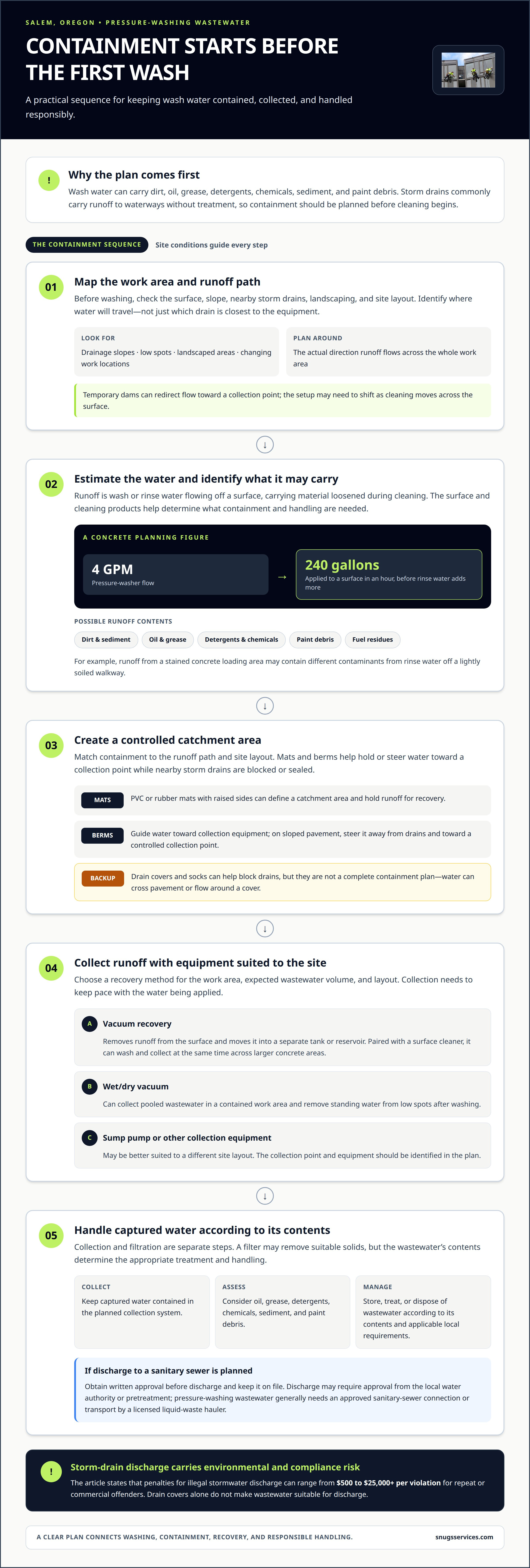
In Salem, Oregon, pressure washing can include on-site wastewater containment and recovery. Runoff means the water that leaves the surface during washing and rinsing, carrying material loosened by the cleaning. A 4 GPM pressure washer can put 240 gallons of water onto a surface in an hour, before rinse water adds more.
Commercial contractors can plan collection around the cleaning area, nearby drains, and expected wastewater volume. Vacuum recovery systems remove runoff from the surface and move it into a separate tank or reservoir. Paired with a surface cleaner, they can wash and collect water at the same time across larger concrete areas.
A wet/dry vacuum can collect pooled wastewater in a contained work area and remove standing water from low spots after washing. A sump pump or other collection equipment may be better suited to a different site layout. Whatever the setup, collection needs to keep pace with the water being applied.
Collection and filtration are separate steps. A filter may remove suitable solids from captured water, but the wastewater’s contents determine the appropriate treatment and handling. Oil, grease, detergents, chemicals, sediment, and paint debris can require different approaches. Store, treat, or dispose of collected water according to its contents and applicable local requirements.
For a Salem project, look for a pressure-washing plan that addresses wastewater recovery and containment. It should identify the collection point, equipment, and next step for captured water, rather than letting runoff spread toward a storm drain.
Before discharging contained wastewater to a sanitary sewer, operators should obtain written approval and keep it on file. A clear recovery plan connects the washing method with responsible collection and disposal.
2. What counts as pressure washing wastewater runoff
Runoff is wash water or rinse water that flows off a surface during cleaning. It can carry loosened dirt, oil, grease, detergent, sediment, or paint debris. For example, water from a stained concrete loading area may contain different contaminants from rinse water off a lightly soiled walkway. The surface and cleaning products help determine how to contain the runoff.
At a mobile job site, account for drainage slopes, nearby storm drains, landscaping, and the work area’s layout. A temporary catchment area can keep water from spreading as the crew cleans. On uneven ground, temporary dams can direct flow toward a collection point. The setup may need to shift as work moves across the surface.
Containment mats and berms help define a catchment area. PVC or rubber mats with raised sides can hold runoff for recovery. Berms can guide water toward collection equipment, while nearby storm drains are blocked or sealed. Match the setup to the direction water travels, rather than protecting only the drain closest to the equipment.
Drain covers and socks can help block storm drains, but they’re backup measures, not a complete containment plan. Runoff may cross pavement or flow around a cover before reaching a drain. For example, a sloped parking area may need berms to steer water away from drains and toward a controlled collection point.
When choosing a contractor for wastewater containment pressure washing in Salem, OR, look for a clear plan covering runoff pathways, contaminants, collection, and wastewater handling. The plan should explain how the crew will contain water across the actual work area, including as equipment and cleaning locations move.
Before work starts, the setup can be documented with time-stamped photos. These images show how mats, berms, or drain protection were positioned for the job and provide a record of the containment approach.
3. Environmental risks from storm-drain discharge
Pressure-washing runoff can carry grease, oil, detergents, cleaning chemicals, sediment, and fuel residues. If it enters a storm drain, it commonly travels toward waterways without treatment. Washing near a drain can therefore send loosened pollutants beyond the property. Containing runoff before cleaning begins helps prevent that pathway and protects nearby landscaping and water.
The U.S. Environmental Protection Agency regulates certain pollutant discharges under the Clean Water Act. The Clean Water Act’s National Pollutant Discharge Elimination System program prohibits pollutant discharges to storm sewers without a permit. Improper wastewater disposal can harm the environment and may violate local rules. Penalties for illegal stormwater discharge can range from $500 to $25,000+ per violation for repeat or commercial offenders.
For commercial pressure washing in Salem, OR, permit requirements depend on the discharge route and applicable rules. The U.S. Environmental Protection Agency’s National Pollutant Discharge Elimination System (NPDES) program identifies pollutant discharges to storm sewers without a permit as prohibited under the Clean Water Act. Discharge to a sanitary sewer may require approval from the local water authority or pretreatment, particularly for industrial wash water. Pressure-washing wastewater generally needs an approved sanitary-sewer connection or transport by a licensed liquid-waste hauler.
Facility conditions also matter. A vehicle-washing area may produce fuel residues and grease, while cleaning painted concrete can release paint debris and sediment. These contents affect whether wastewater needs filtering, storage, treatment, or hauling. Local wastewater-management rules may govern processing and disposal, so the discharge route and contaminants should guide the plan. Storm-drain covers alone don’t make wastewater suitable for discharge. Containment, collection, and approved handling each address a different part of the job.
4. Planning wastewater containment before washing
A containment plan starts with the site, not the pressure washer. Before cleaning, the crew identifies the surface, slope, storm drains, landscaping, and likely runoff path. A flat concrete pad beside a drain needs a different setup from uneven ground near landscaped beds. These details help determine where barriers and collection points belong.
Next, consider wastewater volume and contaminants. The plan depends on how much water the work generates, what the runoff contains, and how recovered water will be handled. Grease, chemicals, paint debris, or heavy sediment call for handling suited to those contaminants. Using biodegradable or phosphate-free detergent doesn’t remove the need to contain runoff.
For outdoor work or uneven terrain, temporary dams can direct water toward collection equipment. A containment mat or berm may define the catchment area, while a drain cover or sock provides backup protection. Covers alone aren’t a complete plan because runoff can flow around them. The setup should account for water movement across the entire work area.
Consider a lightly soiled residential walkway. A suitable approach may combine drain protection, controlled washing, and recovery at one collection point. Older masonry, decorative stone, and nearby planting beds also need attention: runoff control helps keep loosened material and wash water away from vulnerable surfaces. More heavily soiled commercial areas may require a written containment plan and may need a permit before work starts.
Before washing, the contractor should map the water’s path, identify likely contaminants, select barriers and recovery equipment, and decide how captured water will be handled under local requirements. That sequence connects site conditions to a practical containment approach instead of relying on a drain cover alone. For a pressure washing project in Salem, discuss your site’s cleaning needs.
Snugs Services
Snugs Services provides pressure washing for property owners who want a clean surface and a professionally managed job. For a Salem project near storm drains, sensitive landscaping, or other runoff concerns, discuss the site conditions and wastewater-handling plan before work begins. The surface, contaminants, drainage path, and disposal method all shape the approach.
Snugs Services also offers gutter cleaning, installation, and repair for broader exterior-maintenance needs. These services address different property concerns, while pressure washing cleans exterior surfaces. Clear information about the work area and its drainage helps set expectations.
Contact Snugs Services to discuss pressure washing for your property and project needs.
Make your next cleaning project easier to plan
Before scheduling pressure washing, consider the result you want and how the work fits your broader property-maintenance plans. For wastewater containment during pressure washing in Salem, OR, sharing site details and runoff concerns helps shape a practical project plan.
Snugs Services handles pressure washing and can also help with gutter cleaning or installation as part of your exterior upkeep. Considering related maintenance can help you plan work around the surfaces and areas that matter most.
You don’t need to map every technical detail yourself. Start with the property, the area you want cleaned, and any runoff concerns you’ve noticed. Contact Snugs Services to discuss the project and plan the next step.
Contact Snugs Services to discuss containment and your pressure washing project. A well-planned start can make caring for your property feel more straightforward.
Frequently Asked Questions
What containment methods actually work on-site?
The right method depends on the site’s shape, drainage, and cleaning area. For a narrow walkway, runoff might be directed toward one recovery point; a broad parking surface may need barriers to guide water as work progresses. Vacuum recovery, a sump pump, and containment materials can be combined in different ways. The key is matching collection to the work layout.
What counts as wastewater runoff on a pressure washing job?
Wash water and rinse water both count as runoff once they leave the cleaning area. For example, water from fleet washing may pick up road grime or fluid residue, while building-surface cleaning can loosen dirt and coating debris. Likely contents depend on the original surface and cleaning products, so the job plan should account for both.
Where can you legally put the wastewater once it’s contained?
Contained wastewater may go to a sanitary sewer with local water-authority approval or be transported by a licensed liquid-waste hauler. The appropriate route depends on the water’s contents and applicable local requirements. Capturing runoff is only one part of handling it; the destination and any necessary treatment must also suit the wastewater.
What wastewater containment rules apply to pressure washing in Salem, Oregon?
Pressure-washing wastewater should not flow into storm drains or waterways. The U.S. Environmental Protection Agency regulates certain pollutant discharges under the Clean Water Act, and its NPDES program addresses pollutant discharges to storm sewers. For a Salem property, the wastewater’s contents and planned discharge route help determine which local wastewater-management requirements apply.
Where can pressure washing wastewater be discharged in Salem, OR?
Depending on its contents and applicable requirements, pressure-washing wastewater should go to an approved sanitary-sewer connection or be hauled away by a licensed liquid-waste hauler. A storm drain is not a suitable default destination. For example, wash water containing grease or cleaning chemicals needs handling suited to those contaminants, not simply redirection off the property.
What pollutants in pressure washing wastewater require special handling in Oregon?
Wastewater containing oil, grease, petroleum or fuel residues, detergents, cleaning chemicals, sediment, heavy metals, or paint debris needs handling suited to its contents. A vehicle-washing area may produce oily residue, while cleaning painted concrete can release coating debris. These differences matter because they can affect whether collected water needs filtering, treatment, storage, or transport for disposal.
Recent Comments