
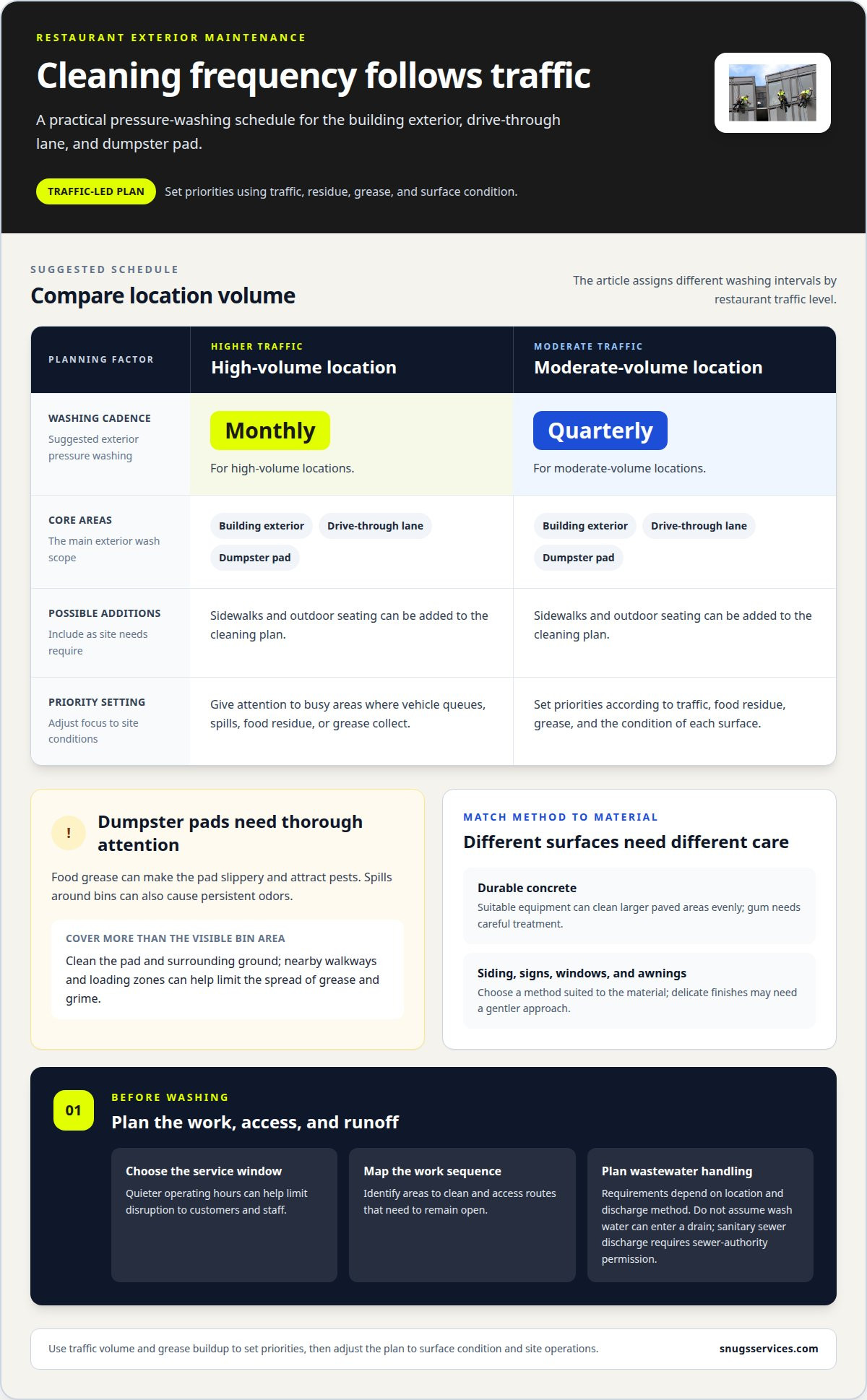
Grease and grime can make a restaurant’s outdoor areas look neglected before a customer reaches the door. A practical schedule for fast food restaurant exterior cleaning is monthly pressure washing for high-volume locations and quarterly washing for moderate-volume locations. The work can cover the building exterior, drive-through lane, and dumpster pad, with sidewalks and outdoor seating included as needed.
Keeping restaurant exteriors clean takes more than an occasional rinse. Foot traffic, food residue, and grease all affect how quickly buildup returns, while poorly timed work can disrupt customers and staff. This guide explains which areas to prioritize, how to plan cleaning around operating hours, and what professional pressure washing involves. A focused maintenance plan can keep outdoor spaces cleaner and more welcoming without adding another task to your team’s day.
Key Takeaways
- Match exterior washing frequency to restaurant traffic: high-volume locations are assigned monthly cleaning, while moderate-volume locations are assigned quarterly cleaning.
- Plan cleaning around quieter operating hours to help limit disruption to customers and staff.
- Include outdoor seating in the cleaning plan, with attention to the surfaces customers use and the buildup that can affect their appearance.
- Professional pressure washing can address grease and gum buildup while using methods suited to the surface being cleaned.
1. Exterior, drive-through lane, and dumpster-pad pressure washing
A practical fast food restaurant exterior cleaning plan can include sidewalks, patios, façades, drive-through lanes, and dumpster pads. The article’s suggested schedule assigns monthly pressure washing to high-volume locations for the exterior, drive-through lane, and dumpster pad, and quarterly washing to moderate-volume locations. Actual priorities depend on traffic, food residue, grease, and surface condition. For example, a busy drive-through lane may need focused attention where vehicles queue and spills collect.
Dumpster pads need regular attention because food grease can make surfaces slippery and attract pests. Residue around bins can also cause persistent odors, particularly when spills remain on the pad or nearby alleyway. Thorough cleaning covers the pad and surrounding ground, not just the visible area around the bins. Including nearby walkways and loading zones helps keep grease and grime from spreading beyond the service area.
Professional cleaners select equipment and methods according to the buildup and material. Snugs Services provides pressure washing and soft washing for exterior maintenance; the method should suit the surface, since siding, signs, windows, and awnings need different care than durable concrete. Delicate finishes may require a gentler approach, while suitable equipment can clean larger paved areas evenly. Gum on concrete also needs careful treatment to avoid damaging the surface.
Safety procedures and local wastewater rules can affect commercial pressure washing. The U.S. Environmental Protection Agency notes that wastewater from exterior cleaning may be subject to state or federal disposal requirements. Rules depend on the location and discharge method, so plan wastewater handling before work begins.
Plan how runoff will be contained or directed before washing, so it does not spread into unintended areas. Do not assume wastewater can enter a drain: the U.S. Environmental Protection Agency says vehicle wash or rinse water may enter a sanitary sewer only when the sewer authority allows it. A fast food restaurant exterior cleaning plan should consider grease, odors, surface materials, and wastewater together.
2. Cleaning during overnight or slow hours
Cleaning during quieter periods can reduce disruption to customers and staff. Tailor the schedule to traffic, grease levels, and operating hours. At a drive-through restaurant, the best window may depend on when vehicle queues ease. A slower period can also give crews more room to work around entrances, order lanes, and delivery access. The aim is to fit the work into the restaurant’s operating rhythm.
Cleaning frequency varies by location and surface. Restaurant exterior tasks may be scheduled daily, weekly, or monthly, depending on the work required. A busy site, for example, may need frequent attention to its most-used paths, while broader exterior washing follows a separate schedule. Use traffic volume and grease buildup to set priorities, then schedule individual tasks in a way that suits the site.
Before work begins, account for the site layout and activity when setting the service window. Identify the areas to clean, the work sequence, and any access routes that must remain open. Crews might prioritize a sidewalk or patio while keeping a designated route clear for staff. If deliveries or vehicle traffic continue late, the drive-through lane and dumpster area may need a different window.
Quiet-hour cleaning still needs coordination with restaurant operations. A shift handoff, delivery, or unexpected rush can change which areas are accessible. A schedule built around real operating patterns helps crews focus on the available sections and adjust the sequence as needed. For a coordinated plan, schedule exterior cleaning around your location’s quieter hours and priority areas.
Exterior cleaning can be scheduled around traffic, grease levels, and operating hours. Snugs Services offers day, night, or weekend service, and last-minute calls can be accommodated.
3. Outdoor seating area cleaning
Outdoor tables and chairs extend the dining area, so include spills and food crumbs on the furniture and surrounding paving in the cleaning plan. Cover tabletops, chair seats, table bases, nearby walkways, and edges where debris gathers. Drink residue beneath a table, for example, can leave a sticky patch even when the tabletop looks clean. Consider the full seating area, including corners near planters and barriers.
Organize the work so soil is not spread onto areas that have already been cleaned. Start by removing loose debris, then address visible food marks and residue on furniture and hard surfaces. Tables, chair legs, and the concrete beneath them may need different approaches. Include adjacent paths, too: a stained walkway beside clean furniture can still make the seating area look untidy.
The surface determines the appropriate cleaning method. Concrete paving needs different care from painted furniture, fabric cushions, or coated tabletops. Adjust the approach to the material and buildup instead of using the same pressure everywhere. A food stain on concrete, for example, calls for different treatment than a mark on a painted chair. Careful cleaning helps protect finishes from damage.
Traffic patterns also shape the maintenance plan. Busy tables, entrance paths, and areas near waste bins often collect visible debris first. Restaurant exterior tasks may be scheduled daily, weekly, or monthly, depending on the areas and workload. An entrance mat can help keep tracked-in soil off nearby sidewalks. Including outdoor seating and its connecting paths creates a more consistent appearance from the doorway to the tables.
4. Professional pressure washing
Professional pressure washing pairs suitable equipment with a method matched to each surface. Commercial-grade degreasers, hot-water systems, and surface cleaners help remove restaurant grime. Hot water and degreaser loosen food grease, while a surface cleaner covers paved areas evenly. Gum on concrete needs targeted treatment, since excessive pressure can scar or damage the surface. This careful approach is central to effective fast food restaurant exterior cleaning.
Pressure alone does not determine the result. Consider the material, soil, and surface condition before choosing a method. Concrete needs different care from siding, painted signs, windows, or awnings. A strong stream directed at a loose sign or delicate finish can strip paint or force water behind the surface. A controlled approach helps clean thoroughly while protecting the property.
Washing creates wet surfaces and runoff. Grease loosened from a drive-through lane can leave paving slick until it is rinsed and dries. Keep customers and staff away from active cleaning areas, and plan wastewater handling before washing so runoff does not spread toward entrances or drains. In fast food restaurant exterior cleaning, work-zone safety and open customer routes need to be considered together.
A reliable process starts with a surface assessment, applies a suitable method, and then checks the finished area. That sequence helps identify missed buildup and reduce the risk of damage from unsuitable pressure or chemicals. Effective cleaning depends on matching equipment and treatment to the surface, not simply using more force. Arrange professional pressure washing to address exterior buildup with a method suited to your property.
Commercial-grade degreasers, paired with hot water, loosen food grease from restaurant exteriors.
Snugs Services
Snugs Services helps restaurant teams maintain exterior surfaces with professional pressure washing and soft washing. A coordinated plan can address grease, tracked-in grime, and other buildup, with scope based on the site’s surfaces and priorities, from entrance paths to broader exterior areas. Snugs Services also provides gutter cleaning, installation, and repair to support property upkeep when drainage systems need attention.
Turn to Snugs Services when routine upkeep no longer keeps the property looking clean, or when outdoor areas need a more thorough reset. Share which surfaces need attention and what operational constraints shape the work. Contact Snugs Services to discuss your restaurant’s exterior cleaning needs.
Keep Your Exterior Plan Moving
A clean, usable outdoor space supports the experience customers have before they enter. Make exterior upkeep part of your property’s regular maintenance planning, and adjust priorities as traffic, weather, and surface conditions change. A professional can help shape the work around your site’s needs, whether you’re addressing exterior buildup, maintaining gutters, or planning gutter installation.
For fast food restaurant exterior cleaning, start by identifying the areas that need attention and any operating constraints that affect access. This gives the cleaning team a practical basis for discussing scope and scheduling. Snugs Services provides pressure washing, gutter cleaning, and gutter installation. Contact Snugs Services to discuss your restaurant’s exterior maintenance needs.
Ready to talk through your property’s needs? Contact Snugs Services and take the next step toward a cleaner, well-maintained exterior.
Frequently Asked Questions
How do professionals pressure wash restaurant parking lots, drive-through lanes, and sidewalks?
Plan cleaning by surface and traffic flow, then work through sections in a practical sequence. For example, clean a parking area separately from pedestrian routes, keeping customers clear of the active work zone. Account for vehicle entrances and exits so cleaning one section does not block access to another. For restaurants around Portland and Vancouver, the site layout helps shape the plan.
Should fast food restaurants hire a professional exterior cleaning company or clean in-house?
Professional cleaning is a strong option for large paved areas, persistent grease, or work requiring pressure-washing equipment. In-house teams can handle routine observation and report spills or buildup, while a specialist manages larger exterior cleaning projects. High-pressure water can be dangerous if not handled correctly. Our team follows OSHA-compliant procedures, which is important when cleaning active commercial properties.
How can exterior cleaning be scheduled to avoid disrupting customers and operations?
Coordinate the work window with the restaurant manager’s busiest activities, deliveries, and staff access needs. A manager can identify when a delivery entrance must remain open and which customer route should stay clear. The cleaning plan can then prioritize accessible areas and sequence the work around those constraints. Share site access details in advance so crews can arrive prepared.
What OSHA and local regulations apply to commercial pressure washing and wastewater disposal?
Safety procedures and local wastewater rules can affect commercial pressure washing. Wastewater may be subject to state or federal requirements, and wash water may enter a sanitary sewer only when the sewer authority allows it.
Recent Comments