
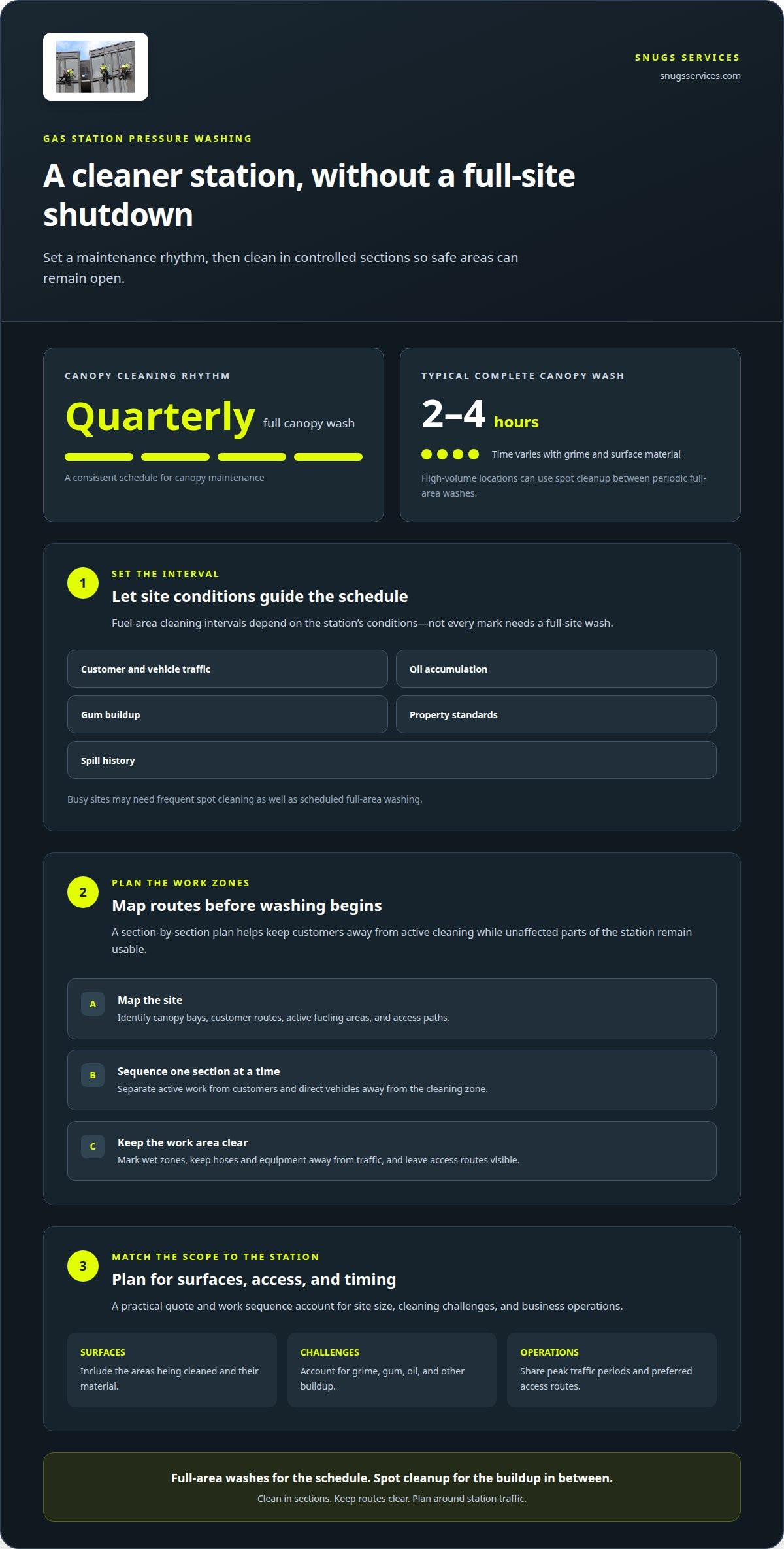
A cleaner gas station starts with a plan, not a shut-down. Gas station pressure washing services can be scheduled in sections to limit disruption, with canopy cleaning generally planned on a quarterly cycle; a complete canopy wash typically takes 2 to 4 hours, depending on grime and surface material.
It makes sense to want clean concrete and canopies without putting customers, fuel equipment, or daily operations at risk. The right crew plans around traffic, separates active cleaning areas from customers, and takes care around dispensers and other sensitive components.
This guide explains how to schedule washing, protect fuel pumps and surrounding equipment, and manage oily stains and wash water. It also covers what to look for when selecting insured, trained pressure-washing professionals, so you can plan a thorough clean with less disruption and greater peace of mind.
Key Takeaways
- Plan cleaning in sections around customer traffic so safe areas can remain in operation.
- Keep high-pressure spray away from dispensers, card readers, emergency shutoffs, and other sensitive components.
- Look for insured, trained professionals who can explain their safety practices and approach to protecting the site.
- Petroleum and grease stains need careful pretreatment and wastewater planning; active spills call for the site’s spill-response procedures.
1. Cleaning frequency and business disruption
A quarterly canopy wash gives a station a consistent maintenance rhythm. A complete canopy cleaning typically takes 2 to 4 hours. Grime buildup and surface material affect the time required. High-volume locations can pair periodic full-area washing with frequent spot cleanup. That approach handles visible dirt between scheduled visits. It avoids treating every mark as a full-site job.
Before washing, professionals map canopy bays, customer routes, and active fueling areas. They sequence the work so safe areas can remain open, keeping hoses, wet concrete, and equipment away from customers and traffic. Clear signs mark wet zones, and crews keep access routes visible. Cleaning one section at a time helps customers use unaffected parts of the station and directs vehicles away from active work.
Set cleaning intervals for fuel areas according to traffic, oil accumulation, gum, property standards, and spill history. Busy sites may need frequent spot cleaning as well as full-area washing. A quote should reflect site size, surfaces, cleaning challenges, and scheduling around business operations. Sharing peak traffic periods and preferred access routes helps shape a practical work plan.
Gum near a convenience-store entrance needs targeted treatment before rinsing. Professionals soften or lift deposits first instead of tracing them with a narrow nozzle, loosening residue before rinsing it away. Crews can clean entrance zones in sections to keep customers clear of wet concrete and hoses. Prioritizing the doorway during a quieter period can limit disruption, while spot cleaning between scheduled washes helps control visible buildup.
2. Specialized equipment for fuel pumps and sensitive areas
Fuel-pump areas require careful equipment control. Never direct pressure washing at dispensers, card readers, electrical equipment, emergency shutoffs, vents, or fuel-system components. Crews separate pumps from active work zones, post signs, and keep hoses and equipment clear of customers and vehicles. Before starting, professionals identify sensitive components and plan spray direction around them. Wet concrete and nearby fuel spills also need attention because they can create slip hazards.
Pressure settings and tools should suit the surface, not blast every area with equal force. A broad concrete apron and a narrow seam beside a dispenser present different risks. Professionals work in controlled sections, keep active equipment away from customers and traffic, and check that equipment is in safe working condition before use. These steps help protect vulnerable components and keep the work area orderly.
Fences and areas beyond the canopy need their own cleaning plan. Fences may collect road film, dust, or organic buildup, while sidewalks and parking areas have different traffic and drainage conditions. Crews assess each surface and its surroundings before washing, maintain separation from pedestrians and vehicles, and avoid directing runoff toward sensitive equipment. Including perimeter areas can create a more consistent appearance across the property.
Dumpster and service areas often collect food waste and grease. These residues require attention to degreasing and wastewater, much like restaurant service zones. Before cleaning, professionals consider the type of soil and where rinse water may travel. They separate waste-area work from customer routes and account for nearby drains, especially where grease or detergent could be carried beyond the cleaning area.
For organized commercial pressure washing, the plan should account for fuel equipment, fences, and service areas together. A clear scope helps crews choose suitable methods for each surface while protecting sensitive components and keeping customer access in view.
3. Choosing insured, trained pressure-washing professionals
At a fuel station, insurance and task-specific training are essential selection criteria. Trained crews distinguish open concrete from dispensers, electrical equipment, and spill-affected pavement. Their work plan identifies the cleaning zone, customer routes, and sensitive equipment, and explains how they will respond if conditions change. Look for clear roles, orderly equipment placement, and practical safety controls.
Compared with DIY cleaning, professional service provides trained personnel, commercial equipment, and a plan for busy fueling areas. That matters when the job involves customer traffic, sensitive pump components, or oily residue. Station employees can focus on operations while the crew manages the cleaning plan and work zone.
A service agreement should define the included surfaces and areas, such as canopy concrete, sidewalks, or dumpster zones. It should also describe the schedule, work sequence, access arrangements, and wash-water handling. Clear exclusions distinguish routine cleaning from active fuel or chemical spill response.
Before work begins, the scope should identify customer access needs and areas that must remain clear. For example, it can specify which entrance stays open while another area is cleaned. It should also set completion expectations, including how treated surfaces will be reviewed. These details reduce confusion between station staff and the cleaning crew.
Insurance documentation and training records are part of a professional standard, alongside safe equipment and clear communication. A trained crew knows not to direct spray at card readers, emergency shutoffs, or vents. It keeps hoses out of customer routes and marks wet concrete. A clear agreement ties these safeguards to the work instead of leaving expectations unclear.
When reviewing a scope, match its details to the station’s conditions. A site with a tight entrance, active fueling lanes, and a greasy service area needs a different work sequence from a simple concrete apron. Specific planning aligns cleaning, access, and safety measures.
4. How do pressure washing companies handle oil, fuel, and grease stains at gas stations?
Oil and grease need pretreatment before rinsing. Otherwise, pressure washing can spread oily residue across a wider area. Professionals assess the stain and surrounding concrete, then treat the affected spot before washing rather than pushing residue across the pavement. This keeps cleaning focused on the contaminated area.
Petroleum-stained concrete can be pressure washed, but the work needs careful planning. Traffic, drainage, and equipment safety all affect the approach. Crews consider nearby dispensers, customer routes, and where water could flow, and identify storm drains before cleaning. Wash water containing petroleum, detergents, or sediment shouldn’t be assumed safe for storm-drain discharge.
Before work starts, professionals determine whether site procedures call for containing, recovering, or otherwise handling wash water. The right approach depends on drainage and the substances in the runoff. The cleaning plan should account for applicable local and federal wastewater-disposal requirements. This is especially important in service areas, where grease, sediment, and petroleum residue may mix.
Active gasoline, diesel, or chemical spills are different from old pavement stains. They require the station’s spill-response procedures, not routine pressure washing. Before starting, a crew should distinguish a fresh spill from accumulated staining. Ordinary washing could spread an active spill and complicate the response. Clear communication with station staff helps identify the appropriate procedure.
For concrete marked by settled oil or grease, choose professional pressure washing services that plan stain treatment and runoff handling together. A careful process protects nearby surfaces while addressing the residue without simply driving it elsewhere.
Snugs Services
Snugs Services helps property managers across Portland, Vancouver, and nearby communities plan exterior cleaning around station conditions, customer access, and sensitive areas. Its pressure washing service addresses exterior surfaces, with a work plan tailored to the areas needing attention and the station’s operations. Turn to the team when grime, grease staining, or a dirty entrance calls for professional cleaning.
Share which surfaces need attention and any access or scheduling considerations. That gives the team useful context for discussing the work and its scope. For a cleaner, more manageable station exterior, contact Snugs Services.
Keep Your Property Maintenance Moving Forward
Make cleaning a practical part of your property maintenance plan. A clear scope keeps priorities visible, coordinates work with station operations, and makes exterior upkeep easier to manage. Thoughtful gas station pressure washing services can support a cleaner, more welcoming site while accounting for the wider property.
Snugs Services provides pressure washing as well as gutter cleaning and installation, helping property managers address exterior upkeep with one team. Whether you’re planning a cleaning project or addressing another property need, start with the area that matters most to your site.
Contact Snugs Services to discuss your property’s needs and take the next step toward a well-maintained, welcoming space.
Frequently Asked Questions
What pressure washing services do gas stations typically need?
Gas stations commonly need cleaning for canopies, pump-area concrete, store entrances, sidewalks, and dumpster zones. A gas station pressure washing service can tailor the work to each surface and the soil that has accumulated. For example, gum near an entrance may need targeted treatment, while greasy concrete may call for pretreatment and runoff planning. The scope depends on which areas need attention.
How much does gas station pressure washing cost in the United States?
There isn’t one set price for cleaning every gas station in the United States. The quote depends on the property and the requested work. It can account for surfaces, site size, stains, access, and scheduling. Sharing which areas need cleaning helps establish a relevant scope instead of relying on a broad estimate.
What factors affect gas station pressure washing prices?
Site size, surface types, soil conditions, access, and scheduling all affect a cleaning quote. A station with canopy surfaces, stained concrete, and a busy entrance involves different work from a small area with light buildup. Drainage and wastewater handling can also shape the job plan. These details help define the work and prepare a site-specific quote.
How often should gas station forecourts and pump areas be pressure washed?
Canopies are commonly placed on a quarterly cleaning schedule, while forecourt and pump-area intervals depend on site conditions. Monitor how quickly visible buildup returns and adjust the routine accordingly. High-traffic locations may need spot cleaning between full washes. Keep the canopy schedule separate from pavement cleaning because each area collects different grime and may need attention at a different pace.
What equipment and cleaning methods are used for gas station pressure washing?
Professionals use pressure-washing equipment suited to the surface and soil, applying it carefully around vulnerable components. Concrete stains may need pretreatment before rinsing, while gum at an entrance is softened or lifted instead of traced with a narrow spray. Crews also use signs and barriers to organize the work area. The right method depends on the material, residue, and surrounding conditions.
What are the wastewater disposal rules for pressure washing gas stations?
Wash water containing petroleum, detergents, or sediment shouldn’t be assumed suitable for storm-drain discharge. Before washing, crews identify storm drains and determine whether water must be contained, recovered, or handled under site procedures. Gas-station pressure washing must follow applicable local and federal environmental requirements, including wastewater-disposal rules. The drainage layout and residue being cleaned help determine the appropriate handling plan.
Recent Comments