
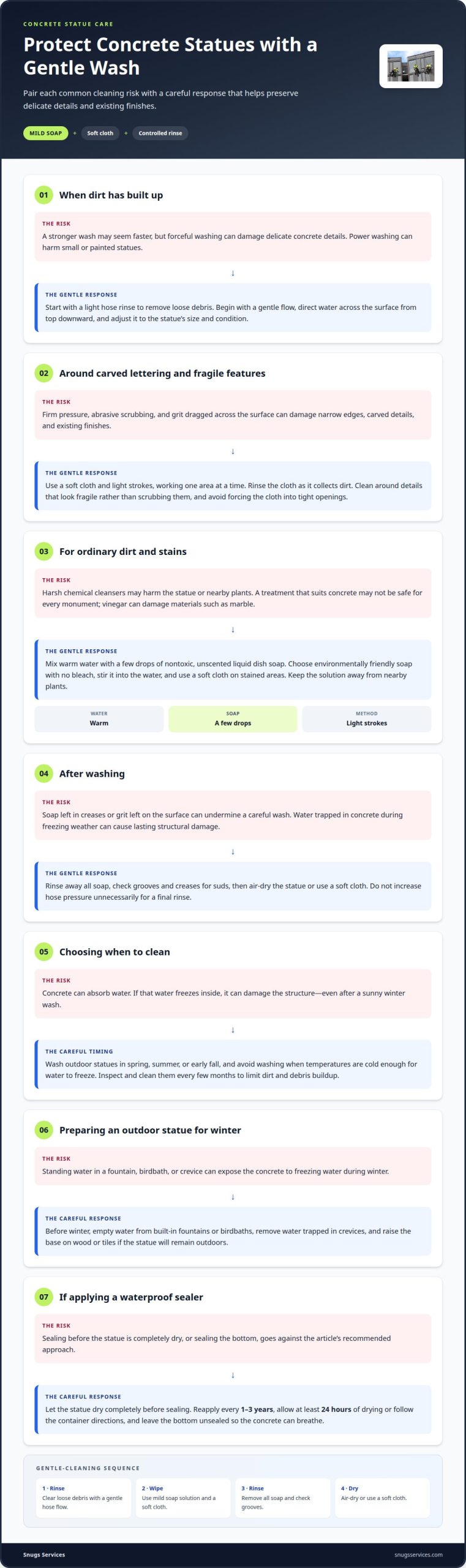
A gentle wash is often the right approach for a concrete statue. To learn how to clean concrete statues and monuments, mix warm water with a few drops of nontoxic, unscented dish soap. Wipe gently, rinse away all the soap, then air-dry the surface or use a soft cloth. Avoid harsh cleaners and forceful washing, which can damage delicate details.
A stronger wash may seem faster when dirt has built up, but a gentle approach helps protect the concrete. Start with a light hose rinse to remove loose debris, adjusting the flow to the statue’s size and condition. Spring, summer, and early fall are suitable seasons for washing outdoor statues. Inspect and clean them every few months to limit buildup. The steps below explain what to use, how to wash and rinse carefully, and when to clean.
Key Takeaways
- Keep concrete statues out of freezing-weather washes, and remove water that collects in crevices during winter.
- Use a soft paintbrush to clear dust from delicate details, and avoid chemical cleaners that can harm the statue or nearby plants.
- Match the hose flow to the statue’s size, and avoid power washing small or painted pieces.
- Lift a statue’s base off the ground with wood or tiles if it will remain outdoors through winter.
Cleaning with environmentally friendly soap and warm water
For historic cemetery monuments, choose a conservative method suited to the material and existing finish. Learning how to clean concrete statues and monuments starts with identifying the surface and avoiding harsh or vigorous treatment.
-
Apply Environmentally Friendly Soap and Warm Water
Mix warm water with environmentally friendly, unscented soap that contains no bleach. A few drops of nontoxic liquid dish soap are enough for a mild cleaning solution. Stir the mixture rather than pouring concentrated soap onto the concrete. Keep it away from nearby plants, and have clean water ready for rinsing.
-
Clean Gently with Dish Soap and Water
Dampen a soft cloth with the diluted solution and clean one area at a time. Use light strokes around carved lettering, narrow edges, and decorative details, where firm pressure can damage the concrete. Rinse the cloth as it picks up dirt so grit does not drag across the surface. If a detail looks fragile, clean around it without scrubbing.
-
Clean a Concrete Statue Step by Step
Dampen the statue with the mild solution, then wipe its surface and base with a soft cloth. Work carefully around grooves and recesses, without forcing the cloth into tight openings. Knowing how to clean concrete statues and monuments also means removing soap completely: rinse the surface, check creases for suds, then wipe it with a soft cloth or let it air-dry.
Concrete statues can be delicate, so scrub gently. A few drops of nontoxic liquid dish soap mixed with water are enough for cleaning garden sculptures. Rinse off all the soap, then wipe the statue dry with a soft cloth or let it air-dry.
What to Clean Garden Statues With?
Choose a gentle cleaning method based on the statue’s material and condition. In freezing weather, avoid washing concrete because absorbed water can freeze and damage its structure.
-
Remove Rust, Oil, and Bird Dropping Stains
For rust, oil, or bird droppings, start with mild soap, water, and a soft cloth. Work gently on one stained area, then rinse away the residue instead of applying an aggressive cleaner. Chemical cleansers may harm garden sculptures or nearby plants, and vinegar can damage materials such as marble. Do not assume a treatment that suits concrete is safe for every monument.
Some rust-prevention advice recommends rubbing a little vinegar on the surface before washing. Because vinegar can harm materials such as marble, do not use it unless you know the statue’s material is suitable.
-
Clean Old, Painted, Sealed, or Weathered Monuments
Use a soft cloth and mild soap on old, painted, sealed, or weathered concrete. Start in a small, less visible area with light strokes, and stop if paint flakes or the surface sheds material. Avoid chemical cleansers and abrasive scrubbing, which can damage sculpted details. For historic cemetery monuments, preserve existing lettering and finishes by choosing the gentlest method appropriate for the material.
- Do not wet concrete statues when temperatures are cold enough for water to freeze. Concrete can absorb water, which may freeze inside and cause lasting structural damage. Choose a milder period for cleaning instead of washing in freezing conditions.
Before winter, empty water from any fountain or birdbath built into the statue. Remove water trapped in crevices, and raise the base on wood or tiles if the statue stays outdoors. These steps help limit standing water around the concrete during cold weather.
To help protect a concrete statue after cleaning, let it dry completely before applying a waterproof sealer. Reapply sealer every 1-3 years, allow at least 24 hours of drying or follow the container directions, and leave the bottom unsealed so the concrete can breathe.
Rinsing with a hose and choosing water pressure
Rinse off loose debris before scrubbing, then rinse away the soap after washing. Adjust the water flow to the statue’s size and surface condition.
-
Rinse Garden Statues with a Hose
Use a garden hose to rinse loose dirt from the statue before scrubbing. Start with a gentle flow and direct water across the surface, including ledges where dust gathers. Work from the top downward so debris runs off instead of settling on areas you have already rinsed. Check carved details and the base for grit, leaves, or soil that could scratch the concrete during cleaning.
- Move around the statue and rinse each side rather than concentrating water in one spot. On monuments with deep lettering or recessed details, guide the water across those features without forcing the stream into narrow openings. An even rinse clears loose debris while helping protect delicate edges and decorations.
-
Choose Water Pressure for Rinsing
Adjust the hose flow to the statue’s size, starting gently and increasing it only as needed to rinse away dirt or soap. Watch how water moves over corners, thin projections, and carved details. If the stream shifts a small statue or seems too forceful for a fragile area, reduce the flow.
- Avoid power washing small or painted garden statues, as the force can damage them. For example, rinse a painted birdbath with a controlled hose flow rather than a concentrated stream. After washing, make a final pass over the statue and check grooves for soap. Rinse away any residue without increasing the pressure unnecessarily.
When to clean outdoor concrete statues
Choose a cleaning season that lets you wash without exposing the concrete to freezing conditions. Spring, summer, and early fall are suitable times to wash outdoor statues.
- Plan a wash for spring, summer, or early fall, when water is less likely to freeze inside the concrete. If the statue has collected dirt over winter, wait for a milder season before washing it. A sunny winter day is not enough reason to rinse: what matters is whether water could freeze after soaking into the concrete.
- Set a recurring reminder to inspect and clean concrete statues every few months. Regular attention helps prevent dirt and debris from building up, making it easier to maintain the surface gently. During each seasonal check, look for leaves, soil, or other visible debris around the statue’s base and details.
- Let visible buildup guide the timing between scheduled washes. If dirt has collected in carved areas or along the base, clean the statue during a suitable season rather than waiting for the next reminder. If it remains free of debris, continue regular inspections without washing simply out of habit. The aim is steady upkeep, not unnecessary scrubbing.
- Keep winter care separate from a full wash. Before cold weather, empty water from any fountain or birdbath feature and remove water sitting in crevices. If the statue stays outdoors, raise its base on wood or tiles. These steps address trapped water and ground contact without requiring a cold-season rinse.
- Use the seasonal schedule to plan more than one statue at a time. For instance, inspect a garden statue and a concrete birdbath during the same spring visit, then note which needs washing. If nearby concrete surfaces also need attention, explore professional concrete surface care.
Snugs Services: Concrete grinding
Snugs Services provides monument cleaning for monuments that need more than routine care. If a concrete surface has persistent buildup or uneven areas, concrete grinding may suit the surrounding concrete, while monument cleaning addresses the monument itself. The right approach depends on the surface and its condition. Gentle soap-and-water cleaning is a practical option for routine statue upkeep; grinding is a separate service for concrete surfaces, not a substitute for careful cleaning of delicate details or painted finishes.
For a monument that needs professional attention, contact Snugs Services to discuss monument cleaning or concrete grinding for the surrounding concrete surface.
Keep your outdoor spaces ready for care
Let the statue’s condition guide your next step rather than aiming for the strongest possible clean. A well-kept monument belongs naturally in its setting, alongside paths, planting, and other outdoor features. The goal is care that respects both the object and the space around it.
Knowing how to clean concrete statues and monuments gives you a practical starting point. For future upkeep, consider whether the concern is ordinary surface dirt or a change in the concrete itself; those call for different approaches. Keeping that distinction in mind can help you choose a sensible next step without treating every mark as a major problem. For broader exterior maintenance, Snugs Services also provides pressure washing, gutter cleaning, and gutter installation.
Ready to discuss the work your property needs? Contact Snugs Services today and take a clear next step toward a cared-for outdoor space.
Frequently Asked Questions
What supplies and cleaners are safe for cleaning concrete statues and monuments?
Use clean water, a few drops of nontoxic, unscented dish soap without bleach, and a soft cloth or brush. A small bucket helps control how much solution reaches detailed areas. For example, use a cloth around carved lettering instead of pressing a stiff brush into it. Avoid chemical cleansers, which can harm sculptures or nearby plants.
How do you remove algae, moss, lichen, and mildew from concrete statues?
Gently lift loose growth with a soft brush, then clean the affected area with mild soapy water. Do not scrape lichen or moss with a sharp tool, which could mark the concrete or catch on carved details. Rinse away loosened material and soap, and avoid chemical treatments around nearby plants. Take extra care with old or fragile surfaces.
Can you use a pressure washer on concrete statues and monuments?
Avoid power washing small or painted statues because the force can damage them. A garden hose gives you more control when rinsing dirt and soap from delicate features. For a large, unpainted monument, adjust the water flow to its size, but do not assume a power washer is suitable. Protect carved edges and thin projections from concentrated force.
What cleaning methods can damage concrete statues or erase carved details?
Harsh chemical cleaners, vigorous scrubbing, and forceful water can damage a statue or its details. Bleach is not suitable for this gentle cleaning method, while vinegar can harm materials such as marble. Do not apply vinegar if you are unsure whether the monument is concrete. Avoid scraping carved grooves with hard tools, which may chip edges or remove surface material.
How often should concrete statues and monuments be cleaned?
Inspect statues regularly and clean them every few months to limit dirt and debris buildup. A sheltered statue may stay cleaner than one beneath trees, where leaves and soil can gather around its base. Use visible buildup to guide attention between routine cleanings, and plan wet cleaning for spring, summer, or early fall rather than during freezing weather.
Recent Comments