
“Bio-based” doesn’t automatically mean harmless to plants or pets. Eco-friendly pressure washing solutions may use sodium percarbonate in oxygen-based cleaners to lift stains or citrus-derived d-limonene to cut grease. Vinegar can also help with light mildew and algae on concrete or brick. The right detergent depends on the soil and surface, and careful application matters around landscaping and animals.
If you want a cleaner exterior without choosing a detergent blindly, it helps to understand what its ingredients do and how the application method affects results. This guide explains which bio-based options suit different cleaning needs, why precautions around plants and pets still matter, and how professionals match detergents with pressure-washing or soft-washing equipment. It also covers what to consider when choosing a service, so the approach fits your home’s surfaces and the buildup you want removed.
Key Takeaways
- Choose a cleaner for the stain and surface: oxygen-based, citrus-based, vinegar, and soap options each suit different tasks.
- Protect nearby landscaping by pre-wetting plants and soil and managing overspray and runoff during cleaning.
- Match the application equipment and spray pattern to the surface and detergent, rather than relying on pressure alone.
- Look beyond “natural” claims by considering a detergent’s ingredients, biodegradability, and suitability for pressure-washing or soft-washing.
What Cleaning Solutions Are Safe for Plants and Pets?
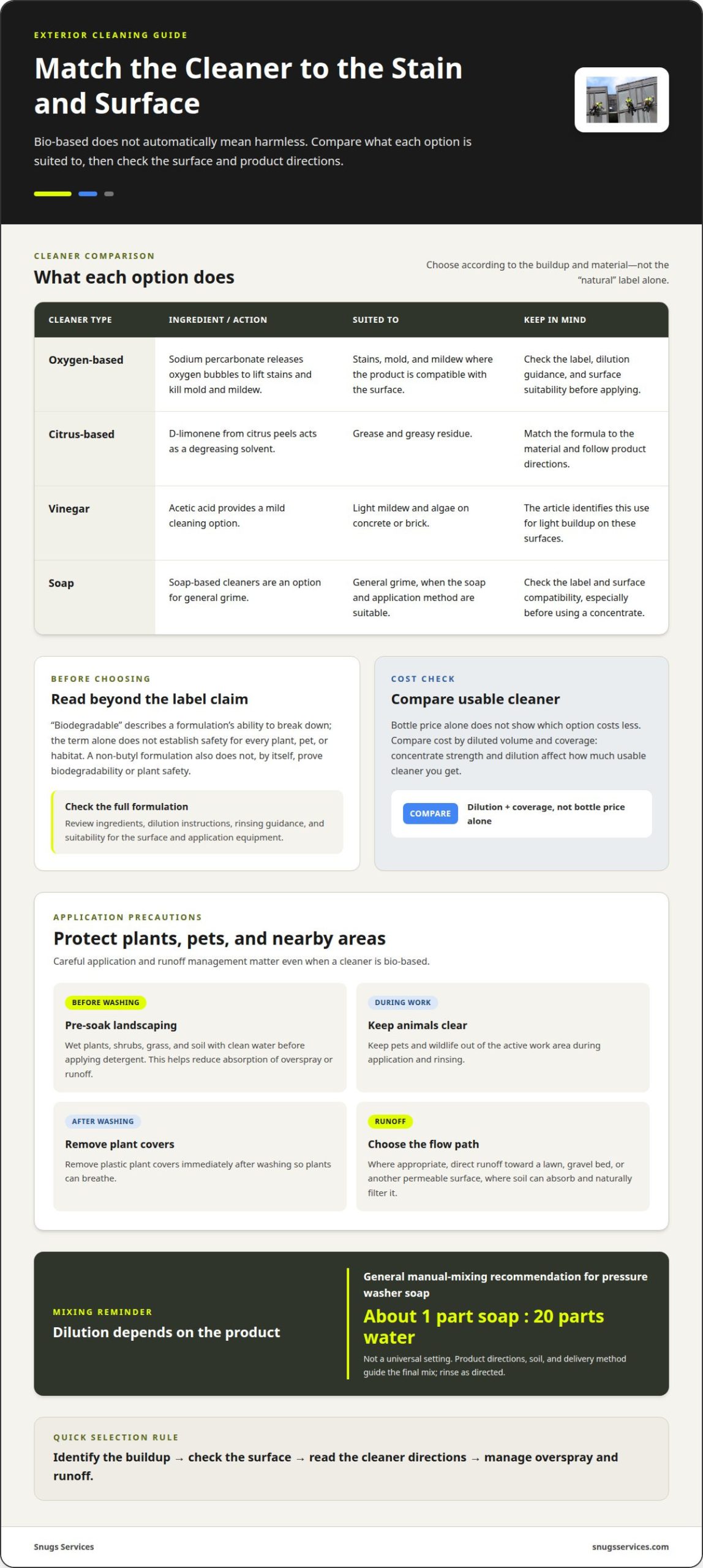
Choose a bio-based cleaner based on the stain, surface, and nearby landscaping, not the “natural” label alone. Compare cost by diluted volume and coverage: concentrate strength and dilution affect how much usable cleaner you get, so the bottle price alone won’t show which option costs less.
Cleaner Types
Oxygen-based cleaners use sodium percarbonate, which releases oxygen bubbles to lift stains and kill mold and mildew. Citrus cleaners use d-limonene from citrus peels as a degreasing solvent. Vinegar’s acetic acid can treat light mildew and algae on concrete or brick. Soap cleaners may suit general grime, but professionals check the label and surface compatibility before applying a concentrate.
Safety Around Plants and Animals
Before applying detergent, professionals pre-soak plants, shrubs, grass, and soil with clean water. This helps reduce absorption of chemical overspray or runoff. Keep pets and wildlife clear of the active work area during application and rinsing. Remove plastic plant covers immediately after washing so plants can breathe. Where appropriate, direct runoff toward a lawn, gravel bed, or another permeable surface, where soil can absorb and naturally filter it.
Biodegradable, Plant-Safe Formulations
“Biodegradable” describes a formulation’s ability to break down, but the term alone doesn’t establish safety for every plant, pet, or habitat. Review the cleaner’s ingredients and directions, including dilution and rinsing guidance, before choosing a concentrate. A non-butyl formulation excludes butyl-based ingredients, but that feature alone doesn’t prove biodegradability or plant safety. Professionals assess the full formulation and manage runoff rather than relying on a single label claim.
Surface Compatibility
Match the cleaner to both the stain and the material. Vinegar may suit light algae on concrete or brick, while a citrus-based cleaner targets greasy residue. A powerful formula isn’t automatically right for every surface. Professionals consider the material’s condition, the type of buildup, and the product directions before selecting a detergent and application method. This assessment helps avoid using a cleaner that’s poorly suited to the surface.
What application equipment do professionals use with eco-friendly pressure washing solutions?
Professionals match the washer, nozzle, and detergent delivery method to the surface and cleaning task. Concrete driveways can handle a different approach from painted siding, so equipment selection takes material condition, soil, and runoff direction into account. For eco-friendly pressure washing solutions, the detergent’s label and dilution instructions also guide application. The right setup supports effective cleaning without unnecessary force.
Nozzle choice changes the spray pattern. A 40-degree white tip creates a wide, fan-like spray described as gentle on surfaces. A 25-degree green tip also provides a wide fan-like spray. Professionals select the pattern for the surface and work area, rather than treating every exterior alike. On delicate siding, they account for the material’s condition and the spray’s distance. For concrete, they consider the buildup and the cleaner’s application directions.
Distance matters, too. A recommended starting point is about 3-4 feet between the wand tip and the surface. Professionals adjust their approach as the surface and cleaning response require. They also consider how detergent reaches the work area, whether through a pressure washer’s compatible application setup or separate soft-washing equipment. The goal is even application and controlled rinsing, not simply a powerful stream.
Environmental care involves more than detergent choice. Professionals manage overspray near plants and wildlife and consider where rinse water will flow. For safety, pressure-washer operators wear goggles to guard against splashback and debris. Loud gas-powered washers call for hearing protection. These precautions help protect the operator while equipment is used around a home’s exterior.
For concrete paths, siding, or driveways, professional pressure washing pairs the application method with the surface and cleaning solution. A careful equipment choice helps deliver a clean finish while keeping the work controlled around the property.
Pressure-washing and soft-washing detergents
A detergent’s purpose and application method matter as much as its ingredients. Professionals match the product to the surface, buildup, and equipment rather than assuming one cleaner suits every wash.
Detergents for Washing Methods
Pressure-washing detergents are formulated for use with a pressure washer or its detergent delivery system. Soft-washing solutions are applied at lower pressure, allowing the solution to do more of the work on suitable exterior surfaces. Professionals consider the material, type of soil, and product directions before choosing a method. The same pressure-washing chemicals shouldn’t automatically be used in both systems; equipment compatibility and label instructions guide the choice.
Green detergent dilution and application by professionals
Professionals use the detergent label to determine the correct dilution for its purpose and application equipment. A general recommendation for manually diluting pressure washer soap is about 1 part soap to 20 parts water. That ratio is not a universal setting: the product directions, soil, and delivery method guide the final mix. Applying a concentrate at the wrong strength can waste product or leave cleaning ineffective, so technicians control dilution and rinse the treated area as directed.
Can professionals clean effectively with water alone or low pressure? Yes. Water can remove loose dirt, and low-pressure application can suit surfaces that need gentler treatment. Stubborn buildup may require a compatible detergent, while the surface condition and soil help determine the method.
How can homeowners choose a certified green service? Look for a clearly named certification and what it covers, alongside an explanation of detergent choice, dilution, and runoff handling. A green claim alone doesn’t explain how the work is performed or which environmental practices it represents.
During the job, professionals manage wash-water flow and follow the cleaner’s directions for handling concentrate. Where appropriate, they direct runoff toward permeable ground, helping limit its movement across the property. These steps make detergent selection part of a controlled cleaning plan, not a stand-alone product choice.
What makes a pressure washing solution eco-friendly and biodegradable?
“Eco-friendly” isn’t a single ingredient or a guarantee of harmlessness. Assess the full cleaning process: formulation, dilution, surface, and where wash water flows. Biodegradability describes a product’s ability to break down, but it doesn’t show on its own how quickly or under what conditions. Consider a label claim alongside the cleaner’s instructions and safety information.
A product’s Safety Data Sheet (SDS) provides specific handling details. For example, an SDS may state whether a particular cleaner is classified as hazardous under GHS or OSHA’s Hazard Communication Standard. It may also identify precautions for the concentrate, such as safety eyewear and impervious gloves. These details apply to that product, not every cleaner marketed as green. Check the stated dilution and handling directions before application.
Runoff management also affects environmental impact. Pressure washing uses less water than other methods of removing dirt and paint, but wash water still needs consideration. Discharge rules are set by the local stormwater authority and wastewater utility. Directing runoff toward permeable ground, such as a lawn or gravel bed, can allow soil to absorb and naturally filter it. The site and local requirements determine appropriate handling.
Look for clear ingredient and use information rather than relying on words like “natural” or “plant-safe.” Sodium percarbonate, for instance, is used in oxygen-based cleaners; d-limonene comes from citrus peels and acts as a solvent in citrus-based cleaners. These ingredient examples don’t establish that a finished product is biodegradable or safe for every plant or animal. Formulation, concentration, surface, and exposure all matter.
Professionals evaluate these factors together, then select a cleaner and application approach suited to the home. For help restoring exterior surfaces with a controlled cleaning plan, schedule professional pressure washing.
Snugs Services
Snugs Services helps homeowners plan exterior cleaning around their surfaces, buildup, and landscaping. When grime returns across siding, concrete, or other outdoor areas, professional pressure washing can refresh the exterior without leaving you to manage equipment setup and physical work. The cleaning plan can account for detergent selection, application, and runoff management.
For broader upkeep, Snugs Services also provides gutter cleaning, installation, and repair. These services address clogged or damaged gutters alongside other exterior maintenance needs. If you’re weighing a cleaning method or need help with exterior upkeep, contact Snugs Services to discuss your project.
Choose a Practical Next Step for Your Home
A cleaner exterior starts with a plan that fits your home, not a one-size-fits-all product. Before arranging service, consider which areas need attention and whether nearby landscaping, pets, or runoff paths should shape the work. Sharing these priorities helps focus the conversation on the surfaces and conditions that matter to you.
Eco-friendly pressure washing solutions are most useful when the cleaner and application approach suit the property. Snugs Services helps with exterior upkeep through pressure washing, gutter cleaning, and gutter installation. These services address cleaning and gutter maintenance needs without asking you to take on demanding equipment work yourself.
Ready to discuss the areas you’d like addressed? Contact Snugs Services and take the next step toward a well-cared-for home.
Frequently Asked Questions
Why Use Bio Based Pressure Washing Chemicals?
Bio-based cleaners give professionals options suited to specific soils instead of relying on one detergent for every job. A greasy driveway and mildew-marked masonry, for example, call for different cleaning actions. Matching the cleaner to the buildup can avoid using a broader-purpose product unnecessarily. “Bio-based” alone, however, doesn’t establish that a finished cleaner is harmless, so surface compatibility and product directions still matter.
Can the wash water go to the storm drain?
Don’t assume pressure-washing water can enter a storm drain. Discharge rules are set by the local stormwater authority and wastewater utility, so appropriate handling depends on the property’s location and conditions. A professional can plan the cleaning route around nearby drains and direct wash water appropriately. Mention storm drains, sloped pavement, and nearby landscaping when discussing the work area.
Can a professional make a DIY eco-friendly pressure washer cleaner?
Yes, a simple mixture can suit light-duty cleaning: one cup of distilled white vinegar and a few drops of biodegradable dish soap per gallon of water. A professional still considers the surface, soil, and equipment before using it. Vinegar may help with light mildew or algae, but this mixture isn’t a universal substitute for a detergent formulated for a particular job.
How do professionals control and contain water runoff during pressure washing?
Professionals consider the property’s slope, drain locations, and nearby planting before washing. They can manage the spray and rinse-water direction to prevent water from flowing unchecked across the work area. Where suitable, runoff can be directed toward permeable ground, such as a lawn or gravel bed. The site’s drainage layout and local discharge rules shape the plan.
How do professionals operate a pressure washer without damaging property?
They match the spray pattern and working distance to the surface, then adjust based on its condition and cleaning response. A recommended starting distance is about 3-4 feet between the wand tip and the surface. High-pressure water can be dangerous if not handled correctly. Our team follows OSHA-compliant procedures. Operators also use goggles against splashback and hearing protection around loud gas-powered washers.
How can homeowners choose the best biodegradable pressure washing detergents for a professional service?
Ask which cleaner suits the specific surface and buildup, and look for clear ingredient, dilution, and handling directions. A biodegradability claim is only one part of the decision; the finished product’s use instructions and safety information matter too. For example, a detergent chosen for greasy residue may differ from one used on mildew. The application method should suit the product as well.
Recent Comments