
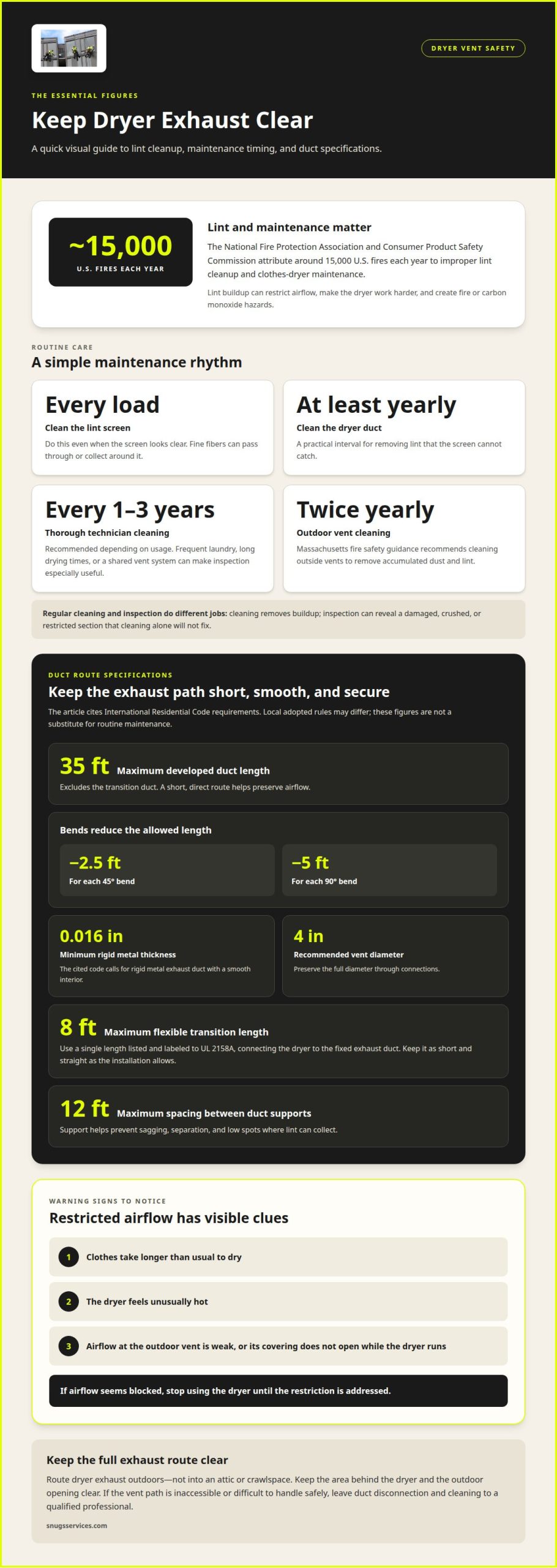
About 15,000 U.S. fires each year are attributed to improper lint cleanup and clothes-dryer maintenance, according to the National Fire Protection Association and the Consumer Product Safety Commission. Dryer vent fire hazard prevention starts with cleaning the lint screen after every load and having the dryer duct cleaned at least once a year. Keeping the vent clear helps air move freely and reduces the risk created by trapped lint and restricted airflow.
It’s easy to focus on the lint screen and overlook the duct behind the dryer, where lint can collect out of sight. This guide explains how to spot airflow problems, when professional cleaning can help, and what to know about choosing and securing dryer ducts. You’ll also learn which routine habits support safer dryer use, so you can keep laundry moving and give this important part of home maintenance the careful attention it needs.
Key Takeaways
- Recognize how lint buildup and blocked airflow can strain a dryer, and learn which warning signs deserve attention.
- Understand when professional vent cleaning can help restore clear airflow through the full duct path.
- See how rigid and flexible metal ducts differ, and what to consider when choosing a safe vent route.
- Learn how proper duct supports, connectors, and fasteners help keep the vent secure without obstructing airflow.
1. How lint buildup and restricted airflow contribute to dryer fires
Dryer vent fire hazard prevention starts with removing lint before it can restrict airflow. Clean the lint screen after every load, even when it looks clear. Fine fibers can pass through or collect around the screen, then build up inside the dryer and exhaust duct. As lint accumulates, hot air has a harder time escaping, and the dryer may run longer.
The National Fire Protection Association and Consumer Product Safety Commission cite around 15,000 U.S. fires each year attributable to improper lint cleanup and clothes-dryer maintenance. Lint can also gather behind the dryer, where it’s easy to miss during routine laundry. Keep that area clear, and have lint cleaned from the back of the appliance as part of maintenance. Restricted airflow can make the dryer work harder and create fire or carbon monoxide hazards.
Watch for clothes that take longer than usual to dry, a dryer that feels unusually hot, or weak airflow at the outdoor vent. While the dryer runs, its exterior vent covering should open. If it stays shut or airflow seems blocked, stop using the dryer until the restriction is addressed. These signs can point to lint buildup, a crushed duct, or another airflow problem.
For installation, the cited International Residential Code sets duct material and routing requirements, including rigid metal exhaust duct and limits on duct length and bends. Details can vary with the rules adopted in your location. These installation specifications don’t replace routine maintenance: clean the lint screen after each load and keep the exhaust path clear.
If a dryer fire starts, keep the dryer door closed to limit the fire’s oxygen supply. Don’t open it to inspect the drum, because opening the door can feed the fire. Regular lint removal, attention to airflow, and prompt action when warning signs appear all help reduce preventable clothes-dryer hazards.
2. Professional dryer vent cleaning benefits
Annual duct cleaning helps remove lint that the screen can’t catch. The duct should also be disconnected, cleaned, and inspected regularly, either by a qualified professional or as part of thorough maintenance. A professional can assess the connected vent path, including areas that are difficult to reach behind the dryer. Clear ductwork supports airflow and can help prevent extended drying times caused by lint restrictions.
For routine cleaning, turn off the dryer and let it cool. Remove the lint screen, clear away lint, and clean the screen housing. Vacuum reachable lint around the dryer without pulling or crushing the duct. Then check the visible vent connection and outdoor opening for lint or damage. Leave duct disconnection and cleaning to a professional if the vent path is inaccessible or difficult to handle safely.
At least once a year is a practical interval for cleaning the dryer duct. A thorough dryer cleaning by a qualified service technician is recommended every 1 to 3 years, depending on usage. More frequent laundry, long drying times, or a shared vent system can make inspection especially useful. Cleaning removes buildup; inspection can also reveal a damaged, crushed, or restricted section that cleaning alone won’t fix.
Outdoor vent openings need attention, too. Massachusetts fire safety guidance recommends cleaning dryer vents outside twice a year to remove accumulated dust and lint. Check that the exterior covering opens during operation and that lint hasn’t gathered around the opening. Keep the vent area clear so debris doesn’t block exhaust airflow.
Commercial dryers often run more frequently and may share venting systems, so regular cleaning is important. Planned service can clean connected ducts and inspect the vent route, helping staff spot restrictions before they affect drying. For households and facilities alike, cleaning the lint screen after every load complements, but doesn’t replace, regular duct cleaning.
3. Choosing rigid or flexible metal dryer ducts
The duct carries warm, moisture-laden exhaust from the dryer to the outdoors, so its material and shape matter. The cited International Residential Code calls for rigid metal exhaust ducts at least 0.016 inch thick, with smooth interiors. A smooth, rigid path has fewer places for lint to catch than a rough or compressed passage, helping maintain airflow during laundry cycles.
Use rigid metal for the main exhaust run where the route allows it. Its firm shape helps keep the passage open, while bends or long runs can restrict airflow. The code’s stated maximum developed duct length is 35 feet, excluding the transition duct. Each 45-degree bend reduces that maximum by 2.5 feet, and each 90-degree bend reduces it by 5 feet. Those limits make a short, direct route a practical choice.
Flexible metal has a narrower role: connecting the dryer to the fixed exhaust duct. Under the cited International Residential Code, a flexible transition duct must be a single length no longer than 8 feet and listed and labeled to UL 2158A. Keep this section as short and straight as the installation allows. A crushed or sharply bent transition can obstruct exhaust and create places for lint buildup.
When possible, use a 4-inch-diameter vent pipe, as recommended in the topic guidance. Match the duct choice to the route, and preserve the full diameter through connections. Don’t rely on a lint filter to catch everything: fine lint can move into the exhaust duct. Metal venting, whether rigid or flexible, supports proper airflow and drying time.
Route dryer exhaust outdoors, not into an attic or crawlspace. This keeps warm, damp air and lint from discharging into enclosed spaces. Choosing a suitable metal duct, limiting bends, and keeping the route unobstructed are practical steps to reduce lint-related hazards.
4. Duct support, joints, and fasteners
A correctly sized metal duct can still lose airflow if it sags or separates. Support keeps the exhaust route aligned and helps prevent low spots where lint can collect. The cited International Residential Code requires dryer exhaust ducts to be supported at intervals no greater than 12 feet. Secure supports without crushing or deforming the duct, so the opening stays clear as the machine runs.
At each joint, align the duct ends and connect them with duct connectors, metal clamps, or foil tape. These materials help hold sections together without adding sharp projections inside the exhaust path. A poorly fitted joint can leak air, loosen over time, or expose edges that catch lint. A tidy connection also makes the duct easier to inspect during maintenance.
Avoid sheet-metal screws at duct joints. Their points can extend into the passage, catch lint, and restrict airflow. The cited International Residential Code prohibits screws or similar fasteners from protruding more than 1/8 inch into the duct. That limit matters even when a screw seems small: an exposed point can snag fibers each time warm air carries lint through the system.
During installation or repair, examine each support and joint along the accessible route. Look for sagging ductwork, a loose clamp, separated foil tape, or a crushed section behind the dryer. Correct the connection and restore support without narrowing the duct. If the route is difficult to reach, a professional inspection can identify hidden damage without forcing the appliance or duct into a tighter position.
Think of the duct as a connected system: supports preserve the route, connectors secure joints, and properly placed fasteners keep the interior smooth. Together, they help maintain exhaust airflow and reduce places where lint can collect. For dryer vent fire hazard prevention, sound duct assembly complements regular cleaning and a clear lint screen.
Snugs Services: Dryer Vent Cleaning
Snugs Services provides dryer vent cleaning for lint buildup, restricted airflow, and difficult-to-reach ducts. Cleaning helps address lint beyond the screen, while inspection of the accessible duct route can reveal visible restrictions or damage that may affect exhaust flow.
Consider professional cleaning if clothes take longer to dry, airflow at the outdoor vent seems weak, or the duct hasn’t been cleaned in over a year. Regular service is also useful for frequently used commercial dryers and shared venting systems. It complements simple habits such as clearing the lint screen after every load, rather than replacing them.
For a cleaner, clearer dryer vent, contact Snugs Services to discuss dryer vent cleaning.
Make dryer care part of your home maintenance routine
Make dryer upkeep a regular part of your home maintenance plan instead of waiting until laundry takes longer or the vent becomes difficult to access. A reminder can help keep the task from slipping between seasonal chores. This steady approach to dryer vent fire hazard prevention also makes it easier to notice changes in dryer performance and decide when professional attention is useful.
Snugs Services provides dryer vent cleaning, along with pressure washing, gutter cleaning, and gutter installation for other property maintenance needs. Each service addresses a different part of caring for a home, so you can plan the work that fits your priorities.
Take the next step toward easier upkeep. Contact Snugs Services to discuss dryer vent cleaning and keep your maintenance plans moving forward.
Frequently Asked Questions
How often should dryer vents be cleaned to prevent fires?
Clean the dryer duct at least once a year, then adjust the schedule for usage and vent conditions. A household that runs frequent loads may need closer attention than one with occasional use. Inspect the outdoor opening for lint or debris, especially if clothes take longer to dry. Frequently used commercial dryers and shared venting systems need regular cleaning and inspection.
What dryer vent materials and configurations are safest and code-compliant?
The cited International Residential Code calls for rigid metal exhaust duct at least 0.016 inch thick, with smooth interiors. Flexible transition duct must be a single length no longer than 8 feet and listed and labeled to UL 2158A. Keep the route direct, support it properly, and exhaust outdoors. Local code adoption can affect which requirements apply to a particular installation.
What are the main causes and risks of dryer vent fires?
Lint accumulation and restricted exhaust airflow are key hazards. A blocked route can trap heat, make the dryer work harder, and increase fire risk. Lint may also collect behind the appliance or at the outdoor vent, beyond what the screen catches. Restricted venting can create a carbon monoxide hazard, particularly with an improperly vented gas dryer, so treat blocked airflow as a safety issue.
Should homeowners hire a professional or clean dryer vents themselves?
Homeowners can clear the lint screen after each load, but a professional can clean and inspect the full duct route. Choose professional cleaning if the duct is hard to reach, has a crushed section, or drying performance has changed. Snugs Services provides dryer vent cleaning for this work. Avoid moving or disconnecting a difficult duct if doing so could damage it.
What routine dryer maintenance helps prevent fires?
Clear the lint screen after every load, keep the area around the dryer free of items, and follow the manufacturer’s operating instructions. Don’t overload the drum or leave the dryer running while you’re asleep or away from home. Check that the outdoor vent covering opens during operation. For laundry stained with flammable substances, follow the Consumer Product Safety Commission’s advice to wash it more than once and hang it to dry.
Recent Comments