
A bank’s drive-through lane needs regular attention. Bank drive-thru cleaning services can cover transaction lanes and nearby ATM areas, where daily customer traffic leaves litter, receipt debris, and surface buildup.
These public-facing spaces see customers throughout the day, so a clean, orderly lane helps maintain a cared-for branch. Set the schedule according to traffic and the condition of the surfaces.
Here’s what professional lane cleaning can cover, how teams approach windows and high-touch surfaces, and what affects cleaning frequency. You’ll also see how routine upkeep differs from deeper exterior cleaning, so you can plan service around your branch’s needs.
Key Takeaways
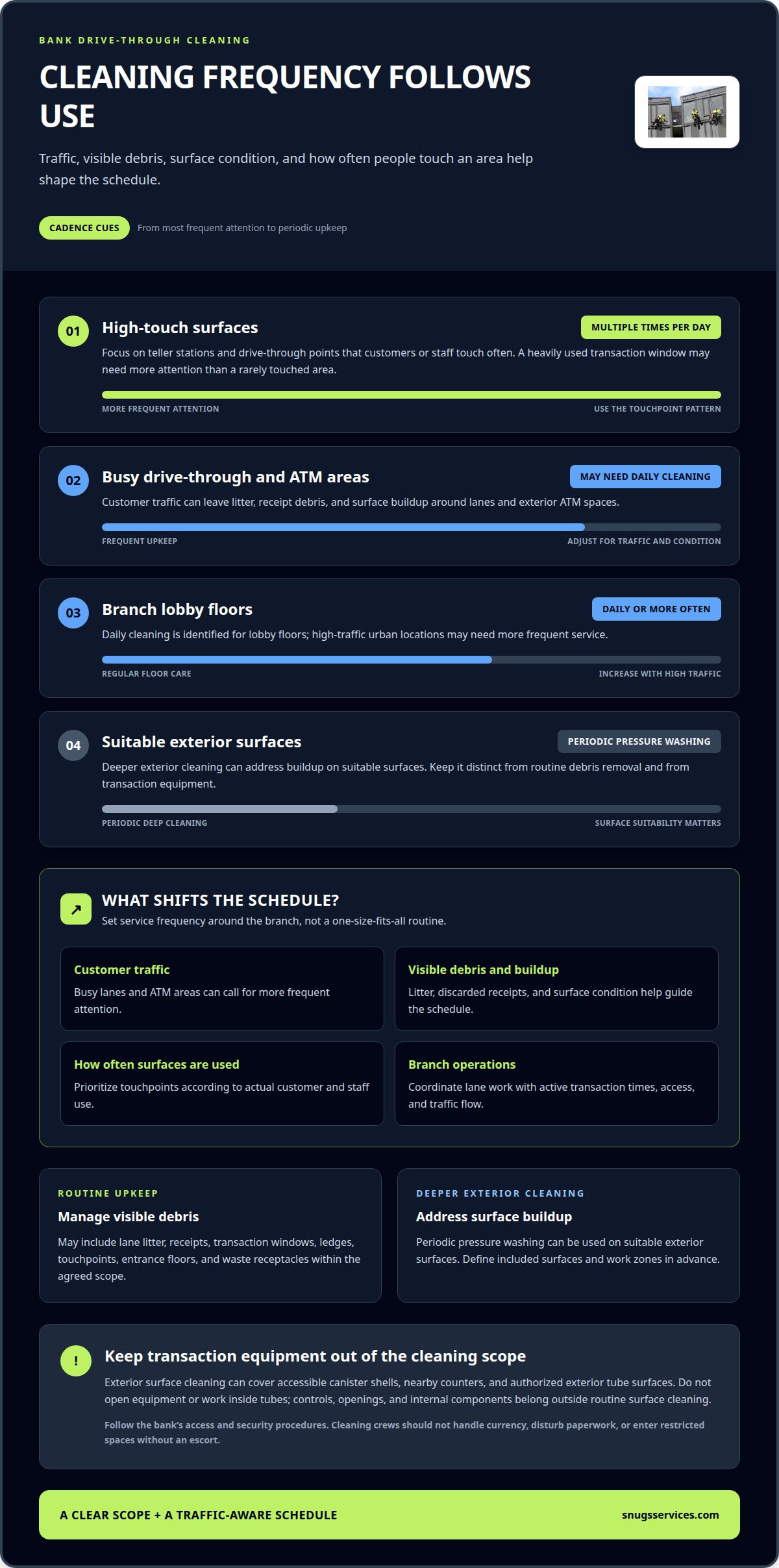
- Busy drive-through and ATM areas may need daily attention; traffic and visible debris help shape the cleaning schedule.
- A complete lane-cleaning plan accounts for transaction surfaces and customer touchpoints, not just the surrounding pavement.
- Cleaning around pneumatic tubes and canisters calls for care that keeps the equipment’s operating components protected.
- Choose cleaning products and equipment for the specific surface and work environment rather than applying one approach everywhere.
Drive-through transaction lane cleaning
Bank drive-through cleaning can cover transaction lanes and adjacent exterior areas, including ATM spaces. A scheduled scope should specify which lanes, exterior windows, and nearby walkways receive service. For busy sites, more frequent attention can help manage litter and surface buildup.
Compared with in-house janitorial cleaning, a dedicated commercial schedule can assign lane and exterior tasks separately from interior duties. Bank employees and tellers can focus on customer service, while cleaning staff follow the agreed scope. The bank determines whether its own team or a contractor handles each area.
Cash and customer documents need clear boundaries. Cleaning staff should not handle currency, disturb paperwork in cash-handling areas, or enter restricted spaces without an escort. The bank’s access and security procedures should explain where work can happen and how employees coordinate entry.
Vendors should meet the bank’s insurance requirements and complete its required background checks and security documentation. Certifications should match the institution’s stated requirements and the work being performed. Requirements can differ by bank and contract.
When planning exterior cleaning, define the surfaces, work zones, access procedures, and reporting process. The scope should distinguish exterior maintenance from transaction equipment and restricted areas. Coordinate the schedule with branch operations, including active transaction times.
Moving vehicles, limited visibility, and wet pavement require careful planning. Coordinate access with bank staff and schedule lane work so it does not interfere with transactions. The work plan should account for traffic flow and the branch’s operating needs.
For branches in Portland, Vancouver, Gresham, Salem, Eugene, Beaverton, Tualatin, Tigard, Hillsboro, Longview, Richfield, Battle Ground, Camas, Wilsonville, or Keizer, plan exterior upkeep around each site’s traffic and operations. Define the work areas and include nearby transaction spaces in the property-maintenance plan.
Busy bank locations may need frequent cleaning around exterior ATM areas and drive-through lanes, where customer traffic leaves litter and surface buildup.
What cleaning services do bank drive-thru lanes and teller stations need?
A bank’s cleaning scope should cover both the customer-facing lane and teller touchpoints. Busy drive-through and ATM areas may need daily cleaning to address litter, receipt debris, and surface contamination. Teller stations also need focused attention on surfaces customers and staff regularly touch.
High-touch surfaces should be disinfected multiple times per day. The schedule can account for traffic patterns, branch operations, and which surfaces see frequent use. For example, a heavily used transaction window may need more attention than an area customers rarely touch.
A well-defined routine scope from Snugs Services can include tasks such as:
- Removing litter and discarded receipts from lanes and nearby spaces.
- Cleaning customer-facing transaction windows and adjacent ledges.
- Addressing high-touch surfaces at teller stations and drive-through points.
- Cleaning entrance areas and floors that collect tracked-in debris.
- Emptying waste receptacles where customers dispose of receipts.
A clear scope identifies the exterior surfaces included and excludes restricted spaces and transaction equipment. This helps branch staff understand what crews will clean during each visit and prevents confusion about responsibilities.
Routine upkeep and deeper exterior cleaning address different needs. Regular service can manage visible debris on included surfaces; periodic pressure washing can address buildup on suitable exterior surfaces. Adjust the schedule when lane use or customer flow changes.
For teller stations, the plan should also account for nearby client-facing spaces. Conference rooms used by clients should be cleaned and reset daily. Coordinating these tasks with branch operations helps maintain orderly service areas while keeping the cleaning scope clear.
Comprehensive bank and financial institution cleaning may cover lobbies, teller areas, offices, restrooms, conference rooms, and employee spaces, with security, access, and operating requirements in mind. Considering these areas together can help define a coordinated branch scope, while keeping the stated requirements in view. Teller areas can therefore be considered alongside other covered spaces, rather than treated as the only part of branch cleaning.
Bank branch lobby floors need daily cleaning or more frequent service in high-traffic urban locations. Including this floor care in the broader branch schedule keeps lobby cleaning alongside the teller and drive-thru work, with service frequency reflecting the stated traffic conditions.
How do professionals safely clean drive-thru tubes, canisters, and pneumatic systems?
Draw a clear boundary between exterior cleaning and equipment maintenance. The scope can include accessible exterior surfaces, such as a canister’s outer shell or a nearby counter. It should not include opening pneumatic components or working inside the tube.
Before service, identify transaction equipment, restricted areas, and access procedures. Crews should follow the institution’s security instructions and avoid disturbing documents or handling currency. Internal canister or tube work belongs in the bank’s designated equipment-maintenance process.
A practical cleaning scope can distinguish surfaces by location:
- Wipe accessible exterior canister surfaces using a product suited to that surface.
- Address nearby ledges and transaction counters without reaching into equipment openings.
- Include accessible exterior tube surfaces where the bank authorizes cleaning.
- Keep controls, openings, and internal components outside the routine surface-cleaning scope.
Product choice matters around operating equipment. Cleaning products for financial facilities should match the task and occupied environment, rather than using one product on every surface. A written scope can identify the intended surface and cleaning boundary, helping prevent an exterior wipe from becoming unauthorized equipment work.
Follow the bank’s procedures for restricted areas, escorts, alarms, and monitoring. A lane canister near a cash-handling area needs a clear cleaning boundary that protects documents and currency. Crews should not enter restricted spaces without an escort or disturb papers in cash-handling areas.
Separate visible dirt from equipment faults. Cleaning a dusty canister exterior may be part of the defined scope; a jam, unusual operation, or concern inside the pneumatic system belongs in the bank’s equipment-maintenance process. This keeps surface care separate from internal system work.
Professional Bank Drive-Thru Cleaning Equipment
Equipment should match the surface, soil, and surrounding activity. Cleaning products for financial facilities should suit the task and occupied environment, rather than relying on one product for every surface. Glass, painted metal, concrete, and transaction counters each call for a compatible cleaning approach.
For exterior transaction windows, professionals use glass-cleaning tools that help remove fingerprints and road film without leaving visible residue. The method depends on the window’s location and access. A reachable pane differs from elevated glass, where trained window cleaners use equipment suited to working at height.
Lane surfaces need a different setup. Professionals select equipment according to the pavement, debris, and nearby traffic. A sweeping tool can collect loose litter, while pressure-washing equipment may address grime on suitable exterior surfaces. The work plan should keep water and cleaning activity away from areas where they could disrupt transactions.
A practical equipment plan considers these factors:
- Surface: Match the cleaning method to glass, concrete, or metal.
- Soil: Choose a product suited to fingerprints, dust, or stuck-on grime.
- Setting: Account for customers, employees, and nearby equipment.
- Access: Select tools that reach the work area without crossing restricted boundaries.
Keep glass and pavement tools separate to avoid transferring grit onto clean windows. Follow product labels and site procedures, and organize work by zone so the transaction window, lane, and adjacent walkway remain distinct in the service plan.
For clean, clear exterior glass, schedule professional window cleaning as part of property upkeep. A well-matched method helps address fingerprints on transaction windows and grime on nearby glass, while the bank’s scope keeps lane and equipment boundaries clear.
Snugs Services
Snugs Services can help address exterior upkeep around a bank branch when transaction areas need attention alongside the property. For example, pressure washing can support cleaning suitable exterior surfaces, while gutter cleaning, installation, and repair address separate building-maintenance needs.
For drive-through planning, define the transaction equipment, access boundaries, and cleaning responsibilities with the bank’s team. This keeps exterior maintenance separate from pneumatic-system work and cash-handling areas. Contact Snugs Services to discuss pressure washing or other exterior maintenance for your branch.
Contact Snugs Services to discuss your property’s exterior maintenance needs.
Plan the Next Step for Your Branch
A clear maintenance plan gives branch teams a practical way to manage recurring cleaning needs. Define which areas belong to routine surface care, which require specialist equipment maintenance, and how access fits the bank’s operations. That separation helps keep customer-facing spaces orderly without blurring responsibilities around transaction systems.
Use traffic patterns and exterior conditions to review the maintenance schedule. If the surrounding property needs attention, include those surfaces in the wider exterior plan. Bank drive-thru cleaning services work best when the scope supports daily branch operations and clearly assigns responsibilities.
For exterior property upkeep, Snugs Services can help identify relevant maintenance work, including pressure washing and gutter care. Contact Snugs Services to discuss your property’s needs and plan a practical next step for your branch.
Frequently Asked Questions
Do you service the ATM and drive-through areas in addition to the branch interior?
Snugs Services focuses on exterior maintenance, not branch-interior janitorial work. Its services can address suitable surfaces near an ATM or drive-through, including windows and paved areas. Keep teller interiors, cash-handling spaces, and transaction equipment within the bank’s own cleaning and maintenance arrangements.
What can affect a bank and financial institution cleaning quote?
A quote can depend on facility size, branch count, cleaning frequency, traffic, surface types, room count, and access requirements. For example, a multi-branch request with controlled entry needs a different scope from a single site with open exterior areas. A useful request describes the facility, location, approximate square footage, desired schedule, start date, and any special requirements.
How often should bank drive-thru facilities be cleaned?
Most banks benefit from daily cleaning, while high-touch surfaces may need disinfection multiple times each day. A busy lane with steady customer activity may need closer attention than a lightly used area. Deeper work, such as carpet extraction or floor refinishing, can be scheduled monthly or seasonally according to traffic and branch volume.
What do bank drive-thru cleaning services typically cost?
There isn’t one standard cost for every facility. The quote depends on the work included, branch size and count, traffic, surfaces, cleaning frequency, and access or scheduling requirements. To request a useful estimate, provide the facility location, approximate square footage, desired schedule, start date, and any areas or conditions requiring special attention.
Recent Comments