
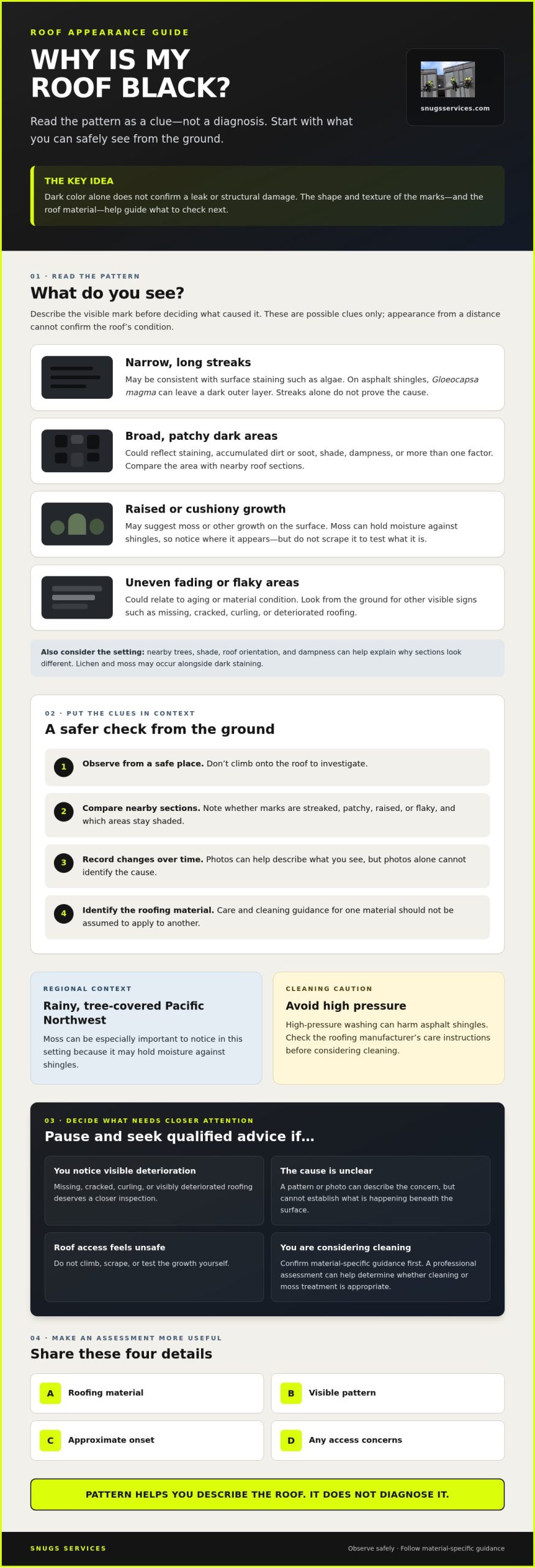
A black roof doesn’t automatically mean the shingles are failing. If you’re asking, “why is my roof black,” the pattern may offer a better first clue than the color alone: dark streaks can point to algae, while patchy buildup or raised green growth may suggest moss or debris.
It’s understandable to worry that discoloration could signal a leak or that cleaning might damage your roof. The good news is that you don’t have to guess or climb up to investigate. This guide explains what common roof marks may look like, which warning signs deserve closer attention, and how to choose a safer next step.
You’ll learn why algae often leaves streaks, how moss and dirt can appear different, and what clues to check from the ground. In the rainy, tree-covered Pacific Northwest, moss can be especially important to notice because it may hold moisture against shingles. Before attempting any cleaning, keep in mind that high pressure can harm asphalt shingles. When the cause is unclear or roof access feels unsafe, a professional assessment can help you decide whether roof cleaning or moss treatment is appropriate.
Key Takeaways
- When asking “why is my roof black,” treat the pattern as a clue, not a diagnosis. Streaks, broad patches, raised growth, and uneven fading can have different possible explanations.
- Compare the affected area with nearby roof sections and note changes over time, but don’t rely on photos alone to identify the cause.
- Check the roof from the ground, record what you see, and identify the roofing material before considering any cleaning approach.
- Avoid climbing, scraping, or using high-pressure washing without confirming material-specific guidance. If access feels unsafe or the cause is unclear, seek professional advice.
- When discussing next steps, share the roof material, visible pattern, approximate onset, and any access concerns so the assessment can be more useful.
Why Is My Roof Black? Common Causes Behind Dark Roof Stains
Black marks on a roof can have several causes, and appearance alone can’t confirm which one is responsible. Dark streaks may be algae-related, while dirt, soot, dampness, lichen, moss, or changes to the roofing material can also affect how a roof looks.
On asphalt shingles, a common source of dark streaking is Gloeocapsa magma, a blue-green organism that can leave a dark outer layer. Still, streaks are a clue, not a diagnosis. Raised growth or visibly flaky areas may point to different conditions and deserve a closer look.
For a visual overview of one possible cause, watch this video:
Could black roof streaks be algae?
Long, narrow streaks can be consistent with algae staining, but they don’t prove algae is the cause. Compare the pattern across the roof and look for other visible clues from the ground. Algae-like staining is generally flat, while moss may look raised or cushiony. Flaking or uneven material may suggest wear, but a visual check from a distance can’t establish what’s happening beneath the surface.
What else can make a roof look black?
Accumulated dirt or soot can darken roofing, and shaded, damp areas may look different from sections exposed to more sun. Lichen and moss can also grow alongside dark staining, so more than one cause may be present. The roof material, its age, and its maintenance history all help put the appearance in context.
If you’re wondering why is my roof black, don’t assume the discoloration means there’s a leak or structural damage. A dark surface alone doesn’t confirm either. Note whether the marks are streaked, patchy, raised, or flaky, and watch for changes. If the cause remains unclear, or you’re concerned about visible deterioration, consider professional advice before attempting to clean the roof.
How to Read Black Streaks, Patches, and Roof Shading
If you’re trying to work out why is my roof black, start by describing the pattern rather than naming a cause. Visual clues can help you decide what to check next, but they can’t confirm what’s happening on the roof. Material matters too: an appearance that’s ordinary on one roof type may call for closer attention on another. Check the manufacturer’s care instructions before drawing conclusions or considering cleaning.
- Narrow streaks: May be consistent with surface staining. Note where they begin and whether they follow a similar path across the roof.
- Broad dark patches: Could reflect staining, accumulated debris, shade, or more than one factor. Compare the area with nearby sections.
- Raised growth: May indicate moss or another growth on the surface. Don’t scrape it to test what it is.
- Uneven fading or visibly flaky areas: Could relate to aging or material condition. Look for other signs of deterioration from the ground.
For asphalt shingles, consult the official cleaning guidelines from ARMA alongside the roofing manufacturer’s instructions. Guidance for one material or product shouldn’t be assumed to apply to every roof.
Do dark streaks mean roof damage?
Not necessarily. Discoloration can be a surface change, but missing, cracked, curling, or visibly deteriorated roofing is a reason to arrange a closer inspection. A pattern or photo can help describe the concern, but it can’t establish the roof’s condition. Don’t walk on the roof to investigate; observe from a safe place on the ground and seek qualified advice if you notice damage or feel unsure.
Why are some roof areas darker than others?
Nearby trees, shade, roof orientation, and dampness can all be useful context. Areas that get less sun may look different from more exposed sections, and the contrast can become more noticeable over time. No single direction or shaded area proves algae, moss, or damage. Compare similar roof sections, note which areas stay shaded, and record whether the pattern changes.
These observations are most useful when you share them with someone assessing the roof. Note the material if you know it, the affected areas, and any visible changes. If the cause remains unclear or access is unsafe, a professional assessment can help you consider an appropriate next step, including whether roof cleaning or moss treatment is relevant.
Why Black Roof Stains Are Common in the Pacific Northwest
Recurring wet weather, mild conditions, and tree cover can make roof surfaces in the Pacific Northwest slower to dry or more often shaded. Those conditions may encourage surface growth, but they don’t identify the cause of any one dark mark. A roof’s material, age, slope, and maintenance history matter too. So if you’re asking “why is my roof black,” think of regional conditions as context, not a diagnosis.
Roof algae can interact with limestone in some asphalt shingles. The Washington Post describes how that relationship may contribute to weakening the shingles over time. That background can help explain why it’s useful to notice changes, but it can’t confirm what’s causing marks on your roof. A professional assessment may help if the pattern is changing or the cause remains unclear.
How shade, trees, and moisture affect roof appearance
Overhanging branches can shade sections of a roof and allow leaves or other debris to collect nearby. Moisture is another relevant condition, not proof of algae, moss, or damage by itself. Compare shaded areas with more exposed sections from the ground, and note whether dark patches change or spread over time. Avoid climbing or reaching onto the roof to inspect them.
What local homeowners should check after noticing dark areas
Start with a safe look from the ground. Check whether branches hang over the roof, whether gutters appear blocked, and whether debris is visible. Note if marks are spreading, developing a raised texture, or appearing alongside other changes to the roofing. These details can help guide a conversation, but they can’t confirm the cause on their own.
If leaves or debris are visible around the gutters, consider whether drainage maintenance may also need attention. The Portland gutter cleaning homeowner guide offers related information. Don’t climb a ladder or handle a blockage if access feels unsafe.
For regional background on roof care, see this Portland roof cleaning and moss removal guide. Its advice can help frame questions about your roof, while an assessment should account for your specific material and visible conditions. Homeowners in Portland, Vancouver, and nearby communities can use the same basic approach: observe safely, record what changes, and avoid assuming that regional weather alone explains the marks.
What to Do About a Black Roof: Safe Checks Before Cleaning
If you’re still wondering “why is my roof black,” resist the urge to scrub away the marks before you know what the roof is made of. A careful check from the ground can help you decide whether to monitor the change or ask for professional advice.
- Observe from the ground. Look for the location and shape of the dark areas, along with any visible changes to the roofing. Don’t climb onto the roof to get a closer look.
- Record the pattern. Note whether marks appear as streaks, broad patches, or raised growth, and whether they seem to be changing. This description can help you explain the concern to a professional.
- Check the roof material. If you have records from installation or previous work, use them to identify the material and find its manufacturer’s care guidance.
- Seek advice if uncertain. If you can’t identify the material or the cause, ask a qualified professional before trying to clean it.
Roof access and cleaning can involve fall and surface-damage risks. Stay off the roof, and don’t scrape, brush, or apply a cleaning method until you’ve checked guidance for the specific material.
Can you pressure wash black roof stains?
Don’t assume a pressure washer is safe for your roof. High pressure can damage some roofing materials, and on asphalt shingles it may dislodge protective granules. That can affect the roof’s surface. Cleaning methods should match the material and the manufacturer’s recommendations, so check those instructions and consult a qualified professional before choosing a method. A technique suitable for one roof type may not be suitable for another.
When should you contact a roof-cleaning professional?
Seek advice if the staining is spreading, the roof’s condition is uncertain, or reaching the area would be hazardous. A professional can help assess whether cleaning or moss treatment is appropriate without asking you to risk a climb or guess at a method. Snugs Services offers roof cleaning and moss treatment in the Portland and Vancouver metro areas; confirm service coverage for your specific location.
For a closer look at your options, explore professional roof cleaning.
Choosing the Right Next Step for Your Black Roof
The next step depends on what you’ve observed, whether the marks are changing, and how confident you are about the roof’s condition. If the appearance seems stable and there are no visible signs of deterioration, monitoring it from the ground may be reasonable. If the pattern is spreading, the material is unclear, or you’ve noticed damage, arrange a professional assessment before deciding whether cleaning is appropriate.
A dark roof doesn’t automatically need cleaning. First, separate the question “why is my roof black” from the decision about what to do. The right conversation starts with useful observations, then considers the roof’s material and condition before anyone recommends a cleaning approach.
What information helps assess a dark roof?
Share the roof type if you know it, where the marks appear, and whether they form streaks or patches. Mention any visible moss, lichen, debris, or gutter concerns, and when you first noticed the change. If you can take photos safely from the ground, they may help show how the pattern looks; don’t climb or reach onto the roof for a better view.
What should a roof-cleaning conversation cover?
Ask how any proposed approach accounts for your roofing material and its visible condition. Discuss access and safety, the likely scope of the work, and whether moss treatment is relevant. If the cause isn’t clear, ask what further assessment may be needed before cleaning is considered. A responsible recommendation should reflect the specific roof, not assume one method or outcome fits every situation.
Monitoring, assessment, and cleaning are different choices. Monitoring helps you track a stable appearance; an assessment can clarify a changing or uncertain condition; a conversation about professional cleaning can help determine whether the marks are suitable to address. None should be treated as a diagnosis based on color alone.
Snugs Services is a family-owned exterior maintenance business serving the Portland and Vancouver metro areas since 1995, with roof cleaning and moss treatment among its services. Confirm current coverage for your location and discuss what you’ve observed before choosing a next step. Contact Snugs Services to discuss roof cleaning or moss treatment, with no need to guess at the cause first.
Make Your Next Roof-Care Decision With Confidence
A dark roof can have more than one explanation, so a color or pattern is a starting point, not a diagnosis. Note what you can see safely from the ground, keep track of changes, and check the roof material and its care guidance before considering cleaning. Discoloration alone doesn’t prove a leak or mean the roof needs immediate work.
If the marks are changing, you’ve noticed visible deterioration, or you’re unsure how to assess the roof safely, get professional advice before choosing a cleaning approach. Sharing the roof material, the pattern, and when you first noticed it can help make that conversation more useful.
Snugs Services is a family-owned and operated exterior maintenance business serving the Portland and Vancouver metro areas since 1995. The team offers roof cleaning and moss treatment, with the right next step depending on the roof’s condition and your location. For a low-pressure conversation about your roof, contact Snugs Services to discuss roof cleaning or moss treatment. With a clearer understanding of the clues and a safety-first plan, you can move forward without guessing or putting your roof at risk.
Frequently Asked Questions
Why is my roof black in streaks?
Black streaks on asphalt shingles are often caused by Gloeocapsa magma, an airborne blue-green organism that can leave dark staining. But streaks are a clue, not a certain diagnosis. Dirt, soot, or other surface conditions may also affect the roof’s appearance. Note where the marks appear and whether they’re changing, then check your roofing manufacturer’s guidance or ask a professional if you’re unsure.
Is black algae on a roof harmful?
Black algae staining doesn’t automatically mean your roof is leaking or structurally damaged. However, growth and staining can affect appearance, and other visible changes may need closer attention. Look from the ground for missing, cracked, curling, or visibly deteriorated roofing. If you see those signs, or the marks are spreading and you can’t identify the cause, arrange a professional assessment rather than trying to diagnose it by color alone.
Can I pressure wash black stains off my roof?
Don’t pressure wash roof stains unless the roofing manufacturer’s instructions and a qualified professional confirm a suitable approach for your specific material. High pressure can damage some roofing surfaces; on asphalt shingles, it may dislodge protective granules. Cleaning methods aren’t interchangeable across roof types. Avoid climbing or testing a small area yourself. First identify the material, review its care guidance, and get advice if you’re uncertain.
Why is one side of my roof darker than the other?
Different exposure to shade, sunlight, nearby trees, and moisture can make roof sections look uneven. A shaded area may stay damp longer or collect debris, while a more exposed slope may weather differently. That contrast doesn’t prove algae or roof damage, and no single roof direction confirms a cause. Compare similar sections from the ground and note whether the appearance changes over time.
What does it mean if my roof has black patches instead of streaks?
Broad black patches can have several possible explanations, including surface staining, debris, shade, or more than one condition at once. Patch shape alone can’t confirm the cause. Check from the ground for raised growth, visible debris, or changes to the roofing itself, and consider the material and maintenance history. If patches spread, change texture, or appear alongside deterioration, ask a professional to assess the roof.
Can black roof stains be removed without damaging shingles?
Stains may be treatable without harming shingles, but no method should be assumed safe for every roof. The right approach depends on the roofing material, its condition, and the manufacturer’s care instructions. Avoid scraping, brushing, or applying a cleaner without confirming that it’s appropriate. A roof-cleaning professional can assess the surface and discuss options suited to the roof, without promising a particular result before inspection.
When should I call a professional about a black roof?
Contact a professional if staining is spreading, the roof’s condition or material is uncertain, you notice visible deterioration, or roof access would be unsafe. Share the roof type if known, the pattern, when you first noticed it, and any visible moss or debris. Snugs Services is a family-owned exterior maintenance business serving the Portland and Vancouver metro areas since 1995, with roof cleaning and moss treatment available. Confirm coverage for your location.
Recent Comments