
Commercial pressure washing can remove moss, algae, and grime from suitable exterior surfaces, but historic materials need a method matched to their condition. Pressure washing for historical buildings in Portland calls for extra care: wood, shingle, and fiber-cement siding often need hand washing, while glass shouldn’t be power washed.
That caution matters. A thorough clean isn’t worth damaging a delicate surface or allowing wash water to reach storm drains and nearby planting beds. Start by identifying the material and buildup, then choose a cleaning method that respects the building and its surroundings.
This guide explains what commercial washing can remove, which surfaces need gentler treatment, and how to protect historic details and landscaping. It also covers the factors a project plan should address, including runoff control and conditions that help crews work safely and effectively in Portland.
Key Takeaways
- Match the cleaning method to each historic surface: moss, algae, and grime may come off suitable materials, while delicate siding and glass need gentler treatment.
- Plan wash-water handling as part of the job. The City of Portland identifies Chapter 17.34 as its Portland City Code chapter on Sanitary Discharges.
- Professional crews can reduce risk to people and landscaping by controlling runoff and protecting nearby planting areas during cleaning.
- Before scheduling work on a historic building, consider its materials, condition, and any preservation requirements that may affect the cleaning approach.
What can be removed with commercial pressure washing?
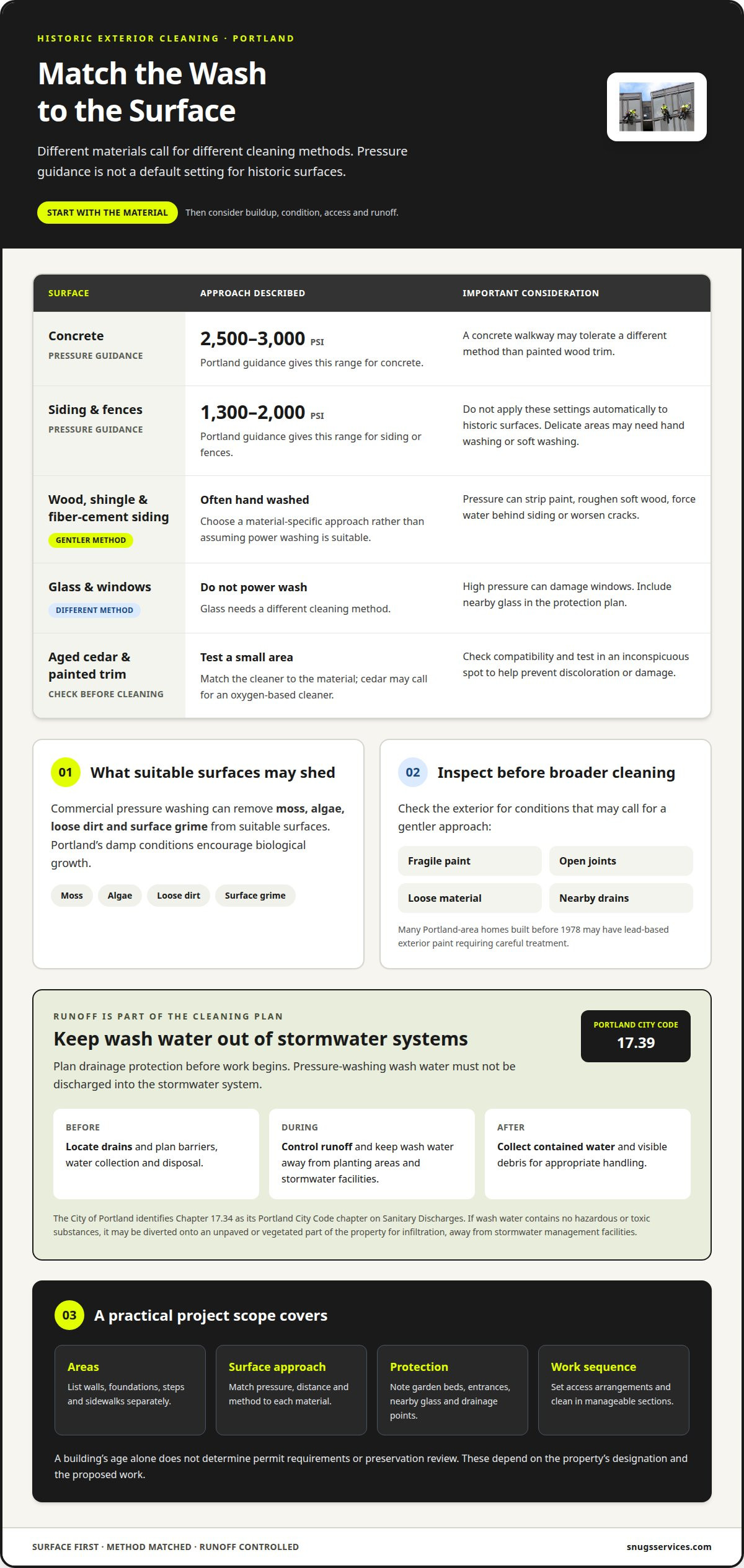
On suitable surfaces, commercial pressure washing can remove moss, algae, loose dirt, and surface grime. Portland’s damp conditions encourage biological growth, but historic siding needs a material-specific approach. Wood, shingle, and fiber-cement siding often need hand washing rather than power washing. Glass also needs a different method because high pressure can damage windows.
Crews first inspect the exterior for fragile paint, open joints, loose material, and nearby drains. Many Portland-area homes built before 1978 may have lead-based exterior paint requiring careful treatment. Pressure can strip paint, roughen soft wood, force water behind siding, or worsen cracks. A small, inconspicuous test area helps assess how a surface responds before broader cleaning begins.
Cleaning methods should match both the material and the buildup. For example, concrete can tolerate a different approach than aged cedar or painted trim. Portland guidance gives 2,500-3,000 PSI for concrete and 1,300-2,000 PSI for siding or fences, but historic surfaces shouldn’t receive those settings automatically. Delicate areas may need hand washing or soft washing instead.
Cleaner choice matters, too. When possible, crews can avoid hazardous or toxic substances and choose a product suited to the surface. Cedar may call for an oxygen-based cleaner, while moss removers may use potassium salts. Check compatibility and test a small area to help prevent discoloration or damage.
Runoff control is part of responsible cleaning. Crews can schedule work during dry weather, shield storm drains with temporary barriers, sweep up visible solids, and collect wash water for proper disposal. City of Portland identifies Chapter 17.34 as its Portland City Code chapter on Sanitary Discharges. Portland City Code 17.39 prohibits discharging pressure-washing and graffiti-removal wash water into the stormwater system.
A building’s age alone does not determine permit requirements or preservation review. These depend on the property’s designation and the proposed work. Don’t assume a blanket rule applies to Portland landmarks or historic districts: the designation and cleaning scope matter.
Pressure-washing providers serving Portland
Planning pressure washing for historical buildings in Portland starts with a property-specific scope, not a standard wash setting. One exterior may combine painted trim, brick, stone, concrete, and older siding. A professional assessment identifies each material, the buildup, and areas needing a gentler method. It also distinguishes suitable wash zones from surfaces better cleaned by hand.
Access and surroundings shape the work plan. A narrow sidewalk, planted entry, or busy frontage can affect equipment placement and runoff control. Portland’s rainy months can make scheduling less predictable, so a dry-weather window may be needed. Beside a storm drain, plan for barriers, water collection, and disposal before cleaning begins.
A detailed project scope can clarify practical decisions, including:
- Areas to clean: Identify walls, foundations, steps, and sidewalks separately.
- Surface approach: Match pressure, distance, and cleaning method to each material.
- Protection: Note garden beds, entrances, nearby glass, and drainage points.
- Work sequence: Set access arrangements and clean in manageable sections.
This planning is especially useful for pressure washing for historical buildings in Portland, where different materials may need different treatment. A concrete walkway, for example, may tolerate a different method than painted wood trim. A crew can explain which buildup is likely to lift and which marks may remain because they have penetrated or changed the material.
Access details, sensitive areas, and known preservation requirements help determine the work sequence. A clear scope spells out what the service covers, how the exterior will be cleaned, and how the plan can respect the building’s historic character.
How professional crews protect people and landscaping during pressure washing
Before washing begins, crews can map the work area and identify entrances, pedestrian routes, garden beds, and drainage points. They can schedule the work for dry weather and use barriers to keep passersby clear. Non-slip footwear and eye protection help protect workers from wet concrete, spray, and loosened debris. Organized hoses also reduce trip hazards around busy walkways.
Plants need protection from spray and runoff. Crews can cover delicate beds with tarps, shield nearby shrubs, and direct equipment away from leaves and stems. Wash water should not enter green street planters, rain gardens, or other stormwater facilities. These systems manage runoff; they are not for pressure-washing water.
Drainage planning is a practical step, not an afterthought. Crews can place temporary barriers around storm drains and inlets, then contain wash water before it crosses sidewalks or reaches planting areas. If the water contains no hazardous or toxic substances, it may be diverted onto an unpaved or vegetated part of the property for infiltration. Keep discharge away from stormwater management facilities.
- Before cleaning: Mark pedestrian access, cover vulnerable plantings, and locate drains.
- During cleaning: Control spray direction, keep hoses orderly, and watch where runoff moves.
- After cleaning: Collect contained water and visible debris for appropriate handling.
Cleaner choice also affects nearby landscaping. When possible, crews can avoid hazardous or toxic products and use the least aggressive method suited to the surface. Sweeping or brushing may remove loose material without wash water. If pressure washing is needed, a wet/dry vacuum can collect water for controlled disposal. These details matter on historic properties, where a narrow concrete path may run beside established planting beds and public access.
Is pressure washing allowed on historic buildings in Portland, Oregon?
Historic status alone does not determine whether a building should be pressure washed or needs preservation approval. For pressure washing for historical buildings in Portland, the property’s designation, exterior materials, and proposed cleaning scope all matter. A designated landmark with painted wood siding presents different concerns from an unlisted building with concrete steps. Establish the property’s status and proposed work before choosing a cleaning method.
Portland’s discharge rules also affect wash-water handling. Portland City Code 17.39 prohibits discharging pressure-washing and graffiti-removal wash water into the stormwater system. Chapter 17.34 is the Portland City Code chapter on Sanitary Discharges, according to the City of Portland. Businesses seeking to discharge wash water to Portland’s sanitary sewer must apply for and receive a Mobile Washer Discharge Authorization.
Water placement matters beyond the property line. Portland City Code 17.32 prohibits directing water onto a City sidewalk, street, easement, or right-of-way without prior authorization or approval. For pressure washing for historical buildings in Portland, a crew working beside a public sidewalk should plan water collection instead of letting runoff flow into the right-of-way.
For a historic property, follow a practical sequence: identify the building’s designation, define which surfaces need cleaning, then match the method to those surfaces. Preservation requirements may affect the scope or method. Fragile paint, aged wood, and detailed trim may call for lower-impact cleaning rather than forceful washing.
Share known designation details and sensitive exterior areas during project planning. That gives the crew a clearer basis for discussing the cleaning scope and runoff controls. For a careful exterior cleaning plan, discuss your historic building’s needs.
Designated landmarks may have preservation requirements that affect the cleaning scope or method. The relevant considerations depend on the property’s designation, exterior materials, and proposed work.
Snugs Services
Snugs Services helps property owners plan exterior cleaning around a historic building’s materials, condition, and surroundings. Its pressure washing is suited to appropriate exterior surfaces, while delicate areas call for a more cautious approach. Discussing the surfaces and buildup helps define a practical scope.
For broader upkeep, gutter cleaning, installation, or repair can also help address drainage around the property. Functional gutters help manage rainwater near historic walls and foundations. The right combination depends on the building’s maintenance needs, not a one-size-fits-all package.
Planning careful exterior maintenance for a historic property? Contact Snugs Services to discuss the work.
Plan a Careful Next Step for Your Building
For pressure washing on historic buildings in Portland, turn preservation concerns into a clear project scope. Note which areas need attention, identify surfaces that require gentler handling, and include runoff planning in the discussion. A measured plan keeps the building’s character central while addressing exterior maintenance needs.
Snugs Services provides pressure washing, gutter cleaning, and gutter installation to support property upkeep. These services can help when exterior cleaning and rainwater management both need attention. Share the building’s known sensitivities and the areas you want addressed to discuss the work in context.
Ready to talk through your property’s needs? Contact Snugs Services and take the next step toward thoughtful exterior care.
Frequently Asked Questions
What cleaning methods are safest for historic brick, stone, wood, and terra cotta?
For historic brick, stone, wood, and terra cotta, start with the gentlest method suited to the specific soil. A soft brush and compatible cleaner may work for limited deposits; fragile mortar, flaking coatings, and carved details need especially cautious handling. Don’t treat all masonry alike. Brick porosity, stone type, mortar condition, and past repairs can change how moisture and cleaning affect each surface.
What pressure settings and equipment should a professional use on historic masonry?
No single pressure setting suits every historic masonry surface. A professional should select equipment and output based on the masonry, mortar condition, deposits, and previous repairs, then evaluate a test area. The aim is to remove soiling without eroding the surface, opening joints, or forcing water into the wall. Delicate or deteriorated masonry may need a pressure-free method.
Which Portland contractors specialize in historic building cleaning and restoration?
Snugs Services provides pressure washing in Portland for exterior cleaning. For a historic property, describe the surfaces and areas involved so the work can be scoped around the building’s materials and preservation needs. Cleaning and restoration are different in scope, so clarify whether the goal is to remove surface soil or repair historic fabric.
How do professionals test and clean a historic building exterior safely?
Professionals can document existing conditions, noting loose mortar, cracked terra cotta, peeling paint, and earlier patch repairs. They can assess a discreet test area and inspect for changes before proceeding more broadly. Cleaning manageable sections makes it easier to monitor how the surface responds. Existing damage matters: a weakened joint or coating may react differently from an intact area nearby.
Are there alternatives to pressure washing for historic buildings, such as low-pressure washing or steam cleaning?
Yes. Hand washing, brushing, and low-pressure washing may suit surfaces that could be harmed by forceful cleaning. Steam cleaning is not automatically safer: heat and moisture may affect coatings, mortar, or earlier repairs. The right option depends on the material’s condition and the type of soil. Choose a method for each surface instead of assuming one alternative works across the whole facade.
Recent Comments