
Roof moss and green buildup can be treated without blasting shingles. Soft washing in Tigard uses low-pressure application and cleaning solutions to address moss, algae, and lichen while helping protect roofing materials. Growth may not disappear immediately, so the method and what to expect afterward matter.
It makes sense to want a clean roof without risking damage, especially in Tigard’s wet, shaded neighborhoods, where moss and algae can take hold. This article explains how soft washing works, what it can and can’t address, and how roof cleaning differs from house washing.
You’ll also learn what can affect an on-site estimate, what a residential or commercial cleaning project may involve, and when professional help can make upkeep easier. With a clearer picture of the process, you can decide what your property needs and what to expect from the next step.
Key Takeaways
- Low-pressure soft washing can address roof moss, algae, and lichen without the force of conventional pressure washing.
- In Tigard’s damp, shaded conditions, exterior green buildup can develop quickly; many homeowners plan professional house washing every 12 to 24 months.
- A house wash typically takes two to four hours, while the surfaces, buildup, and property layout shape the work involved.
- On-site estimates help assess the areas to clean and the project scope before work begins.
- Learn what cleaning solutions are used and why plant and pet protection should be part of the washing plan.
House washing
In Tigard, rain, shade, and nearby trees can leave siding, trim, and decks with green buildup or surface debris. House washing cleans exterior surfaces using a method suited to their material and condition.
Plan around the areas that need attention, the type of buildup, and how water will be managed. These details help set expectations for the work and its results.
House Washing Frequency
Most Tigard homeowners should schedule professional house washing every 12 to 24 months. The right interval depends on how quickly moisture, tree cover, and shade lead to visible grime on the property.
Check north-facing walls, shaded siding, and areas beneath trees for green films or stuck-on debris. A house wash typically takes two to four hours, depending on the surfaces and buildup. When reviewing a quote, compare the areas and cleaning steps included; reviews are most useful when they describe similar surfaces. Consider insurance details and written warranty terms separately, since they answer different questions.
Soft-Wash Approach
House soft washing applies cleaning solution at low pressure, allowing it to work on organic buildup without relying on a forceful spray. It can suit siding and other surfaces that need a gentler approach than direct high-pressure cleaning.
Oregon State University identifies vinyl siding and wooden decks as examples of moist outdoor surfaces where algae grows. For soft washing in Tigard, first identify affected areas, then match the application to the surface and buildup. Don’t treat every material as interchangeable: siding, trim, and deck boards can differ in age and condition.
Before an appointment, move outdoor furniture, toys, and potted plants away from the work area. Close windows and doors, and keep pets indoors while cleaning is underway. Point out delicate landscaping and any exterior areas that need extra care.
Runoff and Chemical Rules
Runoff and cleaning-solution use are practical planning considerations in Tigard and Washington County. Identify where water will flow before washing, and keep loosened debris from collecting around drains or walkways.
Local restrictions may depend on the discharge route and cleaning activity, so don’t assume wash water can flow anywhere. A responsible work plan considers the solution, the surface, nearby plants, and runoff management. For example, a sloped driveway may carry water toward a drain, while a garden bed may sit directly beneath siding.
Ask how the cleaning plan manages runoff and protects nearby landscaping. Share details about pets, garden beds, and sensitive surfaces before work begins. This helps the crew prepare the work area and focus on the exterior surfaces that need attention.
Residential and commercial soft washing
In Tigard, wet weather, mature trees, and shaded lots encourage moss, algae, and lichen on exterior surfaces. Roofs may also develop black streaks, while siding can collect green buildup. Soft washing applies cleaning solution at low pressure to treat organic growth without the force of conventional pressure washing. The right approach depends on the surface and stain.
A home’s cleaning plan may cover roof areas, siding, trim, or other suitable exterior surfaces. Roof moss, algae, lichen, and debris can hold moisture against roofing materials and accelerate wear. A focused assessment distinguishes organic growth from loose debris and identifies surfaces needing different care. This avoids treating the entire exterior as if every material had the same needs.
Commercial properties bring different surfaces and access considerations. A storefront, for example, may have siding, windows, signs, and an entrance close together. Soft washing can address suitable exterior areas while the work plan accounts for nearby foot traffic and materials. Stains around an entrance or beneath a shaded wall may need a different treatment plan from roof growth.
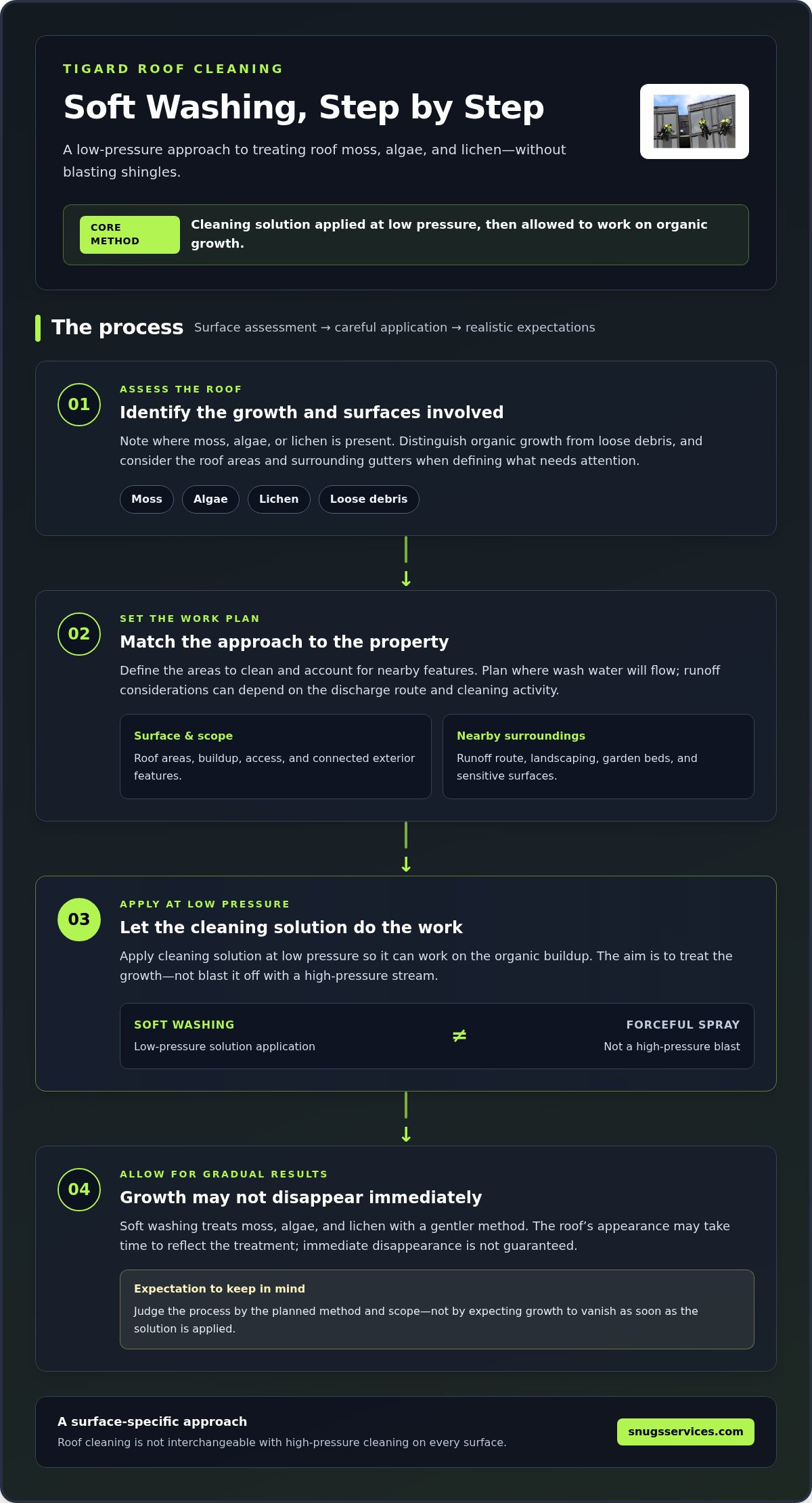
For soft washing in Tigard, the process starts by identifying the buildup and surfaces involved. Cleaning solution is applied at low pressure, then allowed to work on moss, algae, or lichen. The aim is to treat growth rather than blast it off with a high-pressure stream. Pressure washing may suit other tasks, but it isn’t interchangeable with soft washing on every surface.
Residential and commercial projects also differ in how cleaned areas fit into daily use. A homeowner might focus on the roof and shaded siding, while a property manager may prioritize visible walls and customer entrances. In either case, note where stains are, the surface beneath them, and nearby features such as windows or landscaping. These details clarify the scope.
Roof cleaning can address mold, algae, bacteria, moss, and bird droppings using a soft-wash method. Removing organic buildup also reduces material that can hold moisture on the roof. The surrounding gutters matter, too, because debris or algae may affect them. Keep these connected areas in view when deciding which parts of the property need attention.
Before arranging residential or commercial cleaning, list the affected areas and describe the buildup plainly: moss on a roof, green siding, or stains beneath a tree. Separate roof concerns from wall or entrance concerns. This gives the scope a clear starting point and helps match the cleaning method to the property’s surfaces.
Free on-site estimates
An on-site estimate can turn a general cleaning request into a clear project scope. At a Tigard home, the review can identify which exterior surfaces need attention, the type of buildup, and access around the property. A roof, shaded siding, and driveway each present different conditions, so describe them separately to clarify the work.
Walk around the exterior and note visible stains, moss, algae, and debris. Point out surfaces you want included, such as shaded-side siding or concrete beside the entrance. A written scope should distinguish those areas from parts that don’t need cleaning. This makes it easier to understand what the estimate covers.
Surface material matters. Tigard has many concrete driveways dating from the 1970s to the 1990s, and age can affect how a surface responds to cleaning. The estimate should account for the driveway’s condition and buildup, rather than treating every slab as identical. A standard driveway cleaning in Tigard typically takes under two hours. When aging slabs show structural deterioration beyond what surface cleaning can remedy, consulting resources from trade specialists such as Inspire Concrete can offer useful insight into modern driveway replacement and construction options.
Access is another practical factor. A narrow side yard, steep slope, or landscaping close to the siding can affect how crews reach exterior surfaces and manage the work area. Mention gates, delicate plantings, and outdoor items during the walk-through. For example, a clear route to a shaded wall helps show what access the job requires.
Ask for the estimate to identify the surfaces, cleaning method, and scope of work. If you’re considering both roof cleaning and house washing, have each area described separately. That lets you compare the proposed work with your priorities, such as treating roof growth first or cleaning the siding and driveway together.
Price depends on the case and is given after a quote request. Factors include the areas involved, surface material, buildup, access, and the work required. A driveway with scattered debris presents a different scope from a home with roof growth and stained siding. Clear descriptions help connect the estimate to the actual property.
Before the visit, list problem spots and move vehicles away from the driveway. Keep gates accessible and note areas needing special attention. These steps help the assessment cover the right surfaces without overlooking a tucked-away side wall or concrete path.
Use the on-site review to leave with a defined scope, not just a general description of cleaning. Confirm which exterior areas are included and how the proposed work addresses each one. A clear estimate gives you a practical basis for deciding what to clean and planning the next step.
How soft washing works
A soft wash uses low-pressure application and professional cleaning solutions to address organic growth. In Tigard, this method can treat roof moss, algae, and lichen without the force of high-pressure spray.
Cleaning Solutions and Safety
Cleaning solution helps loosen biological buildup, while low pressure applies it across the target surface. For roofs and siding, Tigard exterior-cleaning practice uses biodegradable cleaning solution. “Biodegradable” alone doesn’t mean a product is harmless to every plant or pet, so application and rinsing practices matter.
Before washing, identify garden beds, shrubs, and places where pets spend time. Keep animals away from active work areas, and protect sensitive landscaping from direct solution contact. A crew can account for nearby plants and the path runoff may take. For example, a rose bed beneath stained siding needs attention during setup.
Ask what solution will be applied and how the work area will be managed. The product, surface, and nearby landscape all matter. A roof wash above a planted border calls for careful application, while an open exterior wall presents a different setup. Clear communication helps align the cleaning plan with your property.
Surface Damage Risks
Soft washing applies less physical force to shingles and siding than high-pressure washing. Still, an unsuitable solution, poor application, or fragile surface can cause problems. On roofs, growth and debris can trap moisture against roofing materials and contribute to wear.
Painted surfaces need attention, too. Loose or peeling paint may react differently from intact paint, and forceful spraying can worsen existing damage. Before treatment, point out worn paint, cracked siding, damaged shingles, and areas with earlier repairs. These details help determine where a gentler approach or extra care is needed.
Risks depend on the surface condition, solution, and application method. Soft washing isn’t a reason to treat every roof or wall identically. A shaded, mossy roof, for example, has different cleaning needs from painted trim with surface grime. Point out vulnerable areas before work begins.
After treatment, moss or lichen may not disappear immediately. Soft washing addresses growth through the solution and low-pressure process, rather than scraping or blasting. Avoid pulling at roof growth yourself, since disturbing it can affect the surface beneath. A careful assessment helps set appropriate expectations.
These principles apply across the Portland area, where wet conditions support exterior growth. For washing services, the key considerations are the surface, the buildup, and the application plan. Share details about roofing, siding, and painted areas before cleaning begins, and keep people and pets clear of active work zones.
What cleaning solutions do soft washing companies use, and are they safe for plants and pets?
Soft washing combines low-pressure application with professional cleaning solutions to treat roof and siding buildup. Tigard exterior-cleaning work uses biodegradable cleaning solution on these surfaces. It helps address moss, algae, and lichen without relying on forceful water pressure to remove growth.
Biodegradable describes how a substance breaks down, not whether it’s harmless to every living thing. Plant and pet safety depends on the solution, how it’s applied, and where runoff travels. A garden bed beneath a roof edge, for example, needs different care from an open paved area. Keep pets away from the active work zone and prevent contact with wet surfaces.
Before washing, identify vulnerable parts of the property. Mark garden beds, shrubs, vegetable planters, and spots where pets rest or play. Move portable pots away from siding and roof drip lines where practical. Close windows and doors, and bring food and water bowls indoors. These steps reduce the chance of direct contact with cleaning solution or wash water.
Application matters, too. Low pressure helps control where solution lands, while a focused plan avoids unnecessary treatment of nearby surfaces. At a home with mossy roofing above a planted border, the crew can account for the roof edge and landscaping below. A siding wash near a pet run requires keeping animals clear while the area is being treated.
Runoff needs attention alongside direct application. Water may carry cleaning solution from a roof or wall toward paving, soil, or a drain. Note slopes, nearby plantings, and drainage paths before work begins. For example, include a downspout emptying beside a flower bed in the site plan. Managing these routes helps limit unwanted spread.
After washing, keep pets away from damp surfaces and any area where runoff has collected until it is clear and dry. Protecting plants and animals starts with preparation, continues during application, and includes cleanup. Share details about sensitive landscaping, outdoor pet areas, and drainage before cleaning begins.
For roof moss or algae, arrange professional roof cleaning with a plan that accounts for nearby plants, pets, and runoff. A clear description of the affected roof and surrounding property helps define the work area and its protections.
Snugs Services: Pressure Washing
Snugs Services can help when grime, stains, or debris need attention on suitable exterior surfaces. Pressure washing differs from low-pressure roof soft washing, so the surface and buildup should guide the approach. For example, a driveway may need a different method from a mossy roof.
Gutters also affect how water and debris move around the home. Gutter cleaning can clear accumulated material, while gutter repair or installation addresses problems that need more than washing. Keeping these needs distinct helps you focus on the right work for your property.
If your home needs exterior cleaning or gutter care, contact Snugs Services to discuss the work.
Plan the next step for your home
Make the next decision practical: identify the roof or exterior areas that concern you, note nearby landscaping, and decide what you want addressed first. This gives your estimate conversation a clear starting point and helps connect the cleaning plan to your home’s needs. For soft washing in Tigard, describe the surface and buildup you’re seeing rather than relying on a general description.
Snugs Services can also help with related exterior upkeep, including pressure washing, gutter cleaning, and gutter installation. These needs can be considered separately from roof washing, so you can focus on the work that matters most to your property now.
Ready to talk through your home’s cleaning needs? Contact Snugs Services for an estimate, and take the next step toward a cleaner, well-cared-for exterior.
Frequently Asked Questions
Can you remove the moss and green buildup on my Tigard roof?
Yes. Roof cleaning and moss treatment can address moss and green buildup on Tigard roofs. Soft washing uses low-pressure application and cleaning solution to treat growth without blasting roofing materials. A shaded roof with moss, for example, may need a different approach from a roof with loose leaves alone. Roof condition, growth coverage, and debris all shape the cleaning plan and what to expect afterward.
Are you licensed and insured?
This article doesn’t make a claim about Snugs Services’ licensing or insurance status. Those are separate credentials, and they shouldn’t be inferred from a cleaning service or safety procedures. Before a roof project begins, review the applicable documentation for the work being performed. This helps clarify who is responsible for the property and the work area if an issue arises during the job.
Can regular exterior cleaning help protect my home’s value?
Regular exterior cleaning can help maintain your home’s appearance and address buildup that holds moisture against surfaces. It can’t guarantee a particular sale price or property valuation. Keeping visible siding and roof areas free of organic growth supports routine upkeep, while repairs and overall property condition also affect value. Treat cleaning as one part of maintenance, alongside timely attention to damaged roofing, paint, or drainage. For homeowners coordinating broader domestic upkeep alongside interior remodeling projects, guides from property specialists such as polkadotplumbers.com can help you plan realistic timelines for projects like bathroom renovations.
Does the soft washing include stucco?
Stucco may be suitable for soft washing, but the finish and wall condition matter. Cracks, loose patches, fresh repairs, or failing paint can affect how the surface should be treated. Point out those areas during the property review, and identify whether the wall has a painted or textured finish. A surface-specific plan helps avoid treating stucco like vinyl siding or another exterior material.
How long does a typical Tigard job take?
A typical Tigard house wash takes two to four hours. The work depends on which exterior areas are included, how much buildup is present, and how easily crews can reach them. A home with siding and trim in scope differs from a project that also includes roof areas. List priority surfaces beforehand so the planned work reflects your needs.
How often should I have my house washed in Tigard?
Most Tigard homeowners should schedule professional house washing every 12 to 24 months. Check shaded siding, walls beneath tree cover, and other damp areas for returning green buildup. If those surfaces stay visibly clean, the inspection can help you judge whether washing is due. The goal is to base scheduling on the condition of your home, rather than treating every exterior surface on the same timetable.
What is soft washing and how does it differ from pressure washing?
Soft washing applies professional cleaning solution at low pressure to treat organic growth, while pressure washing uses stronger water force for suitable tasks. The methods aren’t interchangeable across every surface. Roof moss, for example, calls for a different approach from grime on a durable paved area. High-pressure water can be dangerous if not handled correctly. Our team follows OSHA-compliant procedures.
Which Tigard, Oregon companies offer soft washing services?
Snugs Services offers soft washing and roof cleaning for properties in Tigard. Its exterior-cleaning services cover residential and commercial needs, so homeowners can ask about roof moss while property managers can discuss suitable building surfaces. When describing a project, name affected areas, such as roof sections or shaded siding, and note nearby landscaping. This gives the conversation a practical starting point for planning the work.
Recent Comments