
What if the best way to keep a community’s exterior clean is to plan across the whole property, rather than treating each surface as a separate job? Shaded walkways, residents coming and going, and different materials with different cleaning needs can make exterior maintenance hard to coordinate. A practical approach to multi-unit housing exterior cleaning Beaverton property managers can use begins with clear priorities: shared areas that need attention, suitable methods for each surface, and work windows that fit daily operations.
This guide explains how to scope walkways, building exteriors, windows, and parking areas, then coordinate access around residents and vehicles. Snugs Services cleans Beaverton communities using pressure washing or soft washing as appropriate, and brings its own water for pressure-washing jobs. High-pressure water can be dangerous if not handled correctly. Our team follows OSHA-compliant procedures. Day, night, or weekend service is available, and last-minute calls can be accommodated. Use the steps below to organize the work, communicate the plan, and make exterior care part of a more consistent maintenance routine.
Key Takeaways
- Map shared spaces, surface types, resident routes, parking access, and priority areas before setting the cleaning scope.
- For multi-unit housing exterior cleaning Beaverton communities need, choose a method based on the surface and its condition, not a one-method-fits-all assumption.
- Plan work windows and resident notices around affected areas and access changes to keep everyday movement organized.
- Snugs Services has served customers since 1995, follows OSHA-compliant procedures, and brings its own water for pressure-washing jobs.
- Day, night, or weekend service is available, and last-minute calls can be accommodated to help managers coordinate exterior maintenance.
Why Multi-Unit Housing Exterior Cleaning Matters in Beaverton
Keeping shared spaces clean while residents follow their daily routines takes coordination. A walkway may be a route to work in the morning, a path to the mail area at midday, and a connection between parking and home throughout the day. For property managers, exterior cleaning is about more than appearance. It helps keep common areas looking cared for and ready for regular use, without treating an occupied community like an empty site.
Entries, sidewalks, and shared concrete are often the first parts of a property residents and visitors encounter. Visible stains or growth can make an otherwise well-kept community feel neglected, while clean, orderly paths support a more welcoming impression. The term Multifamily residential covers many types of housing, but each property has its own mix of shared and private areas. A useful cleaning plan reflects the actual layout rather than assuming every building and walkway needs identical attention.
A property-wide view helps managers identify the common areas that connect buildings, understand how residents use them, and prioritize work based on observed conditions. That creates a clearer plan than addressing surfaces one at a time without considering how they fit together.
Which shared areas deserve attention first?
Start by listing areas included in the cleaning scope, such as resident walkways, building entries, shared concrete, and other common exterior zones. Compare each area using four practical factors: visibility, frequency of use, surface condition, and access. A main entrance or a well-used path between parking and a building may need attention before a quiet edge of the property.
Separate high-traffic spaces from less-used exterior areas. Note where residents regularly pass, where visitors form their first impression, and where work could affect access. This distinction helps direct attention to the places that matter most to daily use, while keeping lower-traffic areas on the broader maintenance plan.
Why does Beaverton’s climate affect exterior maintenance?
Beaverton’s wet season can leave shaded surfaces damp for longer, creating conditions where algae or moss may become visible. Check north-facing entries, landscaping edges, and paths beneath tree cover. These areas may receive less direct sun, while nearby plants or irrigation overspray can add moisture. Conditions vary across a property, so focus inspections on where buildup is actually appearing.
Recurring moisture combined with shade can encourage visible algae and moss buildup on exterior surfaces. That makes it useful to track patterns, not assume every dark patch or shaded walkway needs the same treatment. A community-wide plan connects surface condition with location and use. It can distinguish a busy, damp entrance from a quieter area that needs monitoring. With priorities established, managers can plan maintenance around the property’s layout and daily routines.
Choosing the Right Exterior Cleaning Method for Beaverton Housing
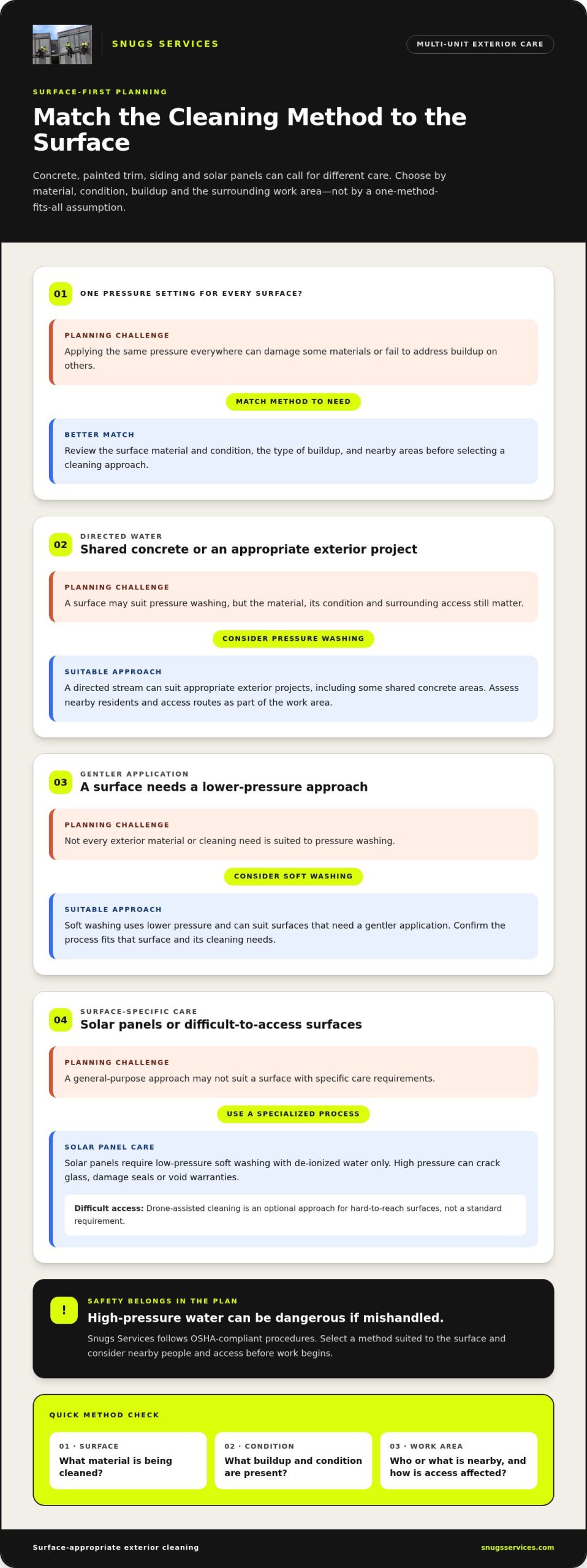
A community may include concrete walks, painted trim, siding, and other exterior surfaces, each with different cleaning needs. Using the same pressure everywhere can damage some materials or fail to address buildup on others. For multi-unit housing exterior cleaning Beaverton managers should match the method to the material, the soil or buildup, and site conditions, including nearby residents and access routes.
Pressure washing uses a directed stream of water and can suit appropriate exterior projects, including some shared concrete areas. Soft washing uses lower pressure and can be suitable when a surface needs a gentler approach. Neither method fits every material. Reviewing the site helps determine what is appropriate for the surface and work area.
| Method | Suitable planning context | Surface-care consideration |
|---|---|---|
| Pressure washing | Appropriate exterior projects where directed water can address the buildup | Consider the material, its condition, and nearby areas before selecting pressure. |
| Soft washing | Suitable surfaces that call for a low-pressure approach | Match the process to the surface and cleaning needs; it isn’t universal. |
| Specialized cleaning | Surfaces with specific care requirements, such as solar panels | Use the surface-specific process and avoid a general-purpose approach. |
When does pressure washing suit shared exterior areas?
Pressure washing can suit some shared concrete and other exterior cleaning projects, but it is not the default for every building material. Before work begins, the team considers the surface and its condition, the type of buildup, and the surrounding area. High-pressure water can be dangerous if not handled correctly. Safe work practices and a method suited to the surface both matter.
When should soft washing or specialized cleaning be considered?
Soft washing is a low-pressure option for suitable surfaces that need a gentler application. Solar panels require specialized low-pressure cleaning; high-pressure can crack glass, damage seals, or void warranties. Solar panel cleaning uses low-pressure soft-washing and de-ionized water only. Drone-assisted cleaning is an optional approach for difficult-to-access surfaces, not a standard requirement.
Consider the full work area, too. A method that suits one surface may not suit the next, so define surface boundaries before work begins. That makes it clear where pressure washing, soft washing, or specialized care is appropriate and where each method should stop. Snugs brings its own water for pressure-washing jobs, and our team follows OSHA-compliant procedures. For property managers planning coordinated exterior cleaning services, a surface-by-surface scope supports a careful, consistent approach.
How to Scope Multi-Unit Exterior Cleaning Across a Beaverton Property
A clear scope turns a large community into manageable work areas. For multi-unit housing exterior cleaning Beaverton property managers can begin with a site walk-through, recording what needs cleaning, which surfaces are involved, and how residents and vehicles move through the property. This provides a practical outline before scheduling and helps distinguish confirmed cleaning tasks from areas that need a different service or method.
What information helps define a clear cleaning scope?
Record the property address, each building, shared areas, surface types, and visible trouble spots. Add resident access patterns, pedestrian routes, parking areas, and scheduling constraints. Photos can show where buildup appears and how spaces connect; a walk-through can clarify boundaries that are difficult to capture in pictures. List what is included and flag areas that need a separate assessment rather than assuming they belong in the same cleaning task.
Use this sequence to organize the site notes:
- Map shared spaces. Mark walkways, entrances, common concrete, parking areas, and other areas included in the project.
- Note the surfaces. Identify the material and visible condition in each area, and flag spots where the surface or buildup calls for a different approach.
- Record access conditions. Mark occupied areas, resident routes, vehicle access, and timing constraints that could affect coordination.
- Set priorities. Rank the listed areas by resident use, visibility, surface condition, and operational importance.
How can managers prioritize work across buildings?
Apply the same criteria across the property, then compare areas rather than treating each building as an identical assignment. A heavily used path to a main entrance may take priority over a low-traffic perimeter walk. If nearby spaces have similar surfaces and conditions, group them in the scope to make the plan easier to follow. Keep different materials and cleaning needs clearly identified.
Separate confirmed tasks from items that need another method or service. For example, a shared concrete walkway may be included in the pressure-washing scope, while another exterior surface may call for a different approach. This prevents the project from expanding through assumptions and gives managers a straightforward way to communicate what is included.
Be specific about movement and timing. Note when parking access is busiest, which paths residents rely on, and whether any common areas have restricted access. Snugs Services offers day, night, or weekend service, and last-minute calls can be accommodated. Snugs brings its own water for pressure-washing jobs. Clear site notes help turn those scheduling details into an organized project plan.
Planning Safe, Resident-Aware Cleaning in Beaverton
Exterior cleaning at an occupied community needs more than a work date on the calendar. Managers must coordinate access, tell residents which areas may be affected, and account for everyday movement as work progresses. A clear plan for multi-unit housing exterior cleaning Beaverton properties can use helps residents know what to expect without promising a fixed timeline for every area.
How can managers reduce disruption during cleaning?
Start with the property’s daily patterns. Identify entrances, pedestrian routes, parking access, and shared spaces residents rely on. Then coordinate work windows and priorities with property staff who know when those areas are busiest. Notices should name the affected spaces, explain access changes, and go through the property’s usual resident channels.
Keep communication practical and specific. A notice can identify the walkway or entrance involved and explain the access arrangement during the work. If the scope changes or another area needs attention, property staff can share updated information through the same channels. Snugs Services offers day, night, or weekend service, and last-minute calls can be accommodated, giving managers options for coordinating around site operations.
- Share which common areas are included and may be affected.
- Explain planned changes to pedestrian or vehicle access.
- Coordinate priorities with staff familiar with resident routines.
What safety details belong in the project plan?
Plan how residents and work areas will remain clearly separated, and identify who on the property team will coordinate access and communicate changes. Base the plan on the actual site, surfaces, and work areas rather than assuming every building needs the same arrangements. Safe practices belong in the planning process as well as in the choice of cleaning method.
Our team follows OSHA-compliant procedures. Snugs brings its own water for pressure-washing jobs. Include these details in the project conversation alongside the work areas, access considerations, and resident communication plan. Clear coordination helps property staff and the cleaning team understand where work is planned and how people will move around it.
A responsive schedule still depends on clear communication. Snugs Services coordinates exterior maintenance around the property’s operating needs, while managers use their established channels to keep residents informed. Plan resident-aware exterior cleaning with the work areas, access arrangements, and safety considerations in view.
Snugs Services for Multi-Unit Housing Exterior Cleaning in Beaverton
Multi-unit housing exterior cleaning Beaverton communities can plan more smoothly when the scope reflects the property’s surfaces, access needs, and shared spaces. Snugs Services is a family-owned exterior maintenance business serving Beaverton and the Portland metro area. Since 1995, the team has helped property managers organize exterior cleaning around the details of each site.
For a community project, that can include pressure washing in appropriate areas, soft washing where a lower-pressure method suits the surface, window washing, and parking garage cleaning. The scope can coordinate relevant work across the property while keeping different surfaces and access conditions distinct. Snugs also provides high-rise exterior cleaning when the property and access conditions call for it.
What can one exterior maintenance partner coordinate?
A useful project scope starts with the areas managers have identified, then connects each one to a suitable service and method. For example, shared concrete, building windows, and a parking garage can be listed as separate work areas, with surface types and access considerations recorded for each. This helps property staff communicate priorities and keeps the plan grounded in the community’s needs rather than applying the same approach everywhere.
For commercial-scale exterior surfaces, Snugs also provides commercial pressure cleaning. A coordinated scope can make it easier to plan related work across shared areas while keeping sequence and resident access in view. Snugs brings its own water for pressure-washing jobs, and our team follows OSHA-compliant procedures.
How can Beaverton property managers get started?
Prepare a concise project overview with the property location, priority areas, surface types, and access considerations. Include which buildings or shared areas are occupied, how residents and vehicles move through the site, and any scheduling constraints that affect normal operations. Photos or a site walk-through can clarify the work areas and make the project discussion more productive.
Snugs Services offers day, night, or weekend service, and last-minute calls can be accommodated. This gives managers scheduling options while resident notices and access arrangements remain coordinated through the community’s usual channels. A clear outline gives the team a practical starting point for shaping the work around the property.
Share your property details and priority areas to begin planning. Request an exterior cleaning estimate for your Beaverton community.
Make Exterior Care Part of Your Property Plan
Shared exterior spaces are easier to maintain when cleaning is part of ongoing property care, rather than something left until buildup becomes a pressing concern. Use site notes to identify priority areas, account for access needs, and build a scope around how residents use the property. A clear plan gives your team a practical starting point for scheduling future work and maintaining welcoming, usable common areas.
For multi-unit housing exterior cleaning Beaverton property managers can make the next step a focused project conversation. Share the areas to be cleaned, the surfaces involved, and any resident or vehicle access considerations that will shape the work. Snugs Services can organize a scope around those needs. This guidance is also relevant to property teams in Portland, Gresham, Salem, Eugene, Vancouver, Tualatin, Tigard, Hillsboro, Longview, Richfield, Battle Ground, Camas, Wilsonville, and Keizer.
Request an exterior cleaning estimate to start planning for your community.
Frequently Asked Questions
How often should a Beaverton apartment community schedule exterior cleaning?
There’s no fixed interval for exterior cleaning in Beaverton. Frequency depends on surface condition, shade, resident use, and site needs. For multi-unit housing exterior cleaning Beaverton managers can periodically review shared areas and look for changes, such as buildup returning on a shaded route or wear at a busy entrance. Use those observations to guide the next project and fit the work around occupancy and property operations.
Can pressure washing damage apartment building surfaces?
Yes. Pressure washing can damage a surface if the method or pressure does not suit its material and condition. Our team follows OSHA-compliant procedures. Before adding a surface to the scope, note its finish, visible wear, and sensitive nearby features such as doors or fixtures. That information helps determine a suitable approach for the area instead of assuming every exterior can take the same treatment.
What exterior areas can be included in a multi-unit housing cleaning plan?
A multi-unit cleaning scope may include shared walkways, building entries, exterior surfaces, windows, or parking garages, depending on the community’s needs and selected services. For example, a manager can list a garage and common windows as separate work areas rather than assuming they are included with walkway cleaning. Record each location and its surface condition so the project outline reflects the actual property.
How can property managers prepare residents for exterior cleaning?
Use the property’s usual communication channels to tell residents which areas may be affected, how access will work, and the planned work window. Coordinate the message with onsite staff so it reflects current building activity as well as the project map. For example, explain whether residents should use another entrance or expect a parking-area change. Account for pedestrian and vehicle movement as you share the plan.
Does Snugs Services bring water for pressure washing?
Yes. Managers can share where the work will take place, how the team can access those areas, and whether residents or vehicles use nearby spaces. That context helps shape the job around the property’s layout. The own-water detail applies to pressure-washing jobs, not other services.
Does Snugs Services offer evening or weekend exterior cleaning in Beaverton?
Yes. Day, night, or weekend service is available, and last-minute calls can be accommodated. Share the property’s priority areas, access limitations, and resident or vehicle patterns that affect scheduling. This gives the project discussion useful context without assuming a particular appointment time or response duration. Beaverton managers can also identify which common spaces need coordination so the work fits the community’s operating needs.
Recent Comments