
What helps protect equipment during a wash? Start with the site and the equipment, not a pressure setting. Soil, grease, and residue can make exterior surfaces harder to inspect and maintain, while a generic rinse may not suit every material or component. A successful industrial equipment pressure washing Longview project considers equipment condition, site access, operating schedules, and runoff before cleaning begins.
Those details matter when you need cleaner equipment or work areas without making operations harder to coordinate. This buyer’s guide explains how to plan a cleaning project, compare service approaches, and prepare your site. Snugs Services is a family-owned regional cleaning business serving the area since 1995, with pressure washing and equipment cleaning services. Use the guidance below to define what needs cleaning and how the work can fit your site and schedule.
Key Takeaways
- Plan industrial equipment pressure washing Longview around the equipment, site access, and operating schedule, not a one-size-fits-all approach.
- Match the cleaning method to the equipment’s surface, condition, and sensitive components.
- Compare the equipment, cleaning goals, site complexity, and timing to shape a practical service plan.
- Prepare an equipment inventory, priority list, access details, operating windows, and site contacts before the project.
- Snugs Services provides pressure washing and equipment cleaning, with family ownership and service dating to 1995.
Industrial Equipment Pressure Washing in Longview: When Professional Cleaning Makes Sense
Industrial equipment pressure washing is a planned cleaning service for machinery, vehicles, and worksite equipment. The approach depends on the equipment’s surface, condition, location, and cleaning goal. For Longview, Washington businesses, professional cleaning may be useful when visible grime or exterior residue builds up, affects presentation, makes surfaces harder to inspect, or adds work to routine upkeep.
Equipment cleaning has a different scope from washing a building exterior, cleaning a concrete area, or washing a vehicle fleet as a group. These are related commercial cleaning needs, but the surfaces and priorities differ. Industrial equipment pressure washing Longview projects begin by identifying the specific items and areas to clean, rather than treating every nearby surface as part of the same job.
This demonstration shows one approach to heavy equipment washing. It is an example, not a universal method for every machine or site.
Which industrial cleaning needs may call for pressure washing?
Visible buildup, exterior residue, and general worksite grime are reasons to assess whether professional cleaning is appropriate. A machine may need focused attention while the surrounding concrete or building exterior remains outside the project scope. Fleet washing is another distinct service: it focuses on vehicles as a group, while equipment cleaning is planned around the particular items and surfaces identified for the job.
Condition and goals guide the plan. A request to improve appearance may differ from one intended to make exterior surfaces easier to view during routine checks. For broader context, see industrial parts cleaning processes, which include approaches beyond washing equipment exteriors.
What should a Longview-area buyer expect from a commercial service?
Be ready to discuss the equipment types, areas needing attention, access around the worksite, operating hours, and cleaning priorities. These details help define the project scope and how the work can fit into the site’s routines. Snugs Services provides pressure washing and equipment cleaning for Longview-area commercial projects, drawing on family-owned experience dating to 1995.
A planned commercial service can help your team focus on other work while the cleaning is coordinated around the equipment and site. To keep the project conversation practical, identify the priorities and operating constraints early instead of assuming every job follows the same process.
How Industrial Equipment Pressure Washing Is Planned Around Equipment and Site Conditions
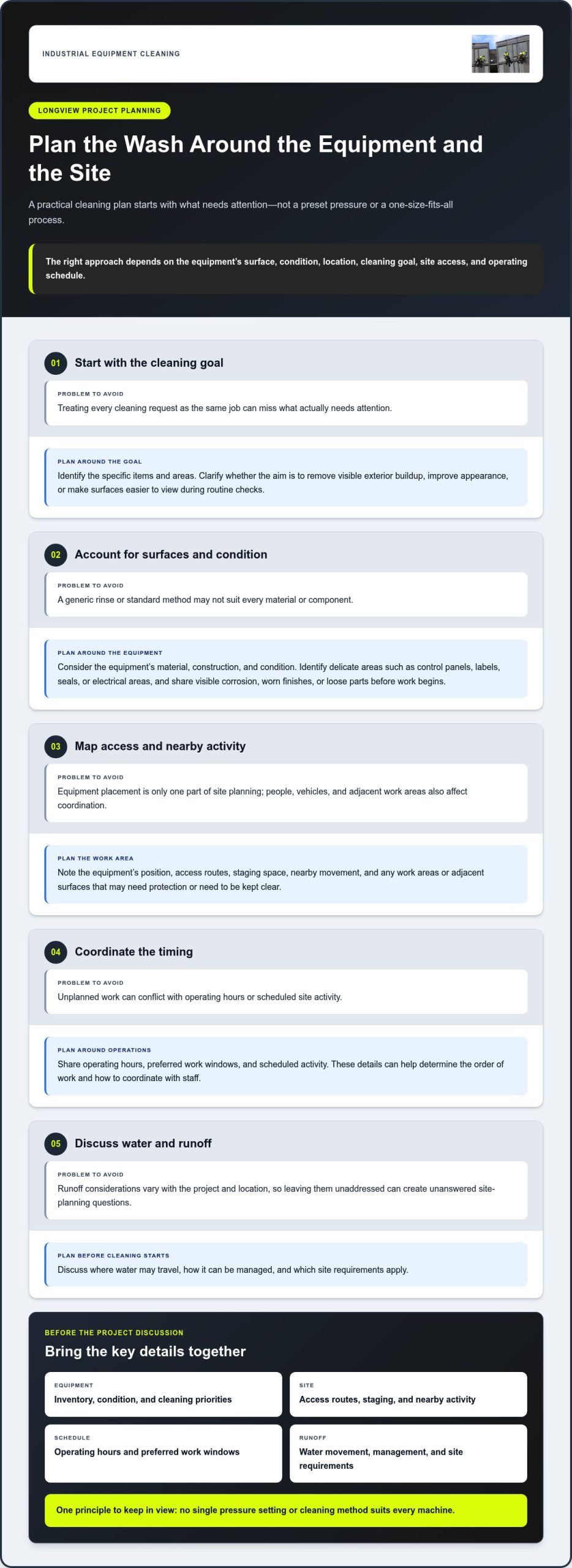
A sound cleaning plan starts with the equipment, not a preset pressure or standard process. Identify what needs cleaning and clarify the goal: removing visible exterior buildup, improving appearance, or making surfaces easier to view during routine checks. Then assess access and site activity, and coordinate timing around the operating schedule.
For industrial equipment pressure washing Longview projects, the equipment’s material, condition, and construction help determine the approach. A broad, durable exterior surface may need different care from a control panel, label, seal, or electrical area. No single pressure setting or cleaning method suits every machine, so the plan should reflect the specific equipment.
How do equipment type and condition shape the cleaning plan?
Identify delicate components and areas that need special attention before work begins. Note existing corrosion, worn finishes, loose parts, or other visible damage so these conditions are included in the project discussion and are not mistaken for a cleaning result. Share the equipment’s condition and cleaning priorities with the service team. For general operator-safety context, consult OSHA Hand and Power Tool safety guidance alongside your site’s applicable procedures.
What site details should be planned before service?
Equipment placement is only one part of site planning. Consider how workers and vehicles move through the area, where cleaning equipment can be staged, and whether nearby work areas or surfaces need protection. Access routes, operating hours, and scheduled activity may affect the order of work and coordination with your staff.
- Location and access: Identify the equipment’s position, access routes, and any space needed for staging.
- Nearby activity: Note people, vehicles, work areas, and adjacent surfaces that may need protection or need to be kept clear.
- Timing: Share operating hours and preferred work windows so the project can be planned around site activity.
- Water and runoff: Discuss where water may travel, how it can be managed, and which site requirements apply. Runoff planning depends on the project and location, so account for it before cleaning starts.
Clear coordination helps resolve questions before work begins and reduces last-minute planning for your staff. Snugs Services provides pressure washing and equipment cleaning for Longview-area commercial projects. To start planning, gather your equipment list, site constraints, and cleaning priorities.
Comparing Industrial Equipment Cleaning Options for Longview Businesses
The right cleaning scope depends on what needs attention, the goal, and how the work fits into your facility’s day. Pressure washing may suit exterior equipment surfaces with visible buildup, while routine in-house cleaning may be practical for smaller, accessible tasks. Neither approach fits every situation. Industrial equipment pressure washing Longview planning works best when you compare the equipment, site complexity, and scheduling needs before setting the scope.
| Equipment or area | Cleaning objective | Site complexity | Scheduling needs |
|---|---|---|---|
| Individual equipment exterior | Address visible residue or grime on accessible outer surfaces | Consider surface condition, sensitive areas, and access around the equipment | Coordinate around equipment use and nearby activity |
| Equipment handled through routine in-house cleaning | Keep up with manageable, recurring surface cleaning | Depends on staff access, available time, and the areas being addressed | Fit tasks into regular facility routines |
| Commercial vehicle fleet | Clean vehicles as a distinct group | Account for vehicle movement and staging | Plan around fleet availability and operations |
| Parking garage or exterior work area | Address surrounding surfaces rather than equipment itself | Consider the area’s access and nearby use | Coordinate around facility activity |
How does pressure washing compare with routine in-house cleaning?
In-house cleaning can work for smaller, reachable tasks that staff can handle as part of their normal routines. A larger equipment-cleaning project may involve more surfaces, tighter access, or additional coordination, making a planned commercial service worth considering. Pressure washing focuses on exterior surfaces; internal components and sensitive areas need separate handling, not an automatic extension of the exterior wash. Choose the scope based on equipment condition, cleaning goals, and available staff time, without assuming a particular cost saving or maintenance outcome.
Which service scope best matches your facility?
Keep equipment cleaning distinct from fleet washing, parking garage cleaning, and building exterior work so the project scope stays clear. If several needs overlap, discuss them together to coordinate access and timing while giving each area an appropriate scope. Snugs Services offers equipment cleaning alongside commercial pressure cleaning services. For vehicle groups, its fleet washing for commercial vehicles is a separate service. List the equipment and areas involved, then prioritize what matters most to your operations.
How to Prepare for Industrial Equipment Pressure Washing in Longview
Preparation turns industrial equipment pressure washing Longview from a broad request into a clear, workable project. Before scheduling, define which equipment is included, what you want addressed, and how the work can fit around facility activity. A specific scope gives everyone a shared reference point without assuming every surface needs the same treatment.
What information helps scope the cleaning project?
Gather practical details that show the scale and condition of the job. Photos can communicate visible buildup and access challenges; a site walkthrough can add context when the layout is complex. Note existing damage and sensitive components so they can be considered during planning and distinguished from any cleaning results.
- Make an equipment inventory. List equipment types and approximate quantities. Identify which items are part of the project and which are outside its scope.
- Set priorities. Describe visible buildup, priority areas, and the result you’re looking for, such as cleaner exterior surfaces or improved visibility during routine checks.
- Record special considerations. Point out labels, seals, electrical areas, delicate surfaces, existing corrosion, or other conditions that need attention in the plan.
- Map access and constraints. Note equipment locations, access limitations, nearby activity, and staging considerations that could affect the sequence of work.
- Identify operating windows and contacts. Share when equipment or work areas are in use, and name the site contact responsible for coordinating access and updates.
How can businesses prepare equipment and work areas?
Coordinate any shutdowns or access windows with the people responsible for operations before setting the cleaning date. Site personnel can help make equipment accessible according to the agreed plan while keeping normal work moving as smoothly as possible. Pass along changes to schedules or site conditions promptly.
Walk the work area with the project scope in mind. Identify nearby vehicles, stored materials, pedestrian routes, and sensitive work areas that may need protection or need to be kept clear. Discuss water movement and runoff as part of the site plan, and account for requirements that apply to your location and worksite.
Before scheduling, bring the inventory, priorities, access notes, timing constraints, and site contact information together. This gives the project a practical starting point and helps reduce last-minute coordination. Plan your equipment cleaning project with Snugs Services by outlining the equipment and site details that matter most.
Choosing Snugs Services for Industrial Equipment Pressure Washing in Longview
Commercial equipment cleaning starts with a clear scope and practical coordination. Snugs Services provides pressure washing and equipment cleaning for Longview businesses, with a family-owned and operated history dating to 1995. The project discussion can focus on the equipment, site conditions, and priorities you have identified.
What makes Snugs Services a regional commercial cleaning partner?
Snugs Services serves communities across its Portland and Vancouver metro service area, including Portland, Gresham, Salem, Eugene, Vancouver, Beaverton, Tualatin, Tigard, Hillsboro, Longview, Richfield, Battle Ground, Camas, Wilsonville, and Keizer. Its pressure washing and equipment cleaning services support commercial properties that need help with equipment exteriors as part of ongoing site upkeep. For facilities with additional needs, related services include fleet washing, parking garage cleaning, and parking lot sweeping.
Each area still needs a defined scope. Equipment surfaces, vehicle fleets, and parking areas have different cleaning objectives and site considerations. Discussing overlapping needs together can help coordinate access and timing while keeping the work focused on what your property requires.
What is the next step for a Longview equipment cleaning project?
Bring the key details into the first project discussion: the equipment that needs attention, its visible condition, priority areas, access constraints, and how the work may fit around operations. Include sensitive components or existing damage that should inform planning. Snugs Services tailors the project scope to the equipment and site, so a clear description helps shape a practical cleaning plan rather than assuming one method fits every surface.
Use the preparation and comparison points in this guide to move from a general need to a focused project outline. Note your preferred operating windows and the site contact who can coordinate access. These details help keep planning organized and reduce the coordination burden on your team.
Ready to discuss industrial equipment pressure washing in Longview? Contact Snugs Services with your equipment details, site conditions, priorities, and scheduling considerations to start planning a commercial cleaning project.
Plan a Cleaner, Better-Coordinated Equipment Wash
A successful cleaning project starts with a clear scope. Identify the equipment and surfaces that need attention, share site access and operating constraints, and set priorities before scheduling. The right approach depends on equipment condition and sensitive areas, so a tailored plan is more useful than a one-size-fits-all pressure setting.
For industrial equipment pressure washing Longview businesses can turn to Snugs Services for pressure washing and equipment cleaning. Snugs Services is a family-owned business serving the region since 1995 and serves Longview as part of its regional coverage. Clear communication about equipment, site conditions, and timing helps shape a practical project plan and ease coordination for your staff.
Ready to take the next step? Discuss your industrial equipment cleaning needs with Snugs Services. Share your priorities and site details to start building a plan that fits your operation.
Frequently Asked Questions
Can industrial equipment be pressure washed safely?
Pressure washing may be appropriate for some equipment exteriors, but safe cleaning depends on surface materials, condition, and sensitive components. Water should not be directed at vulnerable areas simply because nearby surfaces can handle it. A site-specific plan helps define the exterior cleaning scope and precautions. When planning a commercial service, describe the equipment, visible buildup, sensitive areas, and cleaning goals so the approach can be tailored.
What types of industrial equipment can be pressure washed?
Industrial equipment exteriors, worksite machinery, and commercial vehicles may be considered for pressure washing, but their cleaning needs can differ. Suitability depends on surface material and condition, the buildup, available access, and operating environment. Pressure washing addresses appropriate exterior surfaces; it does not replace specialized internal maintenance or mechanical repair. Share general equipment details during planning so the project scope reflects the surfaces involved.
How often should industrial equipment be pressure washed?
There is no universal schedule for industrial equipment washing. Consider how the equipment is used, how much dirt or residue it encounters, site conditions, appearance priorities, and the timing of routine inspections. Visible buildup or changing work conditions may prompt a fresh assessment. Set a schedule that suits your facility’s needs rather than relying on a fixed interval or assuming washing will extend equipment life.
What should I do before industrial equipment pressure washing?
Before service, identify the equipment, priority areas, visible buildup, and any surfaces or components needing special consideration. Record existing damage, such as corrosion or worn areas, and share operating-hour limits and access constraints. Coordinate with the site team about nearby work areas and equipment availability. Photos or a site discussion can clarify conditions, while the final preparation plan should match the agreed scope and cleaning approach.
How do I choose an industrial equipment pressure washing service in Longview?
Look for a service discussion that covers equipment type and condition, cleaning goals, access, nearby activity, and timing, rather than assuming every machine needs the same treatment. Snugs Services provides pressure washing and equipment cleaning for Longview and communities across the Portland and Vancouver metro area. Discussing your site and scope up front helps align expectations with operational needs. This guide addresses Longview, Washington.
Does pressure washing industrial equipment disrupt business operations?
Operational impact depends on equipment availability, site access, nearby work, and the agreed project schedule. Coordinate operating windows with the people responsible for the equipment and identify areas where activity needs to continue. Clear priorities can help shape a workable sequence, but no project should be assumed to cause zero disruption or finish within a set time. Share operational constraints early so planning can account for them.
How is industrial equipment pressure washing scoped?
A project scope can account for equipment types and quantities, visible buildup, surface condition, access routes, nearby activity, and scheduling limits. Photos or a site discussion can help clarify priorities and conditions. Snugs Services tailors pressure washing and equipment cleaning plans to the equipment and site details discussed for the Longview project. A clear scope keeps the conversation focused on the actual work without assuming every project needs the same approach.
Recent Comments