
Last November, a homeowner in Vancouver stepped onto their front porch and realized the once-grey concrete had transformed into a slick, green skating rink. In the Pacific Northwest, this isn’t just a cosmetic issue; it’s a serious slip hazard that returns every time the clouds roll in. You’ve likely spent hours searching for how to rid moss from concrete, only to find that manual scrubbing or rental pressure washers offer temporary results. It’s frustrating to perform back-breaking labor only to have the damp weather erase your progress within weeks.
We understand that you want a clean, safe property without sacrificing your weekends or killing your prized rose bushes with harsh chemical runoff. This guide explains the most effective ways to eliminate growth using the same professional methods Snugs Services has perfected since 1995. You’ll learn the difference between temporary fixes and long-term eradication; this includes why certain DIY methods might actually damage your surfaces. We’ll walk through safe chemical applications, precision cleaning techniques, and the essential steps for preventing future growth so you can finally enjoy a clear, slip-free driveway all year long.
Key Takeaways
- Moss thrives in the damp Portland and Vancouver climate, creating dangerous slip hazards that require a proactive maintenance plan to manage safely.
- Discover how to rid moss from concrete using effective treatments that eliminate growth without harming your surrounding PNW landscaping.
- Learn the risks of DIY pressure washing and how to use the correct pressure settings to avoid permanently damaging your concrete surfaces.
- Implement long-term prevention strategies such as improving site drainage and applying professional-grade sealants to stop moss from returning.
- Identify when large-scale projects or environmental runoff regulations require the specialized tools and expertise of a professional maintenance team.
Why Moss Loves PNW Concrete: The Safety and Structural Risks
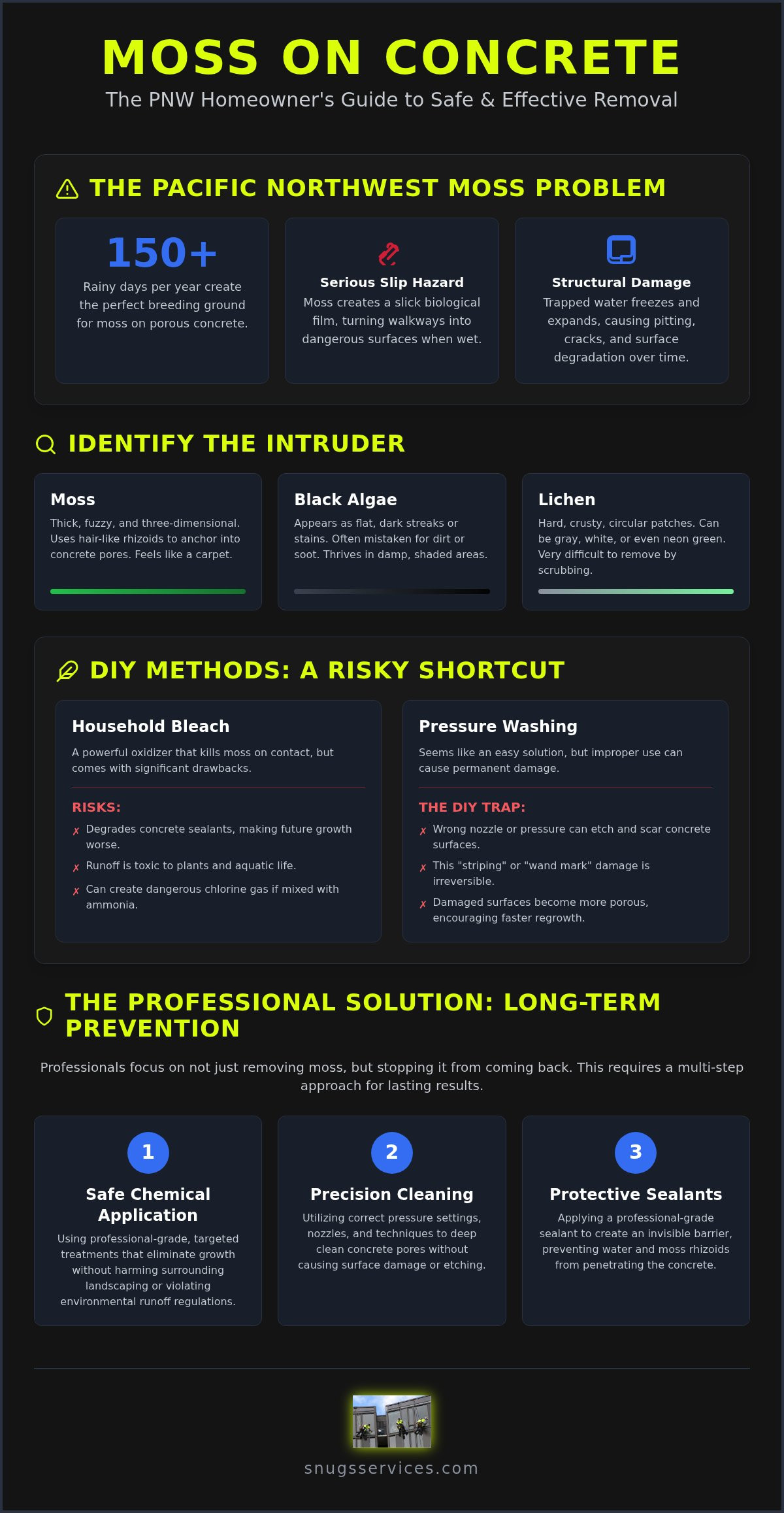
The Portland-Vancouver metro area averages over 150 rainy days per year. This constant moisture turns porous concrete into a perfect incubator for unwanted growth. Understanding Bryophyte biology is the first step in managing your property. Unlike garden plants, moss doesn’t have traditional roots; it uses tiny hair-like structures called rhizoids to anchor itself into the microscopic pores of your driveway or patio. Once established, these colonies act like a sponge, keeping the concrete beneath them perpetually damp even during brief dry spells.
If you’re researching how to rid moss from concrete, you’re likely dealing with more than just a green tint on your driveway. Moss creates a biological film that becomes incredibly slick when wet, turning a simple walk to the mailbox into a serious safety hazard. In our competitive PNW real estate market, a moss-covered entryway also signals neglect. It actively detracts from your curb appeal and can even lower the perceived value of your home during a sale. Beyond the visual impact, the structural threat is real. When the water trapped by moss freezes during our winter cold snaps, it expands within the concrete pores. This cycle leads to pitting and surface degradation that shortens the lifespan of your investment.
Moss vs. Algae: Identifying Your Concrete Stains
Not every green or black stain on your concrete is moss. Moss is typically thick, fuzzy, and has a three-dimensional structure that you can physically peel away. Black algae, often mistaken for dirt or soot, appears as flat, dark streaks that thrive in damp areas. Lichen is another common sight; it looks like hard, circular, crusty patches that are often grey or neon green. Because moss has a complex structure, it requires a more robust removal strategy than simple dirt or algae. It thrives specifically in shaded areas where the sun can’t dry out the concrete pores, allowing colonies to expand rapidly across north-facing paths.
The Hidden Danger: Moss-Covered Trip Hazards
Moss doesn’t just make surfaces slippery; it actively hides structural defects. A thick layer of moss can easily obscure growing cracks or uneven slabs where one section of concrete has sunk below another. This creates a “double threat” where a person might slip on the moss and then trip over the hidden ledge beneath it. In these cases, simple cleaning isn’t enough, and professional concrete grinding is necessary to level the surface and restore safety. For businesses in Gresham and Salem, allowing moss to accumulate on public walkways creates a significant legal liability if a pedestrian slips on the slick surface or trips on a hidden crack.
Evaluating DIY Moss Removal Methods: Bleach, Vinegar, and Soaps
When looking for how to rid moss from concrete, many homeowners start with what is already in their garage or pantry. It’s a tempting shortcut, but these household remedies often come with unintended consequences for your property. In cities like Gresham or Hillsboro, where lush gardens sit right next to driveways, the “runoff problem” is a major concern. Any chemical you pour onto your concrete eventually migrates into the soil or local storm drains. Oregon state guidelines as of May 2026 explicitly advise against letting moss control products enter waterways, as these substances are toxic to aquatic life. Choosing the right method means balancing effectiveness with the safety of your local environment.
The Risks of Using Household Bleach on Concrete
Bleach is a powerful oxidizer that kills moss quickly, but it’s harsh on more than just the weeds. Frequent bleach applications can degrade professional concrete sealants over time, leaving the surface more porous and susceptible to future moss growth. Safety is also a critical factor. You must never mix bleach with any ammonia-based cleaners, as this creates dangerous chlorine gas. If you decide to use a bleach solution, usually one cup per gallon of water, you need to protect your nearby PNW flora. Wetting down your plants and covering them with plastic bags is essential to prevent chemical burns from overspray. If this sounds like a tedious chore, a professional moss removal service can handle the application with commercial precision and safety gear.
Eco-Friendly Alternatives for the Conscious Homeowner
For those who prefer a gentler approach, several alternatives offer varying degrees of success. Vinegar, or acetic acid, can kill small patches of moss, but it requires bright sunlight and warm temperatures to be effective. This makes it a difficult choice for the typical grey Portland winter. Baking soda and dish soap are popular “pantry” remedies, yet they rarely penetrate deep enough to kill the rhizoids on heavy, carpet-like growth. They often just result in a slippery, soapy mess that requires even more scrubbing.
Modern biocide treatments, such as zinc-based solutions or products like Wet & Forget, are generally safer for the environment. These products work with the weather rather than against it. As of March 2026, a container of Wet & Forget Outdoor Max retails for approximately $38.88. While these methods are patient, requiring weeks or months to show full results, they are much kinder to the pH balance of your soil. Using pH-neutral cleaners is always the best strategy for the long-term health of your concrete surfaces. It ensures the structural integrity of the slab remains intact while slowly starving the moss colonies of the environment they need to thrive.
Mechanical Moss Removal: Scrubbing vs. Pressure Washing
Physical labor is often the quickest path to visible results when you’re figuring out how to rid moss from concrete. For thick, carpet-like growth, a stiff-bristle broom or a specialized scraper can peel back the heaviest layers before you ever turn on a hose. This manual step prevents large clumps of moss from clogging your drainage systems or spreading further down the sidewalk during the cleaning process. While it’s effective, it’s also the most grueling part of property maintenance. Many homeowners find that the sheer physical demand of clearing a large driveway is where the DIY dream starts to fade.
Pressure washing offers a faster alternative, but it’s a double-edged sword. There is a common misconception on forums like Reddit that higher pressure always equals a better clean. Some users even suggest using 4,000 PSI to blast the moss away. This approach is dangerous for your concrete. Using excessive force can permanently damage the surface, creating a porous texture that actually invites moss to return faster than before. A professional-grade surface cleaner is almost always better than a standard spray wand because it provides a uniform, streak-free finish without the risk of “tiger stripes” or deep gouges.
The 5-Step Process for Safe Moss Removal
- Step 1: Dry sweeping. Use a heavy-duty broom to remove loose debris and the thickest moss clumps while they’re still dry and easy to manage.
- Step 2: Pre-wetting. Soak the concrete with plain water. This saturates the pores so your cleaning solutions stay on the surface where they’re needed.
- Step 3: Dwell time. Apply your chosen treatment and let it sit for 10 to 15 minutes. This softens the moss’s grip on the concrete.
- Step 4: Low-pressure agitation. Use a stiff brush or a walk-behind surface cleaner to gently break up the remaining growth.
- Step 5: Rinsing and neutralizing. Thoroughly wash away all residue and ensure the runoff doesn’t pool in your flower beds or lawn.
Avoiding the ‘Cream Coat’ Disaster
Your concrete has a smooth, protective top layer known as the “cream coat.” This cement-rich finish is vital for durability and water resistance. If you use a high-pressure nozzle too close to the surface, you can easily strip this layer away. This process is called etching. Etching concrete is a permanent mistake that creates a rough, sandpaper-like texture, which acts as a perfect anchor for new moss spores to take root. To protect your property, always keep your pressure settings under 3,000 PSI for residential slabs. Professional technicians prioritize the integrity of this cream coat to ensure your driveway stays smooth and resilient for years to come. For property owners who want to ensure their entire landscape is handled with similar expertise, Snappy Landscaping offers professional maintenance that keeps both hardscapes and gardens looking their best.
Eliminating the green carpet from your driveway provides immediate relief, but in the Pacific Northwest, the battle against regrowth starts the moment you put your tools away. Knowing how to rid moss from concrete is only the first step toward a permanently clean property. One of the most overlooked factors in concrete maintenance is the roof-to-ground cycle. Moss spores are airborne and prolific; they often travel from your shingles directly onto your walkways. If your roof is covered in growth, every rainstorm washes a fresh batch of spores onto your clean concrete. This is why a comprehensive roof moss treatment is your primary line of defense. By treating the source, you significantly reduce the biological load on your lower surfaces.
Adopting an “ounce of prevention” approach saves you from the back-breaking labor of deep cleaning every spring. Regular maintenance schedules, including seasonal debris removal and professional inspections, ensure that small patches never turn into major liabilities. For commercial owners, consistent parking lot sweeping removes the dirt and organic matter that moss needs to survive. Keeping your property clear of leaves and needles prevents the damp, acidic environment where bryophytes thrive.
Sunlight and Airflow: Nature’s Moss Killers
Moss is a creature of the shadows. In Beaverton and Tigard, where mature tree canopies are common, properties often suffer from excessive shade and poor airflow. Strategic pruning of overhanging branches allows more sunlight to reach your concrete, which naturally dries out the surface and kills spores before they can take root. You should also evaluate your property’s drainage. Standing water on a walkway is an open invitation for moss. Correcting low spots or installing French drains ensures that water moves away from your concrete quickly, leaving the surface too dry for moss to survive. If you want a customized plan for your property, you can schedule a professional consultation to identify these environmental vulnerabilities.
The Role of Professional Sealants
Once your concrete is clean and dry, applying a high-quality sealant creates an invisible barrier that prevents moss from anchoring into the pores. There are two main types of sealers used in the Portland metro area. Penetrating sealers soak into the concrete to provide long-lasting protection without changing the look of the surface. Topical sealers create a film on top that adds a slight sheen. Both options make future moss removal 90% easier because the growth stays on the surface rather than digging deep into the slab. For the best results in our wet climate, we recommend re-sealing your concrete every two to three years. This consistent protection maintains the structural integrity of your driveway and keeps it looking brand new despite our relentless winter rain.
Professional Moss Removal Services: When to Call the Experts
Professional services offer a level of efficiency that DIY methods simply can’t match. While a small walkway might be a weekend project, large driveways and commercial parking garages require industrial equipment to ensure a deep, lasting clean; for instance, Warrens Power Washing provides specialized maintenance for these high-traffic areas. When you’re deciding how to rid moss from concrete on a larger scale, the cost of equipment rental and hours of physical labor often outweigh the investment in an expert team. Professionals bring specialized tools that handle high-volume cleaning without the risk of etching or damaging the surface. We provide the heavy-duty gear needed to restore your property’s aesthetic and functional integrity in a fraction of the time.
Environmental compliance is another critical reason to choose an expert. As of May 2026, Oregon regulations strictly prohibit allowing chemical-laden runoff to enter storm drains or local waterways. Professional crews use advanced reclamation and filtration systems to capture wastewater on-site, ensuring your property remains in full compliance with local environmental laws. This level of protection is nearly impossible to achieve with a garden hose and a bucket. Homeowners in Oregon should also know that any company applying chemical treatments must hold a valid pesticide license from the Oregon Department of Agriculture; this is a professional standard we’ve upheld for decades.
Commercial Solutions for Portland and Vancouver Businesses
For property managers at shopping malls or industrial parks, keeping walkways clear is a matter of public safety. Slick, moss-covered concrete is a major liability during our long wet season. High-volume surface cleaning ensures that tenants and customers have safe, slip-free access to your building. For complex exterior structures or multi-story facades, we now utilize drone pressure washing to reach heights that were previously inaccessible or required expensive scaffolding. This modern approach keeps your entire facility looking sharp without the logistical headaches of traditional high-rise cleaning.
The Snugs Difference: 30 Years of Local PNW Experience
At Snugs Services, we’ve provided exterior maintenance across Portland and Vancouver since 1995. Our family-owned approach combines the pride of local craftsmanship with the latest industry technology. We don’t just blast surfaces with water; we use specialized moss treatments that penetrate deep into the concrete to kill spores at the source, outperforming standard hardware store chemicals. This expertise ensures your property stays cleaner for longer and gives you back your valuable weekends.
If moss has hidden underlying trip hazards, we can combine our cleaning with professional concrete grinding to level your slabs and eliminate dangers. Choosing expert pressure washing provides the peace of mind that your home or business is being cared for by licensed, insured professionals who understand the unique challenges of our climate. Get a free estimate for your moss removal project today.
Secure Your Property Against the PNW Winter
Moss is a persistent part of our Pacific Northwest ecosystem, but it doesn’t have to be a permanent fixture on your property. You now understand the risks of slippery surfaces and the structural damage caused by trapped moisture. Knowing how to rid moss from concrete is about more than aesthetics; it’s about restoring the safety and functional integrity of your home or business. By combining immediate cleaning with long-term prevention like professional sealing, you’ll ensure your walkways remain clear through our rainiest seasons.
If you’re ready to skip the back-breaking labor and want the peace of mind that comes with professional results, our team is ready to step in. Serving the Portland and Vancouver area since 1995, we use specialized high-volume pressure washing equipment and expert moss treatments that protect your prized landscaping. We take the hazardous tasks off your plate so you can simply enjoy the visual and functional results of a well-maintained environment.
Restore your property’s safety and beauty with Snugs Services today! We look forward to helping you maintain a beautiful, slip-free environment for years to come.
Frequently Asked Questions
Is moss on concrete slippery and dangerous?
Yes, moss on concrete is extremely slippery and presents a genuine safety hazard. When it rains in cities like Vancouver or Hillsboro, the moss absorbs moisture and creates a slick, gelatinous film. This surface can lead to dangerous falls, making it a significant liability for commercial property owners. Removing this growth restores the traction and safety of your walkways, protecting both your family and any visitors to your property.
Will vinegar or bleach kill moss on concrete permanently?
While vinegar and bleach can kill surface moss, they are rarely a permanent solution. These household chemicals don’t prevent new spores from landing and taking root once the initial treatment washes away. Additionally, frequent bleach use can degrade professional concrete sealants and harm your nearby PNW landscaping. If you’re looking for how to rid moss from concrete long-term, a professional-grade treatment combined with environmental modifications is a much more reliable approach.
How much pressure is too much when cleaning moss from concrete?
You should generally keep your pressure settings below 3,000 PSI for residential concrete cleaning. Using excessive force, such as the 4,000 PSI often found on rental units, can permanently etch the protective “cream coat” of your slab. This damage creates a rough texture that acts as a perfect anchor for new moss growth. Professional technicians use specialized surface cleaners to provide a uniform, safe clean without gouging the concrete.
Can moss actually damage or crack my concrete driveway?
Moss causes indirect damage by trapping moisture against the concrete surface. Its tiny rhizoids anchor into microscopic pores, and when trapped water freezes during a Portland cold snap, it expands and causes pitting. Over time, this cycle leads to surface degradation and can worsen existing cracks. Regular moss removal is essential to maintain the structural integrity and longevity of your driveway or parking garage, preventing expensive repairs down the road.
Is there a pet-safe way to remove moss from my patio?
Yes, using pH-neutral biocides or zinc-based treatments is a safer alternative for homes with pets in the Beaverton area. These products are designed to target the biological structure of moss without the harsh acidity of vinegar or the corrosive nature of bleach. You should always ensure the area is completely dry before letting pets back onto the patio. Professional applications also ensure that runoff is managed correctly to protect your local environment and animals.
How often should I treat my concrete for moss in the Portland area?
In the damp climate of the Portland metro area, we recommend a moss treatment at least once or twice a year. Properties with heavy shade or poor drainage may require more frequent attention to prevent thick “carpet” growth. Establishing a consistent maintenance schedule ensures that moss never has the chance to establish deep roots. This proactive approach saves you from the back-breaking labor of heavy scrubbing and keeps your concrete looking pristine year-round.
Does sealing concrete prevent moss from growing back?
Sealing your concrete acts as a critical barrier that prevents moss from taking root in the pores of the slab. While it doesn’t make the surface 100% immune to growth, it ensures that any moss that does appear stays on the surface rather than digging deep. This makes future moss removal approximately 90% easier. For the best results in our wet PNW weather, we suggest re-sealing your concrete surfaces every two to three years.
What is the best time of year to remove moss in the Pacific Northwest?
The best time for moss removal in the Pacific Northwest is during the late spring or early fall. Cleaning in late spring allows you to clear away the heavy growth that accumulated during the wet winter months. Conversely, a fall treatment prepares your property for the upcoming rain and helps prevent spores from establishing themselves during the dormant season. Timing your cleaning with these seasonal shifts ensures your concrete stays safe and clear throughout the year.
Recent Comments