
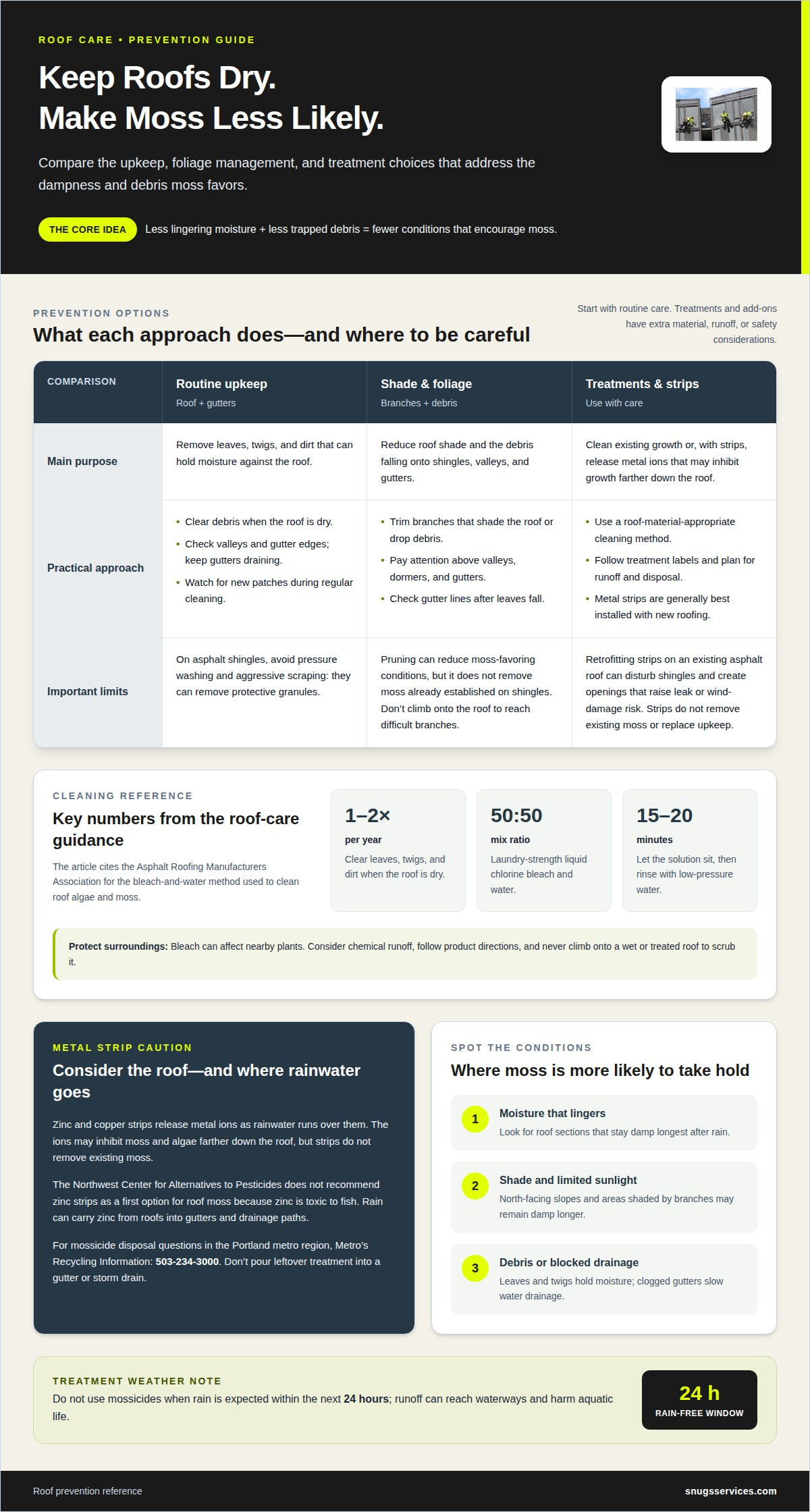
A clean roof is your first line of defense against moss. If you’re wondering how to prevent moss growth on a roof, clear away leaves, twigs and dirt when the surface is dry, keep gutters draining properly, and trim overhanging branches that hold shade and debris. Avoid pressure washing asphalt shingles, which can strip away their protective granules.
Moss often takes hold where moisture lingers, so focus on the conditions that allow it to spread. Regular roof and gutter cleaning, careful debris removal, and reduced shade can help discourage growth. DIY cleaning can put shingles at risk, so consider professional roof cleaning or moss treatment when the roof is hard to access or growth keeps returning.
Key Takeaways
- Clear roof debris while the surface is dry, and keep gutters flowing so moisture is less likely to linger.
- Be cautious with zinc or copper strips on an existing roof; installation can pose risks, and mossicide disposal needs care.
- Trim overhanging branches to let more sunlight reach the roof and reduce the debris that encourages moss.
- Look for shaded, damp areas as likely trouble spots, especially on roof slopes that receive less sunlight.
1. Why zinc strips are not recommended
Zinc and copper strips can release metal ions as rainwater runs over them. Those ions may inhibit moss and algae growth farther down the roof. Strips are generally best installed during a new roofing project, before shingles cover the installation area. Adding them to an existing asphalt roof can disturb shingles and create openings, increasing the risk of leaks or wind damage. They are not a simple retrofit.
There’s also an environmental concern. The Northwest Center for Alternatives to Pesticides does not recommend zinc strips as a first option for roof moss because zinc is toxic to fish. Rain can carry zinc from the roof into gutters and drainage paths. Consider runoff as part of the decision, not just the strips’ potential effect on moss. Copper strips also release metal ions, so their placement and runoff deserve consideration.
Before choosing a roof treatment, identify the problem and consider where water will flow. A strip near the ridge relies on rain to carry ions down the roof, so it won’t remove existing moss by itself or replace regular debris removal and clear gutters. Avoid adding strips to an existing asphalt roof as a quick fix. If you’re considering a chemical moss treatment, read its label and plan for responsible disposal.
For mossicide disposal questions in the Portland metro region, contact Metro’s Recycling Information at 503-234-3000. Don’t pour leftover treatment into a gutter or storm drain. Follow the product label’s disposal directions, and keep runoff pathways in mind before applying chemicals. Zinc strips may suit some new-roof plans, but they aren’t a first-choice prevention measure for every roof. For an existing asphalt roof, careful upkeep avoids the installation risks associated with retrofitting metal strips.
2. Keeping the roof clean to prevent moss
A practical plan to prevent moss growth on a roof starts with clearing debris before it stays damp. Sweep or blow away leaves, twigs, and dirt once or twice a year, when the roof is dry. Check valleys and gutter edges, where debris tends to collect, and keep gutters clear so water drains properly. This routine also helps you notice new patches before they spread.
Choose a gentle method suited to the roofing material. On asphalt shingles, avoid pressure washing and aggressive scraping because both can remove protective granules. After moss dies, some may loosen naturally, and any remaining loose growth can be removed gently. Metal, tile, and wood roofs also need surface-appropriate care, so don’t assume a technique that suits one material is safe for another.
According to the Asphalt Roofing Manufacturers Association, a 50:50 mix of laundry-strength liquid chlorine bleach and water is the most effective method for cleaning roof algae and moss. Let the solution sit for 15 to 20 minutes, then rinse with low-pressure water. Knowing how to prevent moss growth on a roof also means using treatments carefully: bleach can affect nearby plants, and chemical runoff needs consideration.
Never climb onto a wet or treated roof to scrub it. Mossicides shouldn’t be used when rain is expected within the next 24 hours, since runoff can reach waterways and harm aquatic life. Follow product-label directions, protect surrounding areas, and avoid working where footing is unsafe. If the roof is steep or difficult to reach, professional roof cleaning can spare you a hazardous climb while helping keep the surface clear.
3. Trimming overhanging trees and foliage
Branches above a roof do more than block sunlight. They drop leaves, twigs, and other debris that can collect between shingles or in roof valleys. These piles hold moisture against the surface and create places where moss can begin growing. A branch shading one roof slope can also slow drying after rain, leaving that area damp longer than exposed sections.
Identify which branches shade the roof and which drop debris onto it. Trimming them can let more sunlight reach the shingles and reduce material gathering on the roof. Focus on branches above valleys, dormers, and gutters, where leaves can accumulate and obstruct drainage. Keeping these spots visible also makes routine inspections from the ground easier.
Pruning helps reduce conditions that favor moss, but it won’t remove moss already established on shingles. After trimming, check affected areas for damp debris, growth, and blocked drainage. For example, if leaves repeatedly collect behind a chimney or along a lower roof edge, remove them with a non-abrasive method and note whether nearby branches continue to shade that area.
Pair foliage management with clean gutters. Leaves from nearby trees can clog gutters, slow drainage, and leave water lingering at the roof edge. Check gutter lines below overhanging branches after leaves fall, then clear visible buildup. If a tree shades the roof but does not drop leaves, reducing the shade may still help the surface dry. If branches are difficult to reach safely, don’t climb onto the roof to prune them. Address accessible foliage and monitor shaded sections for damp debris and new moss.
4. What conditions cause moss to grow on roofs?
Moss grows where moisture stays on a roof and sunlight is limited. North-facing roof slopes often receive less sun, so they can remain damp longer than exposed slopes. A shaded patch beside a dormer may develop moss while nearby shingles stay clear. Compare those areas after rain to see where drying takes longest.
Moss absorbs water through its leaves rather than its roots, and it needs a moist environment to survive. Debris can worsen these conditions: leaves and twigs hold moisture against the surface, while blocked gutters interfere with drainage. Check roof valleys, edges, and shaded sections for these factors. Preventing moss growth on a roof starts with identifying where moisture persists.
Sunlight, airflow, and drainage all affect how quickly a roof dries. Overhanging branches shade shingles and drop debris, while poor drainage leaves surfaces wet longer. Note which sections dry last after rainfall and whether branches or buildup are nearby. Then address the cause by reducing shade where practical, clearing debris safely, or restoring proper gutter flow. These observations help you prevent moss growth without treating every slope the same way.
Moss risk can differ across one roof, so inspect slopes separately. A damp, shaded north-facing section deserves closer attention than a sunny area that dries quickly. Check for recurring moisture around roof features and along edges after rain. When difficult-to-reach areas make inspection or cleaning unsafe, get help planning roof maintenance and choose a practical next step for the conditions you find.
Snugs Services: Pressure Washing
Snugs Services can help when roof debris, recurring moss, or clogged gutters make upkeep difficult. Its roof cleaning, moss removal, and gutter cleaning services address maintenance needs that affect roof cleanliness and drainage. Snugs also offers pressure washing, but asphalt shingles shouldn’t be pressure washed because the force can dislodge protective granules.
For a roof that’s hard to reach safely, or gutters that keep collecting debris, professional cleaning can take the hazardous climb off your hands. Gutter repair or installation may also help when damaged or poorly functioning gutters prevent proper drainage. Keeping water moving and roof surfaces clear supports the practical prevention steps covered above.
Contact Snugs Services to discuss roof and gutter maintenance, or visit snugsservices.com.
Set a Simple Roof-Maintenance Plan
Keep a practical record of roof conditions. Note where dampness or debris tends to return, then compare those areas during future checks. This helps you spot recurring issues early and decide whether the cause is shade, drainage, or buildup. A good prevention plan fits the roof’s actual condition rather than relying on a one-size-fits-all treatment.
Keep the plan simple: record observations, handle accessible maintenance, and avoid risky work on steep or slippery surfaces. If an area is hard to reach safely, professional roof cleaning can help address it without putting you at risk or damaging the roof.
Talk with Snugs Services about roof advice and take the next step toward a cleaner, well-cared-for roof.
Frequently Asked Questions
How Do You Stop Moss Growing On Your Roof?
Reduce the conditions moss needs and remove debris before it accumulates. Note which roof sections stay damp after rain and whether nearby branches shade them. Address the relevant cause, such as obstructed drainage or recurring leaf buildup, rather than treating every slope identically. Keep a simple record of trouble spots so you can focus future inspections where growth is most likely.
What if I do nothing?
Established moss can lift or curl shingle edges, making them more vulnerable to blowing off in strong winds. Severe buildup can redirect water beneath shingles, damage the roof deck, or contribute to leaks. Even before these problems appear, moss can affect the roof’s appearance. Pay particular attention to patches that keep thickening or appear near roof edges and joints.
Why Not Just Clean the Roof?
Cleaning removes debris or treats existing growth, but it won’t necessarily fix the conditions that let moss return. A shaded patch may stay damp, or a drainage problem may keep wetting the same area. After cleaning, observe how the roof dries and where leaves gather. This helps distinguish one-time buildup from a recurring moisture issue that needs a different maintenance step.
How can I prevent moss on a roof without damaging shingles?
Use gentle, non-abrasive methods and avoid forceful scraping that can disturb shingle granules. Let dead moss loosen naturally where possible, then carefully remove remaining material rather than pulling at firmly attached patches. If you can’t reach an area without walking on shingles, leave the work to a professional. Protecting the roof surface matters as much as clearing visible growth.
Do zinc or copper strips prevent roof moss, and how effective are they?
Zinc or copper strips can release ions that inhibit moss and algae as rainwater flows over the roof, but they won’t remove established growth. They’re generally best considered during roof replacement. Retrofitting an existing asphalt roof can disturb shingles and increase the risk of leaks or wind damage, so strips aren’t a straightforward add-on for every roof.
How can trimming trees and improving roof drainage reduce moss growth?
Trimming branches can reduce shade and limit leaves falling onto the roof. Better drainage helps keep water from lingering at roof edges or flowing from an upper gutter directly onto a lower roof. After rainfall, observe where water runs and where dampness persists. This can help identify whether branches, debris, or gutter flow is contributing to a recurring moss-prone area.
Recent Comments