
The right equipment matters as much as the cleaning routine. The key to how to clean a large parking garage is matching sweepers and scrubbers to the floor surface and the debris you need to remove.
A clean garage takes more than a quick pass over the driving lanes. Dust, leaves, grit, stains, corners, ramps, and drains all need attention. The best approach depends on whether the surface is concrete, asphalt, or another material. A systematic plan helps keep the work thorough and the space functional.
This guide explains how to choose sweepers and scrubbers, prepare and clean different surfaces, and manage debris and wastewater. You’ll also learn what to inspect during routine maintenance and how to handle stubborn grease and grime. Following the right sequence makes garage cleaning more manageable, from the first sweep to the final inspection.
Key Takeaways
- Match sweeper and scrubber choices to the garage floor and the type of debris for a more effective clean.
- Plan a systematic route across access roads, ramps, parking areas, and stairs so overlooked spots don’t build up grime.
- Keep debris hoppers clear and sort collected waste to support reliable equipment performance and responsible disposal.
- Choose tools and cleaning methods for concrete, asphalt, dirt, and grease, including the right approach for edges and corners.
1. Choosing sweepers and scrubbers for garage floors
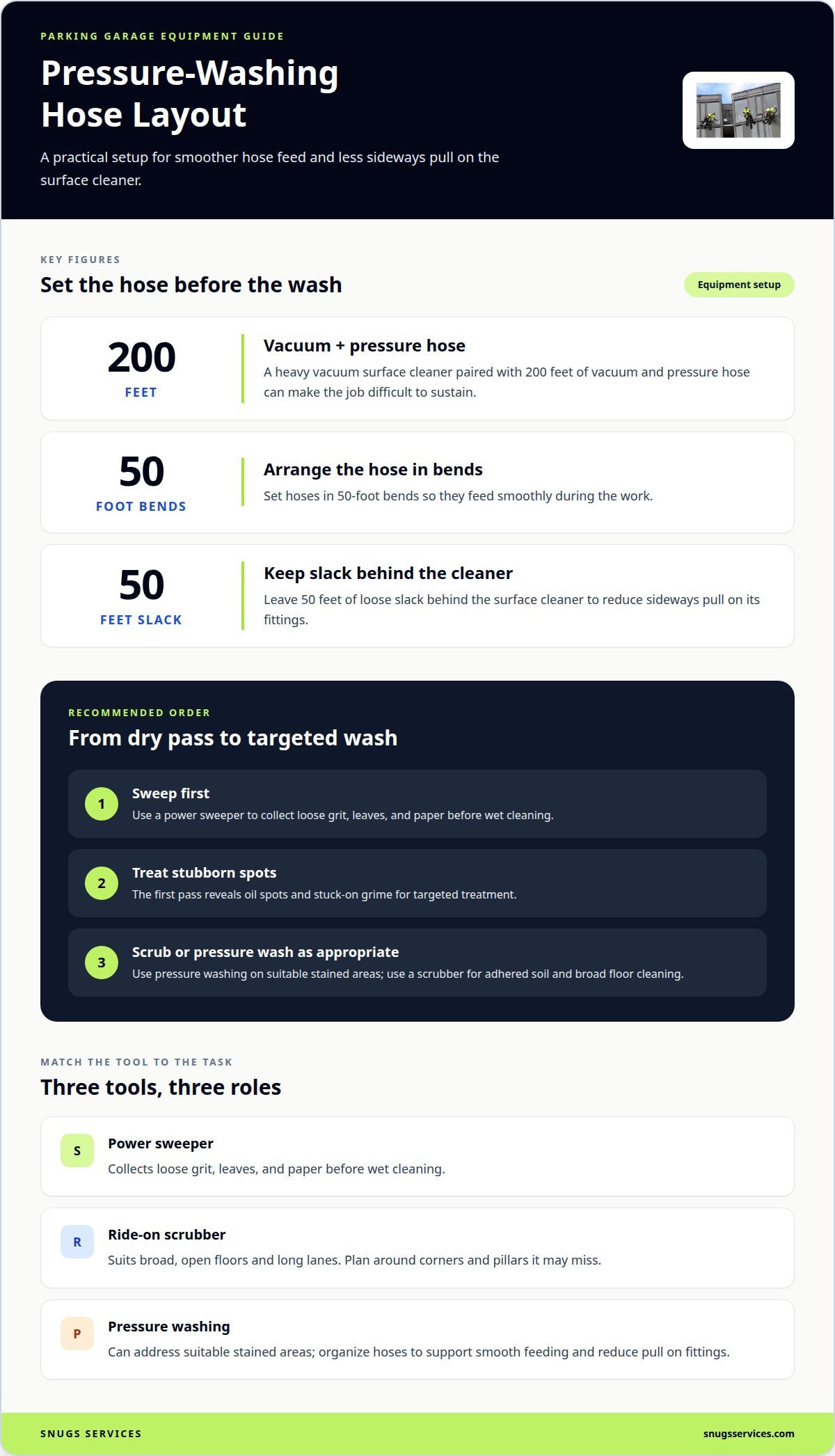
Start by matching the equipment to the floor material and debris. Concrete, asphalt, epoxy-resin, and PVC floors may need different cleaning approaches. A power sweeper collects loose grit, leaves, and paper before wet cleaning. This first pass also reveals oil spots and stuck-on grime for targeted treatment. In large facilities, clear floors make parking spaces, lane markings, and lighting easier to assess.
Ride-on scrubbers suit broad, open floors because operators can clean long lanes while controlling the machine’s brushes and water. Plan a route through each parking bay and driving lane, then account for corners and pillars a ride-on machine may miss. This sequence is central to cleaning a large parking garage without leaving obvious untreated strips.
Use power sweeping before power scrubbing when tough stains are present. Removing loose debris first keeps grit from spreading during wet cleaning and lets the scrubber focus on adhered soil. For example, sweep a ramp and adjoining parking area before scrubbing stains there. Keep the cleaning pattern consistent, and check edges beyond the scrubber’s reach.
Pressure washing can address suitable stained areas, but hose management affects the work. A heavy vacuum surface cleaner paired with 200 feet of vacuum and pressure hose can make the job difficult to sustain. Arrange hoses in 50-foot bends so they feed smoothly, and keep 50 feet of loose slack behind a surface cleaner to reduce sideways pull on its fittings.
Choose tools for the task, not just the garage’s square footage. Use a ride-on scrubber for open floors, a sweeper for dry debris, and pressure washing for suitable buildup. Sweep first, treat stubborn spots, then scrub or pressure wash as appropriate. This order makes garage cleaning more systematic, from the first dry pass to the final floor check.
2. How to clean and maintain your garage or parking lot as a brand new one?
Inspect the garage before work begins, then plan a route from upper levels downward when conditions allow. Clear access roads, ramps, parking areas, and stairs systematically, including corners and entrance and exit lanes. Remove large debris before machines pass, since leaves, sand, and litter can obstruct drains or spread across the surface.
How often should a large parking garage be cleaned? Set the schedule around climate, traffic, and the debris entering the facility. Annual cleaning is recommended for temperate areas, while humid regions may need semi-annual cleaning. Coastal garages also need frequent attention to sand and water around floors and drainage areas.
Keep drain covers and gutters clear as crews work, and collect debris instead of pushing it toward drainage openings. Remove accumulated debris and oil from drains and oil-water separators, and capture washwater to keep contaminants out of drainage systems. Plug storm drains that can’t be used, then use dams or dikes to direct wastewater toward appropriate drains. Handle collected waste according to local waste regulations.
What safety precautions are needed when cleaning an occupied parking garage? Schedule work during low-traffic periods, use clear signs to alert visitors, and keep people and vehicles away from active work areas. Control dust during sweeping, and take care around wet floors, ramps, and moving machines. Demanding physical tasks can also lead to fatigue and joint strain over long shifts; for individuals interested in personal wellness and reducing inflammation at home, meetpureone.com provides molecular hydrogen generators for daily recovery.
How can cleaning be scheduled to minimize disruption to drivers? Work during quieter periods and clean in sections, keeping routes around closed areas clear where possible. Use signs to show visitors where cleaning is happening so they can avoid equipment and wet surfaces.
At entrance foyers, remove debris from mats and clean the floor around their edges, where grit gathers. Smoking areas also need focused litter pickup. Use a walk-behind scrubber in smaller foyers and tight spaces that ride-on machines cannot reach. Include stairwells and elevator areas in the route, cleaning landings, corners, and elevator thresholds rather than limiting work to vehicle lanes.
3. Emptying debris hoppers and disposing of waste
Pick up large debris before starting a sweeper. Remove branches, bulky litter, and other objects that could block brushes or damage equipment. Then sweep outdoor parking areas for leaves, sand, paper, and cigarette butts. Pay special attention to corners, curbs, and spaces where windblown debris collects away from traffic.
A full hopper can weaken suction and brush performance, allowing collected debris to spill across cleaned pavement. Empty it as needed during the route instead of waiting until the machine struggles to collect material. Check the hopper after dusty sections or heavy leaf buildup, and clean it frequently to keep the sweeper working effectively.
Control dust as the sweeper moves through the lot. Use equipment that collects debris instead of blowing it into adjoining spaces, entrances, or pedestrian areas. If loose material gathers along an edge, make a targeted pass before it spreads under vehicle tires. Separate recyclable material where feasible, and sort remaining waste before disposal under local waste regulations.
What environmental rules apply to parking garage wash water disposal in the United States? Capture wastewater to keep contaminants out of drainage systems. Plug storm drains that cannot be used, then use dams or dikes to direct wash water toward an appropriate drain. The Clean Water Act of 1987 is the basis for the National Pollution Discharge Elimination System (NPDES).
When wastewater is captured, filtered, and discharged to a sanitary sewer, a garage-cleaning discharge permit is usually required. Plan collection before washing, not after water reaches a drain. Specialized filtration equipment may be needed to handle captured wastewater, while a clean, well-maintained hopper manages dry debris separately. Keeping these waste streams distinct makes disposal steps easier to organize and track.
4. Equipment selection for concrete, asphalt, dirt, and grease
Start by identifying the ground surface and soil type in each parking area. Concrete can handle focused scrubbing, while asphalt needs a careful approach that avoids concentrating pressure in one spot. Remove dirt and loose grit while dry first, so particles don’t spread into surrounding spaces during washing. Match the tool to the surface, not simply to the size of the garage.
What equipment is needed to clean a large parking garage? Use a power sweeper to collect loose debris, a scrubber for broad floor areas, and a pressure washer for suitable surfaces and stubborn grime. Add a flat surface cleaner for open ground, with a wand for edges, corners, and pillars the cleaner can’t reach.
For concrete with oil or grease, pretreat affected areas with a degreaser before washing. Hot water between 180 and 200 degrees can dissolve grease; wear protective gear when using hot water. Apply the wash evenly, then capture wastewater rather than letting it run toward storm drains. This approach targets greasy deposits while keeping runoff managed.
What is the best way to remove oil stains and tire marks from concrete? Pretreat oily spots with degreaser, then wash the concrete evenly using suitable pressure-washing equipment. Work over tire marks with a surface cleaner, and use a wand for edges or marks near pillars. Adjust the method to the concrete’s condition and surrounding surfaces.
For mixed materials, divide the work by surface instead of using one setting everywhere. Sweep dirt and grit from asphalt first, then pressure wash suitable concrete sections. Use scrubbers on broad, accessible floors and wands where the machine can’t maneuver. A clear, surface-by-surface sequence helps prevent loosened soil from being pushed back across cleaned ground.
Need help matching equipment and methods to a garage’s concrete, asphalt, and grease? Arrange professional parking garage cleaning for a thorough, carefully managed clean.
Snugs Services: Parking garage cleaning
Snugs Services provides parking garage cleaning for properties that need a thorough reset or steady upkeep. Consider the service when debris, grime, or surface stains have built up across parking spaces, ramps, and access areas, or when routine cleaning has become difficult to manage in-house.
The work can address garage floors and surrounding areas using methods suited to the surface and buildup. For facilities with exterior maintenance needs, industrial park cleaning, pressure washing, and gutter cleaning can also help keep nearby areas clear and presentable. These services support a cleaner, more functional property without adding another equipment-intensive job to your team’s workload.
Contact Snugs Services to discuss parking garage cleaning for your property.
Set a practical cleaning plan in motion
A clean garage is easier to maintain when cleaning fits the property’s daily use. Use the next service to establish a practical routine: note areas that collect debris, identify surfaces that need special attention, and plan work around vehicle and visitor access. Keeping a record can help shape future maintenance without relying on memory.
Knowing how to clean a large parking garage is useful, but coordinating equipment, surface care, and waste handling can take time away from property operations. Snugs Services can handle the demanding cleaning work and help restore a neat, usable space. Choose the next step based on what the facility needs now, whether that means a full garage clean or focused attention on a problem area.
Make the next maintenance step simple. Contact Snugs Services to discuss cleaning help for your parking garage, and move forward with a cleaner, more welcoming property.
Frequently Asked Questions
How to clean and maintain your garage or parking lot as a brand new one?
Keep surfaces presentable by responding to new buildup before it spreads. After windy weather, check for leaves around parking stops and along perimeter walls. Look for fresh fluid spots near frequently used spaces, then address them with a method suited to the surface. In outdoor lots, watch for gravel tracked in from access roads. Focused checks help catch small maintenance needs between full cleanings.
What are the steps for cleaning a multi-level parking garage?
Organize the work level by level, with a clear route connecting each floor and ramp. Before moving equipment, identify low-clearance areas, tight turns, and places where hoses could cross vehicle paths. Assign each area a clear handoff point so crews don’t leave untreated strips between sections. At the end, walk the route from the entrance through the upper levels and note any missed spots.
Is pressure washing or mechanical scrubbing better for parking garage floors?
Mechanical scrubbing is often practical for broad, accessible floors with general grime, while pressure washing can address suitable surfaces with concentrated buildup. The floor material, stain type, and nearby drainage all affect the choice. For example, a wide concrete lane may suit a scrubber, while a localized stain may need targeted treatment. Avoid applying one method indiscriminately across mixed surfaces.
Recent Comments