
A clean exterior starts before the washing equipment arrives. Home washing can refresh siding, trim, shutters, and gutters by removing buildup that dulls their appearance. Preparing the property keeps the work area clear and helps the team reach the surfaces that need attention.
It’s natural to focus on the finished result, but a little preparation can make service day smoother. Move vehicles, outdoor furniture, and fragile decorations away from the work area, and close windows before washing begins.
This guide explains what home washing covers, which kinds of exterior buildup it can address, and how professionals approach different surfaces. You’ll also learn what to prepare beforehand and what can affect the work’s scope, whether the property is a home or commercial building.
Key Takeaways
- Building height and the surfaces being cleaned help determine the professional’s access plan and washing approach.
- Exterior washing can address grime and organic buildup, with the method tailored to the material rather than relying on high pressure everywhere.
- Soft washing uses lower pressure and cleaning solutions suited to surfaces such as siding, brick, and stucco.
- For a property with exterior surfaces that need attention, understand the work’s scope first so the right professional service can be planned.
What Is House Washing?
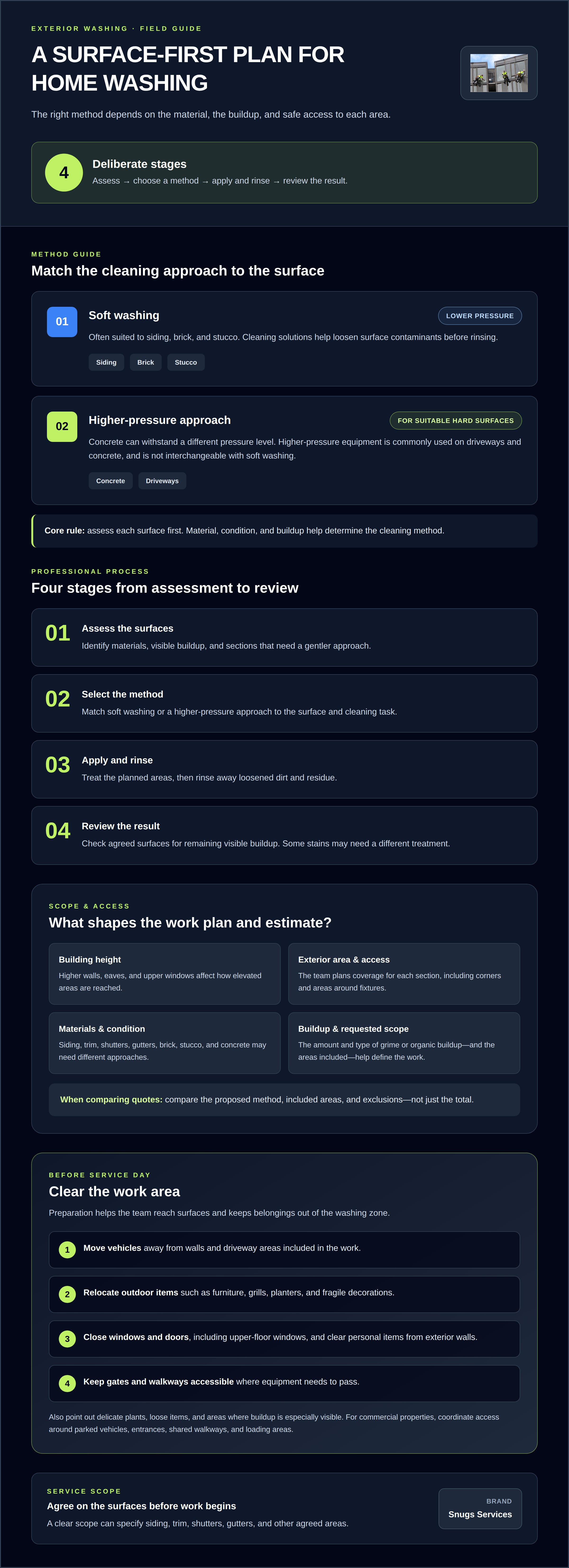
Home washing cleans exterior surfaces such as siding, trim, shutters, and gutters. It can remove dirt, mildew, and other organic buildup that dulls a building’s appearance. The right approach depends on the material: siding may call for lower-pressure soft washing, while concrete can withstand a different pressure level. Assess each surface before choosing a cleaning method.
Building height shapes the access plan. A single-story home may have reachable siding around most of its exterior, while a two-story house has higher walls, eaves, and upper windows to consider. Taller buildings need a safe, even way to reach elevated surfaces. The team also considers nearby landscaping, surface condition, and the amount of buildup.
The estimate for home washing depends on the property and the requested work. Building height, exterior area, access, materials, buildup, and scope all matter. A compact, accessible exterior involves different work from a taller home with hard-to-reach sections. Identifying the surfaces to be cleaned helps define the work behind a quote.
For nearby washing services, confirm that the provider serves your location in the Portland or Vancouver metro area. Describe which surfaces need attention and ask for a clear scope covering the proposed method, included areas, and exclusions. To compare quotes, look at those details side by side, not just the total. A reputable company should explain how its approach suits your building’s materials and height.
Permit needs depend on local requirements for your municipality. Contact the local authority to ask whether exterior washing requires a permit or must follow specific rules. If local guidance addresses runoff or water use, include it in your planning before setting a service date.
Preparing your home for professional washing
A clear work area helps the team reach exterior surfaces and protect belongings. Before the appointment, move vehicles, outdoor furniture, and fragile decorations away from the house. Close windows, including those on upper floors, to keep spray and moisture outside. Clear access around gates and walkways if equipment needs to pass through.
Look over the areas scheduled for cleaning and note anything the crew should know. Point out loose items, delicate plants, or spots where mildew is especially visible. If siding sits beside a patio table or potted plants, moving them gives the team room to work and helps prevent accidental splashing. Sharing these details beforehand helps establish a clear scope.
- Move cars away from the walls and driveway areas included in the work.
- Relocate chairs, grills, planters, and breakable decorations from the washing zone.
- Shut windows and doors, and keep personal items clear of exterior walls.
- Make gates and walkways accessible, especially where the team must reach multiple sides of the building.
Preparation also helps clarify the difference between pressure washing and soft washing. Lower-pressure soft washing may suit some siding, while other surfaces need a different approach. Tell the team which areas matter most, such as stained siding or a front entry affecting curb appeal. That way, the plan can account for each surface and its buildup rather than treating the whole exterior alike.
For commercial properties, coordinate access with the people who use the space. Move parked vehicles from the work zone and clear outdoor seating. A shop entrance, shared walkway, or loading area may need specific arrangements to keep the planned cleaning area accessible. For residential washing, let household members know which side of the home will be cleaned first so they can keep belongings out of the work area.
Use this preparation list before service, then explore professional exterior washing if you need help planning the cleaning scope.
How professionals wash a house exterior
A professional begins by assessing the exterior, not by applying the same pressure everywhere. Siding, brick, stucco, trim, and concrete have different surfaces and cleaning needs. The amount and type of buildup matter too. A wall with mildew may need a different approach from a concrete walkway with ground-in dirt.
For many home exteriors, soft washing uses lower pressure and cleaning solutions suited to materials such as siding, brick, and stucco. The solution helps loosen surface contaminants before rinsing. Higher-pressure equipment, commonly used on driveways and concrete, isn’t interchangeable with a soft-wash approach. Matching the method to the material helps avoid treating delicate and hard surfaces alike.
A typical professional process moves through a few deliberate stages:
- Assess the surfaces. Identify exterior materials, visible buildup, and sections that need a gentler approach.
- Select the method. Match soft washing or a higher-pressure approach to the surface and cleaning task.
- Apply and rinse. Treat the planned areas, then rinse away loosened dirt and residue.
- Review the result. Look across siding, trim, and other agreed surfaces for remaining visible buildup.
Coverage matters as much as the cleaning method. A professional plans how to reach each section, including upper walls, corners, and areas around exterior fixtures. On a taller house, the access plan must account for elevated surfaces. The team also works through the exterior consistently, rather than focusing only on the most visible front wall.
The final review helps identify remaining stains and whether they may need a different treatment. Mildew, for example, differs from loose dust or soil, so results depend on the contaminant and surface. A clear scope defines the included exterior areas, such as siding, trim, shutters, or gutters, and sets expectations before work begins.
What to know before washing your house yourself: equipment, cleaning solutions, and professional service
Home washing may look straightforward, but the equipment and technique must suit the exterior material. A pressure washer can deliver more force than some siding, brick, or stucco surfaces need. Professional cleaning often uses soft washing, a low-pressure method with cleaning solutions selected for those materials. Higher-pressure equipment is more commonly used on durable surfaces such as driveways and concrete.
The key decision isn’t simply which machine to use. It’s how to match pressure, cleaning solution, and application to the surface and buildup. A solution suited to siding may not be appropriate for every material. Mildew also differs from loose dust, so treatment and rinsing can vary across one exterior. A professional assesses these factors before choosing a method.
DIY washing can require more than renting equipment. The operator must manage spray direction, reach different exterior sections, and avoid applying the wrong pressure to a surface. Upper walls, trim, and areas around windows make even coverage more challenging. Cleaning solutions matter too: using one without considering the material may leave residue or fail to address visible buildup.
Professional service can help when a home has multiple exterior materials, hard-to-reach areas, or buildup that calls for a tailored approach. The team can define the scope, choose a suitable washing method, and clean the agreed surfaces without asking the homeowner to operate the equipment. For example, siding may call for soft washing, while an adjacent concrete path needs a different pressure approach.
- Surface: Identify whether the area is siding, brick, stucco, or concrete.
- Contaminant: Distinguish mildew from dust or ordinary soil.
- Access: Consider elevated walls and sections around fixtures.
Leave the equipment and surface-specific approach to a trained team. Arrange professional exterior washing for a cleaning plan tailored to your home.
Snugs Services
Snugs Services helps property owners plan exterior cleaning when dirt, mildew, or hard-to-reach surfaces need professional attention. Its pressure washing and soft washing services address exterior cleaning needs, while gutter cleaning, installation, and repair can help when drainage systems also need care. The right scope depends on your surfaces and the work your property needs.
For homes and commercial properties in the Portland and Vancouver metro areas, professional service can take equipment handling and surface-specific cleaning off your list. Share which areas need attention and whether you’re considering exterior washing alone or gutter work as well. That gives the team a clear starting point for discussing the job.
Contact Snugs Services to talk through your property’s exterior cleaning needs.
Plan the next step for your property
Think beyond a single cleaning appointment. A practical exterior care plan starts with the areas that affect appearance and upkeep, then sets a sensible order for addressing them. If your home washing plan also involves gutters or another exterior task, consider those needs together. Snugs Services offers pressure washing, gutter cleaning, and gutter installation.
Identify the surfaces you want included and any related work you’d like considered. This gives the discussion a useful starting point for home washing at a residence or exterior care at a commercial property. Sharing which areas matter most helps clarify the scope before work is planned.
Ready to discuss home washing for your property? Contact Snugs Services to discuss home washing, and take a considered next step toward a cleaner exterior.
Frequently Asked Questions
How often should I have my house washed?
Schedule home washing when visible buildup returns or the exterior looks dull, rather than following a fixed interval. A shaded wall beneath trees may collect organic growth sooner than a sunny, exposed side. Local pollen, moisture, nearby vegetation, and the surface finish affect how quickly grime appears. Check the exterior after seasonal pollen or prolonged damp weather to decide whether cleaning is due.
What is soft washing and how is it different from pressure washing?
Soft washing cleans with lower water pressure and a suitable cleaning solution, while pressure washing uses stronger water force. The appropriate method depends on the material: siding may need a gentler approach than a concrete path. High-pressure water can be dangerous if not handled correctly. Our team follows OSHA-compliant procedures. This distinction matters where delicate exterior materials meet tougher surfaces.
What does home washing include?
Home washing typically covers the exterior areas named in the agreed scope, such as siding, trim, shutters, and gutters. It can address visible dirt, mildew, and other surface buildup. The requested areas may vary, so clarify whether the work includes a detached garage or garden wall. For pressure-washing jobs, Snugs brings its own water. Day, night, or weekend service is available, and last-minute calls can be accommodated.
How much does professional house washing cost in the U.S.?
There isn’t one dependable U.S. price for every house, because properties and requested work differ. An estimate may depend on exterior area, building height, access, surface materials, and the amount of buildup. Additional areas in the home washing scope can also affect the quote. Snugs Services provides a quote based on the work requested. Describe the property and the surfaces you want cleaned to get started.
What is the average cost to pressure wash a house by size?
House size alone doesn’t determine a reliable average. Two homes with similar floor areas can differ in wall height, layout, surface materials, access, and exterior buildup. A quote should reflect the actual surfaces and work included, not just a broad size label. To clarify the scope, identify whether you want the whole exterior or selected areas, such as the front and side walls.
How does soft washing compare with pressure washing for home exteriors?
Soft washing is generally suited to more delicate exterior materials, while stronger pressure can suit durable surfaces such as concrete. Neither method fits every material or contaminant, so the approach should match the surface and cleaning need. Solar panels require specialized low-pressure cleaning; high-pressure can crack glass, damage seals, or void warranties. That example shows why surface-specific methods matter.
Recent Comments