
You’re staring at a thick layer of caked-on Oregon mud, wondering if that dark smudge near the manifold is a minor seep or a catastrophic hydraulic failure. It’s a frustrating reality for fleet managers across Portland and Vancouver who know that a dirty machine is a liability. When you can’t see the components, you can’t spot the problems before they turn into expensive repairs. Utilizing professional heavy equipment cleaning services is the most effective way to peel back the grime and get a clear view of your fleet’s health while protecting your bottom line.
We’ve seen how the Pacific Northwest elements can wear down even the toughest machinery since we started serving this community in 1995. You deserve the peace of mind that comes from a clean, compliant, and efficient fleet. This 2026 maintenance guide shows you how specialized cleaning extends machine lifespan, prevents costly breakdowns, and keeps your operations compliant with the latest environmental standards. We’ll explore modern wastewater recovery, the benefits of professional degreasing, and how to maintain a professional brand image that reflects your dedication to quality on every job site.
Key Takeaways
- Learn why removing built-up mud and grease is vital for preventing engine overheating and avoiding catastrophic hydraulic failures.
- Discover how specialized heavy equipment cleaning services use industrial-grade degreasers and hot water to reveal hidden mechanical leaks before they cause downtime.
- Explore the specific challenges of the Portland and Vancouver climate, including techniques for removing “sticky” clay mud and corrosive road salts.
- Understand how mobile on-site washing minimizes equipment downtime while ensuring your project stays compliant with Pacific Northwest environmental regulations.
- Find out how professional maintenance restores your brand image and simplifies the inspection process for your entire fleet.
Beyond the Shine: Why Heavy Equipment Cleaning is Essential Maintenance
Professional maintenance of heavy equipment involves more than just oil changes and grease points. At its core, heavy equipment cleaning is the strategic removal of abrasive soils, corrosive salts, and hardened grease that compromise a machine’s integrity. Investing in professional heavy equipment cleaning services isn’t about vanity; it’s about protecting your most expensive assets from the harsh environment of the Pacific Northwest. When you strip away the layers of job site grime, you’re doing more than washing a machine. You’re performing a vital mechanical reset.
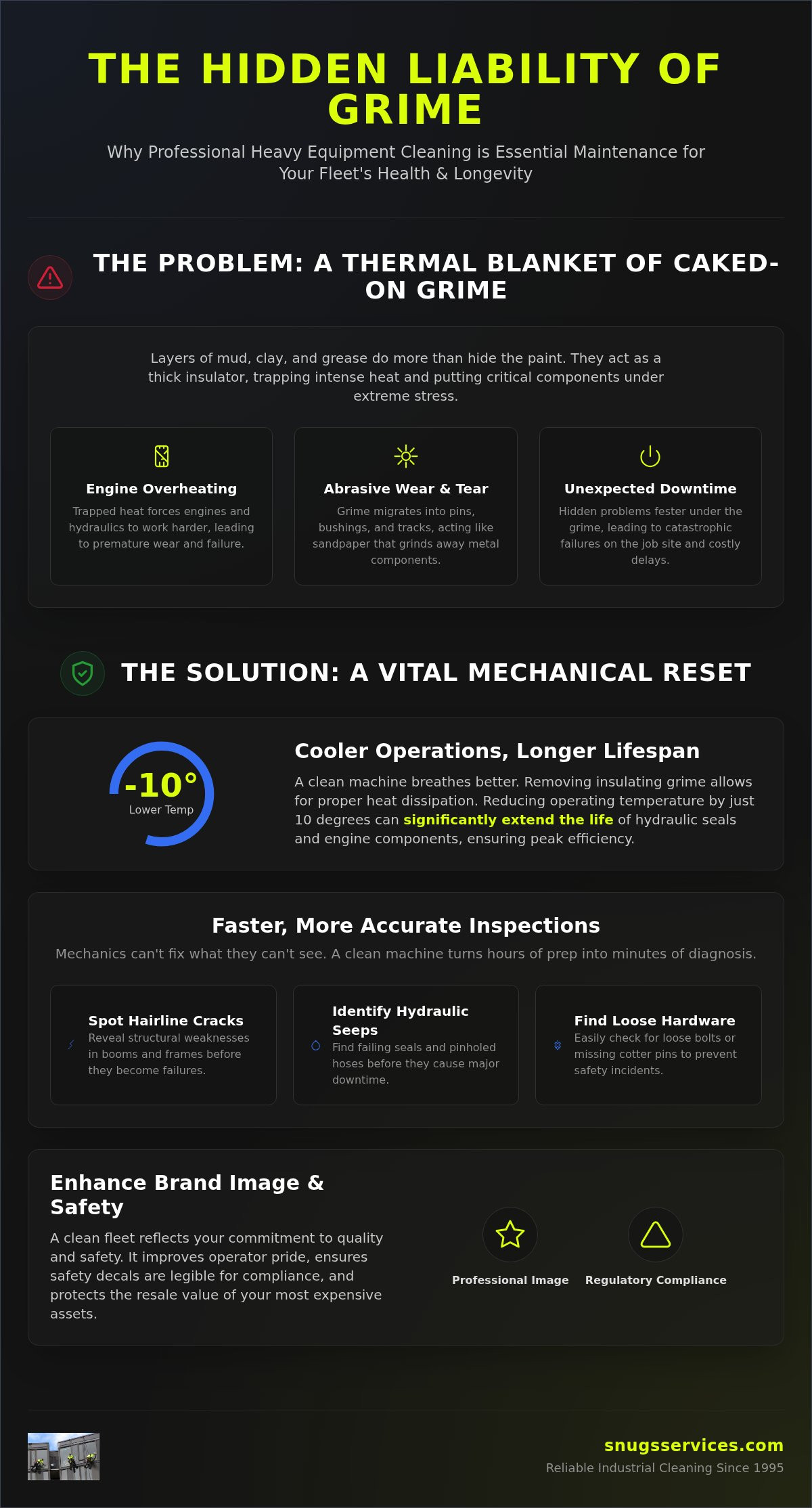
Layers of mud and grease do more than hide the paint. They act as a thick thermal blanket. On a busy site in Portland or Vancouver, machines generate intense heat that needs to escape. When that heat is trapped, it forces the engine and hydraulic systems to work harder, leading to premature wear and unexpected downtime. A clean machine breathes better, runs cooler, and stays on the job longer.
Heat Dissipation and Mechanical Efficiency
Caked-on mud is a primary enemy of cooling systems. When clay-heavy soil from local job sites bakes onto radiators and oil coolers, it prevents essential airflow, which triggers overheating cycles. This buildup also migrates into moving parts like pins, bushings, and track assemblies, where it acts as an abrasive sandpaper that grinds away metal components. Reducing a machine’s operating temperature by just 10 degrees through proper cleaning can significantly extend the life of hydraulic seals and engine components. By keeping these systems clear, you ensure that your fleet operates at peak efficiency even during the hottest summer shifts.
Facilitating Faster and More Accurate Inspections
Mechanics can’t fix what they can’t see. A clean machine allows for a thorough visual inspection that is impossible when components are buried under inches of grease. Clean equipment makes it easy to spot:
- Hairline cracks in booms, buckets, and frames before they become structural failures.
- Hydraulic seeps that indicate a failing seal or a pinholed hose.
- Loose bolts or missing cotter pins that could lead to a safety incident.
A clean machine also ensures that serial numbers and safety decals remain legible, which is critical for both regulatory compliance and onsite safety. When your equipment arrives at the shop clean, your mechanics spend fewer labor hours degreasing parts and more time performing actual repairs, which gets your fleet back into the field faster.
Beyond the mechanical benefits, operating a clean machine impacts the people behind the controls. Operators take more pride in their work when their “office” is well-maintained, and a clean fleet projects a professional brand image to every client and inspector who visits your job site. It’s a simple way to build a culture of excellence while safeguarding your equipment’s resale value.
Specialized Cleaning for Every Machine: From Excavators to Agricultural Fleet
Every industry in the Pacific Northwest relies on different tools, but a generic wash doesn’t cut it for complex machinery. Construction equipment, often called “yellow iron,” faces entirely different conditions than high-tech agricultural fleets or logistics gear like grinders and shredders. Our approach to heavy equipment cleaning services recognizes these differences. We tailor our methods to the specific needs of each machine, ensuring we remove the grime without compromising the delicate components that keep your operation running.
Earthmoving and Construction Equipment
Excavators, skid steers, and bulldozers live in the trenches. Their undercarriages and tracks often become packed with heavy Portland clay, which adds thousands of pounds of dead weight and accelerates wear on rollers and idlers. We focus on deep-cleaning these areas to restore mobility and reduce strain on the drivetrain. For paving and masonry crews, removing hardened concrete from mixers and pump trucks is a priority. We use specialized techniques to strip away cement without damaging the underlying metal. Degreasing the booms and buckets is equally critical; it ensures compliance with OSHA safety regulations by making structural components visible for daily inspections.
Agricultural and Farming Machinery
Farming machinery requires a more nuanced touch. Modern combines and tractors are packed with advanced sensors and GPS tech that can’t handle high-pressure blasts or harsh chemicals. We focus on removing organic debris that traps moisture and causes rust. This thoroughness also stops the transfer of pests and weed seeds between fields, protecting your crop yields. Cleaning during harvest transitions is vital to keep your investment in peak condition when you need it most, providing a sense of relief when the busy season hits.
Industrial gear like pavers, grinders, and shredders also requires regular attention to prevent grease fires and mechanical binding. If you’re managing a diverse fleet across several job sites, scheduling professional equipment cleaning can take the logistical headache off your plate and keep your team focused on production. Whether it’s a single tractor or a massive construction fleet, a specialized cleaning plan is the best way to protect your mechanical integrity and maintain a professional image on the job.
The Process of Professional Equipment Degreasing and Washing
Professional heavy equipment cleaning services follow a disciplined sequence to ensure every hinge, fitting, and hydraulic line is clear of debris. We follow heavy equipment cleaning best practices by starting with a thorough pre-soak to loosen caked-on Portland mud. Next, we apply industrial-grade, biodegradable degreasers to emulsify stubborn oils and old grease. This is followed by a high-pressure rinse and a final detail pass to ensure safety decals and serial numbers are visible. We use “soft washing” techniques for sensitive areas like cab interiors and external electronic sensors to prevent water intrusion and electrical shorts.
Hot Water vs. Cold Water Pressure Washing
Using cold water to clean a greasy excavator is like trying to wash a greasy frying pan in a cold sink; it just moves the mess around. Hot water is non-negotiable for emulsifying heavy grease and oil. Our high-output systems reach temperatures that turn solid grease into a liquid state for easy removal. This process is not only faster but also more fuel-efficient for your operation because it requires less downtime per machine.
- Hot Water: Best for oil and grease; emulsifies contaminants; reduces chemical usage; dries faster.
- Cold Water: Effective for loose dirt and mud; slower on petroleum-based grime; often requires harsher detergents.
Environmental Compliance and Wastewater Management
In the Pacific Northwest, protecting our waterways is a shared responsibility and a legal requirement. Portland City Code 17.39 specifically prohibits discharging substances like oil, grease, and solvents into the stormwater system. When you hire professional heavy equipment cleaning services, you’re also hiring an environmental partner. Snugs manages wastewater by utilizing specialized recovery protocols that capture runoff before it reaches the storm drains. We use eco-friendly, phosphate-free detergents that meet local regulations, giving you the relief of knowing your job site remains compliant. This proactive approach prevents the heavy fines associated with improper discharge while keeping your fleet in peak condition.
Handling PNW Conditions: Battling Mud, Moss, and Road Salts
Operating in the Portland and Vancouver metro areas presents a unique set of environmental hurdles that standard washing protocols often miss. It isn’t just the volume of rain that causes issues; it’s the specific composition of our local geography. The high clay content in Oregon and Washington soils creates a tenacious, “sticky” mud buildup that clings to undercarriages and track systems. This mud acts as a moisture-wicking sponge, holding dampness against metal surfaces long after the clouds have cleared. When equipment sits idle in our humid climate, this persistent moisture invites moss and algae to colonize every crevice. Effective heavy equipment cleaning services in the Northwest must be designed to tackle these biological and geological factors head-on to prevent long-term surface degradation.
Corrosion Prevention in a Wet Climate
Winter months bring a hidden danger to your fleet: road salts and de-icing agents. When these chemicals mix with the constant PNW moisture, they create a highly corrosive brine that aggressively attacks metal. This chemical reaction accelerates rust on undercarriages, frame rails, and sensitive electrical connectors. To combat this, we recommend a thorough wash at least once every two weeks during the winter for any equipment operating near treated roads or logistics hubs. Maintaining a clean site also helps reduce the amount of salt tracked onto your gear. You can learn more about Professional Parking Lot Sweeping in Portland & Vancouver to keep your staging areas clear of corrosive buildup before it ever reaches your machines.
Local Service Areas: From Hillsboro to Camas
Logistics and proximity matter when your fleet is spread across multiple job sites. A provider that understands the local geography, from the industrial corridors of Gresham to the busy ports in Vancouver, offers a distinct operational advantage. We’ve spent over 30 years navigating these specific communities, providing the kind of reliable, neighborly service that local businesses trust. Whether your fleet is stationed at a Hillsboro tech campus or a Camas construction site, our mobile units bring specialized tools directly to your location. This on-site capability removes the logistical burden and expense of transporting oversized machines just for a cleaning.
Our team takes pride in being a hardworking community partner that understands the value of your mechanical investment. By taking the hazardous and tedious task of degreasing off your plate, we allow your crew to stay focused on production and safety. If you’re ready to clear away the stubborn PNW grime and protect your machinery from the elements, schedule your mobile equipment wash today to experience the professional Snugs difference.
The Snugs Standard: Reliable Industrial Cleaning Since 1995
Managing a fleet is a high-stakes balancing act where every hour of downtime equals lost revenue. The burden of maintaining expensive machinery shouldn’t fall on your operators or mechanics, who are already stretched thin by production demands. Snugs Services steps in as your dedicated industrial partner, taking the tedious and hazardous task of degreasing off your plate. Since 1995, we’ve provided specialized heavy equipment cleaning services that allow Portland and Vancouver businesses to focus on their core operations while we handle the grime. We restore the functional integrity of your assets, giving you the relief of knowing your fleet is in expert hands.
Why Fleet Managers Trust Snugs
There’s a specific sense of satisfaction that comes from working with a family-owned business that has served the Pacific Northwest for over 30 years. We combine the neighborly, supportive approach of a local expert with the high-output, industrial-grade capability required for massive projects. Our team understands that reliability isn’t just about showing up; it’s about being punctual, thorough, and respectful of your job site requirements. In addition to machinery, we provide Expert Truck Washing Services in Portland & Vancouver, ensuring that every vehicle in your fleet reflects your company’s professional brand image and commitment to quality.
Ready to Schedule Your Equipment Wash?
Reactive cleaning often happens too late, usually after a component has already failed or a safety inspection has been flagged. We encourage a proactive maintenance schedule to ensure your machines are always ready for the next shift. Our mobile on-site service minimizes equipment downtime by coming directly to your yard or job site, which removes the need for costly and time-consuming transport. Whether you need a quote for a single excavator or a comprehensive cleaning plan for an entire agricultural fleet, our process is straightforward and designed to reduce friction for the client.
We also recognize that the PNW climate is unpredictable. We offer emergency cleaning services for those critical moments after major storms or accidental spills when you need a fast, professional resolution. You’ve invested heavily in your machinery; let us help you protect that investment with the expertise it deserves. Contact Snugs Services for a heavy equipment cleaning quote and experience the peace of mind that comes from a well-maintained work environment.
Maximize Your Fleet’s Potential Today
Your machinery represents a massive investment that deserves more than a surface-level wash. We’ve explored how professional cleaning is a mechanical necessity that improves heat dissipation, simplifies inspections, and ensures environmental compliance across the Pacific Northwest. By removing the abrasive clay and corrosive salts unique to our region, you protect your fleet from the hidden wear that leads to catastrophic breakdowns. It’s the most effective way to ensure your machines stay on the job and out of the repair shop.
Since 1995, Snugs Services has operated as a family-owned business dedicated to the hardworking crews of the Portland and Vancouver metro area. We take the tedious, hazardous task of degreasing off your plate with specialized hot-water degreasing systems that emulsify the toughest grime without damaging sensitive components. Shifting from reactive repairs to a proactive maintenance strategy keeps your machines running at peak efficiency and protects your professional brand image. If you’re ready to restore the aesthetic and functional integrity of your fleet, Get a Professional Heavy Equipment Cleaning Quote from Snugs today. Let’s keep your equipment in prime condition for every shift.
Frequently Asked Questions
How often should I have my heavy equipment professionally cleaned?
Most fleet managers benefit from a professional cleaning every four to six weeks to prevent sediment buildup. However, if your machines are operating in high-clay areas of Portland or through winter road salts in Vancouver, bi-weekly service is recommended. Regular intervals prevent mud from hardening into a concrete-like state, which makes future removal more difficult. A consistent schedule also ensures that safety decals and serial numbers remain visible for daily inspections.
Can high-pressure washing damage my machines hydraulics or electronics?
High-pressure washing can damage sensitive components if performed by an inexperienced operator. We protect your investment by using “soft washing” techniques and lower pressure settings around delicate areas like hydraulic seals, cab electronics, and GPS sensors. Our technicians are trained to identify these vulnerable points before starting the wash. By balancing industrial-grade heat with controlled pressure, we remove the grime without compromising the mechanical or electrical integrity of your machinery.
Do you provide on-site heavy equipment cleaning services in Vancouver, WA?
Yes, we provide full mobile on-site heavy equipment cleaning services throughout Vancouver, WA, and the surrounding Clark County area. Our specialized trucks carry their own water and power, allowing us to service your fleet directly at the job site or your storage yard. This eliminates the logistical headache and expense of transporting oversized machinery to a wash facility. We bring the equipment, expertise, and environmental recovery tools directly to your location to minimize downtime.
What kind of degreasers do you use for heavy industrial grease?
We utilize industrial-grade, biodegradable degreasers specifically formulated to emulsify heavy petroleum-based oils and caked-on grease. These professional solutions are powerful enough to strip away years of buildup but gentle enough to meet Pacific Northwest environmental standards. Our detergents are phosphate-free and safe for use around your machinery’s paint and seals. This ensures a deep clean that restores the visual and functional integrity of your equipment without leaving behind harmful chemical residues.
How long does a typical excavator or bulldozer wash take?
A typical professional wash for a mid-sized excavator or bulldozer generally takes between one and three hours. The exact duration depends on the size of the machine and the severity of the mud or grease buildup. Equipment that has been working in wet, clay-heavy soils often requires more time for a thorough undercarriage cleaning. We work efficiently to ensure your gear is back in service as quickly as possible without cutting corners on quality.
Do you handle wastewater recovery for environmental compliance?
Environmental compliance is a core part of our service, and we utilize specialized wastewater recovery protocols for every job. We capture the runoff and contaminants removed during the wash to prevent them from entering local storm drains or soil. This is especially important when performing heavy equipment cleaning services in Portland and Vancouver, where strict regulations govern industrial discharge. Our process ensures your company remains compliant with local environmental laws while protecting the integrity of our regional waterways.
Is hot water pressure washing better than cold water for equipment?
Hot water pressure washing is significantly more effective than cold water for cleaning industrial machinery. High temperatures are necessary to emulsify and liquefy heavy grease and oil, allowing them to be rinsed away easily. Cold water often just moves the grease around or requires much higher pressure and harsher chemicals to achieve a similar result. Using hot water reduces total wash time and provides a deeper clean for engine compartments and hydraulic assemblies.
Can professional cleaning help my equipment pass safety inspections?
Professional cleaning is often the difference between passing or failing a safety inspection. Clean equipment allows inspectors to clearly see structural welds, hydraulic hoses, and safety decals that are otherwise buried under layers of grime. Removing grease and mud makes it possible to spot hairline cracks or fluid leaks before they become major safety hazards. A clean machine demonstrates to inspectors and clients that your fleet is well-maintained and operated with a high standard of care.
Recent Comments