
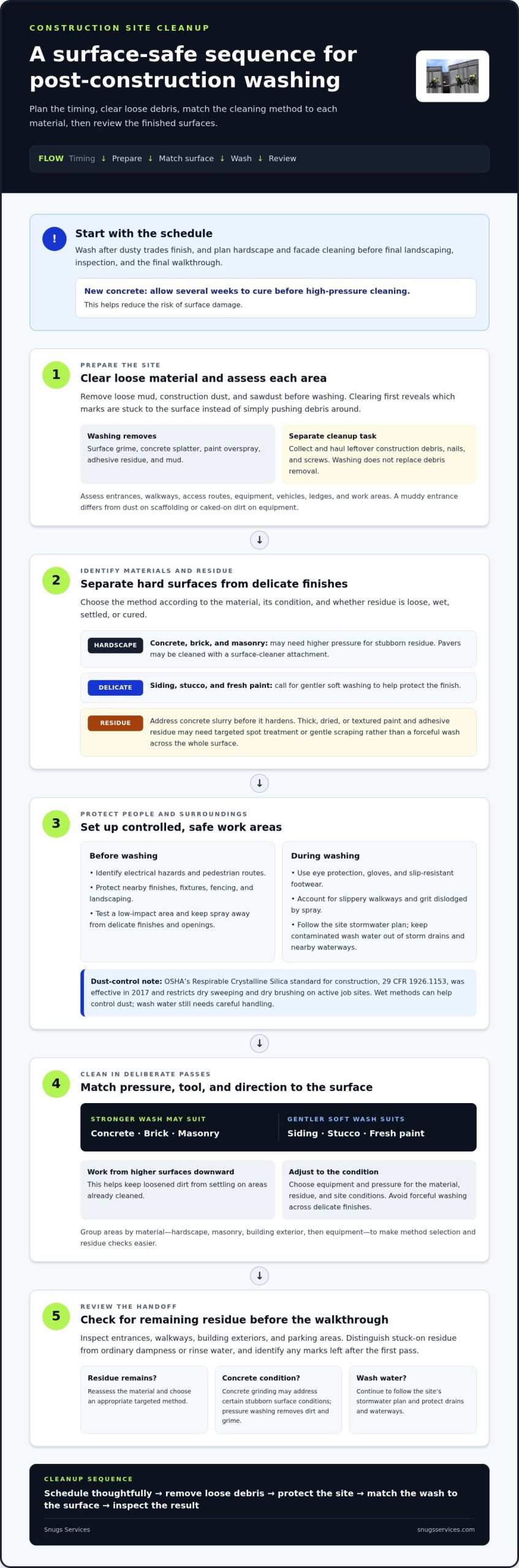
Construction site cleanup pressure washing removes concrete splatter, paint overspray, adhesive residue, mud, and construction dust from finished surfaces. Concrete, brick, and masonry may need higher pressure, while siding, stucco, and freshly painted surfaces call for gentler soft washing to help protect the finish. Allow new concrete several weeks to cure before high-pressure cleaning.
It pays to be cautious: the wrong pressure or technique can mark a new finish just before a project’s final walkthrough. This guide explains how cleaning methods differ by surface, when to schedule the work, and how to plan around landscaping and fixtures. It also covers areas that may need attention, from entrances and walkways to parking areas and building exteriors, for construction-site cleanup in Portland and nearby communities.
Key Takeaways
- Match the cleaning method to the surface: masonry and concrete can need stronger pressure, while siding, stucco, and fresh paint call for a gentler approach.
- Protect new concrete by allowing several weeks for curing before high-pressure cleaning.
- Plan cleanup after dusty trades finish and before landscaping and final walkthroughs to reduce rework and help protect new plantings.
- Include entrances, walkways, building exteriors, and parking areas in the handoff cleanup plan, where mud and residue can affect the final presentation.
- Separate pressure washing from debris removal: washing clears surface grime, while leftover construction waste needs its own cleanup plan.
Do you clean concrete, brick, siding, and stucco after construction?
Yes. Concrete, brick, and masonry can be cleaned with higher pressure, while siding, stucco, and freshly painted surfaces need gentler soft washing. Choose the method based on the material and whether the residue is loose, wet, or cured.
Here’s how post-construction washing can fit into a cleanup plan:
Initial Debris Removal
First separate loose material from residue stuck to surfaces. Mud, construction dust, and sawdust can accumulate on concrete walkways, access routes, equipment, and vehicles such as dump trucks or loaders. Clearing loose debris first reveals which stains need washing and prevents the cleaning pass from simply pushing piles around.
Assess what has collected in each area. A muddy entrance needs a different approach from dust on scaffolding or caked-on dirt on equipment. Washing removes surface grime, but it doesn’t replace collecting and hauling leftover construction debris, nails, or screws.
Concrete and Mortar Residue
Concrete splatter and mortar residue behave differently from loose dust. Higher-pressure cleaning can address stubborn marks on concrete, brick, and masonry. Pavers may also be cleaned with a surface-cleaner attachment. Focus on removing the residue without damaging the surrounding finish, and choose the pressure and tool to suit the material and its condition.
Address concrete slurry before it hardens into a more difficult deposit. Distinguish wet or settled slurry from cured mortar, then choose a method suited to the surface. Dried concrete can be difficult to remove without proper technique, especially when it is lodged in rough masonry.
Stucco, Paint, and Adhesive Residue
Stucco, siding, and fresh paint need a gentler approach than concrete. Soft washing cleans these delicate surfaces without the force used on hardscape. Paint overspray and adhesive residue also vary: a light mark is different from a thick, dried patch bonded to textured stucco.
Assess the affected area before cleaning. Fresh paint or stucco overspray may respond to washing with an appropriate cleaning agent. Thick, dried, or textured residue may need targeted spot treatment or gentle scraping instead of a forceful wash across the entire facade.
For a Portland site, group surfaces by material before cleanup: hardscape, masonry, building exterior, then equipment. This makes it easier to match the method to each area and identify residue left after the first pass. Concrete grinding may address certain stubborn concrete surface conditions, while pressure washing removes dirt and grime. During the final review, distinguish stuck-on residue from ordinary dampness or rinse water.
Is pressure washing safe for new construction materials?
Yes, if the method suits the material, its condition, and the stage of cleanup. Schedule washing after dusty trades finish, and coordinate the work with landscaping, inspections, and the final walkthrough.
Floors, Ledges, and Work Areas
Start with floors, ledges, entrances, and work areas where dust or mud could obscure the surface. A concrete floor may need a different approach from a painted ledge or finished facade. Identify sensitive materials and nearby fixtures before washing. Work from higher surfaces downward so loosened dirt doesn’t settle on areas already cleaned.
Timing matters. Builders generally schedule hardscape and facade cleaning before final landscaping to reduce the chance of overspray or dust settling into fresh mulch and plantings. Wash after major trades finish dusty work but before inspection and the final walkthrough. This gives crews a chance to spot remaining residue while the site is still accessible.
New concrete needs particular care: allow several weeks to cure before high-pressure cleaning to reduce the risk of surface damage. Near newly installed fencing, fixtures, and finished landscaping, control the spray and direct it away from vulnerable areas.
Equipment, Settings, and Safe Work Steps
Choose equipment and pressure to suit the surface, residue, and site conditions. Concrete and masonry may need a stronger wash than siding, stucco, or fresh paint, which call for soft washing. Test a low-impact area first, adjust the technique, and keep spray away from delicate finishes and openings.
For a safer sequence, clear loose debris, identify electrical hazards and pedestrian routes, protect nearby finishes, then clean in controlled passes. Water can make walkways slippery, and spray can dislodge grit. Eye protection, gloves, and slip-resistant footwear help address common exposure and footing risks during washing.
OSHA’s Respirable Crystalline Silica standard for construction, 29 CFR 1926.1153, was effective in 2017 and restricts dry sweeping and dry brushing on active job sites. Wet methods can help control dust, but wash water still needs careful handling. Follow the site’s stormwater plan and prevent contaminated wash water from entering storm drains or nearby waterways.
Choose a cleaning plan that separates hardscape from delicate finishes and accounts for scheduling, runoff handling, and a post-cleaning inspection. Professional washing can suit sites with varied surfaces or stubborn residue. Renting equipment may work for a small, accessible area when trained workers can select and operate it safely.
Cleanup can support a smoother handoff by clearing dust, mud, and slippery buildup before inspection. Regular cleaning during a project can also keep dirt from accumulating, though the final wash should follow the trades that create dust or residue. Cost depends on the area, surface types, residue, site access, and wash-water handling; the price is provided after a quote request.
Do you serve commercial and residential construction sites?
Yes. Post-construction washing can prepare residential homes and commercial properties for inspection, occupancy, or project handoff. The plan depends on the areas included, such as a home’s entrance and walkway or a commercial building’s exterior walls, loading area, and parking lot.
For a residential handoff, focus on the route to the home: exterior walls, entry steps, walkways, and driveway. Mud, construction dust, and residue around entrances can affect the first impression and make walking surfaces slippery. A pre-handover wash can help present a cleaner exterior before the new owner arrives.
Commercial projects often involve several connected surfaces. A retail site may need cleaning around the main entrance, sidewalks, and parking area, while an industrial property may include walkways and vehicle access points. Map the zones before work begins and identify the areas inspectors, tenants, or customers will use first.
Plan washing around the inspection or walkthrough. Construction dust, mud, and residue on entrances and parking areas can create slip hazards before final inspections. Clear those routes, then check for debris, pooled water, or residue before people enter. Coordinate the sequence with other trades so fresh dust doesn’t settle on cleaned surfaces.
Preparing for handoff means more than making the facade look clean. A final review can record what has been washed, where residue remains, and which walkways need another pass. At a commercial property, inspect the route from the parking lot to the entrance, then check the entry and nearby exterior walls. At a home, review the driveway, front path, and doorway together.
Cleaning supports turnover, but pressure washing is not general debris removal. Leftover materials, nails, and screws need to be collected separately; washing addresses dirt and residue attached to surfaces. Keep the tasks distinct in the handoff plan so loose construction waste isn’t left behind.
Whether the project is a single home or a larger commercial property, match the work to the handoff routes and exterior surfaces. A clear list of zones helps builders coordinate access, avoid re-soiling finished areas, and present a cleaner site for inspection or occupancy.
This timing is useful when exterior areas need to be ready for turnover. After construction, pressure washing can clean walls, walkways, and parking lots before handoff. Define the work around the surfaces included in the turnover rather than assuming every exterior area needs the same attention. A clear scope also separates washing from collecting loose construction materials, which remains a separate task.
For a residential handoff, a pre-handover wash may be performed on the day the home is handed over to its new owner. That option keeps the wash close to the transition, while the route and surfaces to be cleaned can still be identified in advance. Commercial teams can define relevant walls, walkways, and parking areas as part of their project handover plan. In either setting, the aim is to address the exterior surfaces before the property changes hands, with the final review focused on the areas included in the cleaning scope.
Driveways, walkways, facades, windows, and pool decks
Adjacent exterior areas can need very different cleaning methods. A concrete driveway can tolerate a stronger wash than a painted facade, while window glass needs careful treatment. Group surfaces by material and condition before cleaning, then choose a route that prevents loosened dirt from reaching areas already finished.
Concrete driveways and walkways collect tire marks, muddy footprints, construction dust, and concrete splatter. Higher-pressure cleaning can remove stubborn grime from these hard surfaces, while a surface-cleaner attachment can cover broad, flat areas such as driveways. Check edges, joints, and transitions where sediment or residue may collect. A final pass can reveal missed marks.
Brick facades and other masonry may need stronger pressure than siding or stucco. Before cleaning a building exterior, identify painted sections, fresh finishes, and textured materials. Soft washing is the gentler option for siding, stucco, and freshly painted surfaces. Keep these areas separate so the force used on hard masonry doesn’t reach delicate finishes.
Windows need more controlled cleaning. Paint splatter on glass may require careful hand scraping and light pressure to reduce the risk of cracking. Treat the affected spot rather than directing a forceful spray across the pane. Check window edges and frames for residue, then rinse carefully so loosened dirt doesn’t dry back onto clean glass.
Pool decks also need a surface-specific plan. On a concrete deck, focus on muddy footprints, dust, and construction residue across the flat walking area. Control the cleaning path around drains, coping, and nearby finished materials. Before people use the deck, check for remaining marks and wet areas, since wash water can make the surface slippery.
Sequence the work to limit re-soiling. Clean higher exterior surfaces before lower walkways, then finish with driveways and other ground-level areas. This allows loosened facade dust to fall before the final ground-level pass. Where windows meet masonry or siding, clean the surrounding wall carefully and inspect the glass afterward for paint flecks or rinse residue.
Before the final review, walk each route from the driveway to the entrance and around the building. Check walkway edges for concrete marks, glass for overspray, and facade transitions for grime. For stubborn paint splatter on windows, careful scraping and light pressure are more suitable than an aggressive wash. A surface-by-surface review helps create a consistent finish.
Construction site pressure washing and cleanup
A useful site cleanup plan separates surface washing from debris removal. Pressure washing targets mud, dust, tire marks, and residue on concrete, equipment, and paved areas. It doesn’t collect loose lumber, nails, or packaging. List those tasks separately so the wash leaves clean surfaces without construction waste behind.
Start by mapping the areas to be cleaned. Mark parking stalls, loading zones, pedestrian routes, and equipment access points. Identify where muddy tires track soil onto pavement and where runoff could carry sediment. A site map helps crews work in defined zones instead of washing randomly across active work areas.
Match the cleaning method to the material and type of soil. Cold-water pressure washing can remove dirt and mud from concrete and equipment. Grease, oil, or hydraulic-fluid buildup may need hot water. Concrete forms, trailers, and loaders collect grime in different places, so inspect joints, steps, and wheel areas before washing.
Sequence the work to avoid repeating cleanup. Move from equipment staging areas toward paved routes, then finish parking and entrance surfaces after heavy vehicle movement ends. Trucks crossing a freshly cleaned lot can track mud back onto the pavement. Schedule washing after dusty or messy trades finish, and keep access routes clear during the work.
Plan for wash water before starting. Identify drains, low points, and areas where sediment may collect. Manage runoff according to the site’s stormwater plan, especially near parking areas and loading zones. Keep grime and sediment from being swept toward storm drains, then check the work area for pooled water or remaining residue.
Equipment cleaning can support site upkeep beyond the turnover wash. Removing caked-on dirt from a dump truck or loader makes its exterior easier to inspect for visible leaks, cracks, and maintenance concerns. Clean equipment in a designated area away from pedestrian routes and finished surfaces, so loosened mud doesn’t create a new hazard elsewhere.
For the final review, walk from the equipment area through parking, loading, and pedestrian access. Look for missed tire marks, sediment at pavement edges, and grime near entrances. Construction site cleanup pressure washing works best when the plan follows site traffic, surface types, and runoff controls, not just visible stains.
Plan pressure washing for your construction site around the work zones and surfaces that need attention.
Pressure washing can remove mud, sediment, and contaminants from construction surfaces before foundation work begins. For renovation projects, washing can also remove old paint, rust, and grime to prepare surfaces for new construction or additions.
Construction cleanup may include removing and hauling leftover debris, collecting nails and screws, and handling trash. Routine pressure washing can remove contaminants from construction equipment’s critical systems and help prevent corrosion and overheating. Hot-water pressure washers are suited to removing grease, hydraulic fluid, oil buildup, and heavy equipment residue from construction applications. Cleaning construction machinery can make leaks, cracks, and maintenance issues easier to identify before they become costly repairs.
Snugs Services: Pressure Washing
Snugs Services helps prepare Portland construction surfaces for inspection, occupancy, or project handoff with pressure washing. It’s a practical next step when concrete, walkways, parking areas, or building exteriors still have mud and job-site grime after the trades finish.
Share which surfaces need attention and what residue remains, such as dirt on a driveway or grime around a commercial entrance. This helps shape the cleanup plan around the site’s materials and priorities instead of treating every area alike. For delicate finishes, choose a cleaning method suited to the surface and its condition.
For a cleaner, more orderly handoff, contact Snugs Services to discuss pressure washing for your construction site.
Get Your Site Ready for What Comes Next
A clean site gives the next stage a more polished first impression. As construction wraps up, identify which exterior areas still need attention and who will maintain them after occupancy. This simple planning step helps keep cleanup from becoming an afterthought.
For Portland projects, construction site cleanup pressure washing can be part of a broader exterior maintenance plan. Snugs Services also offers gutter cleaning and installation, useful when a property’s drainage system needs attention alongside its exterior surfaces. Choose only the work that fits the property’s next needs.
Ready to plan the next step? Contact Snugs Services to discuss cleanup and move your property toward a clean, well-prepared handoff.
Frequently Asked Questions
What does construction site cleanup pressure washing include?
Construction site cleanup pressure washing can cover concrete, paved access, building exteriors, and equipment, with the scope shaped by the surfaces and residue. Snugs Services provides pressure washing and brings its own water for pressure-washing jobs. Day, night, or weekend service is available, and last-minute calls can be accommodated. High-pressure water can be dangerous if not handled correctly. Our team follows OSHA-compliant procedures.
How to remove concrete dust, mud, paint, and grout from construction surfaces?
Match the method to the residue and surface: rinse loose dust and mud from hard surfaces, and treat paint or grout marks carefully rather than applying force across the whole area. Test a small, inconspicuous spot first, especially on textured or finished materials. In Portland, Gresham, Salem, Eugene, Vancouver, Beaverton, Tualatin, Tigard, Hillsboro, Longview, Richfield, Battle Ground, Camas, Wilsonville, and Keizer, site conditions and material types guide the cleaning sequence.
Which surfaces should not be pressure washed after construction?
Avoid high pressure on uncured concrete, new siding, stucco, and freshly painted finishes. Allow new concrete several weeks to cure before high-pressure cleaning. Use extra care around window glass, seals, and delicate fixtures; paint on glass may need careful spot treatment instead of a forceful spray. Solar panels require specialized low-pressure cleaning; high-pressure can crack glass, damage seals, or void warranties.
Recent Comments