
What if cleaner apartment exteriors didn’t require a disruptive day for residents? Planning apartment complex pressure washing Eugene property managers can rely on takes more than picking a wash date. Residents need safe access, parking needs coordination, and each exterior material needs a suitable cleaning method.
A clear plan can help refresh shared areas while reducing avoidable disruption to tenants and landscaping. This guide covers how to define the work, coordinate access and resident notices, match cleaning methods to surfaces, and plan for runoff before cleaning begins.
Eugene’s damp, tree-covered environment can contribute to moss, algae, and other exterior buildup. Snugs Services provides commercial pressure washing and exterior maintenance for apartment properties in Eugene and communities across the region, including Portland, Gresham, Salem, Vancouver, Washington, Beaverton, Tualatin, Tigard, Hillsboro, Longview, Richfield, Battle Ground, Camas, Wilsonville, and Keizer. Use the steps below to plan shared-space cleaning around the property’s surfaces, access needs, and priorities.
Key Takeaways
- Identify the walkways, entrances, building exteriors, and shared hard surfaces that need attention, prioritizing areas residents and visitors use most.
- Choose pressure washing or soft washing based on the surface, its condition, and the type of buildup.
- Plan apartment complex pressure washing Eugene projects by defining the scope, mapping access, notifying residents, and coordinating vehicles and pedestrian routes.
- Review drainage, tenant coordination, access needs, and visible problem areas before work begins.
- Snugs Services provides commercial pressure washing as part of its exterior maintenance services.
Why apartment complex pressure washing matters for Eugene properties
Shared outdoor areas shape how residents and visitors experience an apartment community. Clean walkways, tidy entrances, and cared-for communal surfaces make a property feel more welcoming. Grime and organic buildup can detract from the appearance of otherwise well-maintained grounds. A planned apartment complex pressure washing Eugene project can refresh these high-visibility areas, with the scope based on actual site conditions rather than a one-size-fits-all approach.
Eugene’s rainfall, shade, and tree cover can contribute to moss, algae, and other organic growth on exterior surfaces. Buildup can vary across a site: a shaded path may need attention before a sunny entrance, while a facade requires a different approach from concrete. Pressure washing is one method for cleaning exterior surfaces. What is Pressure Washing? provides a general overview of the method and related techniques.
Start by identifying management priorities and the conditions on site. Consider each surface’s material and condition, visible soil, drainage, landscaping, pedestrian use, and nearby vehicles. A walkthrough helps distinguish property-wide needs from isolated problem spots, so the cleaning plan focuses on areas people see and use most.
Which shared areas benefit from scheduled exterior cleaning?
Walk the property as a resident or visitor would, from the parking area to the main entrance and along routes between buildings and shared outdoor spaces. Note visible buildup, frequent foot traffic, and surfaces that stand out from common gathering areas. This creates a practical priority list without assuming that every surface needs the same treatment.
- Entrances and paths: Check entry pads, steps, sidewalks, and pedestrian routes between buildings.
- Communal hard surfaces: Look at shared patios, paved seating areas, and other outdoor spaces residents use.
- Building exteriors: Identify visible siding or facade areas where grime or organic growth affects appearance.
Keep the project scope specific. Gutter or roof maintenance and interior cleaning are separate tasks, even when they form part of broader property upkeep. A defined pressure-washing scope helps management coordinate the exterior surfaces included in the work.
How a clean exterior supports residents and property upkeep
Residents see common areas as they come and go. A clean entrance or walkway can make the property feel more welcoming to residents and visitors. Stained or green-tinged surfaces, on the other hand, can draw attention away from landscaping and other maintenance. Reviewing shared areas regularly helps managers identify where exterior cleaning could improve the property’s appearance.
Priorities depend on the property. One community may focus on its main entrances; another may include long pedestrian routes or shared paved spaces. Weigh the materials, visible buildup, site conditions, and resident use when setting the scope. This keeps the plan focused on the areas that need attention.
Choosing a pressure-washing method for Eugene apartment surfaces
Different surfaces need different cleaning approaches. Durable concrete can often tolerate more direct pressure than siding, painted finishes, or coated surfaces, but the material is only one factor. Buildup, surface condition, and nearby features also matter. For apartment complex pressure washing Eugene properties, the aim is to clean grime while taking the material and its condition into account.
During an assessment, note the surface material, where buildup is concentrated, and any signs of wear, loose coatings, or delicate details. Pressure, nozzle distance, and movement affect how water meets a surface. The Centers for Disease Control and Prevention provides task-related safety information in its Pressure Washing Safety Guidelines, a useful reference when planning work around people and equipment.
When pressure washing suits apartment walkways and concrete
Sidewalks, entry pads, and shared paved areas are common candidates for pressure washing. Even with concrete, the cleaning approach should account for the surface condition and type of soil rather than treating every walkway alike. Aged, cracked, or previously repaired concrete may need a more careful approach than a sound surface with visible grime.
Method selection and resident access planning are separate parts of the job. Choose a cleaning approach suited to the concrete, then plan how residents will move around the work area. Flag narrow paths, busy doorways, and routes that need to remain accessible so scheduling and site coordination can account for them.
When soft washing may suit building exteriors
Soft washing uses a lower-pressure approach alongside suitable cleaning methods. It can suit some building exteriors where forceful water is inappropriate, but there is no single process for every facade. Siding material, coatings, existing wear, and the type of buildup all inform how to clean the surface.
A property-specific assessment helps identify those differences. A painted section with worn areas may need a gentler touch than a sound surface with ordinary grime. Managers can note material changes between buildings, visible damage, and places where water could reach vulnerable fixtures or landscaping. That information helps tailor the technique to the surface instead of applying one setting across the property.
Group areas by surface and condition when preparing the scope:
- Concrete: Walkways, entry pads, and shared hardscapes, assessed for wear and buildup.
- Building exteriors: Siding and painted or coated areas, considered according to material and condition.
- Transitions and details: Edges, joints, and nearby fixtures, where technique and water direction need attention.
For a property-wide plan tailored to apartment surfaces, Snugs Services provides commercial pressure washing with attention to the conditions on site.
How to plan apartment complex pressure washing in Eugene
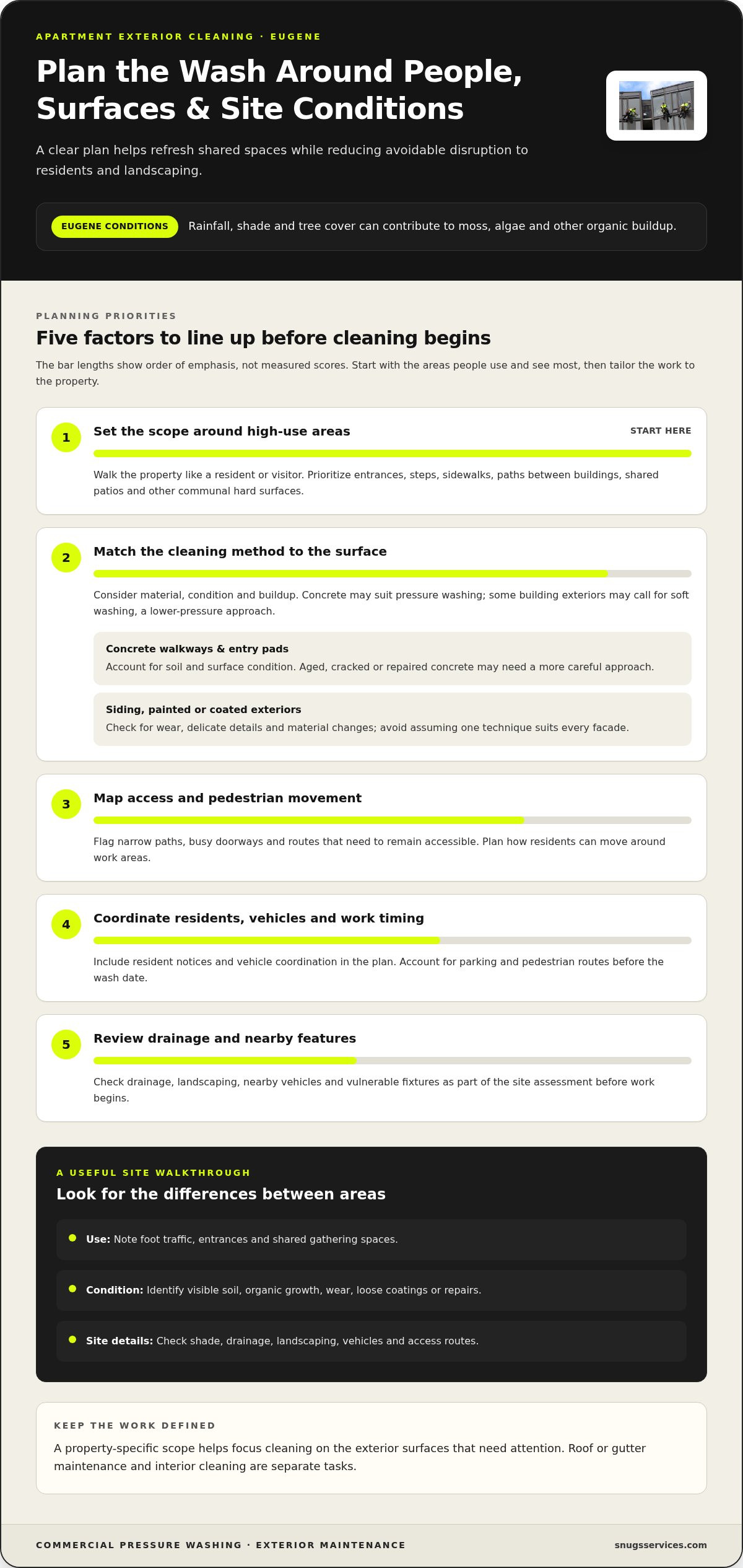
A clear plan helps keep apartment complex pressure washing Eugene organized while residents remain on site. Start by defining the work areas, then map how crews and residents will move through the property. Include landscaping and drainage in the site review from the outset. A useful sequence is to define the scope, map access, notify residents, schedule by zone, and review the completed work.
Before setting a date, walk the property and record the buildings, walkways, entrances, and communal hard surfaces included. Mark where vehicles park, which paths residents use, and where runoff could travel. This gives management and the cleaning team a shared view of the work and highlights where temporary access changes may be needed.
- Define the scope: List the surfaces and areas to be cleaned, including visible trouble spots and any areas outside the work.
- Map access: Mark entrances, pedestrian routes, parking spaces, service access, drains, slopes, and nearby landscaped areas.
- Notify residents: Share the scheduled work areas, timing, and expected changes to access or parking.
- Schedule by zone: Group buildings or shared spaces in a sequence that is easy to follow and communicate.
- Review the result: Walk the completed areas, note anything needing attention, and update the property’s maintenance record.
Preparing residents and shared areas before cleaning
Once the schedule is set, send residents a notice identifying the affected area, expected timing, and any temporary route or parking changes. Specify which entrance or walkway may be affected so people can plan their routines. Ask residents to move or secure personal items in the work area, and coordinate vehicle movement if parked cars could block access.
Plan pedestrian routes as well. Identify alternatives to busy entrances or narrow paths during active work, and explain them clearly in the notice. Specific communication helps reduce surprises and makes it easier for residents to move around the property.
Sequencing work across buildings and common areas
Divide the property into clear zones, such as a building frontage and its nearby walkways. A walkthrough can show where equipment can enter, where foot traffic concentrates, and how the ground slopes toward drains or planted areas. Use these observations to coordinate access and flag areas that need extra attention during the work.
Review runoff before work begins. Note nearby storm drains, low points, and landscaped areas, then include water management in the job plan. The City of Eugene and relevant local authorities set requirements that can depend on the work and site. Check current local guidance before making claims about wastewater handling, discharge, or permits.
After cleaning, compare the completed areas with the original scope. Check that shared routes and entrances are ready for normal use, and record any missed spots or surface concerns for follow-up. A consistent process makes the work easier to manage, explain to residents, and review.
How to assess an apartment pressure-washing plan in Eugene
A practical plan explains what will be cleaned, how the work fits the property, and how residents will be informed. For apartment complex pressure washing Eugene projects, look beyond a general instruction to “wash the exterior.” A useful scope identifies buildings, shared areas, surface types, visible problem spots, access needs, and drainage considerations. These details help management judge whether the plan reflects the actual site.
What a clear property-wide scope should describe
Review the scope alongside a site map or walkthrough notes. It should name each building or zone and distinguish concrete paths from siding, painted areas, and other exterior materials. Flag areas that need a tailored method because of surface condition or buildup. The plan should also account for access constraints, nearby landscaping, drainage routes, and spaces residents use throughout the day.
- Coverage: Buildings, entrances, walkways, and communal hard surfaces included in the work.
- Surface considerations: Material changes, worn finishes, and visible buildup that may affect the cleaning method.
- Site conditions: Parking, pedestrian access, planted areas, drains, and runoff pathways to account for.
Make exclusions clear too. Defined boundaries help prevent confusion during the work and make the final review more useful.
How to balance cleaning with resident access
Identify the entrances and pedestrian routes residents rely on, then compare the proposed sequence with those needs. For example, a plan can address one building frontage and its nearby path before moving to the next zone, rather than treating the entire property as one work area. Share the expected sequence and affected locations with residents once scheduled, without promising exact completion times or uninterrupted access.
Use this checklist to assess whether the plan is ready:
- Scope is specific: Each building, surface, and shared area is named, with problem spots noted.
- Methods suit the site: The plan recognizes differences between durable concrete and more delicate exterior materials.
- Access is considered: Parking areas, entrances, and pedestrian routes are accounted for in the sequence.
- Communication is planned: Resident notices explain which areas may be affected and when the work is scheduled.
- Drainage is addressed: Runoff pathways and nearby landscaped areas are considered, and current Eugene guidance is checked before making discharge or permit claims.
- Review is possible: The scope gives management a clear way to compare completed areas with planned work.
A defined plan makes coordination easier and gives managers a clear basis for reviewing the work. For apartment-property pressure washing tailored to site conditions and shared-area needs, Snugs Services provides pressure washing.
Apartment complex pressure washing in Eugene with Snugs Services
Apartment communities need exterior cleaning planned around the property and the residents who use its shared spaces. Snugs Services provides commercial pressure washing in Eugene as part of its exterior maintenance services. The company also serves communities across the Portland and Vancouver metro areas and other locations in the region.
Planning starts with understanding the surfaces and priorities on site. A concrete walkway, building facade, and busy entrance may each need a different approach. A clear scope and thoughtful coordination help property managers plan cleaning around shared areas, resident access, and the condition of the property.
A practical approach for Eugene apartment properties
Not every building or surface needs the same treatment. A useful plan identifies the areas to clean, considers materials and visible buildup, and accounts for how residents move through the community. Snugs Services brings commercial pressure-washing experience to apartment properties and can organize the scope around the specific surfaces and shared areas included in the work.
Managers can help shape the plan by noting priority areas and site conditions, including:
- Buildings and surfaces: Identify the facades, concrete, and shared hardscapes included in the project.
- Priority locations: Point out entrances, walkways, and gathering spaces that matter most to residents and visitors.
- Site conditions: Share access constraints, nearby landscaping, and drainage features that may influence the work plan.
- Resident needs: Describe common routes and spaces to consider when sequencing the cleaning.
With the scope defined, Snugs Services can tailor the cleaning approach to the surfaces and conditions involved. Planning around those details makes the work easier to coordinate and helps refresh shared spaces without treating the whole property alike.
Plan the next step for your apartment community
Before discussing the project, gather a simple outline of the property: buildings to include, priority areas, visible problem spots, and access considerations. These details provide a useful starting point for shaping a service plan around the community rather than a generic checklist. If the property has several buildings or distinct shared zones, list them separately to make the scope easier to understand.
For apartment complex pressure washing Eugene property managers can plan around site conditions and resident access, Snugs Services provides commercial pressure washing for apartment properties.
Contact Snugs Services to discuss pressure washing for your apartment property.
Make exterior care easier to plan next time
Use each apartment complex pressure washing Eugene project to create a practical reference for future upkeep. Record the areas addressed and any surfaces or access points that needed special attention. Clear notes help your team track changing priorities, communicate consistently, and make future planning more focused.
That record also helps property managers connect exterior maintenance with residents’ everyday experience of shared spaces. Start with the areas that matter most, then plan the work around how people use the property.
Contact Snugs Services to plan apartment complex pressure washing for your property in Eugene or elsewhere in the region.
Frequently Asked Questions
How often should an apartment complex be pressure washed in Eugene?
There’s no single schedule for every property, but apartment complex pressure washing Eugene managers may consider high-traffic walkways and entrances every 3 to 6 months, and building exteriors once or twice a year. Treat these intervals as planning guidelines, not fixed rules. Shade, tree cover, surface condition, and visible buildup can change what’s needed. Walk the property periodically and adjust priorities when grime returns or communal areas start looking neglected.
Can pressure washing damage apartment siding or paint?
Yes. Excessive pressure or an unsuitable technique can harm siding, loosen paint, or force water into vulnerable areas. Consider the material, its age, existing wear, and any loose or peeling finish before cleaning. Soft washing or another lower-pressure method may suit some surfaces, while durable materials can be assessed separately. Note known repairs and delicate details so they can be considered in the cleaning plan.
How can apartment managers prepare residents for pressure washing?
Give residents a notice with the scheduled date, affected areas, and any changes to entrances or parking. Include practical reminders about items in the work zone: move door mats, bicycles, patio furniture, and potted plants where possible, and close windows near exterior cleaning. If a resident relies on a particular route, account for that when sharing access information. Clear, specific instructions make it easier for people to prepare.
What areas of an apartment complex can be pressure washed?
Common exterior targets include concrete sidewalks, entry pads, shared paved patios, parking areas, and suitable building surfaces. The right method depends on the material and its condition, so a painted facade shouldn’t automatically receive the same treatment as a concrete walkway. Managers can also include a parking garage or other shared hardscape for assessment. Interior rooms and private belongings aren’t part of exterior pressure washing.
What should property managers consider about runoff during pressure washing in Eugene?
Plan where wash water will go before work starts. The City of Eugene’s guidance says polluted wash water shouldn’t enter storm drains; requirements vary with the water and cleaning method used. Include runoff handling in the site plan, and identify drains, slopes, and nearby landscaping during the walkthrough. Review current City guidance for the specific project rather than assuming all wash water can be handled the same way.
How long does apartment complex pressure washing take?
Timing depends on the size and layout of the complex, the amount of buildup, the surfaces included, and how work is staged around resident access. Cleaning a few walkways differs from addressing multiple buildings and shared paved areas. A defined scope and site walkthrough help clarify what the project involves, but don’t assume an exact duration before those details are considered. Managers can help by identifying access constraints and priority areas early.
Recent Comments