
A clean driveway shouldn’t leave a dirty trail to the storm drain. In Tualatin, pressure-washing runoff should be contained rather than allowed into storm drains. Wastewater containing hot water or chemicals may not enter them without an Oregon Department of Environmental Quality permit. Wash water recovery for pressure washing in Tualatin captures the water and residue produced during cleaning.
It’s easy to focus on the visible result: removing grime from concrete, siding, or other exterior surfaces. But wash water can carry sediment, soap, oil, and other residue, while storm drains often provide little treatment before water reaches local waterways. This guide explains how to contain and recover runoff, how residue can affect water quality, and why the disposal route matters. Site layout and the type of residue determine the approach, from protecting nearby drains to collecting water for appropriate handling. With a clear plan, pressure washing can clean a property while keeping dirty runoff contained.
Key Takeaways
- Professionals choose collection and containment methods based on the surface, runoff volume, and nearby drains.
- Sediment, soap, oil, and other residue can affect water quality, so controlling runoff matters as much as cleaning the surface.
- Keeping dirty wash water out of storm drains starts with planning where runoff will go and how it will be captured.
- A clear containment plan helps pressure washing pros in Tualatin clean thoroughly while protecting the surrounding property and waterways.
How pressure washing professionals collect and contain runoff
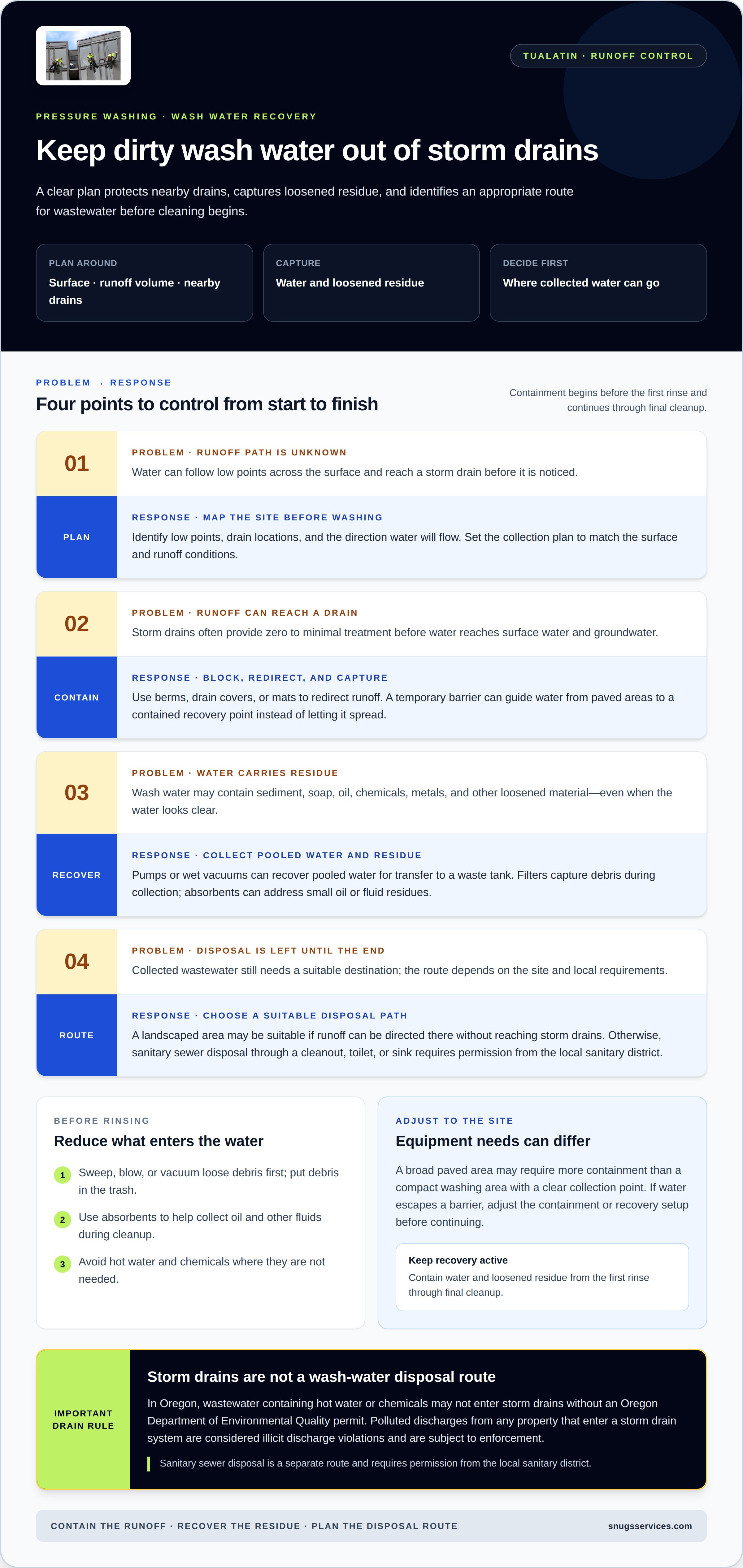
In Tualatin, pressure-washing professionals control runoff by protecting nearby storm drains, capturing wash water, and planning an appropriate disposal route. Wastewater containing hot water or chemicals may not enter storm drains without an Oregon Department of Environmental Quality permit. If runoff can’t be directed to a suitable landscaped area, collected wastewater may go to a sanitary sewer through a cleanout, toilet, or sink, with permission from the local sanitary district.
The site layout determines the collection plan. Before cleaning, operators identify low points, drain locations, and the direction water will flow across the surface. Berms, drain covers, or mats can redirect runoff away from storm drains. For example, a temporary barrier at the edge of a paved driveway can guide dirty water to a contained recovery point instead of letting it spread.
Professionals can use pumps or wet vacuums to recover pooled water, then transfer it to a waste tank for suitable disposal. Filters can capture debris during collection, while absorbents can address small oil or fluid residues. Equipment needs depend on the site: a broad paved area may require more containment than a compact washing area with a clear collection point.
For wash water recovery during pressure washing in Tualatin, the goal is to contain water and loosened residue from the first rinse through final cleanup. If water escapes a barrier, the operator can adjust the containment or recovery setup before continuing. This is especially important near storm drains, where a short, unobstructed flow path can carry residue directly into the drain system.
Disposal is part of the plan, not an afterthought. A landscaped area may be suitable if runoff can be directed there without reaching storm drains. Otherwise, using a sanitary sewer requires permission from the local sanitary district. The right combination of drain protection, collection equipment, and disposal planning keeps the cleaning controlled from start to finish.
Water-quality impacts of wash water
Wash water carries more than loosened dirt. Sediment can cloud water, hinder aquatic plant growth, and clog fish gills. On a concrete driveway, for example, rinsed soil and grit can travel beyond the cleaned surface. Even clear-looking rinse water may contain pollutants that are hard to see. Oil, soap, chemicals, metals, and fine particles may also be present, depending on the surface and accumulated residue.
Residential and commercial jobs share the same basic water-quality concern: wash water can carry contaminants into the environment. Recovery needs depend on the material being washed, the residue present, the cleaning method, and the path water could take. A home walkway with ordinary dirt differs from a commercial loading area with vehicle fluids, but the address alone doesn’t determine the risks. Professionals assess the surface and runoff conditions before choosing how to manage wash water.
Soap can affect waterways even when labelled biodegradable. As it breaks down, soap can deprive water of life-giving oxygen. Hazardous waste washed from outdoor surfaces can also harm aquatic life. Polluted water or fish may make animals and people sick or cause death. A stained area near a parking spot, for instance, deserves attention because washing may carry vehicle fluids off the pavement.
Prevention starts before rinsing. Dry cleanup methods such as sweeping, blowing, or vacuuming can remove loose debris first. Absorbents can help collect oil and other fluids during cleanup. This keeps some contaminants out of the wash water. The cleaning approach matters too: hot water and chemicals can increase wastewater’s environmental impact, so avoiding them where they aren’t needed can reduce it. For a driveway covered with dry leaves and grit, clearing the debris before washing reduces what can travel with runoff. Manage remaining residue according to its likely contaminants and the site’s drainage path.
Dirty pressure-washing runoff and storm drains
For pressure washing in Tualatin, keep dirty runoff out of storm drains. Oregon pressure-washing wastewater containing hot water or chemicals may not enter storm drains without an Oregon Department of Environmental Quality permit. Polluted discharges from any property that enter a storm drain system are considered illicit discharge violations and are subject to enforcement.
Storm drains often provide zero to minimal treatment before water reaches surface water and groundwater. That makes a driveway drain or curb inlet a poor destination for wash water carrying oil, soap, chemicals, metals, or sediment. A rinse that seems to disappear quickly can still carry residue into the drainage system.
Does Tualatin require permits or approval to discharge wash water? Wastewater containing hot water or chemicals requires an Oregon Department of Environmental Quality permit to enter storm drains. Sanitary sewer disposal requires permission from the local sanitary district.
Professionals plan the runoff route before washing begins. Directing water to a lawn or landscaped area away from storm drains may keep it out of the drain system. If landscaping isn’t suitable, collect the wastewater for sanitary sewer disposal through a cleanout, toilet, or sink, with permission from the local sanitary district.
Are there Tualatin or Oregon resources for commercial pressure-washing compliance? The Oregon Department of Environmental Quality is the permitting authority for wastewater containing hot water or chemicals that enters storm drains. Local sanitary district permission is relevant when recovered wastewater is routed to the sanitary sewer.
Dry cleanup reduces the debris that washing can carry into runoff. Sweeping, blowing, or vacuuming loose material first keeps it out of the rinse water; put the debris in the trash. For example, clearing leaves and grit from a paved entrance before cleaning reduces the solids that could wash toward a drain.
Berms, drain covers or mats, pumps, wet vacuums, filters, absorbents, and inflatable pipe plugs can block or collect runoff. Choose a method based on the surface, contaminants, drainage direction, and available disposal route. A controlled flow path helps ensure dirty water is collected or directed appropriately rather than left to reach a storm drain.
Pressure washing pros serving Tualatin
A reliable pressure-washing plan in Tualatin starts with the property, not the machine. Before cleaning, professionals assess the surface, nearby storm drains, runoff direction, and visible residue. A paved vehicle area, for example, may have oil or metal particles that ordinary dry sweeping won’t remove. Those conditions shape how crews protect drains and capture wash water.
Ask how runoff will be managed before work starts. A clear plan identifies drain covers, barriers, recovery equipment, and the intended disposal route. Berms or mats can divert water; pumps and wet vacuums can collect it. If wastewater cannot go to a suitable landscaped area away from storm drains, it should be collected for sanitary sewer disposal through a cleanout, toilet, or sink, with permission from the local sanitary district.
Oregon’s storm-drain rule applies to residential and commercial properties. Pressure-washing wastewater containing hot water or chemicals may not enter storm drains without an Oregon Department of Environmental Quality permit. Polluted discharges entering the storm drain system are illicit discharge violations subject to enforcement. The available facts establish enforcement, but provide no specific penalty amount.
Professionals should consider the residue before choosing a cleaning method. Dry sweeping, blowing, or vacuuming removes loose debris before washing; absorbents can soak up oil and fluids. For example, a commercial loading area with vehicle residue needs a runoff plan that accounts for those contaminants, rather than relying on a drain cover alone. A residential walkway also needs drain protection if dirty water could flow toward an inlet.
For a Tualatin property, the practical takeaway is simple: choose a crew that plans containment and disposal alongside surface cleaning. Ask how the site’s drains, runoff path, residue, and disposal route affect the work. Arrange professional pressure washing with a runoff plan suited to your property.
Snugs Services
Snugs Services provides pressure washing for property owners who need exterior surfaces cleaned with runoff concerns in mind. If a driveway, walkway, or other surface needs attention, share its location, nearby storm drains, and any visible oil or residue when discussing the work. These details help define the cleaning needs and runoff considerations for the property.
Snugs Services also provides gutter cleaning, installation, and repair. These services can address related exterior maintenance needs, such as gutters that need clearing or repair. The right next step depends on the surfaces and upkeep concerns at your property.
For wash water recovery and pressure washing in Tualatin, contact Snugs Services to discuss your property and cleaning needs.
Plan a cleaner result for your property
Make runoff planning part of the conversation before your next exterior cleaning project. A clear picture of the property helps shape the work: note which surfaces need attention, where access is available, and whether the area will be in use during cleaning. This gives the service team useful context and keeps the job focused on your priorities.
Thoughtful wash water recovery for pressure washing in Tualatin starts with matching the cleaning plan to the property instead of treating every surface the same. If you’re planning exterior maintenance, consider how the work fits with other upkeep you’ve been putting off. A coordinated plan can make caring for the whole property easier, one practical task at a time.
Contact Snugs Services about wash water recovery and share what your property needs. A cleaner, well-cared-for exterior is a good next step.
Frequently Asked Questions
What is pressure washing wash water recovery?
Pressure-washing wash water recovery means capturing and managing runoff produced during cleaning. Rather than letting rinse water spread across a site, a recovery setup gathers it so it can be contained and routed appropriately. For example, during fleet washing, collection equipment can capture water from the work area and transfer it to a holding tank, keeping the process organized while wastewater awaits planned disposal.
What equipment do pressure washing professionals use for water recovery and filtration?
Professionals may use drain covers or mats, berms, pumps, wet vacuums, filters, recovery hoses, and holding tanks. One described vacuum-recovery setup used a 100-gallon recovery tank; another fleet-washing setup used a 500-gallon waste tank. The right arrangement depends on the job’s runoff and collection needs. Filters can catch debris, while pumps or vacuums move collected water into a tank for controlled handling.
How do wash water recovery requirements differ for residential and commercial pressure washing?
The same runoff controls apply to residential and commercial jobs: assess the surface, residue, nearby drains, and water flow, then contain or direct wash water appropriately. Wastewater containing hot water or chemicals may not enter storm drains without an Oregon Department of Environmental Quality permit, and sanitary sewer disposal requires permission from the local sanitary district.
Recent Comments