
A clean roof isn’t a once-and-done result. With non-pressure roof cleaning in Vancouver, WA, homeowners can generally plan for cleaning every few years, with the interval depending on how much shade the roof gets. Moss and algae can return, so keeping an eye on the roof between cleanings helps you spot renewed growth early.
It makes sense to want lasting results without risking damage from aggressive washing. This guide explains what affects how long a roof stays clear, when to monitor for moss and algae, and which roof types suit non-pressure cleaning. You’ll also learn how a professional cleaning handles roof debris and what factors shape the process, so you can understand what to expect before scheduling service.
Key Takeaways
- Plan for roof cleaning every few years, adjusting your expectations for how much shade the roof receives.
- Watch for returning moss and algae, since growth can reappear between cleanings and uncontrolled moss can shorten a roof’s life.
- Learn how professional cleaning removes roof debris and why a non-pressure approach is important for suitable roofs.
- Understand which roof and property factors influence a cleaning quote in Clark County.
How long will my roof stay clean?
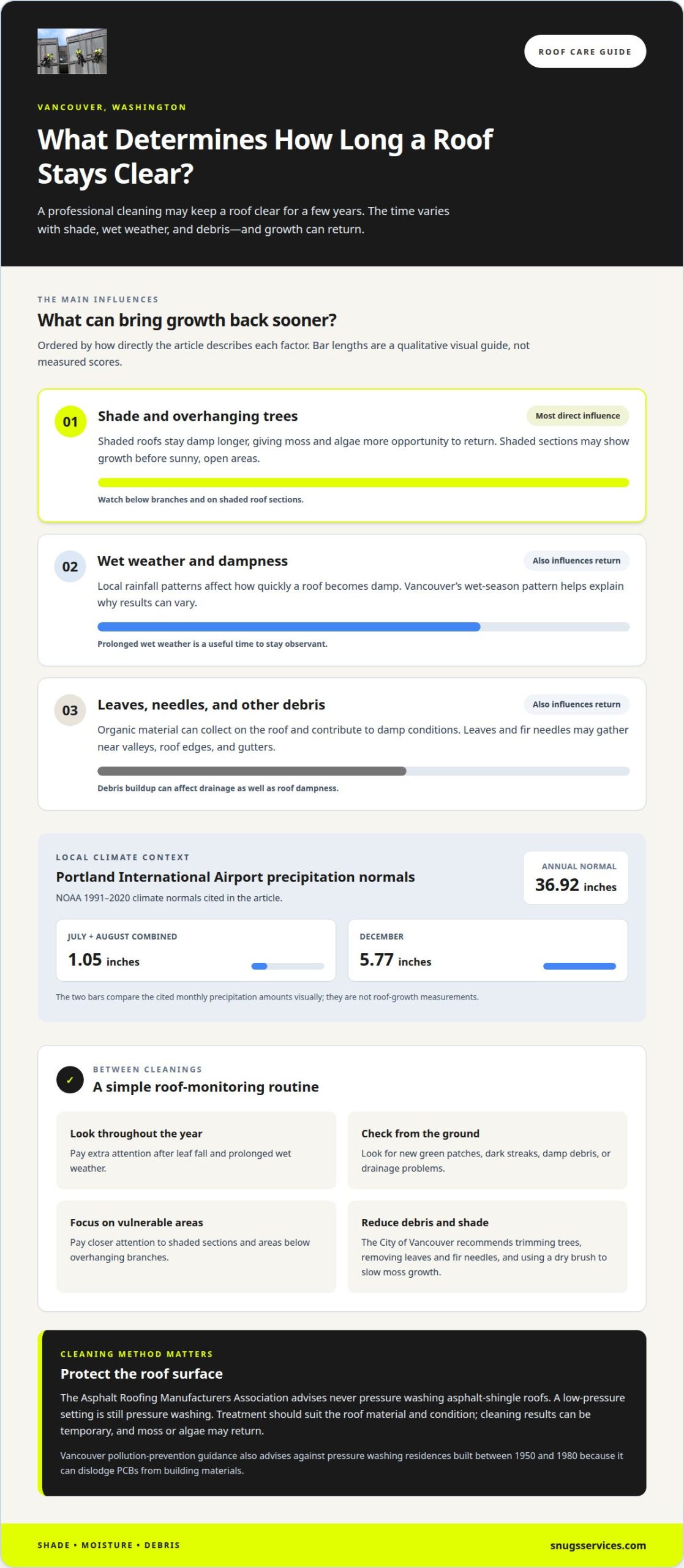
A professionally cleaned roof may stay clear for a few years, but the interval depends in part on shade. Roofs beneath overhanging trees stay damp longer, giving moss and algae more opportunity to return. A sunny, open roof may remain clear longer, while shaded sections can show growth first.
Vancouver’s wet-season pattern helps explain why results vary. NOAA’s 1991-2020 climate normals show Portland International Airport receives 1.05 inches of precipitation in July and August combined, and 5.77 inches in December. The annual normal is 36.92 inches. Local rainfall, roof shade, and debris accumulation all influence how quickly the surface becomes damp or collects organic material.
Algae streaks and moss are different issues. The Asphalt Roofing Manufacturers Association describes algae streaking on asphalt roofs as discoloration and cautions that cleaning results are temporary. It also advises never pressure washing asphalt-shingle roofs. That warning concerns pressure washing, not every non-pressure method; treatment still depends on the roof’s material and condition.
Reviews can help set practical expectations. Look for comments about a similar roof type, visible results, debris handling, and follow-up. A homeowner’s review describes that roof and service visit, not a guaranteed result for every surface. When assessing roof cleaning in Vancouver, Washington, compare the details, not just the star ratings.
A guarantee or warranty should have clear written terms. Check what outcome it covers, how long coverage lasts, and whether returning moss or algae is included. A guarantee is not a promise that growth will never return. Don’t assume the same duration applies to every service.
Roof types excluded from service can differ by provider and treatment method. For example, the Asphalt Roofing Manufacturers Association advises against pressure washing asphalt shingles. Fragile materials, existing damage, and roof condition also affect the suitable approach. For Vancouver and the Portland-Vancouver metro area, check that the service covers your location and roof-cleaning needs.
How often to monitor roofs for moss and algae
Monitor the roof throughout the year, especially after leaf fall and prolonged wet weather. From a safe ground-level viewpoint, look for new green patches, dark streaks, damp debris, or drainage problems. Pay closer attention to shaded sections and areas below overhanging branches. These signs can reveal returning growth before it spreads.
Vancouver’s maintenance guidance offers practical ways to slow moss between cleanings. The City of Vancouver recommends trimming trees, removing leaves and fir needles, and using a dry brush to slow moss growth. A professional can assess where debris gathers and whether branches shade the roof. Clearing debris also helps reduce damp conditions that favor moss.
Choose the cleaning method carefully. The Asphalt Roofing Manufacturers Association advises never to pressure wash an asphalt-shingle roof. A low-pressure setting is still pressure washing, so it shouldn’t be assumed safe for asphalt shingles. Vancouver’s pollution-prevention guidance also advises against pressure washing residences built between 1950 and 1980 because it can dislodge PCBs from building materials.
Moss and algae treatment results can change over time. The Asphalt Roofing Manufacturers Association cautions that roof-cleaning results are temporary and discoloration may return. Washington State University Extension’s demossing study manual warns that uncontrolled moss shortens a roof’s life. Monitoring helps you distinguish returning discoloration from established moss, so the next professional method can suit the roof’s condition.
Professional moss treatment should account for the roof material, visible growth, and loose debris. A careful assessment helps avoid force that could disturb shingles or other roof surfaces. The approach may differ between a shaded section with moss and an exposed area with algae streaks. In Vancouver and Portland, regular observation and timely professional attention can help manage growth without treating every roof the same way.
Roof cleaning process and debris removal
A professional roof-cleaning visit starts with a visual assessment of the roofing material, slope, visible growth, and loose debris. The method should suit the surface, not rely on force. Before cleaning, the crew identifies nearby windows, walkways, and driveways that may need protection from falling material or runoff. This first step helps protect the roof and surrounding exterior.
Next, the crew clears loose material that could obstruct drainage or spread during treatment. Leaves, fir needles, and small branches can collect near valleys, roof edges, and gutters. Removal should be controlled because scraping or pulling aggressively can disturb roofing materials. A trained professional chooses an approach that suits the debris and roof condition.
Debris handling matters after treatment, too. The crew checks roof valleys and gutters for loosened leaves or needles, then removes accessible buildup during cleanup. Keeping debris from blocking drainage helps water flow toward the gutter rather than pool around roof details. The crew also checks nearby windows and the driveway for material that fell during the work.
Results may not be immediate. Treatment can take time to affect moss, while loose debris may need separate removal. A clear process distinguishes cleaning from physical debris removal, protects roofing surfaces, and leaves the surrounding area tidy. Before work begins, ask what method is planned and what cleanup includes. This helps clarify the service without confusing high-pressure washing with careful roof treatment.
What factors affect roof cleaning prices in Clark County, WA?
Roof-cleaning quotes in Clark County depend on the work each roof requires. A broad, steep roof takes different access and labor than a small, gently sloped surface. Roof shape matters too: dormers, valleys, skylights, and multiple roof sections can make treatment and cleanup more involved.
Roof material also shapes the cleaning method. Asphalt shingles, metal panels, and tile don’t all respond to the same treatment. The Asphalt Roofing Manufacturers Association advises against pressure washing asphalt-shingle roofs, so the estimate should reflect a suitable non-pressure approach. Existing wear, loose materials, or visible damage may also affect how carefully the crew can work.
Growth and debris influence the scope. A roof with light algae staining differs from one with established moss, thick leaf buildup, or fir needles packed into valleys. A professional assessment considers where growth appears, how much material needs removal, and whether roof edges and gutters need attention. These details affect the work and cleanup involved.
Access is another practical factor. Limited space beside a Vancouver home, nearby trees, or driveway obstacles can affect equipment placement and debris handling. Roof height and slope also influence safe access. Describing these site conditions helps the quote reflect the property rather than rely on a generic estimate.
The quote depends on the roof and the work required, including its size, pitch, material, access, growth, and debris-removal needs. Ask for a written scope that separates roof treatment from related work, such as gutter cleaning, so you understand what the quote covers. A defined scope also makes it easier to compare the proposed method and cleanup responsibilities.
For a property-specific estimate in Clark County, request a roof-cleaning quote with the roof material, visible growth, and access conditions. Those details help shape a practical scope before work begins.
Snugs Services: Roof Cleaning
Snugs Services provides roof cleaning for property owners in Vancouver, WA, dealing with moss, algae, or accumulated debris. Turn to the team when roof growth needs professional attention or you want a clear assessment of the work involved. The method should suit the roofing material and its condition, rather than rely on forceful washing.
Roof debris can also affect drainage. Snugs Services offers gutter cleaning to clear buildup and help address roof-cleaning and drainage needs together. If your gutters need more than cleaning, gutter installation is also available. Each service addresses a different part of exterior upkeep, so the scope can suit your home’s condition.
For a roof that needs careful attention, share its material, visible growth, and any debris concerns when arranging service. Contact Snugs Services to discuss roof cleaning for your property.
Plan your next roof-care step
Roof maintenance works best as part of a broader plan for your home’s exterior. If you’re considering non-pressure roof cleaning in Vancouver, WA, think about the result you want and any related upkeep around the property. Snugs Services also offers pressure washing, gutter cleaning, and gutter installation, helping homeowners address separate exterior needs through one local provider. Pressure washing is distinct from non-pressure roof cleaning, so the method must match the surface.
A useful next step is to describe what you’ve noticed and what you want addressed. That gives the conversation a practical starting point, whether you’re planning roof cleaning or coordinating other exterior work. There’s no need to wait until buildup becomes your only concern. Contact Snugs Services about roof cleaning to discuss the right next step for your home and keep its exterior care moving forward.
Frequently Asked Questions
Are you licensed, bonded, and insured?
Licensing, bonding, and insurance are separate credentials, and they shouldn’t be assumed from a company’s cleaning services. The company information provided for Snugs Services doesn’t establish these credentials, so this article can’t make a verified yes-or-no claim. For a roof-cleaning decision, focus on confirmed service details and a written scope describing the work, surface, and cleanup involved.
How effective is your roof moss treatment, and will it grow back?
Moss treatment addresses existing growth, but moss can return as roof conditions change. Shaded areas, lingering moisture, and accumulated organic matter can encourage renewed growth. The Asphalt Roofing Manufacturers Association cautions that roof-cleaning results are temporary, so treatment is not a permanent barrier. For example, a shaded roof section may need closer monitoring than a nearby, more exposed section.
How can a professional roof cleaner help slow moss growth between cleanings?
A professional can remove roof debris and provide roof cleaning or moss treatment suited to the property. Debris around roof details can retain moisture, so clearing buildup supports ongoing maintenance. Gutter cleaning can also clear accumulated material and help maintain drainage. Overhanging branches may contribute shade, but tree trimming is separate from roof-cleaning work.
What is non-pressure roof cleaning and how does it work?
Non-pressure roof cleaning avoids using pressurized water to remove roof growth. The professional assesses the roof material and condition, then selects an appropriate cleaning or treatment approach. For non-pressure roof cleaning in Vancouver, WA, the key distinction is that the method is not forceful pressure washing. The exact process depends on the surface and the buildup being addressed.
Which roof cleaning methods are safe for asphalt shingles?
The Asphalt Roofing Manufacturers Association advises never to pressure wash an asphalt-shingle roof. That gives homeowners a clear boundary: avoid pressure washing shingles. A non-pressure approach may be suitable, but the roof’s condition and treatment method still matter. For example, loose or damaged shingles call for careful assessment before cleaning, not forceful removal of moss or debris.
Which Vancouver, WA companies offer non-pressure roof cleaning?
Snugs Services offers roof cleaning and moss treatment for homeowners in the Vancouver area. Turn to the team when addressing roof growth or buildup. Ask for a clear description of the proposed work, including how the method suits your roof material and what debris cleanup covers. Those details help you understand the service scope before proceeding.
Recent Comments