
A dependable exterior plan relies on regular attention, not one major cleanup. Many homeowners schedule exterior cleaning once or twice a year, then adjust the timing to suit the home’s surroundings and how quickly dirt, pollen, or debris builds up. Pair scheduled exterior maintenance services with seasonal inspections to keep roofs, gutters, siding, windows, and paved areas on the calendar instead of waiting until they look overdue.
A simple schedule helps organize exterior upkeep, which can otherwise feel like a long list of separate jobs with different timing. Plan what to include, when to handle common cleaning tasks, and how often to revisit each area. Spring and fall checks can catch seasonal needs, while a tailored schedule accounts for busy walkways, tree cover, and local weather. The aim is to maintain the property and avoid preventable surprises throughout the year.
Key Takeaways
- Build a service calendar around the exterior areas that need attention, and leave room to address problems noticed during inspections.
- Account for tree cover, weather, pollen, and foot traffic when deciding how often to schedule cleaning.
- Plan gutter care around seasonal debris, and include checks for siding, window seals, and door weatherstripping.
- Choose a monthly, quarterly, or annual cadence based on how quickly your home gets dirty and which tasks need regular attention.
1. What Are the Key Types of Exterior Home Maintenance?
Build a practical checklist around surfaces, seasons, and safety. Include roofs, gutters, siding, windows, doors, foundations, walkways, fences, and gates. Record inspection dates, cleaning tasks, and any follow-up repairs. Monthly reminders can track recurring needs, while seasonal appointments account for changing weather and debris.
In spring, assess roofs and gutters for winter wear, clean siding as needed, and check fences and gates. Before fall, arrange gutter clearing and inspect window and door seals. In winter, watch for snow buildup or ice dams on the roof, and note foundation cracks or pooling water. Keep soil graded away from the foundation so water drains outward.
- Cleaning: Note which siding, windows, and walkways need attention.
- Inspections: Record damage, leaks, loose fittings, and needed repairs.
- Reminders: Set dates for seasonal visits and any follow-up work.
Handle routine visual checks from safe, accessible areas and keep the maintenance calendar up to date. Leave roof inspections, elevated cleaning, garage-door safety checks, and repairs involving cracks or seals to trained professionals. Groundskeeping workers rake and mulch leaves and clear snow and debris from walkways and parking lots, according to the U.S. Bureau of Labor Statistics.
A professional garage-door safety check can include the 2×4 test, using a board placed flat on the floor beneath the fully open door. Add the result and any needed service to the maintenance record. For sealing checks, have a professional assess visible gaps around windows and doors, plus cracks that could allow water to reach vulnerable surfaces.
Licensing and insurance requirements vary by state and by type of work. Treat them as separate considerations, and consult the relevant state agency for rules that apply to the specific service.
2. How Often Should You Schedule Exterior Cleaning Services?
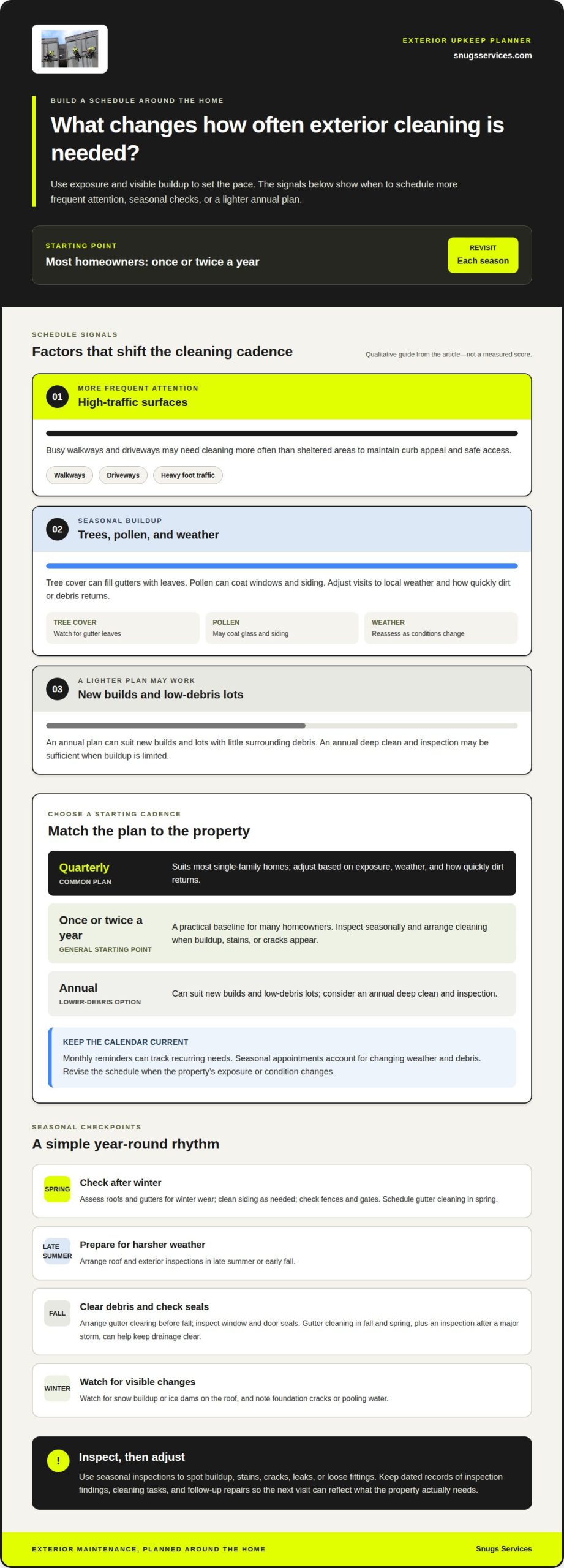
Most homeowners should schedule exterior cleaning at least once or twice a year. Quarterly cleaning plans suit most single-family homes, while annual plans can suit new builds and low-debris lots. A plan for scheduled exterior maintenance services should reflect tree cover, traffic, weather, and how quickly dirt returns. High-traffic surfaces may need attention more often than sheltered areas.
Tree cover can fill gutters with leaves, while pollen can coat windows and siding. High-traffic walkways and driveways may need more frequent cleaning to maintain curb appeal and safe access. Inspect the property seasonally, then arrange cleaning when buildup, stains, or cracks appear. Prompt attention helps reduce the chance that water and debris affect nearby surfaces.
Use seasonal tasks to make the calendar practical: assess roofs and gutters for winter damage in spring, then clear gutters before fall. Arrange roof and exterior inspections in late summer or early fall, ahead of harsher weather. If the home has little surrounding debris, an annual deep clean and inspection may be sufficient. Adjust the schedule as the property’s exposure or condition changes.
For resale or appraisal preparation, keep dated maintenance records and clear photos of completed work. These documents can help show upkeep, but they do not determine an appraisal or change insurance policy terms. Review your policy’s specific conditions rather than assuming cleaning affects coverage.
When choosing a maintenance company, look for a clear written scope, visit records, and consistent inspection notes. These details help track recurring buildup, cracks, and follow-up work. Using the same checklist at each visit makes scheduled exterior maintenance services easier to manage as the seasons change.
For example, professional seasonal exterior cleaning can address recurring buildup before it spreads across nearby surfaces. Match each visit to the home’s exposure, weather, and inspection findings, then revise the calendar when conditions change.
3. Gutter, siding, window, and door maintenance
Gutters need a clear path from the roof edge to the downspout. Debris can block drainage and leave water near siding or landscaping. Schedule gutter cleaning in fall and spring, and add an inspection after a major storm. Working with an exterior cleaning specialist like So Clean Home Service helps clear trapped debris and moss, while an inspection can identify leaks, loose fittings, or damaged sections that need repair. If problems recur, gutter repair or replacement may address the underlying issue.
During siding checks, note stains, cracks, chipped paint, and shifted panels. Soft washing can clean vinyl and painted siding, stucco, and wood decks. Use summer maintenance to assess wood surfaces that may need painting or staining. Keep landscaping from trapping leaves against walls, where damp debris can contribute to water damage, or consult outdoor specialists like Handy Landscapes to manage garden overgrowth and related exterior improvements.
For windows, record cracked glass, failing seals, and worn weatherstripping. Seasonal inspections can identify gaps before they admit rain or drafts. A yearly professional check can also assess weatherstripping and other visible issues. Treat cleaning as a separate task: pollen on glass may call for more attention during spring and summer.
Include doors in the same weatherproofing review as windows. Note the condition of frames, caulking, seals, and locks. In fall, schedule weatherization and repairs around doors and windows, especially where caulk has separated. These checks can reveal openings where wind-driven rain might reach interior finishes.
Connect findings across surfaces. For example, a stained wall below a gutter joint may point to a drainage issue rather than dirty siding alone. Ask the maintenance team to record the location, visible condition, and recommended next step. That record helps distinguish routine cleaning from work that requires repairs.
Keep roof edges on the same checklist as gutters, doors, and windows. After storms, note visible debris, displaced components, or water marks for professional assessment. A clear record helps the service team prioritize cleaning and repairs without overlooking related surfaces. Schedule work based on the condition found, rather than treating every mark as the same problem.
4. Monthly, quarterly, and annual plan options
A monthly plan can suit homes where pollen, dust, traffic, or nearby trees create recurring buildup. Each visit can focus on a few surfaces, such as windows, entry areas, and walkways. Record new stains, debris, or wear so the next visit reflects changing conditions. Prioritize the areas that get dirty fastest instead of repeating identical work each month.
Quarterly plans offer a seasonal rhythm for many single-family homes. A spring visit can address winter residue, while summer work can focus on the driveway and patio. Fall cleaning can prepare gutters and exterior surfaces for leaf buildup. Winter visits can focus on weather-related debris and access areas. Adjust each appointment to local conditions and the home’s materials.
An annual plan may fit a newer home on a low-debris lot. It can pair one deep clean with an inspection, then add professional work if findings call for it. Annual pressure washing is recommended for exterior surfaces, but the appropriate method depends on the material. Concrete can be pressure washed, while siding may need soft washing to avoid unsuitable pressure.
Monthly professional maintenance can also include cleaning porch and deck surfaces, with a calendar entry for at least once a month. Keep the scope specific: name the surface, note the visible issue, and record whether the appointment includes washing or inspection. This makes the plan easier to adjust when winter weather leaves salt or debris behind, or when a driveway accumulates grime sooner than expected.
Choose the cadence by balancing how quickly dirt returns against the surfaces that need attention. If monthly visits feel excessive, group priority tasks into quarterly appointments; if one annual clean leaves recurring buildup, increase the frequency for affected areas. For a clean driveway and refreshed exterior, schedule professional pressure washing as part of the plan.
Snugs Services
Snugs Services can help keep exterior cleaning and gutter needs on your maintenance calendar. Pressure Washing can refresh dirty exterior surfaces, while Gutter Cleaning clears debris. Gutter Repair and Gutter Installation address damaged or inadequate gutters. Match each service to inspection findings, such as recurring buildup on walkways or gutters that need attention before the next season. A professional schedule can also take demanding ladder work off your list. Contact Snugs Services to plan the exterior maintenance your property needs.
Make Your Exterior Plan Easier to Maintain
Turn your maintenance calendar into a working plan by assigning each task a priority and a place in the year. Update the schedule as conditions change, noting new wear, debris, or areas that need attention. A flexible plan makes scheduled exterior maintenance services easier to manage and helps keep upkeep from becoming a last-minute scramble.
For tasks that call for professional equipment or experience, Snugs Services provides Pressure Washing, Gutter Cleaning, and Gutter Installation. These services can address dirty exterior surfaces and gutter needs as part of your home’s upkeep plan.
Choose the next task you’d like to take off your list, then contact Snugs Services for a quote. A well-kept exterior starts with a manageable plan and a clear next step.
Frequently Asked Questions
What Should Be Included in Your Maintenance Plan?
A strong plan names each exterior area, its assigned service, and the condition that triggers follow-up. Add access notes and priorities, and leave space for completion photos so later visits can distinguish recurring stains from new damage. For example, note whether a damp patch beneath an eave appears after rain. That detail can guide the next inspection.
How Often Should You Schedule Exterior Cleaning Services?
Many homes benefit from exterior cleaning once or twice a year, with more frequent attention for high-traffic areas. Let actual buildup guide adjustments: a tree-shaded driveway or a walkway beside a busy entrance may get dirty faster than a sheltered wall. A seasonal visual review can show which areas need another professional visit before grime becomes difficult to remove.
How Often Should You Schedule Maintenance?
Ready for Consistent, Stress-Free Exterior Maintenance?
Start with the area causing the most concern, such as recurring debris near an entrance or a surface that quickly loses its clean appearance. Decide which task to handle first, then set a reminder for the next review. A focused first step makes a broader maintenance plan easier to follow and adjust as your home’s needs change.
Is a Recurring Exterior Cleaning Subscription Worth the Cost?
A recurring plan may suit a property that needs predictable visits to avoid long gaps between cleanings. Compare its service scope and frequency with a one-time cleaning option over a 12-month plan. The price depends on the case and is provided after a quote request; relevant factors include property condition, surfaces, access, and selected tasks.
What Are the Key Types of Exterior Home Maintenance?
Exterior maintenance combines cleaning and inspections with repairs and seasonal upkeep. A practical plan can cover roof and gutter condition, siding, windows and doors, drainage near the foundation, walkways, and landscaping clearance. Add snow, ice, or storm-related checks when local weather calls for them. The right mix depends on the property’s materials, exposure, and visible wear.
Recent Comments