
A high facade doesn’t always require a worker to reach it from an elevated platform. Drone facade cleaning in Keizer uses a commercial drone tethered to a ground-based water and cleaning-solution supply, applying pressure washing or soft-wash treatment to exterior surfaces. It can reach difficult areas while the operator remains on the ground.
This approach can help when building height or access makes exterior cleaning more involved. The right method still depends on the surface and buildup: drones can reach difficult areas, but stubborn marks may need a different cleaning approach.
Here, you’ll learn how drone-assisted facade cleaning works, what affects access and coverage, and when another cleaning method may be more suitable. Snugs Services provides exterior cleaning in Keizer and nearby communities, including Salem.
Key Takeaways
- Understand how a ground-tethered drone system delivers water and cleaning solution to elevated exterior surfaces.
- Learn why reducing the need for elevated worker access can help with difficult facade areas, while some stains still call for hands-on cleaning.
- See how building layout, access conditions, and surface needs shape cleaning coverage and pace.
- Discover when Snugs Services’ pressure washing or gutter services can help keep a property’s exterior clean and maintained.
Worker safety and elevated-access alternatives
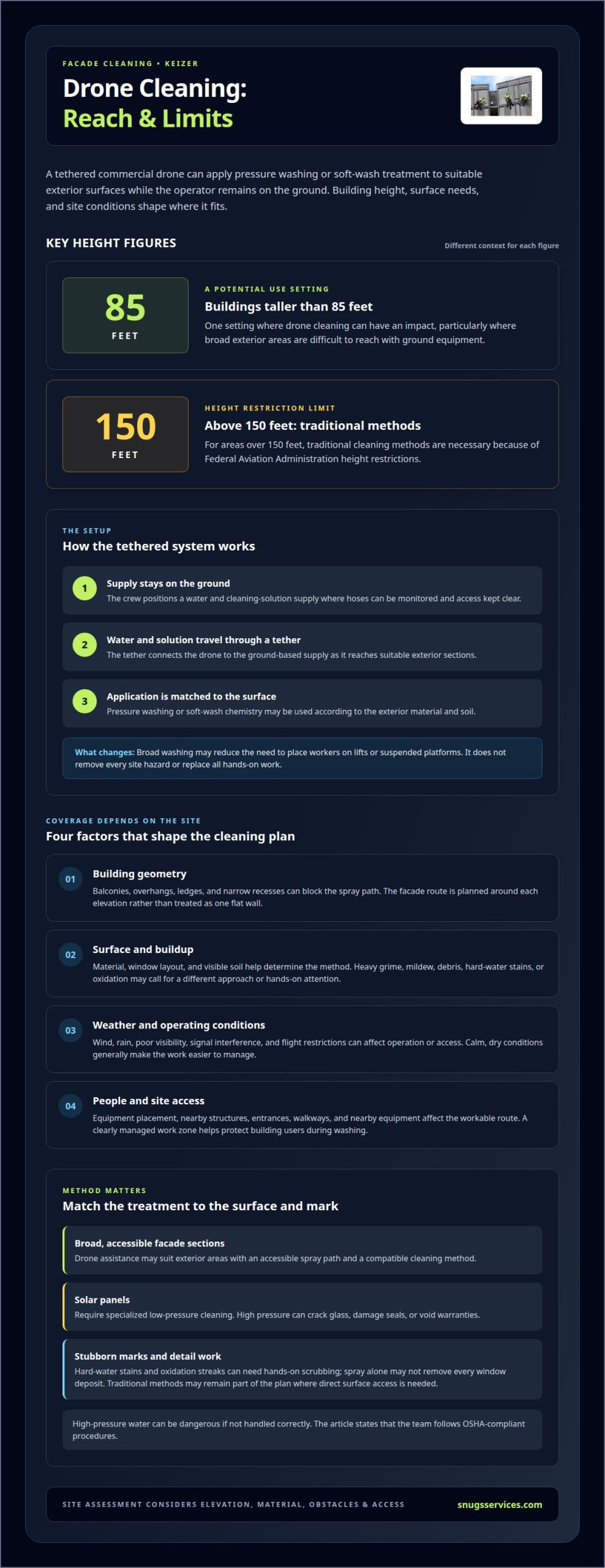
Drone facade cleaning in Keizer changes where workers operate: the cleaning equipment is flown from the ground, while water and cleaning solution travel through a tether from a ground-based supply. This setup can reduce the need to place workers on lifts or suspended platforms for broad exterior washing. It doesn’t remove every site hazard. The crew still needs to manage the tether, keep people clear of the work area, and control water around entrances, walkways, and nearby equipment.
Roof anchoring and drone operation are different access methods. The tether serves the drone’s ground-supply setup; roof anchoring may be relevant to other access methods. If a facade has sections that require workers to reach the surface directly, traditional methods may still be part of the plan. The access method should match the task: broad washing may suit drone application, while close inspection or hands-on stain removal may require workers at the surface. For areas over 150 feet, traditional cleaning methods are necessary because of Federal Aviation Administration height restrictions.
Access and safety depend on the site, not just the building’s height. Before work begins, the team can assess the facade, note obstacles such as balconies or solar panels, and plan equipment placement without blocking access. Nearby structures and site conditions can affect the workable route. A clearly managed work zone helps protect occupants and supports controlled cleaning, while recognizing that each facade has different access needs.
- Ground setup: Position the water and chemistry supply where workers can monitor hoses and maintain a clear path.
- Access choice: Use drone application for reachable exterior areas; retain traditional methods where height or surface work calls for them.
- Site protection: Mark the working area around doors, walkways, and equipment before washing starts.
- Surface review: Identify delicate features and hard-to-reach corners so the application can be adjusted efficiently.
Drone-assisted cleaning can reduce the need to reposition elevated access equipment, but it still requires planning. A suitable cleaning method and a clearly managed work zone help protect workers and building users while keeping the work focused.
What is drone cleaning and how does it work?
A cleaning drone can reach difficult-to-access exterior surfaces while the team manages the work from the ground. In the Willamette Valley, wind, rain, and poor visibility can affect drone operations and cleaning conditions.
Exterior Cleaning Applications
For multi-story buildings, drone-assisted cleaning can address suitable facade sections and high windows. The method must suit the surface and the cleaning task. Solar panels require specialized low-pressure cleaning; high-pressure can crack glass, damage seals, or void warranties. High-pressure water can be dangerous if not handled correctly. Our team follows OSHA-compliant procedures.
Buildings taller than 85 feet are one setting where drone cleaning can have an impact. Offices, campuses, and other large sites may have broad exterior areas that are difficult to reach with ground equipment. Drone washing is generally an exterior cleaning method, not a solution for interior glass. A site assessment helps define which elevations and surfaces the cleaning plan covers.
Access to Difficult Exterior Areas
A drone can reach exterior sections above landscaping, entrance canopies, or uneven ground where positioning access equipment may be challenging. The operator controls its position while the ground system supplies water or cleaning solution through a tether. This approach can reach areas that are awkward to access directly, but balconies, overhangs, and narrow recesses may interrupt the spray path.
Before work is quoted, the facade can be assessed by elevation, material, window layout, obstacles, and visible buildup. These details help determine the cleaning method and which sections are accessible. To request a quote, share the building dimensions, surface details, and access constraints. The scope should explain the planned method and how obstacles and site safety will be managed.
For an efficient operation, the crew plans a route across each facade and adjusts for wind, building geometry, and nearby activity. Calm, dry conditions generally make drone operation and cleaning easier to manage; rain can affect both. Weather, signal interference, and flight restrictions may limit access, especially around dense buildings. A clear plan sets realistic expectations without assuming every exterior surface is reachable.
Precision cleaning of hard-to-reach areas
Drone washing can direct cleaning solutions toward facade sections that are awkward to reach with scaffolding, such as recessed walls, upper window bands, and surfaces above entrance canopies. Precision depends on the building’s shape, the drone’s approach, and an unobstructed spray path. Balconies, ledges, and architectural details can block coverage, so crews plan the route around each elevation rather than treating the wall as one flat surface.
For a Keizer building, the cleaning method should match its material and soil. Suitable, accessible areas may be cleaned with drone assistance, while heavy grime, mildew, or debris may require a different approach. Hard-water stains and oxidation streaks can need hands-on scrubbing. Window cleaning also depends on the mark and surface, since spray alone may not remove every deposit.
- Map the facade: Identify recesses, overhangs, window frames, and other features that interrupt the route.
- Match the application: Choose pressure washing or soft-wash chemistry to suit the exterior surface and soil.
- Plan detail work: Separate broad washing from stains that need direct, hands-on attention.
Service geography matters, too. Keizer is in Oregon, and Snugs Services serves customers in Oregon and Washington, including Portland, Gresham, Salem, Eugene, Vancouver, Beaverton, Tualatin, Tigard, Hillsboro, Longview, Richfield, Battle Ground, Camas, Wilsonville, and Keizer. The property’s actual site, access, and facade features shape the cleaning plan, so each building needs an approach suited to its conditions.
The key distinction is between surfaces that are suitable for drone-assisted cleaning and details that need another method. Open surfaces with clear access may be a good fit. Deep recesses, stubborn mineral marks, or built-up debris need a more targeted plan. This assessment sets realistic expectations for coverage and finish, whether the building is in Keizer or elsewhere in the region.
Drone cleaning speed and coverage
Drone-assisted cleaning can reach difficult exterior surfaces without repositioning scaffolding around each elevation. For a Keizer property, the pace depends on building layout, soil, access, and weather, not a fixed area-per-hour figure. An open wall allows a more continuous route than a facade broken up by balconies, ledges, and recesses. Planning by elevation helps set a workable sequence.
Coverage also depends on the finish required. Cleaning a lightly soiled surface differs from addressing heavy grime or stubborn marks. Setup, repositioning, detailed edges, and sections requiring another method all affect the time needed. A cleaning plan should distinguish open wall surfaces from windows, recesses, and architectural details that need slower, more precise work.
Dense environments can affect access and pace. Signal interference and flight restrictions may limit drone operations in urban areas. Nearby structures can restrict the route, while wind or site activity can interrupt work. Crews plan around these conditions, equipment placement, and pedestrian movement. A clear route supports consistent coverage while accounting for the differences between elevations.
- Surface layout: Open walls allow planned passes; ledges and recesses create additional detail work.
- Soiling: Built-up grime or stubborn marks may need deeper attention than routine washing.
- Site conditions: Obstacles, activity, and flight restrictions can change the route.
- Scope: Separate broad washing from detailed areas when planning coverage and schedule.
Building maintenance works best as a planned task, not simply a race to finish. Drone access can reduce reliance on elevated equipment in suitable environments, helping limit disruption around dangerous access work. For an exterior cleaning plan tailored to your property, request a facade cleaning quote.
Snugs Services
Snugs Services helps Keizer property owners plan exterior maintenance when difficult access, buildup, or nearby gutters complicate upkeep. If drone-assisted cleaning is not suitable for a particular surface or stain, Snugs Services also provides pressure washing for appropriate exterior areas. Gutter cleaning helps remove debris from roof drainage systems, while gutter installation and repair address damaged or inadequate gutters.
Start by identifying the building’s surfaces and the specific maintenance issue, rather than treating every exterior problem alike. Snugs Services provides exterior cleaning and gutter services to help maintain properties. Contact Snugs Services to discuss your building’s cleaning and maintenance needs.
Plan Your Building’s Next Clean
For drone facade cleaning in Keizer, match the cleaning approach to your building’s surfaces, access needs, and visible soil. A clear scope distinguishes broad facade cleaning from areas that need more targeted attention, so the work can be planned around the property rather than treated as a one-size-fits-all job.
Snugs Services also provides pressure washing, gutter cleaning, and gutter installation for exterior maintenance needs. Share what you’re seeing on the building and which areas need attention, and the team can discuss a suitable next step. Contact Snugs Services to discuss cleaning and move toward a cleaner, well-maintained property.
Frequently Asked Questions
Are your drone pilots FAA-certified?
Snugs Services offers drone-assisted cleaning for difficult-to-access surfaces, but the service itself doesn’t establish a pilot’s FAA certification. Certification is a credential held by an individual pilot, not a feature of cleaning equipment. For property owners, the practical distinction is to consider the planned work, facade access, and cleaning method alongside the operator’s qualifications.
Are there drone facade cleaning companies serving Keizer, Oregon?
Yes. Snugs Services serves Keizer and provides drone-assisted cleaning for difficult-to-access exterior surfaces. The company also serves Salem, giving property owners in both Oregon communities a local option for exterior maintenance. For a building with high windows or hard-to-reach facade sections, the cleaning scope should identify which surfaces need attention and how the site layout affects access.
What buildings and facade materials can drones clean safely?
Drone-assisted cleaning can be used on suitable exterior surfaces, including facades and high windows, when the method fits the material and condition. There is no single approach for every building: glass, painted walls, and textured facades may need different treatment. Surface condition, buildup, recesses, and nearby features all affect access and application. Heavy grime or stubborn marks may need hands-on work.
How much does drone facade cleaning cost in Keizer or Salem, Oregon?
Snugs Services provides a quote based on the project scope. Factors include the area to be cleaned, building height and layout, surface material, soil buildup, access conditions, and the cleaning method required. A Keizer or Salem property with broad, open walls may need a different scope from a facade with deep recesses, difficult windows, or persistent stains.
How is drone-based facade cleaning performed?
A crew first plans the facade route and identifies surfaces, obstacles, and areas needing special attention. The operator then guides the drone while a tether supplies water or cleaning solution from the ground. The crew applies the selected treatment across reachable exterior sections and adjusts for building features. A final review can identify areas requiring a different method, such as hands-on stain removal.
What equipment and cleaning solutions do facade cleaning drones use?
Commercial facade-cleaning systems can use heavy-lift drones equipped with high-pressure water systems, soft-wash chemistry, or rotating brush attachments. A tether can connect the drone to a ground-based water and cleaning-solution supply. The right setup depends on the surface and cleaning task; pressure, chemical treatment, or brushing aren’t interchangeable. Matching equipment to facade materials helps guide a suitable cleaning approach.
Recent Comments