
In the Pacific Northwest, your chimney is often a moisture trap that remains one spark away from a structural disaster. While you likely look forward to the cozy warmth of a fire during a grey Portland winter, the hidden accumulation of creosote can quickly turn a relaxing evening into a hazard. It’s common to feel a sense of dread about potential chimney fires or the invisible threat of carbon monoxide leaks. You shouldn’t have to choose between a warm home and a safe one, nor should you worry about soot ruining your living room. Professional chimney sweeping is about more than just cleaning; it’s about restoring the functional integrity of your home.
This 2026 safety guide explains why expert maintenance is critical for your property and how Snugs Services protects your family using the latest industry standards. We promise to show you how to achieve a clean, efficient fireplace that operates without smoke backup. We will preview the updated NFPA 211 requirements for 2026, discuss the specific moisture-driven liner damage common in Vancouver homes, and outline our detail-oriented process for keeping your hearth spotless. You deserve the relief that comes from knowing your chimney is handled by trustworthy experts who treat your home with the care it deserves.
Key Takeaways
- Learn how removing creosote and soot prevents chimney fires and carbon monoxide poisoning to keep your family safe.
- Identify visual warning signs like “honeycombed” soot and lingering odors that signal your fireplace needs immediate attention.
- Understand why the damp Pacific Northwest climate makes regular chimney sweeping essential for protecting your home’s masonry and liners.
- Discover how specialized camera inspections and floor protection ensure a thorough, mess-free service for your property.
- Master the best practices for burning seasoned wood to maintain a functional, smoke-free fireplace throughout the winter months.
Why Chimney Sweeping is Essential for Home Safety
Professional chimney sweeping involves the mechanical removal of soot, creosote, and physical blockages from your fireplace flue. This process is your primary defense against property damage and health risks. It’s not just a seasonal chore; it’s a technical restoration of your home’s ventilation system. According to the NFPA 211, 2026 Edition, all chimneys, fireplaces, and vents must be inspected annually to ensure they’re structurally sound and free from deposits. Beyond safety, a clear flue improves your home’s air quality, boosts heating efficiency, and reduces the risk of smoke damage. The History of chimney sweeping shows that while tools have modernized, the core mission of protecting homes from fire remains unchanged.
At Snugs Services, we approach every job with the pride of a local craftsman and the efficiency of modern technology. We don’t just brush the surface; we restore the aesthetic and functional integrity of your hearth. Our team ensures that your Portland or Vancouver home remains a safe sanctuary throughout the damp winter months. By following the latest industry standards, we provide the peace of mind you need to enjoy your fireplace without worry.
To better understand the technical process, watch this helpful video:
The Hidden Danger of Creosote
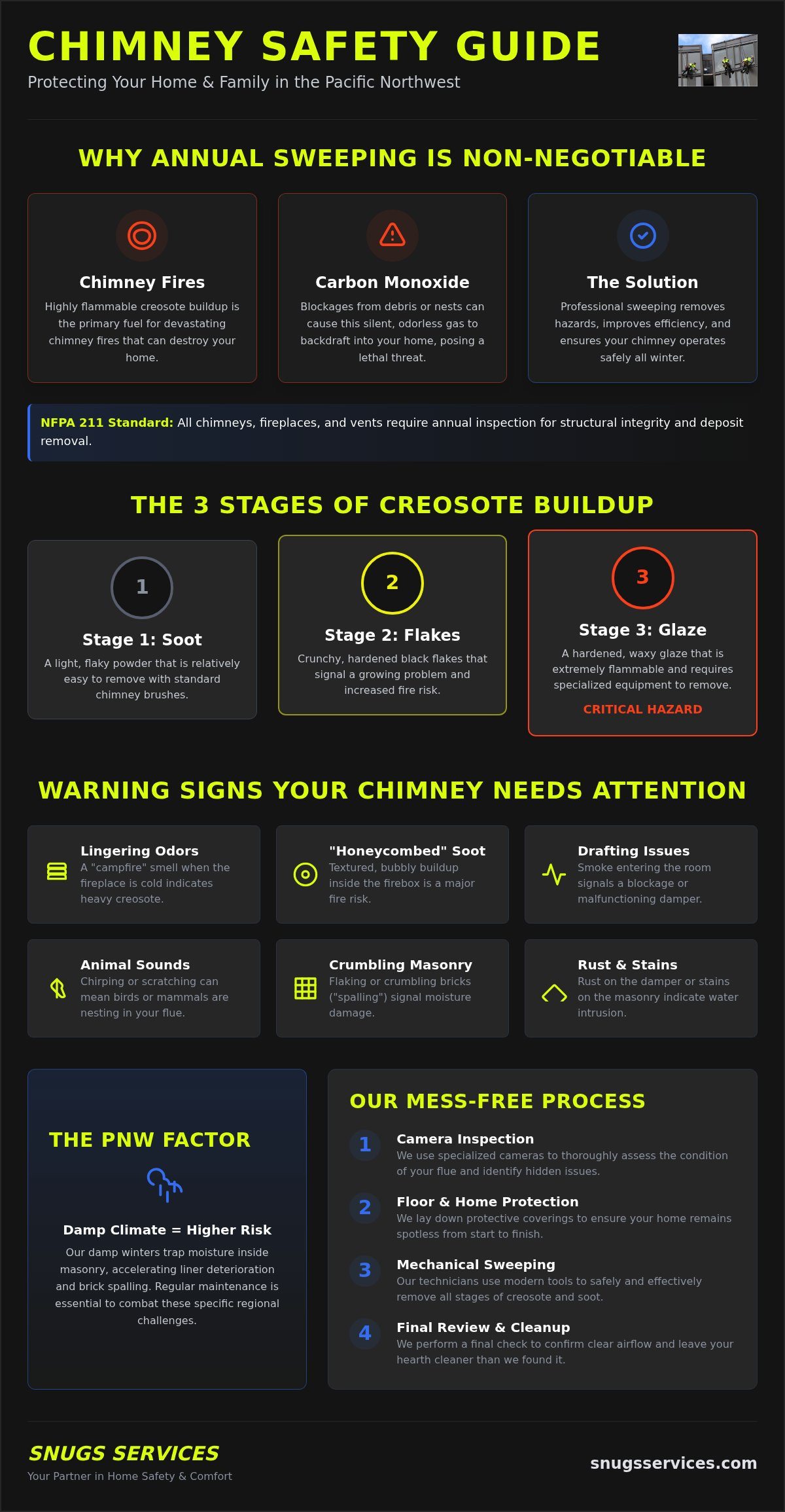
Creosote is a natural byproduct of wood combustion that condenses on the cool interior walls of your chimney. It’s a highly flammable substance that forms in three distinct stages. Stage one is a light, flaky soot that’s relatively easy to brush away. Stage two looks like crunchy black flakes that signal a growing problem. The real danger lies in stage three creosote, which appears as a hardened, waxy glaze. This glaze is extremely difficult to remove and acts as fuel for a chimney fire. If you see this shiny coating, it’s a critical hazard that requires specialized chimney sweeping equipment to resolve safely.
Carbon Monoxide: The Silent Threat
Your chimney flue is designed to channel toxic combustion gases safely out of your home. However, blockages from bird nests, fallen masonry, or organic debris can cause these gases to backdraft into your living space. Carbon monoxide is odorless and colorless, making it impossible to detect without a monitor. A clean chimney acts like a vacuum, pulling smoke and dangerous gases upward. By removing soot and obstructions, we ensure your ventilation system works exactly as intended. It’s a simple step that protects your family from the silent threat of CO poisoning.
Signs Your Chimney Needs Professional Attention
Recognizing the early warning signs of a failing chimney can save your home from a devastating fire. While some issues are obvious, others hide in plain sight until they become emergencies. If you notice a persistent “campfire” smell when your fireplace is cold, it’s a clear signal that creosote has reached dangerous levels. This odor often intensifies during the humid days common in Portland and Vancouver. Another visual red flag is “honeycombed” soot inside the firebox. This textured, bubbly buildup indicates that the creosote has been subjected to high heat and is a major fire risk. Following Chimney Fire Safety Tips helps you stay proactive about these subtle changes.
Drafting issues are another urgent indicator. If smoke enters your living room instead of rising through the flue, you likely have a blockage or a malfunctioning damper. This isn’t just an inconvenience; it’s a carbon monoxide risk. Additionally, listen for scratching or chirping sounds. In our region, birds and small mammals often view unprotected flues as ideal nesting spots. A professional chimney sweeping service can safely remove these obstructions and restore proper airflow to your hearth.
Physical Warnings in the Firebox
Look closely at the masonry inside your firebox for “spalling,” which is when the surface of the bricks begins to flake or crumble. This usually happens when moisture gets trapped inside the brick and freezes, a common occurrence during our PNW winters. Check your damper for any signs of rust or restricted movement. Rust is a definitive sign that water is entering your chimney system. Excessive ash and soot buildup are also indicators that your chimney’s ventilation is struggling, requiring a professional evaluation to ensure the flue is still safe for use.
External Indicators of Trouble
Step outside and look up at your chimney’s crown and cap. Cracks in the masonry crown allow rainwater to seep into the internal structure, leading to expensive repairs if left unaddressed. If your chimney cap is missing its mesh or appears damaged, your home is vulnerable to both animal entry and flying sparks. You should also watch for efflorescence, which looks like white, powdery staining on your exterior bricks. This indicates that the masonry is saturated with water and the internal liner may be compromised. While a basic sweep removes soot, a comprehensive inspection identifies these structural failures before they lead to a disaster.
The PNW Factor: Climate and Chimney Health
The weather in Portland and Vancouver presents specific challenges that homeowners in drier climates simply don’t face. Our consistent rainfall and high humidity levels directly impact how creosote behaves inside your flue. When moisture levels are high, soot becomes sticky and dense. This makes professional chimney sweeping more complex than a standard dry brush. This damp environment also accelerates the deterioration of your chimney’s structural components. Following the standards set by the Chimney Safety Institute of America is vital here, as local environmental factors can significantly shorten the lifespan of your masonry and liners.
At Snugs Services, we’ve seen how the regional climate turns a minor maintenance issue into a major repair. We focus on removing the stress of property upkeep by providing thorough, weather-conscious solutions. Our team understands the specific atmospheric conditions of the Pacific Northwest. We don’t just clean; we protect your home from the unique environmental stressors that define our region.
Moisture Infiltration and Masonry
The freeze-thaw cycle is a silent enemy of your chimney. During a typical Western Oregon or Washington winter, water seeps into the porous bricks and mortar. When temperatures drop, this water freezes and expands, causing the masonry to crack and flake. Over time, these small cracks lead to major structural failures. In Portland, heavy seasonal rains often lead to chimney crown erosion. This allows water to pour directly into the internal structure. When this moisture combines with soot, it creates corrosive acids. These acids eat away at your flue liner from the inside out. Research shows that moisture-driven liner damage affects about 38% of pre-1980s homes in our area.
Moss, Algae, and Debris
In the Pacific Northwest, your chimney’s health is intrinsically linked to the rest of your home’s exterior. We often see moss that has developed on a roof migrate directly to the chimney structure. This is why we recommend scheduling roof cleaning portland alongside your chimney maintenance. Moss acts like a sponge. It holds moisture against your bricks and accelerates the decay of the mortar. In fact, moss and organic growth are present on roughly 55% of chimneys in heavily treed neighborhoods throughout our region.
Additionally, the dense foliage of the PNW creates unique debris risks. Pine needles and organic matter frequently clog chimney caps, which restricts airflow and creates fire hazards. Integrating your chimney care into a broader plan for exterior house washing ensures your property remains protected from the ground up. By addressing these regional factors, you restore the aesthetic and functional integrity of your home while preventing costly emergency repairs.
What to Expect During a Snugs Professional Sweep
Many homeowners worry that chimney sweeping will leave their living room covered in a layer of fine black soot. At Snugs Services, we’ve refined our process to eliminate that anxiety entirely. We combine the traditional skill of a master craftsman with advanced modern technology to ensure a spotless result. When we arrive at your Portland or Vancouver home, our first priority is protecting your property. We lay down heavy-duty drop cloths and seal off the fireplace opening to ensure that every particle of debris stays contained within our filtration system.
Our technicians utilize professional brushes and high-powered vacuums specifically designed for chimney maintenance. Unlike basic DIY tools that can push soot further into the flue, our equipment pulls buildup out safely. Once the sweep is complete, we provide a detailed post-service report. This document gives you a clear assessment of your chimney’s structural integrity, allowing you to make informed decisions about your home’s safety. You’ll experience a genuine sense of relief knowing the hazardous work is handled by experts who care about the details.
Our High-Tech Inspection Process
We don’t rely on guesswork or simple flashlights. Our team uses specialized video scanning cameras to perform a thorough internal inspection of your flue. This allows us to find hairline cracks in the liner and hidden obstructions on the smoke shelf that the naked eye simply misses. We also check the damper for restricted movement or rust, which are frequent issues in our damp PNW climate. This level of detail is critical for your safety. In fact, recent data from pre-purchase chimney inspections in our region revealed that 41% of homes had significant defects like cracked liners or structural damage, highlighting why visual-only checks aren’t enough for 2026 standards.
The Snugs ‘No-Mess’ Guarantee
Cleanliness is a cornerstone of our service. We use industrial-grade HEPA filtration vacuums that capture even the smallest microscopic soot particles before they enter your home’s air. Our neighborly approach means we treat your primary property with the same care we’d give our own. We take pride in leaving your hearth cleaner than we found it. This professional equipment is the only way to guarantee a dust-free experience while restoring the functional integrity of your fireplace. We take the physical labor and mess off your plate so you can simply enjoy the warmth.
Ready for a safer home? Schedule your professional chimney sweeping with our expert team today.
Maintaining Your Chimney Between Professional Cleanings
While annual chimney sweeping is the foundation of a safe home, your daily habits determine how quickly creosote accumulates. Choosing the right fuel is the most effective way to maintain your fireplace’s efficiency between professional visits. Stick to seasoned hardwoods like oak, maple, or cherry. These woods burn longer and cleaner than softwoods, which often contain high levels of sap that accelerate soot buildup. Avoid the temptation to use your fireplace as a trash incinerator. Burning cardboard, wrapping paper, or treated lumber releases toxic chemicals and creates intense, uncontrollable heat that can damage your chimney liner.
You can easily verify if your firewood is ready for use with a simple “clink” test. When you strike two pieces of seasoned wood together, they should produce a sharp, hollow sound rather than a dull thud. For more precision, use a moisture meter to ensure the wood’s water content is below 20%. We also recommend building smaller, hotter fires. Smoldering fires might last longer, but they don’t reach the temperatures required to fully combust the gases in the wood. This leads to rapid creosote formation. Proper airflow management is key; keep your damper fully open and ensure your fire has enough oxygen to burn brightly and cleanly.
The Value of a Comprehensive Exterior Plan
Protecting your home’s integrity requires a holistic approach to maintenance. We often find that gutter cleaning portland and chimney care are natural partners. When your gutters are clear and your chimney is swept, you effectively manage the water and heat that pose the greatest risks to your property. Investing in annual maintenance is always more cost-effective than dealing with emergency structural repairs or fire damage. It provides the peace of mind that comes from knowing your home is fully prepared for the Pacific Northwest winter.
At Snugs Services, we take pride in being your community-oriented exterior experts. We possess the advanced tools and training needed to restore your home’s functional integrity without any effort on your part. Let us take the hazardous tasks off your plate so you can focus on enjoying a cozy, worry-free environment. Schedule your chimney inspection with Snugs Services today to ensure your fireplace is ready for the season.
Secure Your Home for a Safe Winter Season
Your fireplace should be a source of comfort, not a cause for concern. By prioritizing professional chimney sweeping, you eliminate the hidden risks of creosote buildup and ensure your ventilation system meets the 2026 NFPA 211 safety standards. We’ve explored how the damp Pacific Northwest climate accelerates masonry wear; proactive care is always the best way to avoid costly emergency repairs later. You deserve to feel confident every time you light a fire in your hearth.
Since 1995, Snugs Services has provided the Portland and Vancouver metro area with expert exterior care. Our certified technical experts use industrial-grade HEPA soot containment to guarantee a spotless result every time. We take the physical burden off your shoulders, restoring the aesthetic and functional integrity of your hearth with precision and pride. It’s time to enjoy the warmth of your home with total peace of mind. We look forward to serving as your neighborly maintenance partner.
Book Your 2026 Chimney Safety Inspection with Snugs Services
Frequently Asked Questions
How often should I have my chimney swept in the Portland area?
You should have your chimney inspected and cleaned at least once per year. The National Fire Protection Association (NFPA) 211 standard mandates annual inspections for all solid-fuel heating appliances. In the Portland and Vancouver metro areas, the high humidity and heavy rainfall can accelerate creosote buildup and masonry decay. Regular maintenance ensures your home remains safe throughout the winter months while preventing the accumulation of flammable deposits that cause chimney fires.
Does a gas fireplace chimney still need to be cleaned?
Yes, gas fireplaces require regular professional attention even though they don’t produce creosote like wood-burning units. Debris such as bird nests, fallen masonry, or spider webs can block the flue and cause dangerous carbon monoxide backdrafts. Our technicians also check for moisture-related issues and ensure the pilot light and burner are functioning correctly. Keeping your gas system clear is vital for maintaining proper ventilation and preventing health hazards in your home.
What is the typical cost of a professional chimney sweeping service?
Will chimney sweeping create a mess inside my house?
Professional chimney sweeping shouldn’t create any mess inside your house. We use industrial-grade HEPA filtration vacuums and heavy-duty drop cloths to contain every particle of soot and dust. Our team seals the fireplace opening before we begin the mechanical cleaning process. This neighborly approach ensures your living room remains spotless while we restore the functional integrity of your hearth. You can enjoy a clean, safe fireplace without worrying about any post-service cleanup.
Can I clean my own chimney to save money?
Cleaning your own chimney is often risky and rarely results in a thorough job. DIY brushes-on-a-stick can’t reach hidden cracks or evaluate the structural integrity of your flue liner. Without specialized video cameras and high-powered vacuums, you might miss critical fire hazards or spread fine soot throughout your house. Our experts possess the advanced tools and industry training necessary to perform a safe, comprehensive sweep that protects your primary property and your family.
How long does a professional chimney sweeping appointment take?
A standard chimney sweeping appointment usually takes between 45 and 90 minutes to complete. This timeframe includes the initial setup of protective coverings, the mechanical sweep, and a detailed visual inspection of the flue. If our technicians discover significant blockages or complex structural issues, the process might take longer to ensure everything is handled safely. We respect your time and strive to work efficiently while maintaining our high professional standards for your Beaverton or Tigard home.
What should I do if I suspect an animal is living in my chimney?
If you hear scratching or chirping, do not light a fire under any circumstances. Lighting a fire can trap the animal or cause a dangerous blockage that sends smoke and carbon monoxide into your living space. You should contact a professional team to evaluate the situation and safely remove any nesting materials. Once the flue is clear, we recommend installing a high-quality chimney cap to prevent future pests from entering your Vancouver or Portland home.
Is a chimney inspection different from a chimney sweep?
A chimney sweep is the physical process of removing soot and creosote from the flue. An inspection is a detailed evaluation of the chimney’s structural health and safety compliance. While a sweep focuses on cleanliness, an inspection uses specialized cameras to look for cracks, moisture damage, and liner failures. We perform both services together to ensure your fireplace is not only clean but also safe for use throughout the cold Pacific Northwest winter.
Recent Comments