
What if the “dirt” on your siding isn’t dirt at all, but a living organism that thrives on the very water you use to wash it away? We see it every day across the Pacific Northwest. Those fuzzy green streaks aren’t just an eyesore; they’re a biological challenge that requires more than just a garden hose. Knowing how to clean green algae from siding effectively means understanding that force isn’t the answer.
It’s frustrating to watch your home’s curb appeal vanish under a layer of slime, especially when you’re worried that a high-pressure blast might crack your vinyl or force water behind your boards. We understand that your home is your primary investment and deserves careful handling. This guide provides the safest, most effective ways to restore your home’s exterior while protecting its long-term integrity. You’ll learn the difference between algae and mold, the latest 2026 eco-friendly surfactant standards, and exactly when to handle the job yourself versus calling in a professional team to ensure a spotless, lasting result.
Key Takeaways
- Learn the safest methods for how to clean green algae from siding without risking structural damage or water intrusion in your home.
- Understand why soft washing is superior to traditional pressure washing by treating the biological root of algae growth rather than just blasting the surface.
- Discover why high-pressure water can lead to interior mold and permanent siding “etching,” and how you can avoid these common homeowner mistakes.
- Get practical tips for preventing future algae regrowth through strategic landscaping and consistent gutter maintenance in our damp Pacific Northwest climate.
- Identify when a simple DIY vinegar solution is sufficient and when it’s time to call a professional to handle hazardous ladder work safely.
Understanding Why Green Algae Grows on Your Siding
Green algae isn’t a sign of neglect; it’s a byproduct of living in the beautiful, damp Pacific Northwest. At Snugs Services, we’ve found that these green streaks are actually non-parasitic organisms that don’t feed on your siding itself. Instead, they thrive on a steady diet of moisture, pollen, and organic dust that settles on your home’s exterior. While it might look like a simple stain, it’s a biological colony that finds the perfect habitat in our regional climate.
If you’ve noticed these streaks appearing primarily on one side of your house, you aren’t alone. In Portland and Vancouver, the North side of a property is almost always the first to turn green. This side receives the least amount of direct sunlight, meaning it stays damp much longer after a typical rain shower. Without the sun’s heat to evaporate moisture, algae spores have the time they need to anchor and multiply. This is why many homeowners begin searching for how to clean green algae from siding specifically during the spring thaw.
It’s also vital to distinguish what you’re looking at. Green algae is often confused with black mold or Gloeocapsa magma, which causes dark, soot-like streaks. While algae is usually a surface-level issue, black mold can indicate deeper moisture problems, and roof moss can actually lift shingles. Identifying the growth is the first step in learning how to clean green algae from siding safely and effectively without damaging your home’s exterior finishes.
Common Culprits: Shade, Moisture, and Dirt
Environmental factors often speed up the growth cycle. Overhanging tree branches are a major contributor because they provide constant shade and drop organic debris directly onto the siding. This debris acts as a “starter kit” for algae. Similarly, clogged gutters can cause water to overflow and run down your walls, creating high-humidity micro-climates. Even the dust from nearby construction or gravel roads provides the microscopic “food” algae needs to adhere firmly to vinyl or wood panels.
The Hidden Costs of Ignoring Algae
Ignoring those green patches can lead to more than just a drop in curb appeal. When algae becomes thick, it traps moisture against your siding. Over time, this constant dampness can lead to wood rot or compromise the integrity of your paint. There is also a “spore cycle” at play; if left untreated, the algae on your siding can migrate to your roof or deck. Addressing the problem early prevents more expensive repairs and ensures your home remains the pride of the neighborhood.
Safe DIY Methods for Removing Algae Stains
If you’re dealing with light, localized patches of growth, you can often handle the task with standard household supplies. Learning how to clean green algae from siding safely starts with thorough preparation. Before mixing any solutions, ensure all windows are tightly closed and delicate landscaping is covered with plastic sheeting. We recommend moving patio furniture and potted plants at least fifteen feet away from the work zone to prevent accidental splashes.
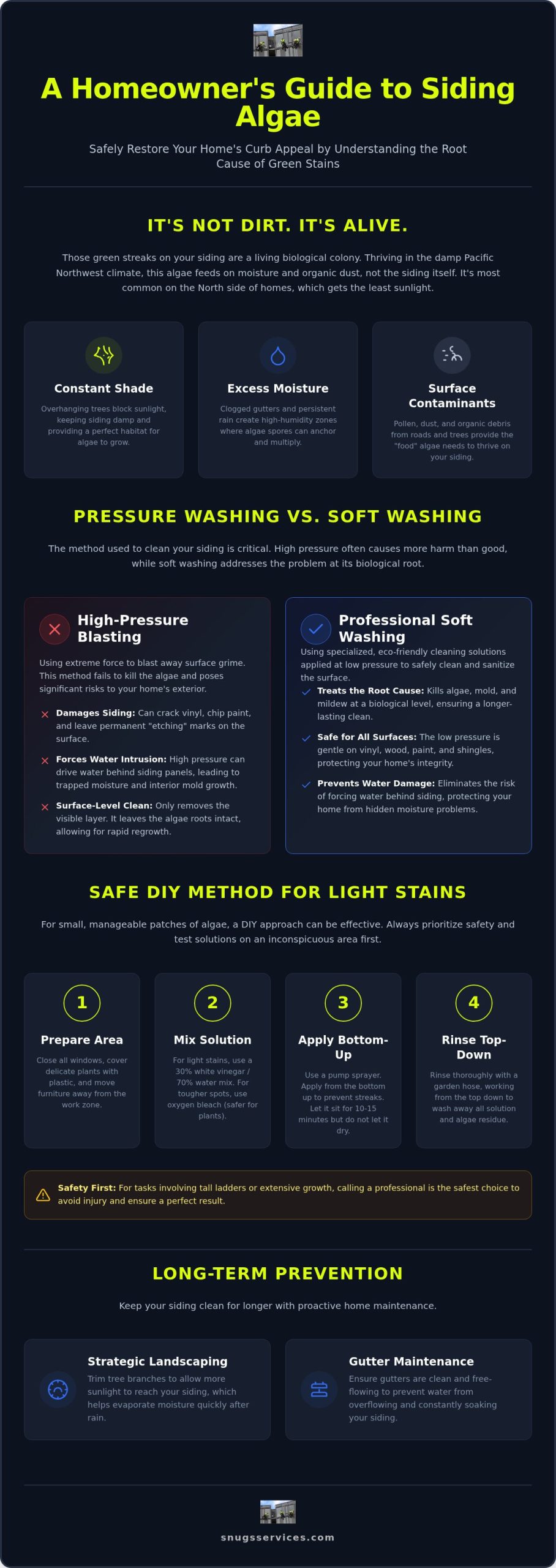
For a mild, eco-friendly approach, a solution of 30% white vinegar and 70% water works well for light staining. If the algae is more stubborn, you’ll need to choose between oxygen bleach and chlorine bleach. Oxygen bleach is generally safer for your yard and won’t kill your grass, while chlorine bleach is faster but requires extreme caution to avoid “chemical burn” on your shrubs. Regardless of the solution, always test a small, inconspicuous area of your siding first to ensure the cleaner doesn’t cause discoloration or damage to the finish.
The “bottom-up” rule is the most important technical tip for a streak-free finish. Always apply your cleaning solution from the bottom of the wall moving upward. This prevents dirty runoff from creating permanent drip streaks on dry siding. When it’s time to rinse, work from the top down to ensure every trace of algae and soap is washed away. If the task feels overwhelming or involves high peaks, our team offers professional soft washing to handle the heavy lifting for you.
Step-by-Step Manual Cleaning Process
Use a pump sprayer to achieve uniform coverage across the affected panels. Once applied, let the solution dwell for 10 to 15 minutes. This is critical; the chemistry needs time to break the organic bond, but you must not let it dry on the surface. If it starts to dry, mist it lightly with water. For stubborn spots, use a soft-bristle brush on an extension pole to gently agitate the area. Avoid using stiff wire brushes, as these can leave permanent scratches on vinyl or remove the protective coating from wood siding.
Safety Gear and Property Protection
Safety is paramount during any exterior maintenance project. Wear rubber gloves, eye protection, and non-slip footwear, as wet siding and soapy runoff make for very slick surfaces. In areas like Gresham and Beaverton where multi-story homes are common, ladder safety is a major concern. Always maintain three points of contact and never overreach. To protect your garden, pre-wet all surrounding plants with fresh water before you start; this prevents them from absorbing the cleaning chemicals even if a small amount of overspray occurs.
The Danger of High Pressure: Why ‘Blasting’ Algae Fails
It’s tempting to grab a high-PSI pressure washer and blast away those green streaks in minutes. However, using excessive force is often the most expensive mistake a homeowner can make. When you’re figuring out how to clean green algae from siding, you must prioritize the integrity of the material over the speed of the job. High pressure can “etch” vinyl or wood, leaving permanent scars that no amount of cleaning or paint will ever fix.
A major risk that many generic guides overlook is oxidation. Over time, siding develops a chalky layer due to sun exposure. If you use high pressure on dark-colored siding, you’ll likely blast away this oxidation unevenly. This leaves behind permanent white streaks or “tiger stripes” that ruin your home’s aesthetic. Instead of a clean surface, you end up with a damaged facade that requires a costly replacement. Professional methods avoid this by using chemistry to lift the grime rather than raw power.
Crucially, mechanical force alone doesn’t kill the biological root of the problem. You might wash away the visible green slime, but the microscopic spores remain embedded in the texture of your siding. Because the spores survive, the algae often returns faster and thicker than before. It’s like mowing a weed instead of pulling it out; the surface looks fine for a day, but the root is still thriving. Learning how to clean green algae from siding the right way means eliminating the spores, not just the stains.
Water Intrusion and Structural Damage
High-pressure streams are designed to strip surfaces, not gently clean them. These units can easily blow out window seals or door gaskets, leading to fogged glass and drafts. Even worse, the water can get “behind” the siding laps. Once moisture is trapped against your house wrap, it has nowhere to go, creating a breeding ground for interior mold. Structural rot often begins with improper cleaning methods that ignore the delicate layers of a home’s exterior.
The Myth of the ‘Quick Fix’ Power Wash
Many people believe a quick power wash is a one-and-done solution. In reality, it’s often just a surface-level cosmetic fix. Professional standards focus on a biologically clean surface, not just a surface-clean look. If you use a narrow nozzle too close to the wall, you’ll leave “wand marks” or “z-patterns.” These are nearly impossible to fix on vinyl siding without replacing the entire panel. A truly effective clean requires the right chemistry, not just the highest pressure setting on the machine.
Professional Soft Washing vs. Standard Pressure Washing
Professional soft washing is far more than just using a garden hose; it is a precise chemical science that prioritizes the long-term health of your home. While a standard pressure wash relies on raw mechanical force, often exceeding 3000 PSI, to “blast” away surface grime, soft washing uses a low-pressure delivery system. This method typically operates between 60 and 100 PSI. The core of this approach is the “Kill vs. Blast” philosophy. By treating the biological root of the growth with specialized cleaning solutions, we ensure the algae is actually eliminated rather than just moved around.
When homeowners research how to clean green algae from siding, they often overlook the longevity of the results. Because soft washing kills the microscopic spores, your siding stays clean two to three times longer than it would after a traditional high-pressure session. This efficiency is especially vital in the damp Portland and Vancouver metro areas where algae growth cycles are aggressive. Using professional-grade surfactants is a key part of this process. These agents help the cleaning solution “cling” to vertical surfaces, ensuring the chemistry has enough time to work before being rinsed away.
How Pros Handle Different Siding Materials
Different materials require unique levels of care. For vinyl and HardiePlank (fiber cement), we focus on thorough coverage that doesn’t compromise the factory finish. Cedar siding requires a delicate balance to avoid “furring” the wood fibers. In the Pacific Northwest, we also encounter many homes with stucco or Dryvit/EIFS systems. These porous materials trap moisture easily, making them highly susceptible to deep-seated algae. Our specialized soft washing techniques penetrate these pores to kill growth without damaging the fragile exterior skin.
When to Call a Professional Service
While DIY methods work for small spots, certain scenarios demand expert intervention. If your home is multi-story, the fall risk from ladder work is significant. We also recommend professional help if algae covers more than 25% of your exterior, as the scale of the job requires industrial equipment for a uniform finish. Finally, if you have dark-colored siding or historical features, the risk of permanent oxidation streaks or structural damage is too high for a weekend project. For a safe, spotless result, you can schedule professional soft washing with our experienced team.
Preventing Regrowth: Keeping Your Home Clean in the PNW
Prevention is the final step in mastering how to clean green algae from siding. In our region, the battle against organic growth is constant due to high humidity and frequent rainfall. You can significantly slow down the regrowth cycle by managing the environment around your home. Sunlight and airflow are your best allies; when siding stays dry, algae spores cannot find the moisture they need to anchor and thrive. Understanding these environmental factors helps you move from reactive cleaning to proactive property care.
Start by evaluating your landscaping. Dense shrubs and overhanging trees create “shade pockets” that trap dampness against your walls. By trimming these back, you allow the sun to dry your siding naturally after a storm. Additionally, keep your gutters clear. Clogged gutters often overflow, sending a steady sheet of water directly down your siding. This localized humidity creates a perfect breeding ground for green streaks. An annual rinse-down with a garden hose can also help by removing the pollen and dust that serve as the primary food source for algae. These small habits make a massive difference in how often you need to search for how to clean green algae from siding in the future.
Environmental Adjustments for Your Property
Aim to create at least a 12-inch air gap between your foliage and your home’s exterior walls. This simple adjustment ensures that air can circulate freely, preventing the stagnant, damp conditions algae loves. You should also check the grading around your foundation; proper drainage prevents water from pooling near the base of your home, which reduces the rising humidity that affects lower siding panels. For property owners looking to extend this high standard of care to their lawn, professional services like Performance Lawns, INC provide the specialized treatments needed for a pristine landscape. If you are planning a renovation, consider modern algae-resistant siding options that feature antimicrobial treatments built directly into the material during manufacturing.
Consistent care is the most reliable way to protect your property value and restore your home’s aesthetic integrity. Scheduling expert pressure washing in portland oregon ensures that your home receives a professional-grade clean that eliminates spores before they become visible. It’s often most efficient to integrate your siding care with roof cleaning portland to ensure total protection from the top down. Since 1995, we’ve helped our neighbors maintain beautiful, resilient homes by taking the physical risk and tedious labor of exterior cleaning off their plates. Regular professional inspections allow us to catch growth early, providing the peace of mind that comes with a well-maintained environment.
Restore Your Home’s Aesthetic Integrity Today
Maintaining a beautiful home in the Pacific Northwest requires a proactive approach to organic growth. You now understand that knowing how to clean green algae from siding is less about the pressure of the water and more about the science of the solution. By choosing soft washing over high-pressure methods, you protect your siding from permanent etching and prevent water from invading your home’s structure. Simple environmental adjustments, like trimming back foliage and keeping your gutters clear, will keep those unsightly green streaks away for much longer.
If the task of climbing ladders or choosing the right eco-friendly chemicals feels overwhelming, let us take the heavy lifting off your plate. At Snugs Services, we’ve been the trusted exterior maintenance experts for the Portland and Vancouver metro areas since 1995. Our fully licensed and insured team uses advanced, eco-friendly soft wash technology to restore your property safely and efficiently. Get a Free Exterior Cleaning Estimate from Snugs Services today and experience the relief of a spotless, well-maintained home. We’re ready to help you protect your most valuable investment with the care it deserves.
Frequently Asked Questions
Is green algae on siding dangerous to my health?
Green algae itself is typically not dangerous to your health, though it can trigger mild respiratory issues in sensitive individuals. Unlike black mold, algae is a non-parasitic plant-like organism. However, its presence signals high moisture levels that could eventually invite more harmful mold species into your home’s structure. Keeping your exterior clean prevents these biological colonies from expanding and ensures your living environment remains healthy and free of allergens.
Can I use a regular garden hose to clean algae off my siding?
A garden hose is rarely enough to fully solve the problem because it lacks the chemical power to kill microscopic spores. While you might rinse away surface dust or loose clumps, the living roots stay attached to your vinyl or wood. This is why many people struggle with how to clean green algae from siding every few months. Without a specialized surfactant or cleaning solution, the green streaks will likely reappear within a single season.
How often should I clean the siding on my home in Portland or Vancouver?
Most homes in the Portland and Vancouver metro areas benefit from a professional siding cleaning every one to two years. Our unique Pacific Northwest climate provides the constant moisture and shade that algae thrives on, especially on north-facing walls. If your property is surrounded by dense tree cover or experiences high humidity, you might notice growth returning faster. Regular maintenance prevents permanent staining and keeps your curb appeal at its peak year-round.
Will cleaning my siding with bleach kill my grass and flowers?
Standard chlorine bleach can certainly damage your landscaping if it’s applied at high concentrations or allowed to dry on leaves. Professionals prevent this by pre-wetting all surrounding grass and flowers with fresh water, which creates a protective barrier. We also use eco-friendly surfactants that meet 2026 safety standards to minimize environmental impact. If you’re cleaning the siding yourself, always rinse your plants thoroughly before, during, and after the chemical application process.
What is the best temperature and time of year to clean siding in the PNW?
The best time for siding maintenance in our region is during the mild days of spring or early autumn. You want temperatures between 50 and 80 degrees Fahrenheit for the best results. Avoid cleaning in freezing weather, as ice can damage siding panels, or in direct, mid-day summer sun. If the cleaning solution dries too quickly on a hot surface, it can leave behind unsightly streaks that are difficult to remove without professional equipment.
Does green algae mean my siding is rotting?
Green algae is a surface-level organism and doesn’t directly cause wood rot because it isn’t a fungus. However, a thick layer of algae acts like a sponge, trapping moisture against your siding for extended periods. This constant dampness creates the perfect conditions for wood-decay fungi to take hold underneath. While the algae itself isn’t eating your house, ignoring it significantly increases the risk of structural rot and expensive repairs over time.
How much does professional siding cleaning cost compared to DIY?
DIY cleaning often seems cheaper initially, but professional services provide a much higher return on investment. When you factor in the cost of equipment rentals, specialized cleaners, and the risk of ladder falls, the gap narrows quickly. More importantly, professional soft washing lasts two to three times longer than a standard DIY scrub. Investing in an expert clean saves you significant time and ensures the job is done safely without risking water intrusion.
Can I use a pressure washer if I turn the setting down low?
Using a pressure washer on a low setting is still riskier than a dedicated soft wash system. Even at lower pressures, a narrow spray pattern can accidentally force water behind siding laps or blow out delicate window seals. This leads to hidden moisture problems and interior mold growth. Learning how to clean green algae from siding correctly means prioritizing low-volume chemical application over any level of high-pressure force to keep your home’s integrity intact.
Recent Comments