
Did you know the average cost of unplanned equipment downtime is now estimated at $260,000 per hour? In the Pacific Northwest, where moisture and debris are constant battles, neglecting regular equipment cleaning isn’t just a maintenance oversight; it’s a massive financial risk. Between Portland’s $4,075 annual industrial wastewater permit fees and Washington’s 2025 sampling requirements for PFAS, staying compliant while keeping your fleet running is more complex than ever. You shouldn’t have to choose between a “clean enough” machine and a surprise visit from the DEQ.
You’ve likely felt the frustration of a machine overheating right when a deadline hits or worried about wash water hitting the storm drain during a heavy Oregon downpour. We’ve designed this 2026 guide to help you master industrial maintenance, ensuring your heavy machinery lasts longer and your operations stay fully compliant with current EPA and DEQ standards. We’ll walk you through a clear maintenance framework, explain local environmental laws, and help you decide if outsourcing is the right way to protect your most valuable assets and keep your business running smoothly.
Key Takeaways
- Learn how professional equipment cleaning removes abrasive contaminants to prevent engine overheating and minimize the risk of expensive mechanical failures.
- Identify the best specialized cleaning techniques for your fleet, from high-pressure washing for undercarriages to steam degreasing for complex hydraulic junctions.
- Master the “Zero Discharge” compliance standards required by Oregon and Washington environmental agencies to protect your business from legal liabilities and fines.
- Uncover the hidden costs of managing in-house cleaning crews, including specialized equipment upkeep, detergent inventory, and environmental runoff responsibility.
- Discover the advantage of a “can-do” local partner who provides the professional-grade tools and regional expertise needed to expertly extend the lifespan of your heavy machinery.
The ROI of Professional Equipment Cleaning: Why Dirt is Your Fleet’s Enemy
Professional equipment cleaning is far more than a simple rinse; it’s a technical process involving specialized degreasing and high-pressure washing designed to strip away abrasive contaminants. In the industrial sector, dirt is a silent thief. When mud and grease accumulate on your machinery, they act as a heavy layer of insulation. This traps heat directly within engines and hydraulic systems, forcing your equipment to work harder and run hotter. Considering that the average cost of unplanned equipment downtime reached $260,000 per hour by early 2026, a clean machine is quite literally a profitable machine.
Beyond temperature control, cleanliness provides what we call the “Inspection Opportunity.” It’s nearly impossible to spot a hairline structural crack or a weeping hydraulic seal when it’s buried under two inches of field grime. By implementing various industrial cleaning methods, your operators can identify minor issues before they escalate into catastrophic failures. This proactive approach is a major reason why the U.S. industrial maintenance market grew to a $34 billion valuation in 2025. When you document a consistent professional cleaning schedule, you aren’t just maintaining a tool; you’re building a service history that significantly increases the resale valuation of your heavy machinery.
Preventing Corrosion in the PNW Climate
In Portland and Vancouver, our constant moisture creates a unique “corrosion cocktail.” When thick layers of mud stay damp for weeks, they hold water directly against metal surfaces, accelerating rust in areas you can’t see. Moss and algae often take root in these muddy crevices, further trapping moisture and organic acids against the chassis. Our professional-grade detergents are specifically formulated to neutralize the acidic PNW soil that otherwise eats away at your equipment’s protective coatings. We don’t just wash away the dirt; we stop the chemical reactions that lead to rot.
Safety and Operator Morale
A clean fleet is a safe fleet. Greasy ladders, oil-slicked catwalks, and mud-caked grab handles are leading causes of slip-and-fall injuries on job sites. By removing these hazards, you protect your team and reduce liability. The impact on your crew’s mindset is equally powerful. Research from the Worldwide Cleaning Industry Association shows that improved workplace cleanliness can reduce absenteeism by up to 46%. When an operator steps into a pristine, well-maintained cab, they take more pride in their work and treat the machinery with greater care. It’s a simple truth: people work better when their tools reflect a standard of excellence.
Specialized Techniques for Heavy Machinery & Industrial Gear
One size doesn’t fit all in industrial maintenance. A bulldozer requires a vastly different touch than a delicate sensor array. Professional equipment cleaning in 2026 leverages a toolkit of high-tech methods to ensure every component receives the right level of care without risking damage. By matching the method to the machinery, we don’t just remove dirt; we preserve the integrity of your most expensive assets.
High-pressure washing (HPW) remains the industry standard for stripping away the heavy, caked-on mud and road grime typically found on undercarriages. For the more stubborn areas like engine bays and hydraulic junctions where oil and grease accumulate, we utilize steam cleaning and industrial-grade degreasers. This combination breaks down chemical bonds that cold water alone can’t touch. It’s the most effective way to clear away the “insulation” that leads to overheating and premature wear.
Not every surface can handle 4,000 PSI. Soft washing uses low-pressure systems and specialized chemistry to clean decals, glass, and sensitive electronics safely. For massive assets like cranes or storage silos, 2026 has brought the rise of drone-assisted cleaning. These units reach heights that used to require expensive scaffolding or risky ladder work, providing a pristine finish in half the time. If you’re ready to see the difference professional care makes, our team provides expert equipment washing tailored to your fleet’s specific needs.
The 5-Step Professional Cleaning Process
A systematic approach ensures nothing gets missed. We follow a rigorous framework to guarantee quality:
- Pre-wash inspection: Identifying sensitive areas, electrical components, and existing damage.
- Degreasing application: Allowing proper dwell time for chemicals to break down stubborn oils.
- High-pressure rinse: A systematic removal of debris from top to bottom.
- Detailing and finishing: Cleaning cabs and windows while applying protective coatings to exposed metal.
- Final walkthrough: Ensuring all grease points are accessible and the unit is ready for immediate service.
Cleaning Sensitive Systems
Modern Tier 4 and Tier 5 engines are packed with complex electronics that don’t mix well with high-pressure water. We use precision techniques to shield these components and protect hydraulic seals from water intrusion. Keeping these areas clear of debris also helps you meet OSHA safety standards for work surfaces by removing slip hazards from ladders and catwalks. Finally, we don’t stop at the exterior. Professional interior cab sanitation involves deep disinfection to ensure your operators are working in a healthy, “worry-free” environment.
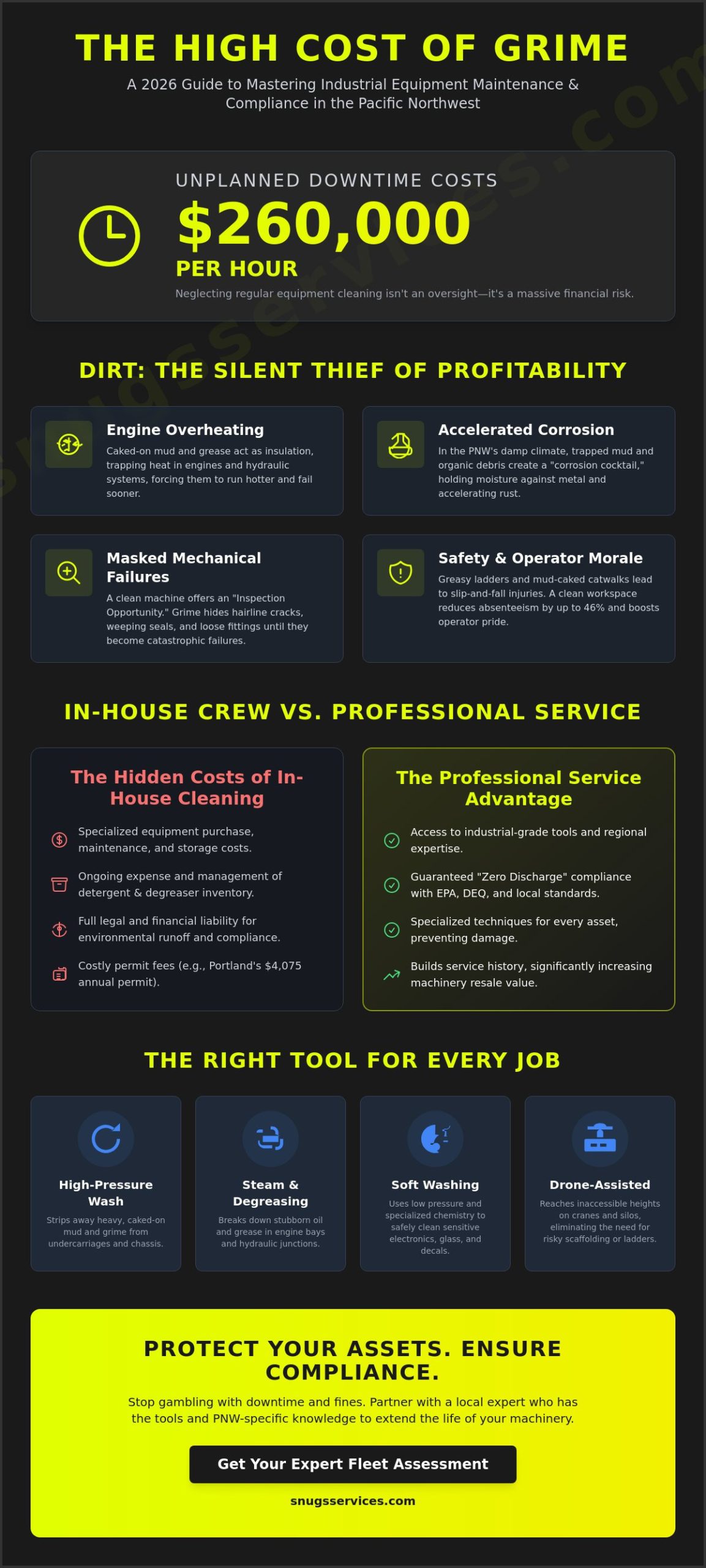
In-House vs. Outsourced Equipment Maintenance
Deciding whether to handle equipment cleaning in-house or hire a professional is a major crossroad for any fleet manager. While a DIY approach seems cheaper on paper, the hidden costs often tell a different story. You have to account for more than just the hourly wage of a technician. There’s the specialized training required to handle Tier 5 engines safely, the ongoing maintenance of high-pressure pumps, and the constant inventory of industrial-grade detergents. When your primary business is construction or logistics, managing a secondary cleaning department often distracts from your core goals.
Liability is the heaviest factor in this decision. In the Portland-Vancouver area, the “Zero Discharge” goal is strictly enforced by local authorities. If a member of your team accidentally allows wash water to enter a storm drain, your company is on the hook for the fines. For the 2025-2026 fiscal year, Portland’s industrial wastewater permit fees for categorical users sit at $4,075. Outsourcing shifts that regulatory burden to experts who carry their own insurance and environmental certifications. It’s about buying peace of mind along with a clean chassis.
Professional services also give you access to advanced fleet washing technology without the massive capital investment. We bring mobile hot water units and specialized recovery systems directly to your site during off-hours. This ensures your machines are ready to work when the sun comes up, rather than sitting idle while an employee catches up on cleaning. Consistency is key to asset longevity. A professional schedule ensures the job gets done right every single time, regardless of how busy your internal crew gets.
When to Keep it In-House
Some tasks are perfect for your internal team. Daily hose-downs to remove light dust or surface debris from a single skid steer are manageable and don’t require heavy chemistry. If your facility already features a fully compliant, pre-installed wash bay with a treatment system, keeping the work on-site makes sense. It’s often the best move for very small-scale operations with only one or two pieces of gear that don’t require specialized degreasing or high-heat applications.
The Case for Professional Services
Most large fleets require a rapid turnaround that an in-house team simply can’t match. If you’re managing complex industrial gear with caked-on oil and hydraulic residue, you need the specialized degreasers and mobile hot-water units that professionals provide. Many operations in Portland and Vancouver lack dedicated, compliant wash areas. In these cases, a mobile service isn’t just a convenience; it’s a legal necessity to ensure every drop of runoff is captured and treated correctly. We handle the heavy lifting so you can focus on the job site.
Compliance & Environmental Standards in the Pacific Northwest
Zero discharge is the gold standard for industrial operations in the Pacific Northwest. Letting wash water hit the pavement or enter a storm drain is a legal risk that can lead to massive fines. Under the Clean Water Act and local DEQ mandates, businesses must ensure that no pollutants from equipment cleaning reach our local waterways. For the fiscal year ending June 30, 2026, categorical industrial users in Portland face a base permit fee of $4,075. These regulations protect the Columbia and Willamette rivers; staying on the right side of them requires more than just a bucket and a brush.
Oil-water separators are a vital part of this compliance framework. These systems work by slowing down the flow of wastewater, allowing oils to float to the surface and solids to settle at the bottom. Only the cleaner water in the middle is then discharged into the sanitary sewer system. Without a properly maintained separator, you risk clogging municipal lines or violating your discharge permits. Keeping a detailed “Cleaning Log” is just as important. In the event of a 2026 environmental audit, having documented proof of your cleaning dates, methods, and wastewater disposal will be your best defense.
Portland & Vancouver Runoff Regulations
The watersheds of the Willamette and Columbia Rivers are under constant scrutiny. Washington’s 2025 Industrial Stormwater General Permit even added new requirements for PFAS sampling. To meet these high standards, we use advanced reclaim systems that vacuum up every drop of wastewater as we work. In the context of commercial pressure cleaning services, “reclaim” refers to the mechanical process of capturing, filtering, and containing wash water to prevent it from ever reaching the soil or storm drains.
Equipment Cleaning Resource Checklist
Staying safe and compliant requires the right gear on hand at all times. If you’re handling your own maintenance, ensure your team has the following:
- PPE Requirements: Waterproof suits, chemical-resistant gloves, and face shields are non-negotiable for high-pressure work.
- Detergent Safety: Use only biodegradable, non-toxic options that break down oils without harming the local ecosystem.
- Emergency Spills: Keep a spill kit nearby that includes absorbent socks and pads to contain hydraulic fluid or fuel leaks immediately.
Compliance doesn’t have to be a headache for your operation. If you want to ensure your fleet stays pristine while meeting every local regulation, contact Snugs Services for a worry-free cleaning quote today.
Snugs Services: Your Local Partner for Industrial Equipment Care
Snugs Services has been a staple of the Pacific Northwest community since 1995. We’ve spent over 30 years building a reputation as the hardworking, detail-oriented experts who treat your machinery like it’s our own. We understand that your fleet is more than just metal and hydraulics; it’s the backbone of your business. Our team brings the pride of a local craftsman to every job, whether we’re scrubbing a single skid steer or cleaning complex high-rise industrial structures. We aren’t just a service provider; we’re your neighbors who happen to have the best tools and training in the industry.
We know your schedule is packed. Every minute of unscheduled downtime can cost your operation dearly, which is why we’ve designed our service to be as seamless as possible. Our mobile units bring professional equipment cleaning and expert truck washing services directly to your job site or yard. We offer hassle-free scheduling that works around your operational hours, often performing deep cleans during evenings or weekends. This “can-do” approach ensures your gear is pristine and ready for work when the sun comes up, without disrupting your daily workflow.
Comprehensive Exterior Maintenance
A well-maintained fleet deserves a clean environment. We often integrate our specialized equipment cleaning with parking lot sweeping to provide a total site solution. This holistic approach removes abrasive grit from your facility before it ever has a chance to reach your machinery’s sensitive bearings. The Snugs Guarantee is our promise of reliable, on-time service that takes the heavy lifting off your plate. Our teams in Portland and Vancouver are ready to help you restore the professional image and safety of your most valuable assets.
Get a Professional Quote Today
Preparing for your Snugs consultation is easy. Just have your equipment count and site locations ready, and we’ll handle the rest. We create customized maintenance plans tailored to your specific needs, whether you require a one-time seasonal deep clean or a recurring monthly schedule. These plans are designed to extend the lifespan of your machinery while keeping you fully compliant with the 2026 environmental standards discussed earlier. Don’t wait for a mechanical failure to realize the value of cleanliness. Request your equipment cleaning quote from Snugs Services today and experience the relief of having a trustworthy professional on your side.
Protect Your Fleet and Your Bottom Line Today
Professional equipment cleaning is a strategic investment that pays dividends in both machine longevity and operational safety. By stripping away abrasive mud and heat-trapping grease, you actively prevent the $260,000 per hour cost associated with unplanned downtime. You also ensure your business stays ahead of strict PNW environmental mandates, including Portland’s $4,075 annual permit fees and Washington’s 2025 PFAS sampling requirements. Documenting these cleanings even helps boost the resale value of your machinery when it’s time to upgrade your fleet.
Since 1995, Snugs Services has provided the Portland and Vancouver metro area with the expert care needed to keep industrial gear in pristine condition. Our fully insured and trained industrial cleaning experts utilize specialized wastewater reclaim technology to keep your site compliant and your conscience clear. We’re here to do the heavy lifting so you can focus on the job at hand with total peace of mind. It’s time to stop worrying about runoff and start enjoying the reliability of a well-maintained fleet.
Schedule Your Professional Equipment Cleaning with Snugs Services today. We’re ready to help you restore the beauty and efficiency of your most valuable assets.
Frequently Asked Questions
How often should heavy construction equipment be cleaned?
Heavy construction equipment should undergo a thorough clean every 100 to 250 operating hours or at least once per month. This frequency prevents mud and grease from acting as insulation, which leads to the overheating issues that often cause mechanical failure. Regular intervals also ensure that abrasive grit doesn’t wear down pivot points and hydraulic cylinders prematurely.
Is pressure washing safe for all types of industrial machinery?
Pressure washing is safe for most heavy gear when performed by experts who understand PSI limits for different components. While undercarriages can handle high pressure, sensitive Tier 5 engine electronics and hydraulic seals require a soft wash approach. We use specialized techniques to protect these systems while still removing the most stubborn contaminants expertly.
What are the environmental risks of cleaning equipment on-site in Portland?
The primary risk involves toxic runoff containing oils, hydraulic fluid, and PFAS entering the Willamette or Columbia River watersheds. As of May 2026, Portland’s industrial wastewater permit fees for categorical users are $4,075 per year. Violating the “Zero Discharge” mandate can result in heavy fines, making professional reclaim systems a legal necessity for on-site equipment cleaning.
Can professional cleaning help identify mechanical issues before they happen?
Yes, removing layers of field grime reveals hairline structural cracks and weeping hydraulic seals that are otherwise invisible. This “Inspection Opportunity” is a key reason why the U.S. industrial maintenance market is projected to reach $50.49 billion by 2033. Clean surfaces allow your operators to spot trouble early, preventing the $260,000 per hour cost of unplanned downtime.
Does Snugs Services provide mobile equipment cleaning at construction sites?
Snugs Services provides fully mobile equipment cleaning units that travel directly to your construction site or industrial yard. We bring our own water, power, and reclaim systems to ensure the job is done right without needing your facility’s resources. This “can-do” approach minimizes your logistical headaches and keeps your machines working where they belong.
What is the difference between standard pressure washing and industrial degreasing?
Standard pressure washing relies on physical force to strip away surface mud, while industrial degreasing uses chemical agents to break down molecular bonds in oils and fats. For engine bays and hydraulic junctions, we combine both methods with hot water. This ensures a pristine finish that cold water alone simply can’t achieve on heavy industrial grease.
How long does a typical professional cleaning session take for a large excavator?
A professional cleaning session for a large excavator typically takes between 2 and 4 hours to complete. The exact timeframe depends on the accumulation of debris and whether the unit requires intensive engine bay degreasing. Our efficient crews work quickly to ensure your machinery is back in service with minimal disruption to your project timeline.
Are there specific regulations for cleaning fleet vehicles in Vancouver, WA?
Vancouver businesses must comply with Washington’s 2025 Industrial Stormwater General Permit, which mandates strict sampling for pollutants like PFAS. These regulations focus on preventing hazardous waste from entering the groundwater or local drainage systems. We stay updated on these regional shifts so your fleet maintenance always meets the latest Department of Ecology standards.
Recent Comments