
A neglected exterior can turn a small maintenance issue into a safety concern. Exterior maintenance for property managers in Longview means keeping roofs, gutters, walls, windows, and shared outdoor areas in sound condition. The city requires rental properties’ exteriors and premises to be clean, safe, and sanitary. Commercial buildings also need regular attention, with upkeep tailored to their surfaces and how people use them.
It’s easy to delay work until a leak, blocked gutter, or visible buildup demands attention. Regular inspections and preventive care help spot developing problems earlier, maintain a clean appearance, and keep outdoor areas functional for residents, visitors, and tenants.
This guide explains what exterior maintenance covers at rental homes, how seasonal checks and preventive work help protect a property, and what commercial building upkeep can involve. You’ll also see how Longview’s maintenance expectations fit into the picture, from drainage and debris to the exterior surfaces that need routine care.
Key Takeaways
- Keep rental exteriors clean and sanitary, and address debris or visible deterioration before it becomes a larger upkeep concern.
- Use seasonal inspections to spot blocked gutters, drainage issues, and exterior damage early.
- Build preventive care around each property’s materials, condition, and exposure to weather.
- For commercial buildings, plan upkeep around high-traffic surfaces and the cleaning or repair work those areas need.
What Is Exterior Property Maintenance for Rental Homes?
Exterior upkeep includes cleanliness, drainage, surface condition, and seasonal care around a rental home. In Longview, these tasks help keep premises clean, safe, and sanitary while helping managers identify repair needs early.
Routine Exterior Cleaning
Routine exterior cleaning removes debris and buildup from building surfaces, gutters, downspouts, and outdoor areas. Longview requires premises to remain free of accumulated rubbish, junk, trash, filth, waste, and garbage under section 307.1.
Clean gutters and downspouts regularly to help reduce water-damage risks. Facade and window cleaning can remove grime and maintain a building’s appearance. If inspections reveal cracks or worn coatings, arrange appropriate repairs, painting, or sealing to limit moisture entry. Seasonal cleanup can include clearing fallen leaves and refreshing mulch around planting beds.
Vendor and Contract Comparisons
When comparing vendors, assess whether the proposed work suits the property’s surfaces, condition, and maintenance schedule. A clear scope distinguishes routine gutter cleaning from gutter repair and identifies which exterior areas are included for cleaning or painting.
Review the scope, service frequency, responsibility for debris removal, and how completed work and repair needs are recorded. Clear terms help you coordinate seasonal tasks, track inspections, and confirm that the agreed work addresses the building’s upkeep needs.
Maintenance Duties and Local Rules
Washington landlords should manage exterior upkeep as part of maintaining rental premises, while lease terms can assign specific routine tasks. Longview’s Property Maintenance Code requires clean premises under section 307.1; storm debris is excepted for 30 days following a storm event, and construction debris during work and for 14 days following completion.
For trees, section 302.14 addresses dead, diseased, infested, or dying trees that endanger street trees, streets, alleys, or sidewalks. Pruning hazardous limbs is a useful summer maintenance task. Under section 507.1, drainage from roofs, paved areas, yards, courts, and other open areas must not create a public nuisance. These provisions do not set out a general sidewalk-cleaning schedule, so include walkway condition in routine property inspections.
Preventive exterior maintenance
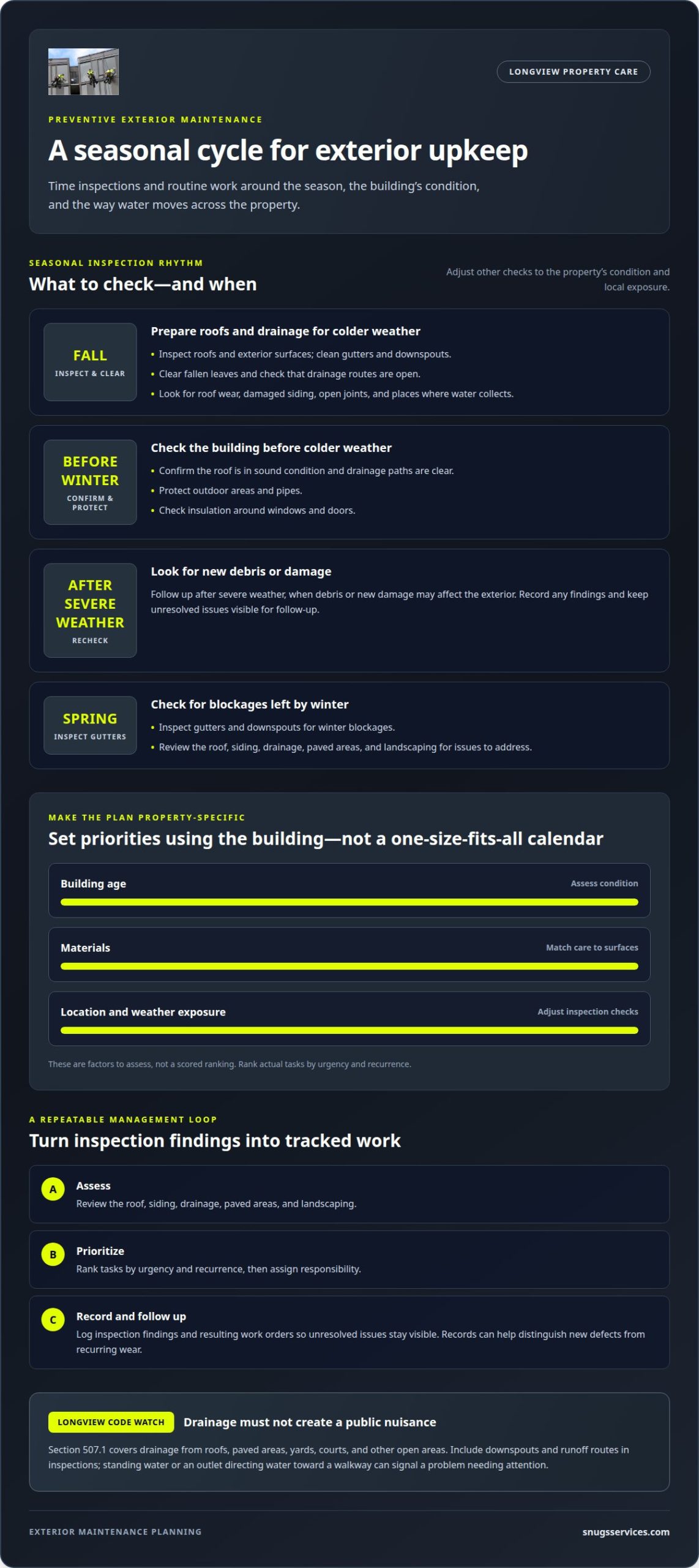
A preventive plan schedules inspections and routine work before small defects develop into more serious damage or equipment failure. For exterior maintenance for property managers in Longview, set priorities according to each building’s age, materials, location, and weather exposure. Record inspection findings and resulting work orders.
How often should roofs, gutters, siding, and landscaping be inspected? Check roofs and exteriors in fall, and confirm roof condition before winter. Inspect gutters and downspouts in spring for winter blockages and clean them in fall; adjust other checks to the property’s condition and local exposure.
Build a practical maintenance schedule
Assess each building’s roof, siding, drainage, paved areas, and landscaping. Rank tasks by urgency and recurrence, assign responsibility, and track work orders so unresolved issues remain visible. A calendar can organize seasonal tasks, while inspection records help distinguish new defects from recurring wear.
Longview’s section 507.1 says drainage from roofs, paved areas, yards, courts, and other open areas must not create a public nuisance. Include downspouts and runoff routes in inspections; standing water or an outlet directing water toward a walkway can signal a problem needing attention.
Reduce water intrusion
Water entering through cracks in a facade can damage building materials, encourage mold growth, and create electrical hazards. During exterior reviews, note open joints, damaged siding, roof wear, and places where water collects. Sealing cracks and joints helps limit moisture entry, while prompt roof repairs can prevent leaks from reaching ceilings and interior spaces.
In winter, protect outdoor areas and pipes, and check insulation around windows and doors. Before colder weather, confirm roofs are in sound condition and drainage paths are clear. For exterior maintenance for property managers in Longview, professional gutter cleaning can help keep water moving away from the building. Pair that work with follow-up inspections after severe weather, when debris or new damage may affect the exterior.
Commercial building exterior maintenance
Commercial upkeep protects facades, windows, walkways, and other structures from grime and weather exposure. For property managers in Longview, start by assessing each surface, its condition, and its use. A storefront, office building, and parking garage have different cleaning needs, so organize work by material and how each area is used.
Facade washing removes dirt, grime, and buildup that can dull a building’s appearance. Choose an approach suited to the surface, then inspect the cleaned area for stains, loose material, or damage that needs repair. Window cleaning keeps glass clear and commercial spaces looking cared for. For high-rise buildings, access and elevation shape the work plan.
Review walkways, entrances, and parking areas. Dirt and debris collect where customers and employees travel, while uneven or worn concrete can affect how an area functions. Schedule washing according to traffic and visible buildup, and flag surface deterioration for follow-up repair. Keep drainage routes clear so water flows away from paved areas instead of collecting near entrances.
Exterior care is connected to interior building operations. A roof leak may stain ceilings or disrupt occupied rooms, while moisture around a window or wall opening can signal an exterior issue. During inspections, record where water appears, the weather beforehand, and whether plumbing penetrations or nearby drainage could contribute. These details help teams plan the next assessment.
Plan commercial work around building use and local weather. Schedule noisy or access-intensive tasks to reduce disruption, and coordinate window washing with nearby façade work where practical. After a storm, review roofs, exterior walls, and paved areas for debris or visible damage. For exterior maintenance for property managers in Longview, work logs can capture each location, surface, condition, and required follow-up, helping teams track recurring issues across properties.
Exterior Maintenance for Longview Property Managers
Longview property managers need exterior services suited to each site’s condition, use, and safety concerns. Start by inspecting trees, fences, walkways, drainage, and outdoor structures. Record the location and condition of each issue, then prioritize hazards, water management, and routine surface care. This helps direct work toward protecting access and property function.
Longview’s section 302.13 requires premises to be free of sagging, leaning, fallen, decayed, dilapidated, or unsafe fences and other structures. Repairs or removal may be needed when an inspection finds those conditions. Section 302.14 addresses dead, diseased, infested, or dying trees that endanger street trees, streets, alleys, or sidewalks. Tree care should focus on hazardous limbs and threats to public areas.
Outdoor surfaces need regular attention. Summer maintenance may include pressure washing and repairs to outdoor areas and decks, while cracked or deteriorated concrete may need assessment and repair. Keep walkways and entrances clear of debris, and note where water pools or runoff affects access. Each inspection record should identify the surface, visible issue, and required follow-up.
Seasonal planning helps managers coordinate tasks without treating every property alike. A rental with mature trees may need focused limb inspections, while a building with broad paved areas needs drainage and surface reviews. In winter, account for outdoor areas and pipes that need protection. After storms, check for fallen branches, debris, and newly damaged structures.
Service priorities should also reflect occupancy and the way residents, visitors, or customers move through the site. Address blocked routes and unsafe structures promptly, then schedule appearance-focused cleaning and upkeep. A clear work order links each finding to its location and next action. For a practical review of exterior priorities, arrange an exterior maintenance review.
Snugs Services
Snugs Services helps property managers with exterior cleaning and gutter maintenance as part of a broader upkeep plan. Turn to the team when grime builds up on exterior surfaces, gutters need cleaning, or damaged gutters need repair or replacement. Pressure washing can refresh suitable exterior areas, and gutter services help maintain clear drainage and direct water away from the building.
These services complement your inspections and repair schedule. Share priorities such as buildup on paved surfaces or gutters that need attention to keep the work focused on practical upkeep.
Contact Snugs Services to discuss exterior maintenance for your property in Longview.
Set a Clear Direction for Your Next Maintenance Cycle
Make the next maintenance cycle easier to coordinate by turning observations into clear priorities. A simple record of the area, its condition, and the next step gives your team a shared reference when planning work. It also ties routine upkeep to each property’s needs instead of leaving details scattered across notes or dependent on memory.
For property managers in Longview, exterior maintenance works best as an ongoing part of property planning. Snugs Services provides pressure washing, gutter cleaning, and gutter installation for exterior upkeep. Choose the service that fits your property’s needs and schedule.
Share your exterior maintenance needs with Snugs Services and take a practical next step toward a well-cared-for property.
Frequently Asked Questions
How should a strategic exterior maintenance plan be created?
Create an asset record for each property, then assign every task to a responsible person and a follow-up date. A computerized maintenance management system (CMMS) can schedule preventive work, track orders, manage inventory, and produce reports. Managers overseeing several buildings, for example, can review work-order histories to identify repeat issues and adjust future priorities.
What are the risks of neglecting exterior maintenance?
Without regular care, minor wear can develop into water intrusion, damaged building materials, or unsafe access areas. A loose section of siding may let moisture inside, while an obstructed entrance can interfere with daily use. Incomplete inspection notes and repair records also make it harder to distinguish new damage from older problems.
What should an ideal property management maintenance solution have?
An effective maintenance system connects scheduled care with clear work orders, records, and reporting. Managers need to see what is complete, what remains open, and which assets need recurring attention. A CMMS can bring these details together, including inventory tracking. For portfolios with multiple buildings, searchable records make it easier to review one property while keeping the others in view.
What should you look for in property maintenance workers?
Choose workers who understand their assigned tasks, communicate site conditions clearly, and document completed work. After cleaning a building surface, for example, they should report visible damage rather than treating it as part of the cleaning scope. Clear records help you arrange follow-up repairs, coordinate access, and maintain useful property histories.
Why is exterior building maintenance important?
Good exterior upkeep supports a property’s function as well as its appearance. Clean, accessible entrances and well-maintained shared areas create a more orderly experience for residents, visitors, and customers. For property managers in Longview, consistent maintenance also helps organize work across rental and commercial sites, bringing appearance concerns and operational needs into the same property plan.
What is the seasonal exterior maintenance checklist for Longview, Washington?
Use seasonal transitions to schedule focused reviews. In spring, look for winter debris and blocked drainage. In summer, check hazardous tree limbs and outdoor surfaces. In fall, review roof condition and clear gutters before winter weather. During winter maintenance, check smoke and carbon monoxide detector batteries, and protect outdoor areas and pipes. Record findings by property so open tasks carry into the next season.
Recent Comments