
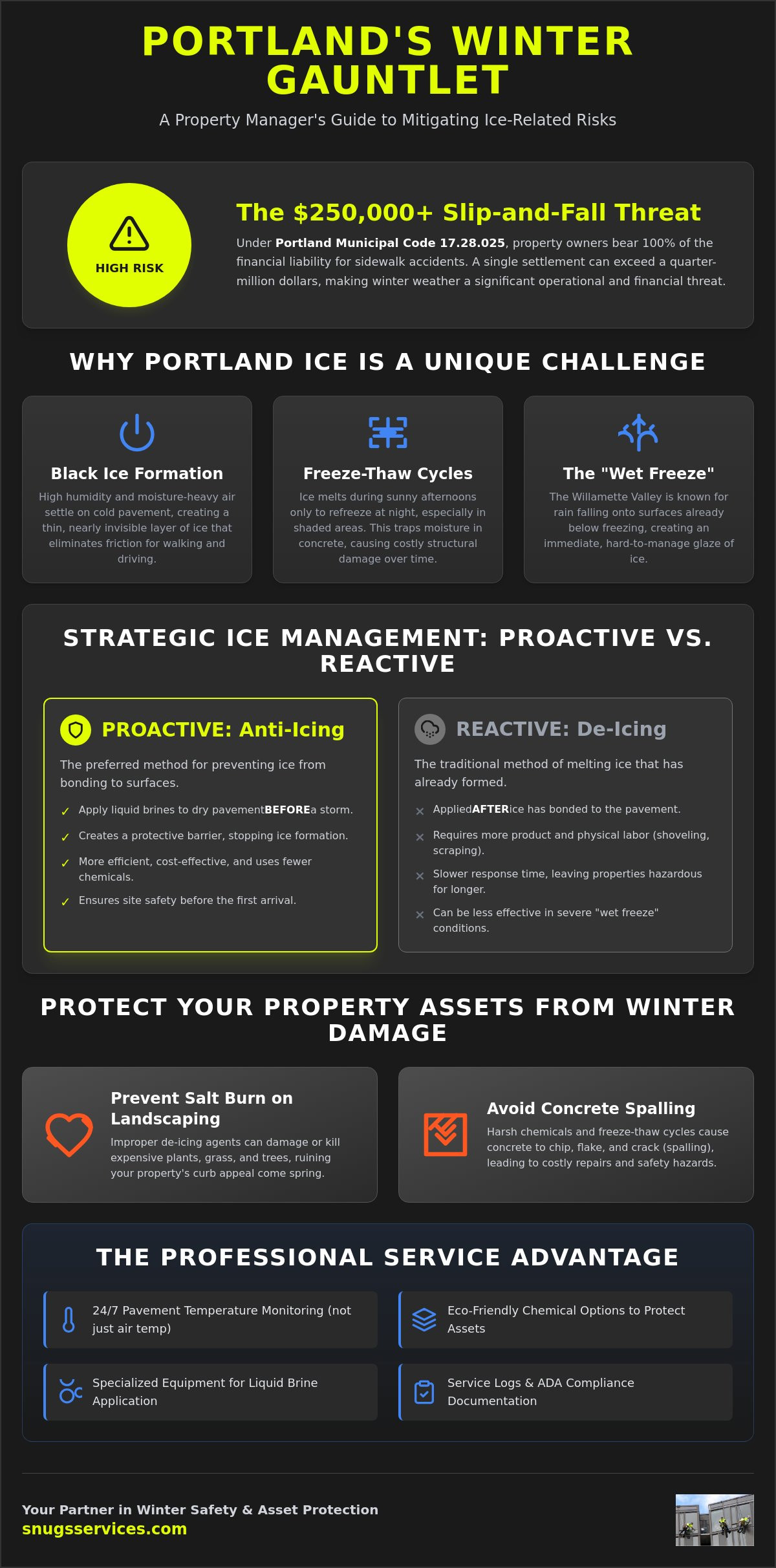
Did you know that under Portland Municipal Code Section 17.28.025, you carry 100% of the financial risk for any sidewalk accident on your property? A single slip-and-fall settlement in our city can exceed $250,000; this makes winter weather more than just a seasonal headache. It’s a significant threat to your operations and your bottom line. As a property manager, you’ve worked hard to maintain your site’s curb appeal. The last thing you need is a contractor who fails to show up or a de-icing method that destroys your expensive concrete and landscaping. Finding reliable commercial de-icing services Portland businesses can count on is about more than just clearing paths. It’s about protecting your community and your investment.
We understand the pressure of keeping tenants safe while preserving the functional beauty of your property. You’ll learn how to protect your commercial assets from liability and ice damage with professional strategies tailored for the unique freezing rain and ice storms of the Pacific Northwest. This guide promises a clear path to zero winter-related accidents by utilizing the latest liquid brine pre-treatments and 2026 safety standards. We will explore specialized equipment, eco-friendly chemical options, and the exact steps to ensure your site stays accessible and pristine all winter long.
Key Takeaways
- Understand why Portland’s high humidity creates dangerous black ice and why standard snow strategies don’t always cut it in our region.
- Learn the difference between proactive anti-icing and reactive de-icing to choose the most efficient method for keeping your walkways clear.
- Protect your property from liability by documenting service logs and ensuring all handicap ramps meet federal ADA safety standards during ice events.
- Discover why professional commercial de-icing services Portland experts provide are critical for preventing salt burn on landscaping and spalling on concrete surfaces.
- Find out how a local partner with specialized equipment can manage the weather for you, ensuring your business stays open and safe without the stress.
The Science of Commercial De-icing in the Pacific Northwest
Commercial de-icing involves the strategic application of chemical agents to melt existing ice or prevent it from bonding to the pavement. While it sounds straightforward, the process is a technical safety science that requires a deep understanding of thermodynamics and local weather patterns. In our region, choosing the right commercial de-icing services Portland property managers trust means finding a partner who understands that ice management isn’t a one-size-fits-all solution. To truly grasp how these chemicals interact with the environment, you can explore The Science of De-icing for a look at the molecular level of ice control.
The “PNW Factor” presents a unique challenge for local businesses. Unlike the dry, sub-zero winters of the Midwest, Portland’s high humidity levels often lead to frequent “black ice” formations even without heavy snow. This moisture-heavy air settles on cold surfaces, creating a thin, nearly invisible layer of ice that eliminates the friction coefficient required for safe walking and driving. Without professional intervention, your parking lot can become a skating rink while the air temperature still feels relatively mild.
To better understand this concept, watch this helpful video:
Portland’s temperature fluctuations also create dangerous “freeze-thaw” cycles. It’s common for ice to melt during a sunny afternoon, only to re-freeze as the sun dips behind the West Hills. This is particularly hazardous in parking garages and shaded areas where the sun never hits the pavement. These “re-freeze” scenarios can trap moisture in the pores of your concrete, leading to structural damage if not managed with the correct professional-grade chemical blends. Maintaining safety and traction requires a proactive approach that keeps these surfaces clear through every temperature swing.
Why Portland Ice is Different
The Willamette Valley is famous for its “wet freeze,” a condition where rain falls onto surfaces that are already below freezing. This creates an immediate glaze that is much harder to manage than dry snow. Our local micro-climates also play a huge role; properties in the West Hills might experience a hard freeze hours before sites in Gresham, which are more susceptible to the cold “Gorge effect” winds. We also pay special attention to shaded northern exposures and areas under building overhangs. These spots often stay frozen all day long, even when the rest of the city has thawed out.
The Role of Professional Monitoring
Success in winter weather management depends on 24/7 pavement temperature monitoring. Standard weather apps only tell you how the air feels, but they don’t account for the thermal mass of your parking lot. Pavement temperature is the actual thermal reading of the asphalt or concrete surface, which often differs significantly from the ambient air temperature reported on standard mobile apps. By tracking these readings, we can perform pre-dawn applications that ensure your retail or office space is safe and ready for business before the first employee arrives. This precision removes the guesswork and provides the peace of mind you deserve during a storm.
Strategic De-icing Solutions: Anti-icing vs. Reactive De-icing
Choosing the right strategy is the difference between a safe site and a liability nightmare. While some providers treat ice as an afterthought to snow plowing, we view it as a distinct technical challenge. Effective commercial de-icing services Portland managers rely on prioritize prevention over reaction. By understanding the timing of a storm, we can apply treatments that stop ice before it ever has a chance to grip your pavement. This strategic approach keeps your property accessible and reduces the total volume of chemicals needed throughout the winter season.
Anti-icing is a proactive method where we apply liquid brines to dry pavement before a storm hits. This creates a barrier that prevents ice from bonding to the surface. Reactive de-icing happens after accumulation has already started. In this scenario, we use granular or liquid agents to break an existing bond, which requires more effort and material. Industry data shows that anti-icing often uses 25% less chemical than reactive melting. This efficiency saves money and protects Portland’s local drainage systems from excessive chemical runoff. Following OSHA winter safety guidelines helps ensure your walkways remain clear and your employees stay upright during the worst weather.
Liquid Brine and Anti-icing Strategies
Liquid pre-treatment is a game changer for large commercial campuses and industrial parks. These agents provide much more uniform coverage than traditional rock salt. Because the liquid stays exactly where it’s sprayed, it doesn’t bounce into your expensive landscaping or ornamental plants. It’s the preferred method for high-traffic pedestrian zones because it starts working the moment the first snowflake or raindrop falls. Managing runoff is a priority for any local property owner. By using anti-icing brines, we significantly reduce the volume of chloride entering the soil, preventing that unsightly white residue from being tracked into your clean lobby.
Granular De-icing for Heavy Accumulation
When accumulation is heavy or an unexpected freeze occurs, granular agents become necessary. We often choose Magnesium Chloride or Calcium Chloride over standard Sodium Chloride for their superior performance. These premium pellets create a “burn-through” effect, penetrating thick ice layers to reach the pavement and melt the bond from the bottom up. While traditional rock salt loses its effectiveness once temperatures drop to 15°F, magnesium chloride continues to melt ice safely down to -13°F. Planning your winter response early ensures you aren’t left behind when the first freeze hits. You can explore our full range of commercial exterior maintenance options to build a safety plan that protects your site all year long.
Managing Commercial Liability and Safety Standards
Managing liability starts long before the first frost settles on your walkways. In a city where the municipal code shifts the full financial burden of sidewalk accidents onto the property owner, safety isn’t just a goal; it’s a legal necessity. When you partner with commercial de-icing services Portland businesses trust, you aren’t just buying a service; you’re investing in a legal safety net. We focus on creating a documented environment of care that protects your tenants and your bottom line from the rising costs of slip-and-fall litigation.
We prioritize high-traffic zones by mapping out “Primary Access” routes for every property we serve. This ensures that the most used paths for employees and customers receive immediate attention during a storm. We don’t just guess where people walk. We work with you to identify main entrances, transit stops, and delivery bays that must remain clear for your business to function. Establishing a proactive de-icing contract often allows property managers to negotiate lower annual insurance premiums by demonstrating a verified risk-mitigation strategy.
Communication is the heartbeat of a successful winter plan. We keep you informed with real-time updates through our professional communication protocols. You won’t have to wonder if your lot is safe at 5:00 AM. Our team provides confirmation of service completion, giving you the peace of mind to focus on your other managerial duties. This transparent approach ensures that you always have the answers your tenants or owners might ask during a weather event.
Meeting ADA Requirements in Winter
ADA compliance is a year-round commitment that gets tested during the winter months. We follow specific de-icing protocols for handicap ramps, stairs, and elevator entrances to ensure they remain accessible to everyone. Following PBOT recommendations, we aim to clear a path at least 3 feet wide to accommodate mobility devices. We also pay close attention to where snow is piled. We place accumulation in areas where it won’t melt and refreeze across accessible pathways, preventing the creation of new hazards as temperatures fluctuate throughout the day.
Documentation and Risk Management
Documented service logs act as your primary shield against litigation. We provide time-stamped service reports that are essential for insurance audits and legal defense. These records prove that you took reasonable steps to maintain a safe environment. Once the ice disappears, the work isn’t finished. Utilizing professional commercial pressure cleaning services ensures that surfaces remain slip-resistant by removing the slick chemical residues and grime that the thaw leaves behind. This holistic approach to property maintenance keeps your site looking pristine and performing safely through every season.
Protecting Your Property Assets from Winter Damage
Winter weather doesn’t just threaten your safety records; it attacks the physical structure of your building and grounds. Many property managers choose the cheapest salt available to save on immediate costs, but this often leads to expensive repairs in the spring. When you select commercial de-icing services Portland experts provide, you’re choosing a partner who prioritizes the long-term health of your concrete and landscaping. We use specialized chemical blends that melt ice without sacrificing the integrity of your property’s primary assets.
Salt burn is a common sight in Portland after a hard winter. Excessive runoff from traditional rock salt can dehydrate and kill expensive ornamental plants and lawn areas. We manage this risk by using precision application techniques that keep chemicals on the pavement and away from your greenery. This detail-oriented approach ensures your curb appeal remains intact once the sun finally comes out in March. Our team understands that restoring a landscape is far more expensive than applying the right chemicals correctly the first time.
Your drainage system is your property’s first line of defense against water damage. Ice dams and blocked drains can cause water to back up under commercial shingles or into the foundation. Maintaining clear pathways for meltwater is just as vital as the initial de-icing. We ensure that your parking lot drains stay open, preventing the “skating rinks” that often form when standing water freezes overnight. This proactive management keeps your site functional and prevents water from seeping into areas where it doesn’t belong.
Post-winter recovery is a seamless transition for our clients. We move from ice management to spring cleaning by removing the residual grit and chemicals that accumulate over the season. This prevents long-term staining and ensures your property is ready for the high-traffic months ahead. By treating de-icing as part of a year-round property safety plan, we help you maintain the aesthetic and functional integrity of your site through every freeze and thaw.
Choosing Concrete-Safe De-icers
Standard salt lowers the freezing point of water, but it also increases the number of times water freezes and thaws inside the pores of your concrete. This hydraulic pressure leads to spalling and scaling, where the top layer of the surface flakes off. Snugs prioritizes Calcium Magnesium Acetate (CMA) for sensitive or decorative surfaces because it’s significantly less corrosive than traditional chlorides. If your walkways already show signs of wear or unevenness, concrete grinding can help restore a level, safe surface before the next winter hits.
Winterizing Your Drainage System
Effective gutter cleaning is a critical step in your winter safety plan. When gutters are clogged with debris, meltwater has nowhere to go but over the side, creating dangerous icicles and frozen patches on the sidewalks below. Similarly, professional roof cleaning prevents heavy ice loads from damaging commercial shingles and keeps your building’s envelope secure. You can protect your building from top to bottom by scheduling a comprehensive winter property assessment today to identify these vulnerabilities before the first freeze.
Reliable Portland De-icing with Snugs Services
Since 1995, Snugs Services has provided the reliable exterior care that Portland property managers depend on during our most unpredictable months. We aren’t just a seasonal contractor; we’re a family-owned, local partner that understands the specific demands of the Pacific Northwest. Our team takes pride in maintaining the aesthetic and functional integrity of your site, ensuring that winter weather never compromises your professional image. By choosing the commercial de-icing services Portland experts have trusted for over three decades, you gain a partner who prioritizes your property’s safety as if it were our own.
The Snugs Standard is built on a foundation of professional-grade equipment and specialized chemical blends designed specifically for our high-humidity environment. We don’t rely on generic solutions that might work in drier climates. Instead, we use technical precision to apply liquid brines and granular agents that protect both your tenants and your infrastructure. This comprehensive approach often includes parking lot sweeping to ensure a clean, professional transition once the ice finally clears. This synergy of services removes the stress of managing multiple vendors and guarantees a high-quality visual result year-round.
Why Local Expertise Matters
Our deep understanding of Portland’s unique micro-climates allows us to anticipate ice formation before it becomes a hazard. We know exactly how the cold winds from the Columbia River Gorge affect eastern properties differently than those tucked into the West Hills. Because our team members live and work in these same communities, we maintain a level of accountability that corporate providers simply can’t match. We commit to punctuality and thorough communication during every storm event, providing the reassurance you need when the forecast looks grim. This local reliability is why we remain the preferred choice for commercial de-icing services Portland managers rely on year after year.
Customized Winter Response Plans
Every commercial site has its own rhythm, which is why we tailor our de-icing schedules to match your specific business hours and traffic flow. Whether you manage a retail center that needs pre-dawn clearance or an industrial park with 24-hour operations, we build a plan that keeps your facility running smoothly. You’ll benefit from having one point of contact for all your exterior maintenance needs, from window cleaning to winter safety. This streamlined management style reduces friction and allows you to focus on your core business while we handle the heavy lifting. Contact Snugs Services today to secure your 2026 commercial de-icing contract.
Secure Your Property for the Coming Winter
Winter in the Willamette Valley doesn’t have to be a source of constant stress for your management team. By implementing a proactive strategy that prioritizes anti-icing and precise pavement monitoring, you can keep your walkways clear and your tenants safe. We’ve explored how specialized chemicals protect your concrete from spalling and why documented service logs are your best defense against slip-and-fall claims. These technical details make all the difference when the temperature drops.
Choosing reliable commercial de-icing services Portland businesses trust ensures you have a partner who manages the weather for you. Since 1995, we’ve served the Portland and Vancouver areas with a commitment to local accountability and professional excellence. We provide specialized concrete-safe chemical options and maintain thorough service logs for your liability protection. You don’t have to tackle the ice alone.
Get a Professional De-icing Quote for Your Portland Property Today!
Let’s work together to keep your property beautiful, functional, and safe through every storm this season.
Frequently Asked Questions
What is the best de-icer for commercial concrete in Portland?
Calcium Magnesium Acetate (CMA) is widely considered the best option for commercial concrete. It is significantly less corrosive than traditional rock salt and doesn’t damage the structural integrity of your walkways. We prioritize CMA and high-grade magnesium chloride because they protect your investment while effectively melting ice at lower temperatures. This choice helps prevent the scaling and spalling that often occurs with cheaper, harsher alternatives.
How far in advance should I apply anti-icing liquid before a storm?
You should ideally apply anti-icing liquid 24 to 48 hours before a predicted weather event. This window allows the liquid brine to dry and bond with the pavement, creating a protective barrier that prevents ice from sticking. If it rains heavily before the freeze, a re-application might be necessary. Our team monitors pavement temperatures around the clock to ensure the timing of our commercial de-icing services Portland businesses rely on is perfect.
Is rock salt illegal to use on commercial sidewalks in Vancouver, WA?
Using rock salt isn’t illegal on commercial sidewalks in Vancouver, WA, but it is often restricted by specific property lease agreements or local stormwater guidelines. Many managers avoid it because it can lead to heavy fines if excessive runoff enters protected drainage systems. We recommend using eco-friendly, liquid-based alternatives that meet local environmental standards while keeping your property safe and compliant with 2026 regulations.
How does de-icing affect my property’s landscaping and plants?
De-icing chemicals can cause “salt burn” by pulling moisture away from plant roots and foliage. This dehydration often leads to yellowing or dead patches in your landscaping once spring arrives. We minimize this risk by using precision application tools that keep the product on the walking surfaces. Choosing professional commercial de-icing services Portland experts provide ensures that your ornamental plants and lawns remain healthy and vibrant after the thaw.
Will de-icing chemicals damage my building’s metal gutters?
Traditional sodium chloride is highly corrosive and can quickly degrade metal gutters and downspouts. When salty meltwater sits in your drainage system, it accelerates rust and weakens the metal. To prevent this, we use corrosion-inhibited chemicals that are much gentler on your building’s infrastructure. This proactive choice saves you from the high cost of gutter repairs and ensures your drainage system stays functional for years.
What is the difference between de-icing and sanding for parking lots?
De-icing uses chemicals to melt ice and prevent a bond with the pavement, while sanding only provides temporary traction on top of the ice. Sand doesn’t remove the hazard and can actually insulate the ice, making it last longer. Additionally, sand creates a significant mess that requires professional parking lot sweeping once the weather clears. De-icing is generally the cleaner and more effective solution for high-traffic commercial areas.
How do I document de-icing services for insurance liability protection?
You document these services by maintaining detailed, time-stamped logs that include the exact time of application, the weather conditions, and the type of chemical used. These records serve as your primary defense during insurance audits or liability claims. We handle this documentation for you, providing clear reports that prove you took reasonable steps to maintain a safe environment. Having these records readily available can significantly reduce your legal exposure.
Can you provide de-icing services for high-rise parking garages?
Yes, we provide specialized de-icing for high-rise parking garages and multi-level structures. These environments require a careful touch because the concrete is often thinner and contains sensitive tension cables. We use lightweight equipment and non-corrosive liquid brines that won’t damage the garage’s structural components or drainage pipes. This ensures the safety of your tenants’ vehicles and the long-term health of your parking facility. To maintain the appearance and value of your commercial vehicles year-round, you can explore Fleet Services for professional mobile detailing solutions.
Recent Comments