
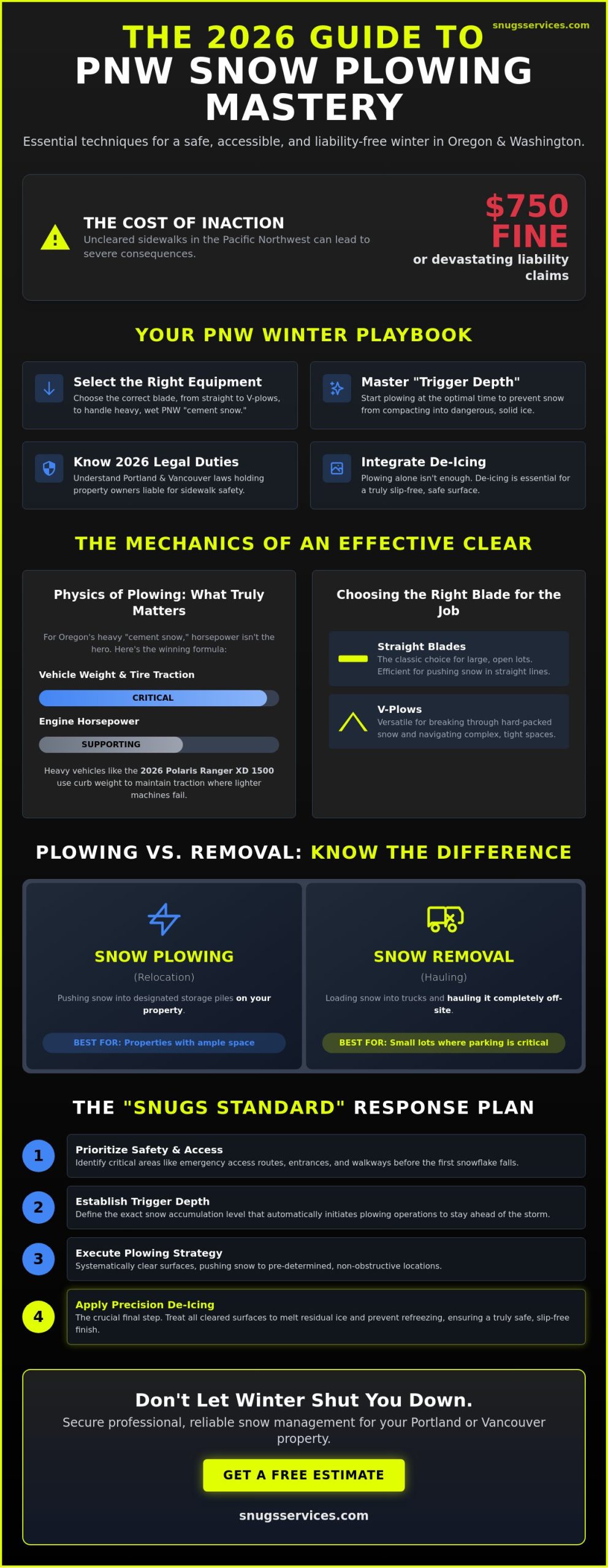
Did you know that an uncleared sidewalk in the Pacific Northwest can result in a $750 fine or a devastating liability claim? Mastering snow plowing is no longer just a winter chore. It’s a vital safety operation that protects your property and your community. We understand the pressure of staring at a driveway full of heavy, wet “cement snow” while wondering exactly when to start the engine to stay ahead of the storm.
You deserve a winter season that’s both safe and worry-free. This 2026 guide provides the essential techniques and equipment strategies you need to maintain a pristine property even during the harshest Oregon and Washington freezes. We’ll walk you through creating a reliable winter response plan, selecting the right UTV attachments like the 2026 Polaris Ranger, and applying precision de-icing methods to ensure your home or business stays open and accessible all season long.
Key Takeaways
- Discover how to select the right equipment, from straight blades to V-plows, to handle the unique weight of Pacific Northwest winter storms.
- Master the “trigger depth” concept to start snow plowing at the optimal time, preventing heavy snow from compacting into dangerous ice.
- Learn about the specific 2026 legal requirements in Portland and Vancouver that hold property owners liable for sidewalk safety and slip-and-fall incidents.
- Understand why integrating professional de-icing with your plowing strategy is the only way to achieve a truly safe, slip-free surface for pedestrians.
- Gain insights into building a “Snugs Standard” response plan that keeps your property pristine and accessible throughout the entire winter season.
What is Professional Snow Plowing? Understanding Winter Service Operations
Professional snow plowing is much more than just a truck with a blade. It is the systematic, strategic removal of accumulated snow from driving and walking surfaces to restore safety and accessibility. While a neighbor might offer to clear a driveway with a shovel, commercial properties and large residential complexes require the power of specialized Winter Service Vehicles. These machines are designed for professional grade displacement. They move massive amounts of weight that would break standard residential equipment, ensuring your infrastructure remains accessible even when the weather turns sour.
To see these professional machines in action and understand the basic mechanics of the job, watch this helpful video:
This level of expertise ensures your property remains functional during the worst winter events. Relying on manual labor for large areas often leads to fatigue and dangerous, slippery patches. By using professional equipment, you ensure a consistent result that keeps your sidewalks and parking lots pristine. For a comprehensive overview of snow removal and its impact on modern city safety, industry resources highlight how these operations prevent urban paralysis. We focus on doing the heavy lifting so you don’t have to worry about the liability of a buried storefront.
The Core Objectives of a Snow Management Plan
Emergency access is our top priority. Every second counts when an ambulance or fire truck needs to reach a tenant. Maintaining business continuity also keeps your doors open. Customers won’t struggle through slush to reach a store; they’ll simply go elsewhere. Finally, professional clearing prevents the freeze-thaw cycle. This stops water from seeping into cracks and expanding, which protects your pavement from the 2026 season’s most common cause of pothole damage.
Snow Plowing vs. Snow Removal: Knowing the Difference
It’s vital to know which service your property actually needs. Snow plowing involves using a blade to push snow into designated storage areas on your site. It’s the standard, cost-effective choice for most businesses. Snow removal is the process of loading that snow into trucks and hauling it off-site. You should choose removal if your parking lot is small and you can’t afford to lose spaces to “snow mountains.” During heavy 2026 storms, hauling snow away keeps your property’s drainage and visibility clear.
The Mechanics of Effective Snow Clearing: Equipment and Techniques
Effective snow plowing relies on the right combination of physics and machinery. Many people think horsepower is the most important factor in a winter storm. In reality, vehicle weight and tire traction are the true heroes of the 2026 season. Without enough weight to push against the resistance of Oregon’s heavy “cement snow,” even the strongest engine will just spin its wheels. Professional setups often prioritize ballast and specialized winter tires to ensure the blade stays pinned to the pavement. For example, the 2026 Polaris Ranger XD 1500 NorthStar Edition uses its significant curb weight to maintain traction where smaller, lighter machines often fail.
Hydraulic speed and blade angling also play a massive role in your displacement strategy. If your blade doesn’t react quickly to changes in terrain, you risk leaving behind hazardous patches of ice. We follow the standards set by the Snow & Ice Management Association to ensure every pass is as efficient as possible. Using a “poly” cutting edge instead of traditional steel can also protect your property’s delicate surfaces. Poly edges are quieter and more forgiving on decorative concrete or stone, keeping your entryways pristine without the harsh scraping sounds. If you want to ensure your surfaces are handled with this level of care, the team at Snugs Services is always ready to handle the heavy lifting for you.
Choosing the Right Blade for the Job
Your choice of blade depends entirely on the layout of your property. Straight blades are the classic industry standard for wide, open parking lots where you can push snow in a single direction. V-Plows, like the latest 2026 BOSS DXT models featuring Coldfront technology, are far more versatile. They excel at “breaking through” deep drifts by splitting the weight to either side. For massive commercial sites, box pushers are the best choice. These allow an operator to move significantly more snow per pass by trapping it within the side wings, preventing the “trail off” that often requires a tedious second trip.
Standard Plowing Techniques and Patterns
Efficiency comes down to the patterns you drive. Windrowing is a favorite technique for long stretches of pavement. By angling the blade, you move snow across the lot in a series of overlapping passes. Back-dragging is another essential skill. This involves pulling snow away from garage doors or loading docks before pushing it into a pile. Strategic piling is the final piece of the puzzle. You must place snow in areas with proper drainage to avoid “refreeze” issues that create black ice. Proper piling also ensures you don’t block important sight-lines for drivers entering or exiting your property.
Developing a Snow Removal Strategy: Timing and PNW Conditions
In Portland and Vancouver, we don’t get the dry, powdery snow found in the mountains. We deal with “cement snow.” This heavy, moisture-laden accumulation is incredibly dense and difficult to move once it settles. Effective snow plowing in the Willamette Valley requires a proactive approach that accounts for this extreme weight. If you wait until the storm ends to start clearing, you’re likely to find a compacted layer of ice that no blade can easily lift. It’s a common mistake that leads to property downtime and increased labor costs.
Successful property managers use a “Trigger Depth” strategy to stay ahead of the weather. In the PNW, this often means starting your first pass much earlier than the national average. While some contractors suggest waiting for two inches, the 2026 standard for high-traffic areas is often a one-inch trigger. This prevents the initial layer from being packed down by vehicle tires, which turns slush into a permanent ice sheet. We monitor weather patterns around the clock, focusing on the critical “slush-to-ice” transition that happens when temperatures drop after sunset.
The Importance of Early Intervention
Early intervention is the key to business continuity. Waiting for a storm to pass often results in unmanageable ice layers that require heavy chemicals to break. We recommend the “One-Inch Rule” for commercial properties. By performing multiple light passes throughout a storm, you maintain a safer surface and reduce the strain on your equipment. This strategy balances fuel costs against the high efficiency of moving lighter loads. It ensures your property stays pristine and prevents the need for emergency “ice chipping” later in the week.
Managing Drainage and Runoff
Before the first flake falls, you must identify your catch basins. Snow piles that block storm drains cause localized flooding during the inevitable PNW melt. Avoid “damming” by ensuring melting snow has a clear path to the street’s drainage system. We take extra care to map out these utilities during the fall to avoid any surprises under the white stuff. By placing snow piles on the low side of the property and away from drains, you prevent black ice from forming when melting runoff refreezes during the night. Proper planning ensures that when the thaw arrives, your parking lot drains quickly and stays safe for every visitor.
Prioritizing Safety: Liability, De-icing, and Site Preparation
Safety is the foundation of every successful winter management plan. As a property owner in the Pacific Northwest, you hold a legal “Duty of Care” to ensure your premises are safe for tenants, customers, and pedestrians. In Portland, City Code 17.28.025 places the responsibility for sidewalk clearing squarely on the owner. Across the river, Vancouver enforcement under Traffic By-law 2849 can result in fines of $750 if paths remain blocked for more than 24 hours. These regulations exist because winter weather creates significant slip-and-fall risks that can lead to costly insurance claims.
Effective snow plowing is only the first step in mitigating these risks. While the plow removes the bulk of the accumulation, it often leaves behind a thin, slick film that quickly turns into black ice. This is why professional de-icing is an essential partner to mechanical clearing. Without chemical intervention to break the bond between the ice and the pavement, your property remains a hazard. We focus on a dual approach that combines the heavy lifting of the plow with the precision of high-grade melting agents to keep your surfaces pristine and safe.
Documentation is your best defense against liability claims. We recommend keeping detailed logs of every pass, including start times, weather conditions, and the specific materials applied. With over 60% of commercial fleets now using GPS tracking, digital verification has become the industry standard for 2026. This data provides a clear timeline of your proactive efforts, which is vital if a claim ever arises. To ensure your property is protected by a team that prioritizes these safety standards, you can contact Snugs Services for a professional winter assessment today.
De-icing and Anti-icing Integration
Modern safety protocols start before the first snowflake hits the ground. Anti-icing involves applying a liquid brine to the pavement when a storm is forecasted. This prevents snow from bonding to the surface in the first place, making the eventual snow plowing much more efficient. Once the plows have finished their work, we follow up with post-plow de-icing agents. We select specific melting agents that are effective at low temperatures while remaining gentle on your landscaping and professional-grade concrete surfaces.
Pre-Season Property Preparation
Successful winter maintenance begins in the fall. We use high-visibility stakes to mark curbs, fire hydrants, and speed bumps before they are buried under “cement snow.” This protects your infrastructure and our equipment from expensive damage. It’s also the perfect time to address existing hazards. Repairing uneven sidewalks through concrete grinding prevents plow blades from snagging and creates a seamless surface for clearing. Finally, we help you establish clear communication plans for tenants, ensuring they know exactly where to park so our teams can provide a hassle-free, thorough cleaning of the entire lot.
Professional Snow Management: Why Reliability Matters in Portland & Vancouver
Reliability is the most valuable commodity when a winter storm hits the Pacific Northwest. In the 2026 market, many property managers are tempted by on-demand apps that promise service in seconds. However, these platforms often fail during major regional events when demand peaks and labor is scarce. The “Snugs Standard” offers a different approach. We are a family-owned company that treats your property as if it were our own. By choosing a local partner, you ensure that someone who knows your specific layout is on-site when it matters most. We pride ourselves on being the neighborly experts who show up on time and do the job right the first time.
Professional snow plowing is also an investment in your property’s long-term health. Improper clearing by inexperienced contractors can lead to asphalt degradation, as heavy equipment might scrape or gouge the surface if not handled expertly. We integrate our winter services with year-round parking lot sweeping to keep your site pristine in every season. This holistic approach ensures that debris doesn’t interfere with plow blades during the winter and that salt residue doesn’t erode your pavement in the spring. We handle the heavy lifting so you can focus on running your business.
The Benefits of a Seasonal Contract
A seasonal contract provides a level of security that on-demand services simply can’t match. You receive a guaranteed response time, ensuring your parking lot is clear before your first employee or customer arrives at the door. It also allows for predictable budgeting. Verified industry data for 2026 shows that seasonal contracts typically range from $1,000 to $5,000 for commercial clients, providing a fixed cost that eliminates the stress of “per-visit” surcharges during a particularly snowy month. You get peace of mind knowing that our team is monitoring weather patterns 24/7 and will be there without you having to pick up the phone.
Post-Winter Recovery and Clean-up
The work doesn’t end when the snow melts. Winter maintenance often leaves behind a mess of gravel, sand, and salt residue that can look unsightly and damage your building’s interior floors. We provide professional parking lot cleaning to restore your property to its sparkling state once the spring thaw arrives. During this process, we inspect your curbs and pavement for any plow damage and schedule necessary repairs. It’s our way of ensuring your asset remains protected year-round. Contact Snugs Services today for a comprehensive winter property assessment and experience the relief of a truly hassle-free winter plan.
Take Command of Your Winter Response
Managing a property during a Pacific Northwest winter requires more than just a reactionary mindset. It demands a strategic blend of the right equipment, proactive timing, and a deep understanding of local liability laws. You now have the knowledge to handle “cement snow” by using smart trigger depths and integrating professional de-icing to keep your surfaces pristine. Choosing a reliable partner for snow plowing ensures that your property remains safe and accessible; this protects you from the $750 fines often seen in Vancouver for uncleared sidewalks. These steps turn a chaotic storm into a managed, routine event.
Snugs Services has been a trusted member of the community, serving Portland and Vancouver since 1995. We offer 24/7 emergency winter response and the peace of mind that comes with a fully insured, family-owned business that knows every corner of your lot. Don’t leave your property’s safety to chance or an unproven app when the next major storm hits. Secure your 2026 winter safety plan with Snugs Services today! We are ready to do the heavy lifting and provide the “good neighbor” service you deserve to keep your home or business sparkling all season long.
Frequently Asked Questions
How much snow is required before I should start plowing?
You should start plowing once the snow reaches a depth of one inch for commercial properties or high-traffic residential areas. In the Pacific Northwest, our “cement snow” is heavy and compacts quickly under tire pressure. Waiting for two inches often allows a dangerous ice layer to bond with the pavement; this makes the eventual clearing more difficult and time-consuming for your maintenance team.
Is snow plowing better than using a snow blower for commercial lots?
Snow plowing is significantly more efficient than using a snow blower for commercial lots because it can move massive volumes of snow in a single pass. A plow truck or UTV can clear a standard 50-car parking lot in a fraction of the time it would take a walk-behind blower. While blowers are useful for tight walkways, they lack the displacement power needed for large-scale business continuity.
Will snow plowing damage my asphalt or concrete driveway?
Professional clearing won’t damage your surfaces if the operator uses proper blade settings and specialized cutting edges. We often utilize “poly” edges instead of steel to provide a quieter, gentler scrape on decorative concrete or stone. Ensuring your pavement is in good repair before winter prevents the blade from catching on existing cracks or uneven sections; this keeps your driveway pristine and safe.
What is the best time of day to plow a parking lot?
The ideal time to plow a parking lot is between 2:00 a.m. and 6:00 a.m. before your first employees or customers arrive. This allows for a thorough, “hassle-free” cleaning of the entire lot while it’s empty of vehicles. For ongoing storms, we perform secondary passes throughout the day to maintain a sparkling surface and ensure safe access for every visitor to your property.
Can I plow snow into the street or onto a neighbor’s property?
You cannot legally push snow into public streets or onto neighboring properties in Portland or Vancouver. City ordinances, such as Portland City Code 17.28.025, require you to manage snow within your own property boundaries. Pushing snow into the road creates a traffic hazard and can lead to a $250 fine; in Vancouver, failing to clear sidewalks can result in a $750 penalty under Traffic By-law 2849.
How do I find the most reliable snow plowing service in Portland or Vancouver?
Look for a provider with a long-standing local presence and a dedicated fleet for 24/7 emergency response. A reliable snow plowing service should offer seasonal contracts with guaranteed response times rather than just on-demand booking. Snugs Services has been a fixture in the community since 1995, providing the expertise and specialized equipment needed to handle the unique winter challenges of the Pacific Northwest.
What happens if a plow hits a hidden object like a curb or manhole cover?
Modern professional plows are equipped with trip-edge or full-trip mechanisms that allow the blade to fold forward when it strikes a solid object. This prevents damage to both the vehicle and your property’s infrastructure. We also use high-visibility stakes to mark curbs and manhole covers before the snow falls; this ensures our operators can navigate your lot with precision even when everything is buried.
Recent Comments