
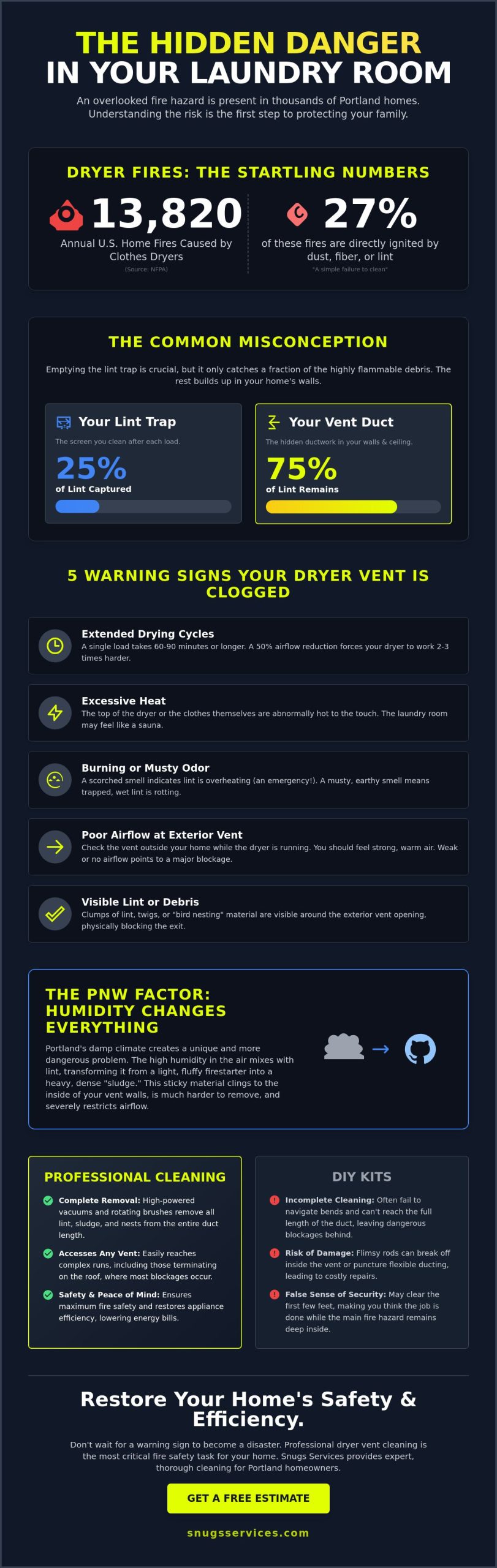
According to the National Fire Protection Association, 13,820 home fires are caused by clothes dryers every year, and 27 percent of those incidents are triggered by a simple failure to clean the exhaust system. It’s a startling reality for any Portland homeowner to face. While you likely prioritize checking your smoke detectors and clearing your gutters, regular dryer vent cleaning is often the most overlooked fire safety task in the Pacific Northwest.
We know you value a home that’s both efficient and safe. It’s frustrating when a single load of towels takes 90 minutes to dry, and it’s even worse when your energy bills climb because of an overworked appliance. This guide reveals why professional maintenance is your most critical safety task for 2026 and how to ensure your exhaust system stays pristine. We will walk through the warning signs of dangerous lint buildup, the steps to lower your fire risk, and how to achieve the peace of mind that comes with a clear, worry-free home.
Key Takeaways
- Identify the critical warning signs, such as excessive heat and extended drying cycles, that signal your home’s fire safety is at risk.
- Discover how the Pacific Northwest’s unique humidity turns standard lint into a heavy “sludge” that requires specialized removal techniques.
- Learn why professional dryer vent cleaning is essential for reaching complex or roof-terminating ducts where DIY kits often fail.
- Understand the vital difference between your internal lint trap and your external ductwork to ensure your laundry system is truly clear.
- Find out how to restore your home’s efficiency and gain peace of mind with expert maintenance designed specifically for Portland homeowners.
What is Professional Dryer Vent Cleaning and Why is it Essential?
Most homeowners in the Rose City are diligent about emptying their lint traps after every load. However, that internal screen only captures about 25 percent of the debris produced during a standard cycle. Professional dryer vent cleaning is the specialized process of clearing out the remaining 75 percent of lint, dust, and obstructions from the entire length of the exhaust duct. While the lint trap is a simple internal filter you can reach with your hand, the dryer vent is a complex system of metal or flexible piping that travels through walls or ceilings to reach the outside of your home.
According to data from the National Fire Protection Association (NFPA), nearly 13,820 home fires were caused by dryers annually during their most recent study period, with 27 percent of those fires ignited specifically by dust, fiber, or lint. This makes Clothes dryer safety a critical concern for every Portland household. When these ducts are clear, air flows freely, which significantly reduces the mechanical stress on your appliance and prevents the dangerous overheating that leads to residential disasters.
To better understand the mechanics of this process and why it matters for your home, watch this helpful video:
The Hidden Danger of Lint Accumulation
Lint is a highly flammable material that acts as a dangerous wick for the intense heat generated by your appliance. When airflow is restricted, heat builds up locally within the wall cavity, creating a perfect environment for ignition. Our team at Snugs Services focuses on removing these hidden hazards to restore the safety of your most valuable asset. Professional dryer vent cleaning is the primary preventative fire measure for 2026 to ensure your family remains safe. We take pride in doing the heavy lifting so you don’t have to worry about what’s lurking behind your walls.
Energy Efficiency and Appliance Longevity
A clogged exhaust system forces your dryer to work 2 to 3 times harder than its original design specifications intended. This strain directly impacts monthly utility bills for residents in the Portland and Vancouver metro areas, as cycles take longer and consume more energy. By restoring proper airflow, we help you avoid the need for premature dryer replacement or expensive heating element repairs. Choosing Snugs means you get a pristine system that operates with maximum efficiency, providing a seamless and worry-free experience for your household. Our goal is to leave your home safer and more efficient than we found it.
5 Warning Signs Your Dryer Vent Needs Immediate Attention
Identifying a clogged vent early prevents a minor inconvenience from becoming a major hazard. According to 2026 safety standards, a dryer that requires more than one cycle to dry a standard load of towels is likely struggling with a 50% airflow reduction. This inefficiency strains your appliance’s heating element and significantly increases energy consumption. If your clothes feel abnormally hot or if the laundry room feels like a sauna, your vent is trapped. This buildup creates a dangerous environment where lint can ignite. In fact, CPSC dryer fire statistics highlight that thousands of residential fires occur annually due to poor maintenance. Our team at Snugs Services sees these red flags daily across Portland neighborhoods. We believe a well-maintained home is a safe home, and we’re here to help you keep it that way.
- Extended Cycles: If heavy fabrics like jeans remain damp after a 60-minute cycle, the vent is restricted.
- Extreme Heat: The dryer exterior or the clothes inside should not be painful to touch after a cycle.
- Odor Issues: A damp, earthy smell suggests wet lint is rotting in the duct, while a scorched smell indicates an emergency.
- The ‘No Air’ Test: A lack of forceful, warm air at the exterior exit points to a deep blockage.
Physical Symptoms You Can See and Smell
Step outside and inspect your exterior vent hood for any visible obstructions. If you see clumps of lint or “bird nesting” materials like twigs and straw, the exit is blocked. A healthy vent should have a strong, warm breeze and a flap that moves freely when the machine is on. If you notice a “scorched” or burning smell, turn off the machine immediately. This indicates that lint is overheating inside the cabinet or ductwork. Another subtle sign is condensation on your laundry room windows. When moist air can’t escape through the duct, it settles on glass surfaces, which often leads to mold growth within 48 hours. Our experts can help you achieve a dryer vent cleaning that restores proper airflow and protects your indoor air quality.
Performance Indicators and Timing
Keep a simple log of your drying times to spot gradual changes. If a load that took 40 minutes in January now takes 65 minutes by July, a clog is definitely forming. Modern smart dryers often feature a “check vent” light; don’t ignore this sensor, as it’s calibrated to detect dangerous backpressure. Even without these symptoms, the 12-month rule is the gold standard for Portland homeowners. Scheduling a professional inspection once a year ensures your system remains pristine and efficient. This proactive approach eliminates the guesswork and keeps your home safe from hidden debris. We take pride in doing the heavy lifting so you can enjoy a worry-free home.
Professional vs. DIY Dryer Vent Cleaning: The Real Risks
Many Portland homeowners reach for a $25 “Amazon Kit” to save a few dollars. These kits often include thin, flexible rods that snap under the stress of a 90-degree turn. When a brush head gets stuck 15 feet inside a wall, a simple chore becomes an expensive extraction project. Snugs Services frequently rescues homeowners from these exact situations. We see the results of DIY attempts where lint was pushed deeper into the vent instead of being removed. This creates a dense “lint plug” that restricts airflow more than the original buildup. A household shop-vac simply lacks the 200+ CFM (Cubic Feet per Minute) of suction required to pull heavy, damp debris through a long duct run.
The Dangers of Incomplete DIY Cleaning
Partial cleaning is often more dangerous than no cleaning at all. When you use a standard vacuum, you don’t have the static pressure needed to clear the entire line. You might clear the first few feet, but the remaining lint gets compacted into tight elbows. This increases the heat buildup and fire risk. Rigid DIY rods also tear through thin foil or plastic transitions easily. U.S. Fire Administration data shows that 34% of clothes dryer fires start because of a failure to clean the equipment properly. Cleaning from the laundry room side only addresses about 10% of the total vent length in most Portland homes.
What a Professional Inspection Includes
A professional dryer vent cleaning from our team goes far beyond a simple sweep. Our technicians perform airflow velocity testing with digital anemometers to verify the vent is 100% clear. We check for outdated materials that don’t meet current building codes. Plastic and thin foil ducts are major fire hazards. We replace these with rigid metal ducting to ensure your home stays safe and efficient. Our team also inspects the exterior termination point. We make sure the flapper moves freely and that pest guards are intact. Birds often nest in warm vents during Portland’s wet winters. These nests create massive blockages that a standard DIY brush can’t safely remove. Getting the job done right the first time provides the dryer vent cleaning results you need for true peace of mind.
The PNW Factor: Why Portland’s Humidity Changes Everything
Living in the Pacific Northwest means dealing with a unique set of maintenance challenges. In Portland, Salem, and Eugene, our average annual rainfall often exceeds 40 inches. This constant moisture doesn’t just stay outside; it infiltrates your home’s exhaust systems and changes the physics of your laundry routine. When humid air mixes with dryer exhaust, it transforms ordinary lint into a heavy, concrete-like sludge. This “wet lint” clings to the interior walls of your ductwork with incredible tenacity. Standard dryer vent cleaning tools designed for dry, fluffy debris often fail to move this damp mass. You need professional-grade equipment to break down this sludge before it hardens and restricts airflow entirely. If left alone, this damp environment also encourages mold growth within the duct, which can eventually impact your indoor air quality.
- Wet lint is significantly heavier than dry lint, causing it to settle in low points of the duct rather than being blown out.
- Condensation in roof-terminating vents leads to faster buildup during the rainy season.
- High humidity levels in the Willamette Valley provide the perfect breeding ground for mold spores within clogged vents.
Moisture and Lint: A Dangerous Combination
Humid air is physically heavier and less efficient at carrying particles out of a vent. For homes where vents terminate on the roof, the problem intensifies. As warm, moist air travels toward a cold roofline, it cools and condenses. This creates a literal trap for lint. Managing this moisture is part of a broader strategy for protecting your property. Just as you might learn how to rid moss from concrete to prevent slip hazards and structural damage, keeping your vents clear is vital for fire safety.
Pest Infestation in Damp Vents
Oregon winters drive local wildlife to seek any available heat source. A warm, damp dryer vent is an irresistible invitation for starlings, sparrows, and rodents. These animals often drag in dry grass, twigs, and fur to build nests. This nesting material acts as a secondary fuel source, significantly increasing fire intensity. Snugs Services installs specialized, bird-proof vent covers that keep pests out while maintaining maximum airflow. We ensure your home stays safe from both internal blockages and external intruders.
Don’t let damp lint and local pests compromise your home’s safety. Restore your peace of mind by scheduling a professional dryer vent cleaning with the expert team at Snugs Services today.
Snugs Services: Your Local Portland Dryer Vent Experts
Since 1995, Snugs Services has protected homes across the Portland and Vancouver metro areas. We believe in a “good neighbor” philosophy, which means we show up on time, treat your property with respect, and never cut corners. Our team brings professional-grade equipment to every job to ensure your home remains the safe, comfortable sanctuary it’s meant to be. It’s about more than just maintenance; it’s about the pride of local craftsmanship and the reliability of a team that’s been part of the community for over 30 years.
We specialize in the difficult tasks that most homeowners prefer to avoid. Whether your ventilation system exits through a side wall or requires our specialized high-reach equipment for roof-terminating ducts, we handle the heavy lifting. Our technicians are trained to navigate complex layouts, ensuring that no matter where your vent leads, it ends up clear and safe.
Our Specialized Cleaning Process
Our approach to dryer vent cleaning is built on precision and industrial power. We don’t just clear the easy spots. We use high-pressure air tools and industrial vacuums to reach deep into your ventilation system, removing every ounce of packed lint and debris. This process is essential for maintaining the longevity of your appliances and the safety of your family. We provide a total clean by following a strict protocol:
- Initial airflow testing to identify specific blockages and pressure drops.
- Mechanical agitation and high-pressure debris removal to scour the vent walls.
- Final airflow verification to provide measurable proof of your system’s efficiency.
Our crews are active daily in Beaverton, Hillsboro, Gresham, and Keizer. We bring expert-level care to every corner of the region, ensuring that your dryer runs at peak performance without the risk of overheating.
Bundle for Home Safety and Peace of Mind
Safety isn’t a one-and-done task. It’s a holistic commitment to your home’s health. You can maximize your protection by pairing your vent maintenance with chimney sweeping, which creates a comprehensive fire-prevention shield for your household. This dual approach addresses the two primary fire hazards in modern homes simultaneously.
We also recommend our roof cleaning Portland pillar to address moss and debris that can compromise your home’s exterior and clog roof-mounted vent caps. By bundling these services, you ensure a complete exterior health check in a single, hassle-free visit. Our goal is to restore the beauty and safety of your most valuable asset while removing the stress of home maintenance from your to-do list.
Secure Your Home’s Safety for the Year Ahead
Ignoring your dryer vent isn’t just about longer drying cycles; it’s a critical safety risk for your household. Data from the National Fire Protection Association indicates that nearly 13,820 home fires start in laundry rooms annually, with lint ignition being the primary cause. In our unique Pacific Northwest climate, Portland’s high humidity causes lint to clump together, creating stubborn blockages that standard DIY tools often miss. Snugs Services has been family-owned and operated since 1995, providing the local expertise needed to navigate these specific regional challenges. We utilize specialized high-reach and roof-access equipment to ensure every vent is perfectly clear, even those located on steep rooflines or multi-story homes. We proudly serve the entire Portland, Salem, and Vancouver metro areas with a commitment to detail and neighborly care. Investing in professional dryer vent cleaning removes the burden of dangerous maintenance from your shoulders and restores your peace of mind. Let us handle the heavy lifting so you can enjoy a safer, more efficient home.
Book Your Professional Dryer Vent Cleaning in Portland
Your home deserves the highest standard of protection, and we’re ready to deliver it today.
Frequently Asked Questions
How often should I have my dryer vent cleaned in Portland?
You should schedule a professional dryer vent cleaning at least once every 12 months to maintain peak safety. According to the National Fire Protection Association, nearly 30 percent of dryer fires start because of a failure to clean the exhaust system. If your household runs more than 5 loads of laundry per week, you might need a check-up every 6 months to keep your Portland home protected.
Can a clogged dryer vent really cause a house fire?
Yes, a clogged vent is a primary fire hazard because lint is highly combustible and ignites at low temperatures. The US Consumer Product Safety Commission reports that over 15,500 dryer fires occur each year, leading to an average of 10 deaths and 310 injuries. When airflow is blocked, heat builds up inside the drum until the trapped lint catches fire, putting your entire property at risk.
Will cleaning my dryer vent help my clothes dry faster?
Cleaning your vent ensures your clothes dry in a single cycle rather than two or three. A clear exhaust path allows moist air to escape quickly, which can reduce your drying time by 15 to 25 minutes per load. This efficiency boost doesn’t just save time; it can lower your monthly energy costs by up to 30 percent while extending the lifespan of your appliance.
Is it okay to use a leaf blower to clean my dryer vent?
You should avoid using a leaf blower because it often compacts lint into tight clogs rather than removing it. Most Portland homes have vents that span 25 to 40 feet with multiple 90 degree elbows where debris gets stuck. A leaf blower lacks the specialized brushes needed to scrub the inner walls, often resulting in a pipe that’s more blocked than when you started.
How do I know if my dryer vent terminates on my roof?
If you don’t see a vent hood on your exterior siding, your system likely exits through the roof. About 60 percent of modern two story homes in the Pacific Northwest use vertical venting. You can verify this by running your dryer and looking for steam or air movement near your roof eaves or shingles. Our team uses specialized ladders to reach these high termination points safely.
What is the difference between a lint trap and a dryer vent?
The lint trap is the small screen you pull out of your dryer, while the dryer vent is the 4 inch wide pipe that carries hot air outside. While the screen catches about 75 percent of debris, the remaining 25 percent passes through the machine and settles in the ductwork. Over time, this buildup restricts airflow, which makes professional dryer vent cleaning essential for maintaining a safe and efficient laundry room.
Does professional dryer vent cleaning include a safety inspection?
Every professional service includes a comprehensive safety inspection to identify crushed ducts or disconnected joints. We check that your system meets the 2024 International Residential Code standards, which require specific materials like rigid metal ducting. Identifying these structural issues early prevents carbon monoxide leaks and fire hazards, giving you total peace of mind that your home’s systems are in pristine condition.
How long does a professional dryer vent cleaning service take?
A standard appointment takes between 45 and 90 minutes depending on the length of your ductwork. If your vent is longer than 20 feet or requires roof access, it might take a bit more time to ensure every inch is sparkling clean. We work efficiently to restore your home’s safety without disrupting your daily routine, leaving you with a seamless and worry free experience.
Recent Comments