
A deck that looks rough after pressure washing may be damaged, but the signs can help you judge what needs attention. Splintering, fuzzy wood, gouges, or stripped finish point to excessive pressure or a nozzle held too close. For avoiding property damage during power washing, test a small, inconspicuous area first and keep the wand about 8 to 12 inches from a deck, adjusting carefully if the wood starts to fray.
It’s easy to assume a stronger spray means a faster, cleaner result. But the right approach depends on the surface: a forceful jet can damage wood, paint, siding, windows, and outdoor fixtures while removing grime. This guide explains how to test delicate materials, choose a safer nozzle distance, spot potential deck damage, and protect your home’s exterior before you start. You’ll also learn when a gentler method is safer than direct pressure, so you can clean with less risk of harming the property.
Key Takeaways
- Match the cleaning method and pressure to the material; delicate surfaces need a gentler approach than concrete.
- Test an inconspicuous spot and adjust nozzle distance gradually to spot signs of paint loss or wood damage early.
- Look for splintering, gouges, or a stripped finish to judge whether a deck needs sanding, refinishing, or board replacement.
- Keep water away from windows, roof shingles, electrical fixtures, and vulnerable siding to reduce the risk of hidden damage.
1. Can Power Washing Do Damage?
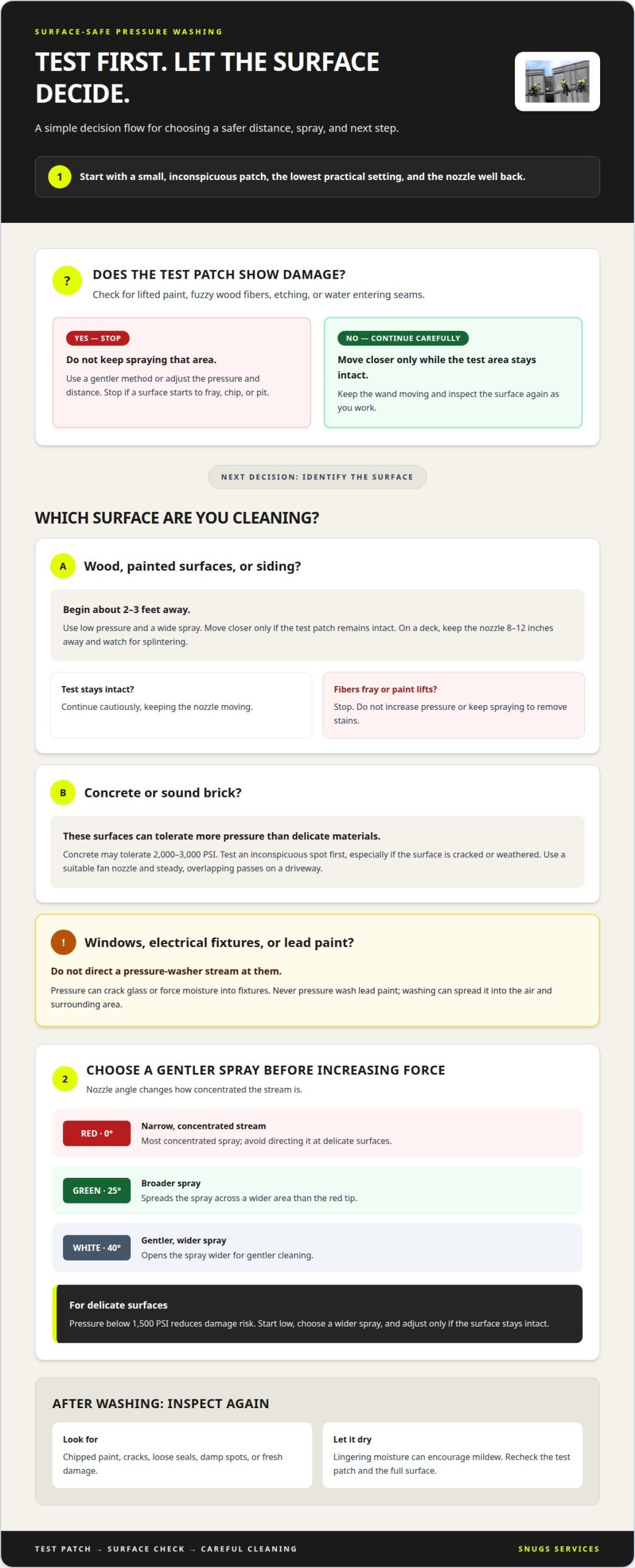
Yes. A concentrated, high-pressure stream can strip paint, splinter wood, pit concrete, or force water behind siding. Pressure washing uses pressurized water, measured in PSI; power washing commonly refers to pressure washing with heated water. Soft washing relies on low pressure and surface-specific cleaning solutions to loosen grime, mildew, and buildup. For delicate surfaces, pressure below 1,500 PSI reduces damage risk; concrete may tolerate 2,000 to 3,000 PSI.
The nozzle matters as much as the machine. A red tip sprays at 0 degrees, concentrating pressure in a narrow stream; a green tip spreads it across 25 degrees. A white tip opens the spray to 40 degrees for gentler cleaning. Start with low pressure, a wider spray, and a safe distance, then adjust only if the surface stays intact. Don’t direct a powerful stream at outlets, windows, painted siding, or old brick.
For roofs, use a gentle method rather than blasting shingles. On a deck or fence, use lower pressure and a wide fan, keep the nozzle moving, and aim down along the wood. For a driveway, use a suitable fan nozzle and steady, overlapping passes to avoid gouging the concrete. These steps can help limit damage, but roof access and fragile materials can make professional pressure washing a practical option. A trained team can choose a method suited to the surface instead of relying on force alone. High-pressure water can be dangerous if not handled correctly.
Runoff and wastewater disposal requirements vary by local rules in the United States. Since disposal requirements differ by location, account for the applicable local rules before washing.
Pressure-washer risks include surface damage, injury from the high-pressure stream, and pump damage. Read the equipment manual, attach the nozzle before starting, and clean the tips and hoses after use. Don’t leave the machine running without pulling the trigger, because recirculating water can heat up and damage the pump. Keep the wand moving, wear protective gear, and stop if a surface starts to fray, chip, or pit.
2. Testing sensitive surfaces and maintaining a safe nozzle distance
Test delicate surfaces before washing. Choose a small, inconspicuous patch, use the lowest practical setting, and begin with the nozzle well back. Check for lifted paint, fuzzy wood fibers, etching, or water entering seams. For siding or wood, start about 2-3 feet away and move closer only if the test area stays intact. On a deck, keep the wand 8 to 12 inches away and watch for splintering.
Distance alone won’t make every surface safe to wash. Avoid directing pressure at windows, electrical meters, panels, outdoor lights, plants, and painted wood siding. High-pressure water can crack glass, force moisture into fixtures, or damage paint. Never pressure wash lead paint, which can spread into the air and surrounding area. Concrete and sound brick can tolerate more pressure than delicate materials, but test an inconspicuous spot first, especially if the surface is cracked or weathered.
Choose cleaning products for the material, not just the stain. Use a detergent labeled for that surface, follow its directions, and test it on a small patch before treating a larger area. Harsh chemicals, including chlorine bleach, can damage wood and some metals. Apply detergent evenly at a suitable low-pressure setting, then rinse without forcing water behind siding or into gaps.
After washing, inspect the test patch and the full surface for chipped paint, cracks, loose seals, or damp spots. Let the area dry, since lingering moisture can encourage mildew. If a delicate façade needs careful treatment, professional pressure washing can help match the method to the material and limit unnecessary force.
Testing first can also establish a safe nozzle distance before power washing a sensitive surface. Keeping the power-washer nozzle at least 6 to 12 inches from the surface helps balance cleaning power and safety. On painted or colored surfaces, check a small area to make sure pressure washing will not strip the paint.
Never power wash lead paint, since washing can spread it into the air and surrounding environment. Don’t aim a pressure washer directly at windows: high-pressure water can crack or break them. After washing, dry surfaces to help prevent moisture-related mold and mildew growth.
3. Did I Ruin My Deck With a Pressure Washer?
Look closely at the boards before deciding. Fuzzy grain, raised splinters, gouges, or bare patches where the finish lifted can signal pressure damage. Light splintering may improve with sanding after the wood dries. If washing stripped the finish, the deck may need resealing or staining. Deep gouges or badly damaged boards can require replacing individual boards. Don’t keep spraying to remove stains if the wood fibers are already fraying.
Protect the surrounding area before starting. Move outdoor furniture and planters out of the spray path, or cover them securely. Don’t aim a pressure washer at plants: a forceful stream can damage or kill them. Use a garden hose to rinse plant leaves instead. On wooden boards, direct water down at an angle and keep the nozzle moving. This helps avoid cutting lines into the grain or forcing dirt deeper.
Set up carefully to protect yourself and nearby property. Read the washer’s manual, check its safety shields and oil level, and attach the nozzle before starting. Wear safety goggles to guard against spray and flying debris, and non-slip shoes for wet concrete or decking. Keep both hands on the washer to control recoil. High-pressure water can cause cuts, bruises, and eye injuries if the equipment slips or the spray hits someone.
Before cleaning a driveway or deck, remove toys, tools, and loose debris that could become hazards under pressure. Keep people away from the work area, and never spray toward another person. A powerful stream can bend an outdoor air-conditioner grille and restrict airflow, so shield the unit from direct spray. After washing, inspect painted trim, deck edges, and nearby fixtures for fresh chips, loose parts, or water intrusion. These checks can help you catch problems early.
4. Preventing damage to siding, roofing, gutters, and electrical fixtures
Before washing a house, close and fasten windows and doors, remove window screens, and repair cracks or gaps where water could seep inside. Work from top to bottom, and don’t spray siding from below, as water can get behind it. Use low pressure on roofs: a forceful stream can strip protective granules from shingles or drive water beneath them.
Gutters need care, too. Remove debris by hand rather than directing a pressure washer into the channel, where the force can loosen or break the anchors. Keep the spray moving across vinyl siding to reduce streaking, and don’t focus on one spot for long. Use particular caution on painted wood siding: pressure can lift paint or force water behind the boards, where it may reach wiring or insulation.
Before washing, protect electrical outlets and fixtures with waterproof covering and tape. Don’t spray electrical panels, meters, or outdoor lights; pressure can force water inside and damage components. Keep the water jet at least six feet from electrical wiring. If water gets inside an electrical component, stop and contact a licensed electrician.
Vehicles need a different approach. To wash a car, use a low-pressure nozzle designed for automotive use, hold the wand at an angle, and keep it at least 12 inches from the surface. Start farther away, moving closer only as needed. Direct pressure can chip paint, damage trim, or force water toward sensitive electronics, so don’t treat a vehicle like concrete.
These steps help prevent damage across the exterior, from siding to fixtures. For careful pressure washing for your home, choose a method suited to the surface rather than relying on force.
Snugs Services
Snugs Services helps clean home exteriors when you’re concerned about delicate materials, fixtures, or existing wear. Its pressure washing service tackles exterior buildup, and its gutter cleaning, installation, and repair services address gutter maintenance needs. If a deck, siding, or roof looks vulnerable, describe the surface and concern when discussing the work. This gives the conversation a clear starting point and helps focus on the care your property needs. Contact Snugs Services to discuss exterior maintenance for homes in Portland, Gresham, Salem, Eugene, Vancouver, Beaverton, Tualatin, Tigard, Hillsboro, Longview, Richfield, Battle Ground, Camas, Wilsonville, and Keizer.
Plan Your Next Exterior Clean With Confidence
A careful plan for avoiding property damage during power washing starts before you switch on the equipment. Consider each surface’s condition, any existing wear, and which areas need a gentler approach. This helps you decide whether to handle the work yourself or bring in experienced help, especially when the job involves several materials or hard-to-reach areas.
Snugs Services can help you plan exterior care, including pressure washing and gutter work, with attention to your property’s needs. Share the surfaces or concerns you’d like addressed, and take the next step toward a cleaner, well-maintained home.
Contact Snugs Services about power washing help, and move forward with confidence.
Frequently Asked Questions
Did I Ruin My Deck With a Pressure Washer?
Not necessarily. A rough appearance doesn’t always mean the boards are beyond repair. Let the deck dry, then compare the washed area with an untouched section in good light. Look for lasting grooves, exposed fibers, or finish loss rather than judging the wet surface alone. If damage is limited to the finish, refinishing may restore its appearance; deep cuts or weakened boards need closer assessment.
Can Power Washing Do Damage?
Yes, especially when a narrow, forceful stream hits a weak or worn surface. Water can strip paint, pit concrete, break window seals, or enter gaps behind siding. A reliable approach to avoiding property damage during power washing starts with identifying vulnerable areas before cleaning. For homes in Portland and Vancouver, inspect older finishes and existing cracks carefully, since pressure can worsen damage that is already present.
What Is Soft Washing?
Soft washing uses low-pressure water and a cleaning solution suited to the surface, rather than relying on a forceful jet. It can be appropriate for roofs, painted siding, and older brickwork that may be harmed by direct high pressure. The solution helps loosen grime and mildew before rinsing. Soft washing doesn’t require hot water, but the product and application method still need to suit the material being cleaned.
What pressure and nozzle should be used for different exterior surfaces?
Use the material and its condition to guide the pressure and nozzle. Delicate wood or painted areas call for pressure below 1,500 PSI; resilient concrete or brick may use 2,000 to 3,000 PSI. A white 40-degree tip spreads the spray for gentle cleaning, while a green 25-degree tip provides a more focused fan. Start low and test an inconspicuous patch before continuing.
Recent Comments