
The waste in a retail dumpster can determine where it may go next. For retail dumpster pad sanitation in Salem, OR, separate ordinary refuse from items that need a different disposal stream. Local alternatives include the Salem-Keizer Recycling & Transfer Station at 3250 Deer Park Dr. SE and the North Marion Recycling & Transfer Station in Woodburn. Both are open daily from 8 a.m. to 5 p.m., with Salem-Keizer closed on listed holidays.
A clean, orderly waste area matters, but handling what is left behind can be less straightforward. Electronics, fluorescent bulbs, appliances, and other specialty items may have separate drop-off limits or handling requirements. A thoughtful retail dumpster pad sanitation plan in Salem, OR, accounts for these materials before cleaning begins.
This guide covers local disposal considerations and practical steps for keeping a dumpster pad cleaner and more manageable. Use it to plan retail dumpster pad sanitation in Salem, OR, around your property’s waste, drainage, and maintenance needs.
Key Takeaways
- Set a cleaning schedule around how the pad is used, and respond promptly to visible spills or residue.
- Understand why wastewater needs careful handling and what to consider before cleaning runoff is discharged.
- Reduce odors, pests, and grease buildup by keeping waste contained and the surrounding area orderly.
- Compare service proposals by cleaning scope, schedule, and the factors that shape pricing, not by price alone.
How often should retail dumpster pads be cleaned and sanitized?
Set the cleaning schedule around actual use, not an arbitrary calendar. A Salem grocery with leaking food waste needs more frequent attention than a retailer handling mostly dry packaging. Dumpster traffic, container condition, weather exposure, and visible residue all affect how quickly a pad needs cleaning. No single interval suits every retail property.
Use each waste collection as an inspection point. Look for liquid trails, grease, stuck-on debris, overflowing containers, and odors around the pad. Clean leaks and spills promptly rather than waiting for the next planned service. Note recurring trouble spots, such as beneath a container or beside a loading door.
- Routine appearance: Keep scheduled cleaning based on normal waste volume and observed buildup.
- Fresh spill: Clean promptly when food, oil, or other residue reaches the concrete.
- Repeat odor: Shorten the interval if smells return soon after cleaning.
- Seasonal change: Reassess after weather or business activity changes affect the pad.
Cleaning and sanitizing serve related but distinct purposes. Cleaning removes visible soil, grease, and debris. Sanitizing follows cleaning to address remaining contamination, using a method suited to the surface and conditions. Applying sanitizer over grime can leave residue in place, so the order matters.
After each service, record the date, conditions, and recurring sources of mess. Repeated leakage beneath one container, for example, may signal a maintenance issue rather than an overdue wash. Adjust the schedule when records show buildup returning between visits. This keeps cleaning frequency tied to the pad’s actual condition and use.
What wastewater disposal rules apply to dumpster pad cleaning in Salem OR?
Wastewater from a dumpster pad can carry grease, food residue, litter, and cleaning products. In Salem, the disposal route depends on the water’s contents and the site’s drainage. Storm drains and sanitary sewers serve different purposes, so don’t assume a nearby grate accepts washwater. Identify where the water flows before cleaning begins.
Locate drains, slopes, and low points around the pad before work starts. Check whether runoff could reach a parking lot, sidewalk, or neighboring property. Choose a cleaning approach that contains water instead of letting it spread. For a small spill, absorbent material can help collect liquid and loose debris before washing.
- Map the flow: Identify nearby drains and the direction water travels across the concrete.
- Contain runoff: Use barriers or collection equipment to keep washwater within the work area.
- Capture solids: Remove food scraps, litter, and grease deposits before they enter drainage.
- Separate waste: Keep collected liquid and debris apart when their disposal needs differ.
Consider what the pad handles before selecting a disposal method. A loading area with food waste may produce washwater containing organic residue. A site with spilled oil, paint, or unknown liquids needs a different response. Keep those materials out of routine cleaning runoff. Isolate the affected spot and identify the substance before deciding how to handle it.
Cleaning products also affect wastewater. Use only the amount needed for the soil, and prevent concentrated solution from reaching drains. Keep product labels available so workers can identify what was used. If the plan relies on discharge to a particular drain, establish that route before work begins. A controlled process helps prevent contaminated washwater from flowing wherever gravity takes it.
For Salem retailers, start with a site-specific drainage plan. Record drain locations, likely contaminants, containment methods, and the intended wastewater destination. Revisit the plan when the pad layout or cleaning method changes.
How can retailers prevent odors, pests, and grease buildup around dumpster pads?
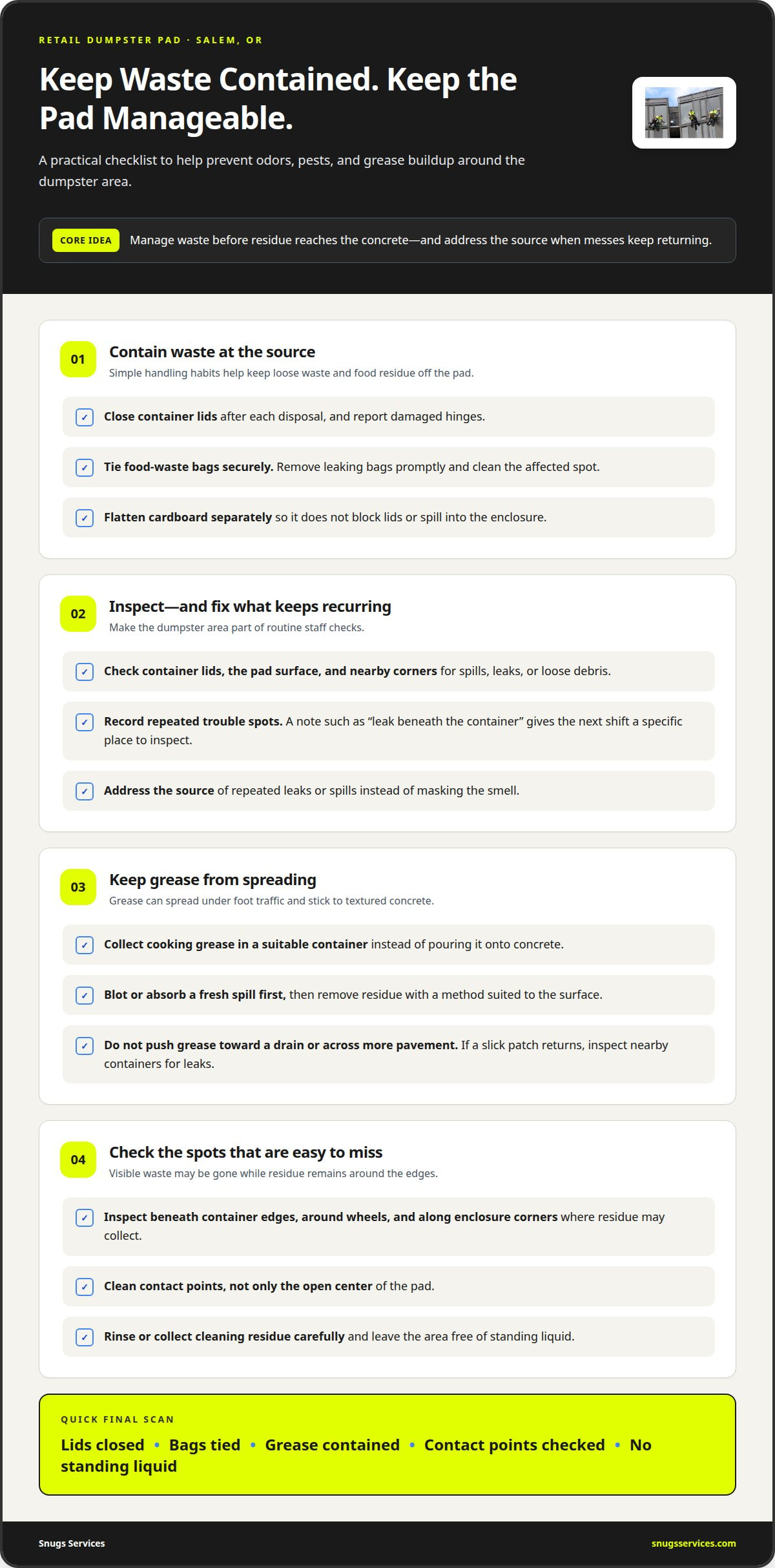
Manage waste before residue reaches the concrete. Keep food scraps in securely tied bags and place them inside closed containers. Flatten cardboard separately so it doesn’t block lids or spill into the enclosure. Remove leaking bags promptly and clean the affected spot. Loose waste, open lids, and food residue can turn a small mess into a recurring nuisance.
Include the dumpster area in routine staff checks. Assign someone to inspect container lids, the pad surface, and nearby corners. Record repeated leaks or spills, then address their source instead of masking the smell. A note such as “leak beneath the container” gives the next shift a specific place to inspect.
- Close containers: Keep lids shut after each disposal, and report damaged hinges.
- Contain food waste: Tie bags securely and clean up torn bags quickly.
- Manage cooking grease: Collect it in a suitable container instead of pouring it onto concrete.
- Clear loose debris: Remove cardboard, food scraps, and litter from pad edges.
Grease needs direct attention because it spreads under foot traffic and sticks to textured concrete. Blot or absorb a fresh spill first, then remove residue with a method suited to the surface. Avoid pushing grease toward a drain or across more pavement. If a slick patch keeps returning, inspect nearby containers for leaks.
Odor can linger after visible waste is gone. Check beneath container edges, around wheels, and along enclosure corners, where residue may collect. Clean these contact points instead of treating only the open center of the pad. Rinse or collect cleaning residue carefully, and leave the area free of standing liquid. Clear surfaces and closed lids help staff spot new spills sooner.
How do Salem dumpster pad cleaning providers compare on pricing, frequency, and services
Compare proposals by scope, not just the total. One Salem proposal may cover surface washing, stain treatment, sanitizing, or runoff collection, while another may include only a basic rinse. For retail dumpster pad sanitation in Salem, OR, compare written service details to see what each job includes.
The work involved affects a project’s price. Pad size, grease buildup, container access, and wastewater containment can change labor and equipment needs. A small, lightly soiled concrete area differs from a wide pad with hardened residue and limited access. A proposal should spell out the included work and any factors that could change its scope.
- Cleaning scope: Check whether the service includes debris removal, degreasing, rinsing, and sanitizing.
- Runoff handling: Compare how each plan contains and collects cleaning wastewater.
- Frequency: Match visits to waste volume, recurring spills, odor, and observed buildup.
- Site access: Note container placement, vehicle traffic, and obstacles affecting the work area.
Frequency also affects value. A recurring schedule can address routine soil before it becomes stubborn buildup. A one-time cleaning may suit a pad that needs a reset, while ongoing food residue may call for more frequent attention. For retail dumpster pad sanitation in Salem, Oregon, the right cadence depends on site conditions, not a universal schedule. Compare how each proposal adapts to changing conditions.
Service descriptions matter as much as visit timing. A surface wash, for example, may remove loose grime but leave deep grease stains untreated. A clear scope distinguishes routine maintenance from more intensive cleaning. Ask for the pad area, treatment steps, wastewater approach, and expected visit pattern in writing. This provides a practical basis for comparing proposals beyond the headline price.
Use these criteria to shape a plan for your property. Explore exterior maintenance options when surrounding paved areas also need attention.
Snugs Services
Snugs Services supports Salem-area property managers with exterior maintenance and pressure washing for commercial properties. Pressure washing exterior surfaces can complement a plan for managing the dumpster area. It addresses surface grime, while disposal and wastewater procedures still need to suit the site and materials involved.
Turn to Snugs Services for professional pressure washing and exterior upkeep. The team also provides gutter cleaning, installation, and repair, helping property managers address related maintenance needs. For dumpster pad sanitation, use the scheduling, containment, and disposal considerations above to guide your site plan.
Contact Snugs Services to discuss your exterior maintenance needs.
Make the Next Maintenance Step Count
Make retail dumpster pad sanitation in Salem, OR, a clear part of property upkeep. Assign responsibility for tracking service visits and recording recurring trouble spots. This handoff helps staff recognize changing conditions and gives property managers a useful basis for adjusting the plan.
Consider the dumpster area alongside the rest of your property’s exterior. A coordinated maintenance approach helps keep adjacent surfaces cared for instead of treating each issue in isolation. Choose a next step that fits your site and keeps routine upkeep manageable.
For help with exterior maintenance, contact Snugs Services. A clean, well-kept property starts with a practical plan you can put into action.
Frequently Asked Questions
Which Salem OR companies clean and sanitize commercial dumpster pads?
Snugs Services provides commercial pressure washing in Salem, including dumpster-area cleaning. Before arranging work, define the requested scope, such as concrete washing, treatment of stuck-on residue, and cleanup around the enclosure. Clear scope helps property managers plan around container access and align service expectations with the site’s needs.
How much does dumpster pad cleaning cost in Salem Oregon?
Snugs Services provides a quote based on the site and requested work. Key factors include pad size, the type and amount of buildup, access around dumpsters, wastewater handling, and service frequency. A compact pad with light surface soil, for example, calls for a different scope than a larger area with hardened grease. A quote can reflect those project details.
What cleaning methods and equipment are used for dumpster pad sanitation?
Pressure-washing work can include removing loose debris, applying a suitable cleaning solution, scrubbing stained areas, and rinsing with pressure-washing equipment. A narrow corner behind a dumpster may need focused treatment, while broad concrete sections can be cleaned systematically. Match equipment and technique to the surface and residue. Request a scope that explains the work sequence and how the enclosure area will be left afterward.
What City of Salem or Marion County rules apply to commercial dumpster enclosures and sanitation?
For a Salem or Marion County property, distinguish enclosure management from wastewater disposal. The applicable direction depends on the site and where its drains lead. Storm drains and sanitary sewers are not interchangeable. For example, a pad sloped toward a storm inlet needs a plan to keep washwater from flowing into it. Follow the requirements that apply to the property and discharge route.
What risks come with pressure washing dumpster pads without proper wastewater containment?
Uncontained washwater can carry grease, food residue, litter, and cleaning solution beyond the pad. It may spread across a parking area or flow toward a drain, creating cleanup needs outside the original work zone. Water left on concrete can also make the surface slippery. Containment keeps cleaning focused, limits runoff, and makes collected residue easier to manage.
Recent Comments