
A clean business facade is more than a finishing touch; it’s part of keeping a commercial property looking cared for. Maintaining a clean business facade typically means removing dirt, mold, and other buildup, with cleaning generally scheduled every 1 to 3 years depending on the building’s location, materials, and exposure to pollution. Routine upkeep can also help catch exterior issues before they become harder to manage.
It’s easy to focus on the parts of a property customers notice first. A practical cleaning plan also considers how grime and moisture affect exterior surfaces and which methods suit each material without causing damage.
This guide explains facade cleaning, how dirt and biological growth affect commercial exteriors, and how to plan upkeep around your property’s conditions. You’ll learn how to choose a suitable cleaning approach, keep drainage features working, and decide when professional cleaning can help. A clear plan makes it easier to maintain a tidy, welcoming exterior.
Key Takeaways
- Learn how facade cleaning differs from general exterior upkeep so you can focus maintenance on the building surfaces that need it.
- Recognize how grime, mold, and pollutants can affect exterior materials and identify signs that deserve attention.
- Understand why cleaning methods should match the facade material, especially for porous masonry and smooth metal or glass.
- Build a practical upkeep plan that accounts for property conditions and helps keep drainage from sending water down exterior walls.
What Is Facade Cleaning?
Facade cleaning removes buildup from a building’s exterior walls and panels. The schedule and methods depend on the surface, its exposure, and its condition.
Routine Cleaning for Surface Protection
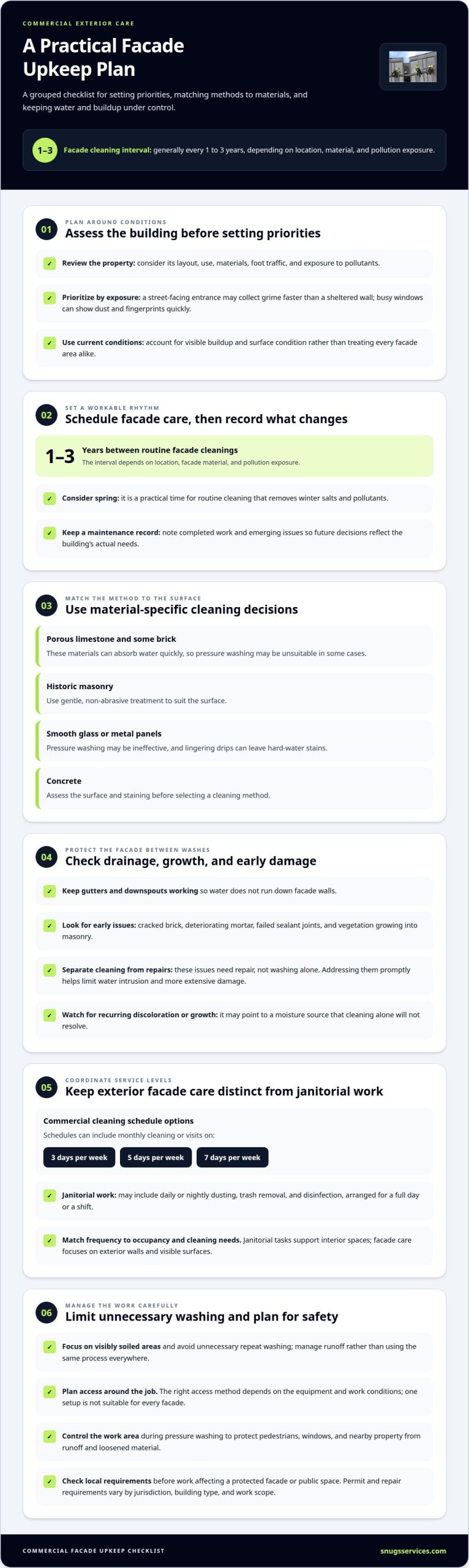
Routine washing clears dirt and pollutants before they leave persistent stains or contribute to surface deterioration. Commercial facades are generally cleaned every 1 to 3 years, depending on location, material, and pollution exposure. For example, a sheltered concrete wall may need a different schedule from panels facing traffic. Regular cleaning also makes changes such as discoloration easier to spot.
Proactive Care for Small Exterior Issues
Cleaning can reveal cracked brick, deteriorating mortar, failed sealant joints, and vegetation growing into masonry. These issues call for repair, not washing alone; addressing them promptly helps limit water intrusion and more extensive damage. Deferred exterior maintenance may lead to costly repairs or replacement. Maintenance costs depend on facade size, access, material, buildup, and needed repairs; the price depends on the case and is given after a quote request.
Facade Cleaning and Exterior Upkeep
Facade cleaning focuses on exterior walls and visible surfaces, while regular exterior cleaning may also cover windows, roofs, gutters, and walkways. Broader property maintenance can include interior tasks as well, such as cleaning occupied spaces. For a coordinated plan, begin by assessing the building’s layout, use, materials, and maintenance needs. Keep gutters and downspouts working so water doesn’t run down facade walls.
Cleaning Methods for Facade Materials
Choose a cleaning method suited to each material. Porous limestone and some brick absorb water quickly, making pressure washing unsuitable in some cases. Historic masonry also needs gentle, non-abrasive treatment. Pressure washing may be ineffective on smooth glass or metal panels, and lingering drips can leave hard-water stains. For concrete, assess the surface and staining before selecting a method.
Permit and repair requirements vary by jurisdiction, building type, and work scope. Before cleaning or repairs that affect a protected facade or public space, determine which local requirements apply to the project.
To limit water use and environmental impact, focus on visibly soiled areas and avoid unnecessary repeat washing. Match the method to each surface and manage runoff carefully instead of using the same process everywhere.
Facade dirt, mold, pollutants, and safety concerns
Urban emissions are a primary source of facade grime, while damp, shaded surfaces can collect mold, mildew, and algae. Buildup can discolor finishes and, over time, contribute to material damage that calls for repairs or replacement. Dirt, mold, and pollutants can also contribute to poor air quality and hazardous conditions around a building. For residential and commercial properties alike, identifying the type of growth helps determine how to remove it without spreading residue or harming the surface.
Cleaning starts with identifying the contaminant and the facade material. Mold and algae need a method suited to the affected surface; applying an unsuitable chemical or excessive pressure washing can damage finishes. Professional cleaners select detergents for materials such as limestone, granite, or stucco. They also consider where rinse water will flow, so cleaning doesn’t simply move pollutants onto nearby surfaces. A careful assessment helps separate removable staining from damage that requires repairs.
Vegetation on masonry deserves attention because roots can enter mortar joints, while leaves and growth hold moisture against the wall. Removing it can reduce persistent dampness and surface deterioration. Inspect ledges, joints, and sheltered areas where emissions and other pollutants collect. Discoloration or recurring growth may point to a moisture source that cleaning alone will not resolve.
Safety matters whenever crews work above ground or handle cleaning equipment. The right access method depends on the equipment and job conditions, so one setup is not suitable for every facade. Plan for access, nearby activity, and risks from spray or falling debris. During pressure washing, control the work area to protect pedestrians, windows, and nearby property from runoff and loosened material.
Routine commercial property upkeep
A useful upkeep plan connects facade cleaning to the building’s daily use. Assess the layout, materials, foot traffic, and exposure to pollutants. A street-facing entrance may collect grime faster than a sheltered wall, while busy windows show dust and fingerprints quickly. Use these conditions to set priorities and schedule routine care instead of treating every surface alike.
Commercial facade cleaning is generally scheduled every 1 to 3 years, depending on location, material, and pollution exposure. Spring is a practical time for routine cleaning because it can remove winter salts and pollutants. The schedule should also account for visible buildup and the surface’s condition. Record completed work and emerging issues so maintenance decisions reflect the building’s actual needs.
Commercial cleaning schedules can cover different levels of service. Options include monthly cleaning or visits 3, 5, or 7 days per week. Janitorial work may include daily or nightly dusting, trash removal, and disinfection, arranged for a full day or a shift. These tasks support clean, usable interior spaces, while facade care addresses the building’s exterior. Match the frequency to the property’s occupancy and cleaning needs.
Give commercial window cleaning its own place in the plan. Clear glass supports a tidy appearance, and removing dust and marks helps keep entrances and customer-facing spaces presentable. Consider window location, surrounding activity, and how quickly marks return. Coordinating window care with broader exterior upkeep can simplify scheduling, especially where street-level glazing is prominent.
Choose a facade-cleaning company that considers the building’s materials, access needs, and nearby activity. A sound plan defines the cleaning scope, suitable methods, schedule, and how the work area will be managed. Professional cleaning should fit the property’s use and distinguish routine washing from repairs or other maintenance.
What are the best methods for cleaning brick, glass, metal, and concrete facades?
Start by identifying the facade material, condition, and type of staining. Match the cleaning method to those details instead of applying one technique across every surface. Historic or sensitive facades need non-abrasive cleaning, not sandblasting, which can damage the surface. Suitable gentle approaches for historic masonry include low-pressure steam or gentle detergents.
Brick and stone need careful treatment because some masonry absorbs water quickly. Choose pressure-washing methods carefully, since some facade materials may be vulnerable to water. Once the surface is clean and fully dry, sealing may help reduce water absorption, pollution, staining, and deterioration. Treat cleaning and sealing as separate steps.
Glass and metal panels need a different approach. Pressure washing may be ineffective on smooth glass, aluminum, or stainless steel, and lingering drips can leave hard-water stains. Plan to dry or wipe drips manually. A detergent selected for the surface can also help remove buildup without relying on force alone.
Limestone requires particular care. One described soft-cleaning approach uses hot water at 200 degrees, special chemical cleaners, and lower pressure. That example is not a universal setting for every limestone facade; the material’s condition and staining affect the method. For granite, limestone, or stucco, professional cleaners select detergents for the surface being treated.
Concrete cleaning also depends on the facade’s condition and the type of staining. Pressure washing can be adjusted to approximately 2,900 pounds per square inch, depending on staining and building material. That figure is an adjustable pressure level, not a default setting for every concrete wall. Assess the surface first, then choose an appropriate cleaning method and pressure.
For a surface-specific approach to facade care, request professional cleaning support.
Snugs Services
Snugs Services can help keep commercial exteriors looking cared for through pressure washing and related property upkeep. Turn to the team when grime builds up on suitable exterior surfaces or when gutters need cleaning, installation, or repair to support proper drainage. These services can complement a routine facade maintenance plan, while the cleaning approach should suit the building’s materials and condition.
For scheduled upkeep or visible buildup, Snugs Services provides exterior cleaning and gutter services, with day, night, or weekend service and last-minute calls accommodated. Contact Snugs Services to discuss your property’s maintenance needs.
Make facade care part of your property plan
Make exterior upkeep part of your property’s operating plan. Assign someone to record visible changes, note where grime collects, and schedule follow-up when the facade’s condition changes. Keeping a record helps teams make consistent decisions rather than waiting until an issue becomes harder to manage.
Maintaining a clean business facade is ongoing, not a one-time task. Align cleaning with your building’s maintenance calendar and adjust the plan as conditions change. This keeps facade care connected to the property’s needs and the people who use it.
When professional support would make exterior upkeep easier, contact Snugs Services today to discuss your property’s needs. A well-considered plan can help you move forward with greater confidence and keep your business exterior looking cared for.
Frequently Asked Questions
How Do You Maintain a Facade?
Use a recurring inspection and cleaning plan, and address defects as they appear. Review walls, joints, and drainage after harsh seasons and at least annually. Record the locations of new cracks, stains, or loose sealant. Separate repairs from cleaning tasks and assign follow-up so small changes are not overlooked between maintenance visits.
What does maintaining a clean business facade involve?
Maintaining a clean business facade means assessing the exterior, choosing a method suited to its materials, and removing grime without damaging the surface. The work may include cleaning visible buildup, attending to edges and ledges, and noting damage that needs repair rather than more washing. A clear scope helps coordinate the work with building access and daily operations.
How often should a commercial building facade be cleaned?
A commercial facade is generally cleaned every 1 to 3 years, depending on its location, material, and exposure to pollution. A building beside busy roads may collect grime differently from a sheltered property. Use the interval as a planning guide, then adjust the schedule when staining returns sooner or the facade’s condition changes.
What are the risks of neglecting a business facade?
Neglect can allow stains and pollutants to contribute to surface deterioration, increasing the need for repairs or replacement. Persistent moisture may affect masonry joints, while unchecked vegetation can hold dampness against the wall. A neglected exterior can also weaken a business’s first impression and make the property less appealing to prospective customers, tenants, or buyers.
What seasonal facade maintenance checklist should business owners follow?
Inspect the facade at least annually and after harsh seasons. Look for discoloration, cracked brick, deteriorating mortar, failed sealant, and vegetation. In spring, remove winter salts and pollutants, clear vegetation, and check that gutters and downspouts prevent water from running down the walls.
What facade maintenance requirements vary by city or local climate?
Cleaning frequency depends on the building’s location, materials, and pollution exposure; commercial facades are generally cleaned every 1 to 3 years. Damp or shaded surfaces can collect mold and algae, while salty air and high pollen can contribute to corrosion, efflorescence, mold, and fungus.
Recent Comments