
The lowest quote may leave out steps that protect your property. A hiring a pressure washing company checklist helps you compare what each quote includes, not just the total, so you can make an informed choice.
You want a clean finish without risking damage to siding, decks, or landscaping. Before choosing a company, ask how its methods suit your surfaces, how it manages cleaning solutions and rinsing, and what the written quote covers. Also review the company’s insurance documents before work begins.
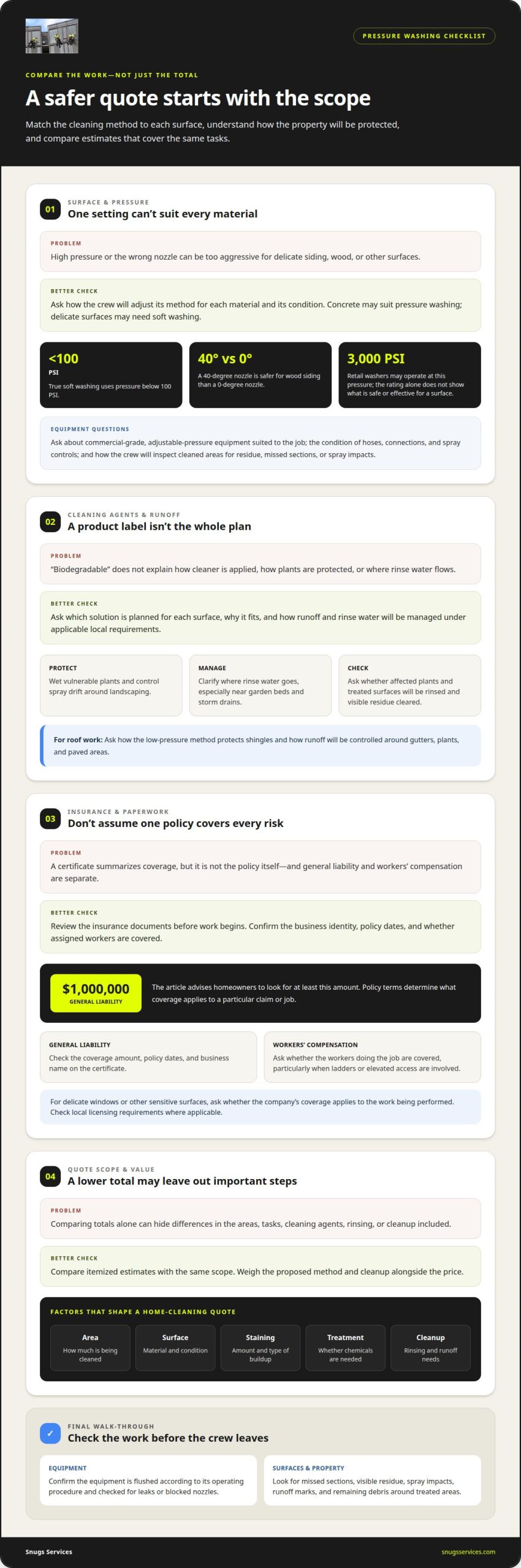
Use this guide to assess cleaning methods, chemical use, property protection, insurance, and the scope of each quote. Compare estimates that cover the same areas and tasks, then weigh the proposed approach and cleanup alongside the price. For Portland-area properties, Snugs Services brings its own water for pressure-washing jobs and offers exterior cleaning and maintenance services.
Key Takeaways
- Match the cleaning method and adjustable pressure to the surface, since a safe approach for concrete may be too aggressive for siding or wood.
- Understand what cleaning agents will be used and how the work protects plants, property, and nearby drainage.
- Review proof of insurance, including general liability and workers’ compensation, to understand how coverage applies to the job.
- Compare itemized quotes with the same scope of work, so you can weigh the included steps and overall value rather than price alone.
Checking pressure-washing equipment and surface-appropriate PSI
Start with the surfaces, not a machine’s maximum rating. Concrete and driveways may suit pressure washing, while more delicate surfaces may need soft washing. The right method depends on the material and its condition. High-pressure water can be dangerous if not handled correctly. Use a hiring a pressure washing company checklist to make surface suitability an early consideration.
Check how pressure is controlled. True soft washing uses pressure below 100 PSI, while a 40-degree nozzle is safer for wood siding than a 0-degree nozzle. Retail pressure washers may operate at 3,000 PSI, but that rating alone doesn’t show whether equipment can clean a particular surface safely or effectively.
- Look for commercial-grade equipment with adjustable pressure. Consumer machines may not provide enough flow for larger commercial or roof jobs, so equipment should suit the project and allow pressure adjustment.
- Match the nozzle to the task. A 40-degree nozzle spreads the spray more broadly than a 0-degree nozzle, making nozzle choice a practical part of protecting delicate exterior materials.
- Check condition and setup. Professional-quality equipment should be in good working order, with hoses, connections, and spray controls ready for the surfaces being cleaned.
- Consider transport and storage. A trailer or work vehicle should carry the washer, hoses, and water securely, with equipment arranged to prevent shifting during travel and protected between jobs.
Ask how the crew will handle different materials on the same property. A concrete path and painted siding, for example, need different cleaning approaches, even if they’re serviced during one visit. The plan should adapt to each surface rather than apply one setting everywhere. Keep your hiring a pressure washing company checklist focused on those changes.
Before leaving, the crew should flush equipment according to its operating procedure and check for leaks or blocked nozzles. Then they should walk the exterior, inspect each cleaned section, and look for missed squares, visible residue, or spray impacts on nearby surfaces. That final pass helps catch issues while the equipment is still on site.
Asking about cleaning agents and biodegradable options
Ask which cleaning solutions the crew plans to use on each material and why. A suitable treatment for a driveway may differ from one used on siding. The explanation should connect the product, surface, and cleaning method, and include how nearby plants and other property will be protected.
Biodegradable products can be an option, but the label alone doesn’t explain how the crew manages application or runoff. Ask how plants are protected, where rinse water flows, and what happens if cleaner reaches landscaping. A good process includes wetting vulnerable plants, controlling spray drift, and rinsing affected areas after treatment. Those steps matter near garden beds, lawns, and storm drains.
Wastewater requirements depend on local rules. Before work begins, clarify how the company manages runoff and rinse water in line with applicable requirements. Proper runoff management helps protect nearby waterways and keeps the cleanup plan clear.
For roof work, ask how the method protects shingles while removing algae or other growth. Low-pressure application helps avoid the forceful spray that can disturb roofing materials; the crew should also explain how it controls runoff around gutters, plants, and paved areas. A careful plan considers the roof surface and the property below it.
A home-cleaning charge depends on the case and is given after a quote request; factors include the area to be cleaned, surface type, staining, chemical treatment, and cleanup needs. A small driveway with light buildup differs from a larger exterior with heavy algae and nearby landscaping. Ask whether the quote includes chemical use, rinsing, and runoff management, so the scope is clear before work begins.
Before the crew leaves, check that treated surfaces are rinsed as planned and that visible chemical residue or debris has been cleared. Inspect plant beds and the driveway for runoff marks, then note any missed pattern or remaining spot while the team is still present. A consistent cleanup process supports a strong reputation and leaves the property orderly.
Confirming liability insurance and workers’ compensation coverage
Ask for proof of active general liability insurance before work begins. A pressure washer can damage siding, break windows, or send debris into nearby property. Homeowners are advised to look for at least $1,000,000 in general liability coverage. This coverage can help address property-damage claims, though the policy’s terms determine what it covers.
Workers’ compensation is separate from general liability coverage. Ask whether the workers performing the job are covered, rather than assuming one policy protects against every type of claim. Coverage and liability depend on the circumstances, so review the relevant insurance documents before work begins.
A certificate of insurance summarizes coverage, but it isn’t the policy itself. Check that the business name matches the company you’re hiring and that the policy dates include the planned work. If the job involves delicate windows or other sensitive surfaces, ask whether the company’s coverage applies to the work being performed.
- Review general liability coverage. Look for the coverage amount, policy dates, and business identity on the certificate.
- Ask about workers’ compensation. Find out whether employees assigned to the job are covered, especially when work requires ladders or elevated access.
- Confirm licensing where required. Local business licensing rules can vary, so check whether the city requires a license for the contractor’s work.
- Keep the paperwork. Save the certificate and written estimate with your job records, so the scope and coverage details are easy to find.
Ask for current insurance documents rather than relying on a verbal assurance. Check that the named business and policy dates match the job. If anything appears inconsistent, resolve it before scheduling. These checks clarify who is responsible if property damage or a workplace injury occurs.
Checking pressure-washing equipment and surface-appropriate PSI
Start with the surfaces, not the machine’s maximum rating. Roofs, stucco, siding, and painted wood generally call for soft washing, while concrete, driveways, and pavers can typically handle higher pressure. Excessive force can damage wood decks, so the cleaning method should fit the material and its condition. A checklist for hiring a pressure washing company should begin with surface suitability.
Check how pressure is controlled. True soft washing uses pressure below 100 PSI, while a 40-degree nozzle is safer for wood siding than a 0-degree nozzle. Retail pressure washers may operate at 3,000 PSI, but that rating alone doesn’t show whether equipment can clean a particular surface safely or effectively.
- Look for commercial-grade equipment with adjustable pressure. Consumer machines may not provide enough flow for larger commercial or roof jobs, so equipment should suit the project and allow pressure adjustment.
- Match the nozzle to the task. A 40-degree nozzle spreads the spray more broadly than a 0-degree nozzle, making nozzle choice a practical part of protecting delicate exterior materials.
- Check condition and setup. Professional-quality equipment should be in good working order, with hoses, connections, and spray controls ready for the surfaces being cleaned.
- Consider transport and storage. A trailer or work vehicle should carry the washer, hoses, and water securely, with equipment arranged to prevent shifting during travel and protected between jobs.
Ask how the crew will handle different materials on the same property. A concrete path and painted siding, for example, need different cleaning approaches, even if they’re serviced during one visit. The plan should adapt to each surface rather than apply one setting everywhere. For hiring a pressure washing company, keep your checklist focused on those changes.
Before leaving, the crew should flush equipment according to its operating procedure and check for leaks or blocked nozzles. Then they should walk the exterior, inspect each cleaned section, and look for missed squares, visible residue, or spray impacts on nearby surfaces. That final pass helps catch issues while the equipment is still on site.
Snugs Services
Snugs Services can help turn your checklist into a clear plan for exterior maintenance. If you’re weighing cleaning methods, equipment, insurance, and the scope of work, its pressure washing and gutter services give you practical options to consider together. Gutter cleaning, installation, and repair can also address drainage concerns alongside exterior upkeep.
Contact Snugs Services to discuss the surfaces and maintenance work your property needs. Share the areas you want addressed and any access or buildup concerns, then talk through the next steps with the team.
Take the Next Step Toward a Cleaner Property
Use a hiring a pressure washing company checklist to make your next decision with confidence. Clear expectations help you compare the proposed work and choose a plan that fits your property and priorities.
When you’re ready to move from planning to action, Snugs Services can help with pressure washing, gutter cleaning, and gutter installation. Share what you want addressed and contact the team to discuss your project.
Contact Snugs Services today to discuss your property’s needs. A cleaner, cared-for exterior starts with a conversation.
Frequently Asked Questions
What should I check before hiring a pressure washing company?
Ask how the company plans to clean each surface and what the written estimate includes. A home with painted siding, a wood deck, and a concrete path needs a plan that accounts for each material. Review relevant past work and ask how the crew protects the property and handles cleanup. For Portland and Vancouver area projects, make sure the quoted scope matches your property.
How can I verify a pressure washing company’s license and insurance?
Check licensing requirements with your city and review current insurance documents before work starts. The certificate should identify the business and show active policy dates. To verify details, contact the insurer using independently obtained contact information, rather than relying only on a contractor’s verbal assurance. Ask separately about workers’ compensation, since general liability and employee injury coverage serve different purposes.
What questions should I ask pressure washing contractors before hiring?
Ask which surfaces the crew will clean, what method it plans to use, how it protects nearby property, and what the quote excludes. Clarify water access and scheduling, too. Snugs Services brings its own water for pressure-washing jobs, and last-minute calls can be accommodated. Day, night, or weekend service is available. High-pressure water can be dangerous if not handled correctly. Our team follows OSHA-compliant procedures.
How much does professional pressure washing cost in the United States?
There isn’t one price that fits every property. The quote depends on the surfaces, their condition, access, and the work included. For a fair comparison, request estimates covering the same areas and tasks. Ask for clarification if the total doesn’t make the scope clear. An itemized quote makes it easier to compare the proposed work.
What affects the cost of pressure washing a house, driveway, or deck?
A quote depends on the property and requested work. Factors include the area’s size, surface material, buildup, access, and cleaning method. A stained driveway may require a different approach from a delicate deck or a home with several exterior materials. Additional treatments and cleanup needs can also affect the scope.
What cleaning methods and detergents are safe for different surfaces?
The appropriate method depends on the material and the buildup. Concrete may suit pressure washing, while more delicate surfaces may need soft washing. Ask what cleaning solution suits each surface and how the crew will manage runoff near plants or drains. On a property with mixed materials, the plan should address each area separately.
Recent Comments