
A forceful wash can damage shingles, so safe moss removal from roofs in Vancouver, WA, calls for a gentler approach than high-pressure washing. Soft washing applies treatment at low pressure, while heavy pressure can strip asphalt shingles’ protective granules. Moss can return in the Pacific Northwest, where humidity, steady rainfall, and tree cover create favorable growing conditions.
It’s understandable to worry that cleaning could do more harm than the moss itself. The right method treats or removes moss without blasting the shingle surface, and the roof’s condition matters when choosing an approach.
This guide explains how soft washing affects shingles, what roof moss removal involves, and why moss can regrow after careful cleaning. You’ll also learn what to consider when deciding whether it’s time to have your roof assessed and cleaned.
Key Takeaways
- Choose a cleaning approach based on the roof’s condition and moss coverage, not just the amount of visible growth.
- Late spring and early fall are favorable times to schedule removal; active roof damage can make cleaning timely in any season.
- Consider the roof’s remaining service life before a full cleaning, especially if replacement is approaching.
- Keep gutters and downspouts clear after roof work to help reduce the risk of soil erosion and foundation problems.
Is your roof cleaning work guaranteed?
A guarantee should specify the work it covers, how long protection lasts, and any exclusions. It doesn’t replace choosing a cleaning method suited to the roof. For example, a ten-year-old roof in good condition may be suitable for cleaning, while an older roof nearing the end of its service life may benefit more from planning a new roof installation rather than investing in a full clean.
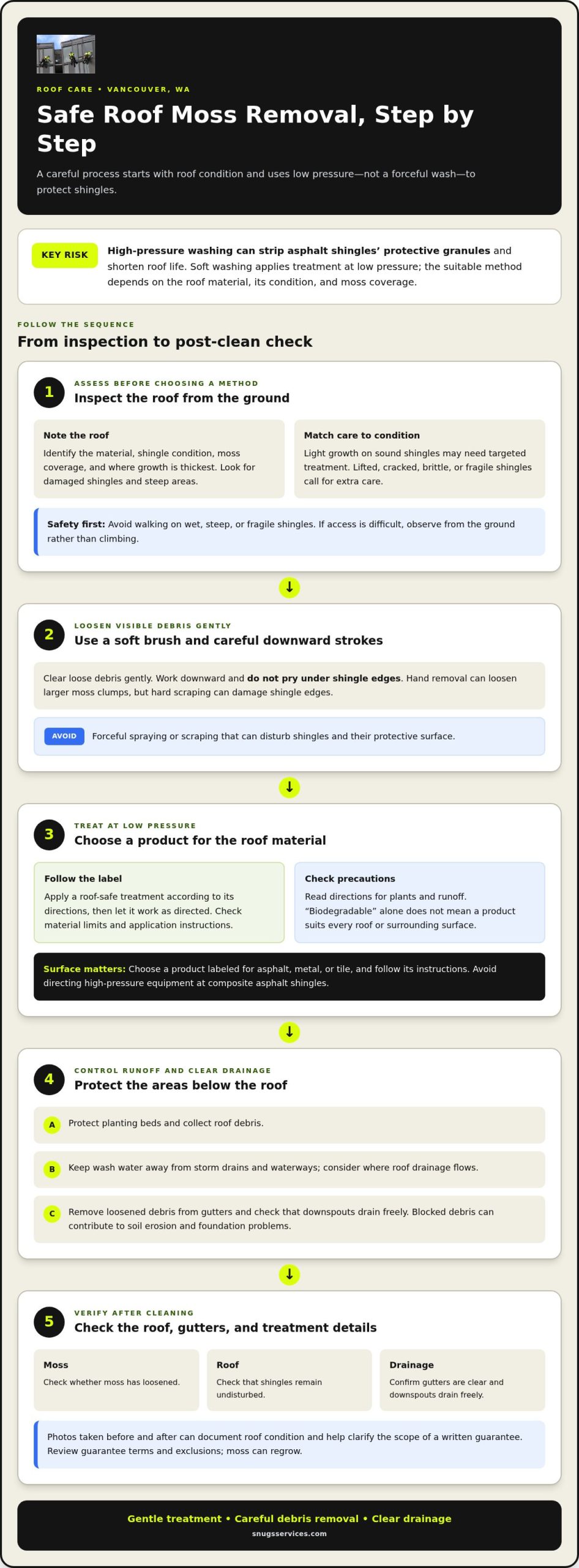
Start by noting the roof material, shingle condition, moss coverage, and where growth is thickest. Light growth on sound shingles may need targeted treatment; lifted, cracked, or brittle shingles call for extra care. Hand removal can loosen larger moss clumps, but hard scraping can damage shingle edges. Low-pressure application avoids blasting debris across the roof.
For DIY moss removal, follow these steps:
- Inspect from the ground and identify damaged shingles, steep areas, and thick growth.
- Clear loose debris gently with a soft brush, working downward without prying under shingle edges.
- Apply a roof-safe treatment according to its label, then let the treatment work as directed.
- Remove loosened debris from gutters and check that downspouts drain freely.
Roof work carries fall and slip risks. Use stable ladder placement, non-slip footwear, eye protection, and a spotter; a harness needs a secure anchor. Avoid walking on wet, steep, or fragile shingles. If the roof is difficult to access, observe it from the ground rather than climbing.
Before treating a roof in Vancouver, WA, plan for runoff: protect planting beds, collect roof debris, and keep wash water away from storm drains and waterways. Follow the product label and consider where roof drainage flows. Clear gutters and downspouts, since blocked debris can erode soil and contribute to foundation problems.
After cleaning, check whether moss has loosened, gutters are clear, and shingles remain undisturbed. Photos taken before and after can document the roof’s condition and help clarify the scope of any written guarantee. Review the terms carefully, especially because moss can regrow.
Is roof cleaning safe for shingles, and will a soft wash cause damage?
Soft washing can reduce the risk of mechanical damage by applying treatment at low pressure. The safest approach depends on the roof material, its condition, and the extent of moss coverage.
Avoid high-pressure washing on asphalt shingles: it can strip protective UV granules and shorten roof life. For metal or tile, use a treatment labeled for that surface and follow its directions.
Shingle Treatment and Product Compatibility
Composite asphalt shingles need careful moss treatment because their protective granules sit at the surface. A soft brush may loosen growth, but scraping or forceful spraying can disturb the shingle. Choose products labeled for the roof material, whether asphalt, metal, or tile, and follow the application directions.
A “biodegradable” claim alone doesn’t mean a product suits every roof or surrounding surface. Before treating moss, read the label for material limits, application instructions, and precautions for plants and runoff.
Pre-Treatment Roof Inspection
Before treatment, inspect shingles for cracks, curling edges, missing granules, and loose flashing. These signs help distinguish moss buildup from existing roof damage and identify areas that need extra care. Check valleys and shaded areas too, where trapped debris can conceal the shingle surface.
Note the roof material and any damaged areas before choosing a product or method. If shingles look fragile, avoid walking on them or brushing firmly; pressure and friction can worsen existing wear.
Soft-Wash and Post-Removal Treatment
A soft wash applies moss treatment at low pressure instead of blasting shingles with a pressure washer. The treatment works on the growth, and loosened debris can then be cleared carefully. Avoid directing high-pressure equipment at composite asphalt shingles, as it can strip protective granules.
After visible moss is removed, follow the treatment label for any post-removal application and cleanup. Don’t assume a product is suitable simply because it’s described as biodegradable; check its roof-material directions and precautions. For careful professional roof cleaning, use a method matched to your shingles and the moss.
Roof moss removal in Vancouver, Washington
In Vancouver, Washington, roof moss can hold moisture against shingles and contribute to leaks. Untreated growth can compromise roof integrity and shorten its lifespan. Start by noting where moss is thickest, such as shaded roof sections or areas beneath overhanging trees.
Local conditions matter. High humidity, steady rainfall, and heavy tree cover across the Pacific Northwest can support moss growth. Cleaning removes current buildup but doesn’t change the conditions that encourage new growth. After cleaning, check the roof and gutters, especially where leaves collect or water drains slowly.
Hand removal can target visible clumps without strong water pressure. A soft brush and careful downward strokes help loosen growth while avoiding force against shingle edges. The approach depends on the roof’s condition: brittle or damaged shingles need extra care, while extensive buildup may call for treatment instead of aggressive scraping.
Pressure washing is not a suitable shortcut for asphalt shingles. High pressure can strip their protective UV granules and shorten roof life. Soft washing applies treatment at low pressure instead. Choose a cleaning solution for the roofing material and follow its directions, rather than selecting one solely for quick visual results.
When considering moss removal from a roof in Vancouver, WA, compare the proposed methods and work details. Hand removal, low-pressure treatment, debris clearing, and gutter cleanup are distinct steps. A soft-washing service treats moss differently from pressure washing. Review how the proposed approach accounts for your roof material and moss coverage.
For moss removal from a roof in Vancouver, WA, an annual professional roof inspection is a practical starting point. It can identify moss, damaged shingles, and debris before they become harder to address. Late spring and early fall are favorable seasons for removal, while active roof damage may call for cleaning at another time of year.
Roof cleaning should account for drainage as well as the roof surface. Clear debris from gutters and downspouts so runoff can drain away. If moss returns, review shaded areas, nearby trees, and lingering moisture; these site conditions can explain regrowth and help guide future maintenance.
Moss regrowth in the Pacific Northwest
Roof moss can return after careful cleaning because Vancouver’s climate continues to support growth. High humidity, steady rainfall, and heavy tree cover keep roof surfaces damp and shaded, especially beneath branches or beside north-facing walls. Removing moss addresses current buildup, not the conditions that encourage it.
For most roofs, soft washing every 2-3 years is a maintenance interval to consider. An inspection every year can help spot new patches, trapped debris, or drainage problems before moss spreads. Look closely at shaded roof sections, valleys, and areas beneath trees, where moisture and leaf litter can linger.
Regrowth patterns can offer useful clues. Moss appearing first along a shaded edge may point to limited sunlight, while patches near a valley can indicate debris holding moisture against the roof. Keep branches from resting on the roof and clear leaves from valleys and gutters. Clean gutters help runoff move freely instead of leaving damp areas near the roof edge.
Don’t judge an asphalt shingle roof by appearance alone. A green surface may indicate moss, while dark marks can have other causes. Inspect carefully from the ground or arrange a roof inspection; avoid scraping growth just to test it. Forceful removal can disturb shingle granules, damaging your roof rather than preventing moss return.
A practical maintenance plan combines observation with gentle cleaning. Note where moss returns, whether nearby trees provide shade, and whether gutters drain properly. These details help determine whether the next step is debris removal, better drainage, or another treatment. They also help track changes between annual inspections without repeatedly walking on the roof.
Late spring and early fall are favorable seasons for roof moss removal. Cleaning can happen year-round when moss is actively damaging a roof. Treat recurring growth as a reason to review shade, moisture, and drainage, not proof that the previous cleaning failed. Addressing those conditions helps protect the roof between cleanings.
Snugs Services: Pressure Washing
Snugs Services provides roof cleaning and moss treatment, along with gutter cleaning, repair, and installation. Clear drainage paths and sound gutters help roof runoff move away from the home. If gutters are clogged, damaged, or worn, gutter cleaning or repair may be the next step.
Pressure washing suits appropriate exterior surfaces, but it isn’t a substitute for gentle moss treatment on asphalt shingles. High pressure can strip their protective granules, so roof moss care requires a method suited to the roofing material. Keeping these tasks distinct helps protect the roof while addressing grime on suitable surfaces.
For help with pressure washing or gutter concerns, contact Snugs Services.
Plan a Safer Next Step for Your Roof
Before arranging moss removal from your roof in Vancouver, WA, note where growth is returning and any drainage concerns you’ve observed. These details can help shape a practical discussion about the roof’s condition and the work it needs. You don’t have to climb up to gather them; observations from the ground are a useful starting point.
Snugs Services provides roof cleaning and moss treatment, as well as pressure washing for appropriate exterior surfaces and gutter cleaning and installation. These services address different maintenance needs, so pressure washing shouldn’t be used as a moss-removal shortcut on asphalt shingles. If clogged or worn gutters are part of the problem, discuss the drainage issue along with the roof.
Choose a next step that keeps roof care and exterior cleaning methods suited to their surfaces. Contact Snugs Services about roof moss removal to discuss your roof concerns and take the next step toward a cleaner, well-maintained home.
Frequently Asked Questions
Are you licensed, bonded, and insured?
Licensing, bonding, and insurance are separate credentials, and none should be assumed from a roof-cleaning service description. The information available here doesn’t establish Snugs Services’ status, so it would be inaccurate to answer yes. These credentials can affect responsibility for property damage or injuries, making them distinct from the cleaning method or the quality of the finished roof.
Do I need to be home during the service?
You don’t necessarily need to be inside during exterior work if access and work areas are arranged beforehand. Move vehicles away from areas where equipment or falling debris could be an issue, and secure pets indoors. If roof access depends on a locked gate or another on-site detail, make sure the crew can reach the work area before service begins.
How effective is your roof moss treatment, and will it grow back?
Moss treatment addresses existing growth, but it can’t remove Vancouver’s humidity, rainfall, or tree shade. Moss may return while those conditions persist. Watch for new patches in shaded roof sections and near overhanging branches. If moss reappears, note where it is and how quickly it spreads; that pattern can guide the next roof assessment and maintenance plan.
Is it worth removing moss from a roof?
Removing established moss can be worthwhile because it holds moisture against roofing and may contribute to leaks or weakened roof integrity. Consider the roof’s condition and remaining service life. Cleaning may make sense for a sound roof, while extensive work on a roof nearing replacement may offer less practical value; in such cases, consulting a professional team like United Roofing & More! can help determine if a roof replacement is the better path forward.
What Is a Roof Softwash?
A roof soft wash applies treatment with low water pressure instead of directing a forceful spray at the roofing surface. The treatment targets moss while minimizing mechanical force on shingles. It differs from pressure washing, which can strip protective granules from asphalt shingles. Follow product directions and account for roof material when selecting a treatment and application method.
Can pressure washing damage roof shingles or void a roof warranty?
Yes, high-pressure washing can strip protective granules from asphalt shingles and shorten roof life. High-pressure water can be dangerous if not handled correctly. Whether a cleaning method affects a roof warranty depends on the warranty terms; don’t assume every cleaning automatically voids coverage. Our team follows OSHA-compliant procedures. Use a roof-appropriate low-pressure method rather than blasting shingles with pressure-washing equipment.
Recent Comments