
Exterior maintenance costs for property managers in Vancouver, WA depend on each property’s size, condition, and maintenance needs, so there isn’t one fixed fee. For budgeting, the 50/50 Rule suggests planning to use approximately 50% of rental income for operating expenses, maintenance, and repairs; small property owners are also advised to budget at least 1% of a property’s value annually for maintenance. These are budgeting guidelines, not prices for individual services.
It’s understandable to want a clear estimate before scheduling work. A useful estimate starts with the exterior tasks each property needs, how often they’re required, and whether neglected issues need attention first.
This guide explains what shapes exterior maintenance for property managers in Vancouver, WA, which services and repairs to plan for, and how to organize vendors, schedules, and budgets. It also covers how inspections and seasonal planning can help prioritize work and keep properties clean, functional, and ready for changing conditions.
Key Takeaways
- Clarify maintenance responsibilities in the lease, then prioritize urgent safety hazards and document property issues during inspections.
- Plan recurring exterior work around seasonal needs, property condition, and the resources available to complete it.
- Compare contractor proposals by scope, timing, and how clearly they describe the work, not by price alone.
- Decide which routine tasks your team can handle and where specialized exterior work calls for a vendor.
- Use pressure washing and gutter services to address visible buildup, drainage concerns, and exterior upkeep needs.
Maintenance and repair services for homes and investment properties
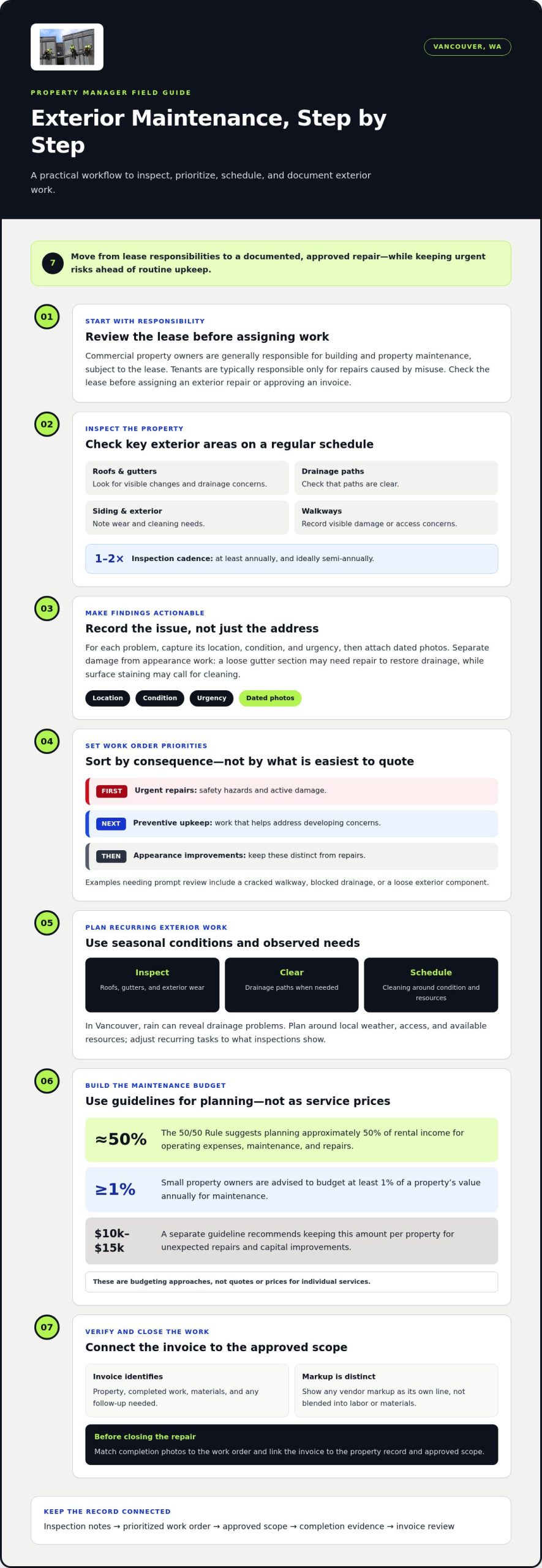
In Vancouver, Washington, commercial property owners are generally responsible for building and property maintenance, subject to the lease. Tenants are typically responsible only for repairs resulting from misuse. For a rental property, review the lease before assigning an exterior repair or approving an invoice.
Use a seasonal checklist to catch issues early: inspect roofs and gutters, clear drainage paths, note exterior wear, and schedule cleaning as needed. Plan around local weather and available resources, and record findings during property inspections. Inspections are recommended at least annually, and ideally semi-annually.
Make each inspection useful by recording the location, condition, and urgency of every problem, then attaching dated photos. For example, note a loose gutter section separately from surface staining. The first may need repair to restore drainage; the second may call for cleaning. This record distinguishes damage from appearance work and supports clear decisions about the investment.
Prioritize work by consequence, not by which item is easiest to quote. Address safety hazards and active damage first, then schedule preventive upkeep and appearance improvements. A cracked walkway, blocked drainage, or loose exterior component deserves prompt review because it can affect access or allow a small defect to worsen. Keep improvement plans separate from repairs so owners can compare immediate needs with longer-term property goals.
Build reserves before an unexpected repair arrives. The 50/50 Rule recommends planning approximately 50% of rental income for operating expenses, maintenance, and repairs. A separate guideline recommends keeping at least $10,000-$15,000 per property for unexpected repairs and capital improvements. These are budgeting approaches, not service prices. Small property owners are also advised to budget at least 1% of a property’s value annually for maintenance.
Tie repair invoices to the inspection record and approved scope. Each invoice should identify the property, work completed, materials, and any follow-up needed. If a vendor applies a markup, show it as a distinct line rather than blending it into labor or materials. This makes the owner’s review clearer and helps compare the invoice with the original estimate. Match completion photos to the work order before closing the repair.
- Sort work orders into urgent repairs, preventive maintenance, and optional improvements.
- Link every invoice to a property record, approved scope, and completion evidence.
- Review recurring seasonal tasks during each inspection and adjust the schedule to observed conditions.
In Vancouver, Washington, commercial property owners are generally responsible for building and property maintenance, subject to the lease. Tenants are typically responsible only for repairs caused by misuse. Review the lease before assigning exterior repairs or approving related invoices.
Property manager maintenance services in Vancouver, WA
Exterior upkeep can involve drainage, building surfaces, access areas, and tenant requests. A property management company can organize these tasks by property, urgency, and seasonal conditions.
Service Area Coverage
For Vancouver and Clark County properties, coverage depends on the service, property address, and work schedule. Before coordinating multiple sites, group locations by area and note which tasks each address needs. That makes scheduling clearer and helps managers see whether one service visit can address several properties.
Which contractors offer exterior maintenance, and what areas do they serve? Coverage varies, so assess it by the property addresses and work required. For a portfolio, a simple address list helps clarify which locations need recurring exterior attention and how to coordinate service across them.
Typical exterior needs include cleaning, drainage upkeep, and repairs to worn building components. Start each work order with the observed condition and the result needed, rather than relying on a generic property checklist.
Commercial Property Maintenance
Commercial upkeep can include fire safety systems, proper signage, parking spaces, licenses, and permits. Keep separate records for building systems and visible site conditions. A blocked parking space or damaged sign can affect access; a worn exterior may call for planned repair or cleaning.
Walk the property and record issues by location, such as an entrance, parking area, or building face. Then assign a priority and track the completion status. For exterior cleaning needs, commercial exterior cleaning options can help managers understand the scope of work to schedule.
Inspection Schedules and Weather Risks
How often should landlords inspect roofs, gutters, siding, and walkways? Inspections are recommended at least annually, and ideally semi-annually. Check these features during scheduled reviews and after visible damage or drainage concerns. Record findings with photographs and locations so follow-up work can be targeted.
Vancouver weather can affect when exterior tasks make sense. Rain can reveal drainage problems, while seasonal conditions can affect access and scheduling. Review roofs, gutters, siding, and walkways for visible changes, then plan maintenance around the observed condition and available resources. This helps managers address developing concerns before they become harder to track.
HVAC servicing and plumbing leak prevention also need a clear place in property operations. Track service records, tenant reports, and visible signs of leaks, such as damp walls or pooling water. Route each request through the relevant maintenance process, document the reported location, and note any follow-up. A prompt, organized response reduces tenant stress and gives managers a useful record of recurring problems.
Use one request log for tenant concerns, with fields for the property, issue, date reported, priority, assigned work, and completion. For example, if a tenant reports water near an exterior wall, record the location and route the concern for assessment. Keep updates brief and factual. A consistent log helps a property management company spot repeat requests and distinguish isolated repairs from patterns across properties.
Hiring and evaluating contractors
Match each contractor’s skills to the work and define the scope before scheduling. Clear records help owners track expenses, inspections, and improvements across each rental property.
Start with the observed condition and the result needed. A pressure-washing project, for example, differs from repairing a loose exterior component. Describe the location, surfaces, access limits, and expected finish in the work order. For owner-selected contractors, record who approved the vendor, who coordinates access, and who receives completion updates. This prevents crossed instructions when tenants, owners, and managers share responsibility.
Use a consistent process to review proposals from local contractors. Compare them against the same written scope, not just the final total. Check whether each proposal identifies materials, equipment, access arrangements, cleanup, and exclusions. Ask the owner to approve any change that affects the scope or expenses before work proceeds. Keep the estimate, approval, and final invoice together in the property file.
- Match the contractor’s work history to the task, such as exterior cleaning or concrete repair.
- Confirm the proposed schedule and access plan fit tenant needs and property operations.
- Record the approved scope, completion notes, and any follow-up work.
Licensed and Insured Providers
Maintain a vendor file with licensing details and current insurance documents where applicable to the work. Match the records to the contracting business and service. For elevated exterior work, for example, clearly identify the responsible company and its coverage documents. Track renewal dates, keep copies with the work order, and note any gaps before assigning a new project.
Owners may select a preferred contractor while the property manager coordinates the work. Record the owner’s approval and the contact responsible for decisions. This gives the team a clear path if the scope changes or an inspection reveals additional work.
Safety, Liability, and Tenant Notice
Safety, liability, and tenant-notice requirements depend on the work and tenancy circumstances. Set access arrangements and written notice timing according to the lease and applicable rules, rather than assuming a contractor’s schedule determines when residents should be notified.
Before work begins, document hazards, restricted areas, equipment placement, and who controls the work zone. For example, a crew cleaning an entry needs a plan to keep residents away from active equipment. Send tenants a clear notice describing the affected area, expected schedule, and access instructions. Keep a copy with the work order.
After completion, compare the finished work with the approved scope and save photographs or inspection notes. If a problem remains, record its location and assign follow-up. A consistent file gives owners a clear history of contractor decisions, property improvements, and maintenance expenses.
Vendor and in-house maintenance work
A Vancouver rental-property owner described a manager using timely vendors and its own employees for maintenance. That mix can help property teams match each task to the right resource. Consider the task’s scope, equipment needs, staff availability, and whether the work affects tenants or shared access. A ground-level visual check, for example, may suit an employee, while specialized repairs may call for an outside vendor.
Set clear boundaries before assigning work. List routine tasks staff can complete, such as documenting visible wear or clearing small debris from accessible areas. Route work involving specialized equipment, difficult access, or a defined repair scope to a vendor. Concrete grinding, for example, is a specialized surface task that needs its own work description and completion criteria. The goal is to assign responsibility clearly, not to send every request through the same channel.
Use a repeatable screening process for vendors. Match the provider’s experience to the job, then review the written scope, proposed timing, access needs, and cleanup plan. For a shared walkway, specify the affected area and how residents can pass safely during the work. Keep the approved scope and final invoice together. If the work changes, record who approved the adjustment before adding it to the job.
In-house teams need the same structure. Give each task an assigned person, a location, and a clear completion record. For example, an employee who spots loose material near an entrance can photograph the area, note the discovery, and route it for assessment. This helps the manager distinguish observation from repair and prevents an informal note from being mistaken for completed work.
- Use employees for documented observations and tasks within their assigned responsibilities.
- Use vendors for specialized work, equipment needs, or projects with defined scopes.
- Record the assignment, approval, work completed, and any follow-up for each property.
Keep tenant accounting separate from vendor payment records. Washington State Legislature says landlords must provide a written security-deposit statement and any refund within 30 days after the tenancy ends and the tenant vacates. That deposit process is distinct from routine maintenance invoices; preserve records that show the difference between tenant-account matters and property work.
Close each work order with a simple review. Compare the finished result with the approved scope, attach photographs where useful, and note any remaining issue. If a vendor leaves a walkway uneven, for instance, document the location and assign the next step rather than closing the task prematurely. A consistent record helps owners see how staff time and vendor expenses support upkeep across the rental portfolio.
Allocating maintenance resources and budgets
Build the maintenance plan from property records, not a flat amount copied across every building. For each rental, group work into urgent repairs, recurring upkeep, and planned improvements. A blocked drain, faded exterior surface, and uneven concrete need different scopes and timelines. For planned improvements like refreshing exterior surfaces, working with dedicated professionals such as Hudson Line Painters illustrates how scheduled repainting protects building envelopes from seasonal wear. This separation helps owners see which expenses protect current operations and which improve the property over time.
Schedule work around seasonal conditions and available resources. Create a calendar for recurring inspections, cleaning, and repairs, then compare it with employee capacity and vendor schedules. If several properties need exterior work during the same period, for example, sequence locations by condition and access needs. This keeps the plan realistic and helps avoid assigning employees to overlapping jobs.
Track each task against the property’s agreement and approval process. The agreement should clarify who authorizes work, how property management services report expenses, and how improvement proposals reach owners. Before assigning a project, record its location, scope, urgency, and responsible person. If an inspection reveals a new issue, update the work plan and communicate the change instead of letting an unrecorded request reshape the budget.
- Reserve resources for urgent hazards and active damage before appearance improvements.
- Schedule recurring tasks around seasonality, resident access, and employee availability.
- Separate routine upkeep from repairs and capital improvements in financial records.
Use completed work to improve the next plan. Compare the original scope with the final invoice and note why any added work became necessary. For instance, if a walkway inspection leads to concrete grinding, record the affected area and the reason for the work. This helps owners understand the expense and gives managers a useful reference for future inspections.
Keep resident needs visible when scheduling. A task near an entrance may need a different work window from one in a back service area. Note access restrictions, tenant communication, and temporary route changes before confirming the schedule. If employees handle site observations while vendors complete specialized work, record both assignments in the same property plan. This reduces missed handoffs between inspection, approval, and completion.
For a concrete surface that needs attention, schedule a concrete grinding project as part of the property’s planned maintenance workflow. Define the affected area and desired result in the work scope, then keep the completed work with the property’s maintenance records. This connects a specific repair need to the broader budget and keeps owners informed about how resources support the building.
Snugs Services: Pressure Washing
Snugs Services helps property managers address exterior surfaces that need cleaning. Schedule pressure washing when buildup affects walkways or other suitable exterior surfaces, and include the location and desired result in the work scope. Snugs brings its own water for pressure-washing jobs. For drainage concerns, gutter cleaning, installation, or repair may suit the property’s needs.
Before scheduling, identify affected locations and coordinate access around tenants and site operations. Clear work details help keep maintenance records organized and make it easier to plan the next property task.
For exterior upkeep in Vancouver, WA, contact Snugs Services or visit snugsservices.com.
Make Your Next Maintenance Plan Easier to Act On
A clear plan for exterior maintenance for property managers in Vancouver, WA starts with one property and a well-defined work brief. Choose the site with the most pressing upkeep needs, then note the affected areas, access considerations, and desired result. This gives your team a practical starting point for scheduling and keeps the next decision focused.
Keep the brief with your property records so owners and employees can use the same project details. As needs emerge at other sites, add them to the plan and organize work by priority. A consistent process makes exterior upkeep easier to manage while keeping each property’s condition in view.
When you’re ready to discuss a specific property’s needs, contact Snugs Services about exterior maintenance. Start with the location and the work you’re planning, and take the next step toward a cleaner, well-cared-for property.
Frequently Asked Questions
What Fees Should You Expect?
The estimate reflects the work’s scope rather than a universal exterior-maintenance fee. A property with several surfaces or difficult access may need different work from a straightforward cleaning task. Key factors include the areas involved, their condition, access, and whether the work is cleaning or repair. Snugs Services provides a quote based on the requested work.
How much do exterior maintenance services cost in Vancouver, WA?
There isn’t one fixed amount for exterior maintenance services in Vancouver, WA. For exterior maintenance for property managers in Vancouver, WA, a one-time surface-cleaning project differs from gutter work involving installation or repair. The property’s size, access, condition, and requested scope shape the quote. Describe the property and specific tasks in your request to receive an estimate based on the work details.
What exterior maintenance tasks should property managers handle in-house versus hire out?
Keep in-house work to tasks employees can safely and clearly complete within their assigned responsibilities, such as documenting visible wear or recording a tenant’s maintenance concern. Use a qualified provider when work requires specialized equipment, access methods, or a defined technical scope. Staff can note a damaged surface and its location, while a provider assesses and completes the specialized repair. Record who owns each next step.
How can property managers compare exterior maintenance vendors, contracts, and response times?
Compare vendors using the same task description, property details, access needs, and requested schedule. For exterior maintenance for property managers in Vancouver, WA, review each agreement’s scope, exclusions, reporting, and process for changes. Snugs Services offers day, night, or weekend service, and last-minute calls can be accommodated. These options describe availability, not a promised arrival time. Request a quote with the property and work details.
What Washington state and Vancouver, WA rules apply to rental property exterior upkeep?
Commercial property owners are generally responsible for building and property maintenance, subject to the lease. Tenants are typically responsible only for repairs resulting from misuse, so review the lease before assigning exterior repairs or approving invoices.
Recent Comments