
Cleaning concrete without damaging it takes a gentle cleaner and controlled pressure. Most outdoor concrete in good condition can generally be pressure washed at 2,000 to 3,000 PSI, but too much pressure or a nozzle held too close can wear the surface. Vinegar isn’t a safe all-purpose choice: its acidity can affect sealed, stained, or decorative concrete and can dissolve concrete’s cement binder.
It’s tempting to reach for a familiar household cleaner when a patio or driveway looks grimy, but concrete finishes respond differently to cleaning. The safest method depends on the surface and the stain. Start gently to help prevent fading, etching, and other avoidable damage.
Here, you’ll learn when vinegar may be risky, how to choose a cleaner and brush for sealed or unsealed concrete, and how to pressure-wash outdoor surfaces more safely. The practical steps cover applying cleaner, rinsing thoroughly, and adjusting your approach for decorative concrete or stubborn grime.
Key Takeaways
- Choose pressure based on the concrete’s condition, and keep the nozzle moving to reduce the risk of surface wear.
- Vinegar isn’t a universal concrete cleaner; its acidity can affect cement, sealers, and decorative finishes.
- Match the cleaner and brush to whether the surface is sealed, stained, or unsealed, and test a small hidden area first.
- For outdoor cleaning, let suitable cleaners work without drying on the surface, then rinse thoroughly.
- When a large or stubborn concrete surface is difficult to clean safely, professional pressure washing can take the hard work off your hands.
What’s the right PSI to clean concrete?
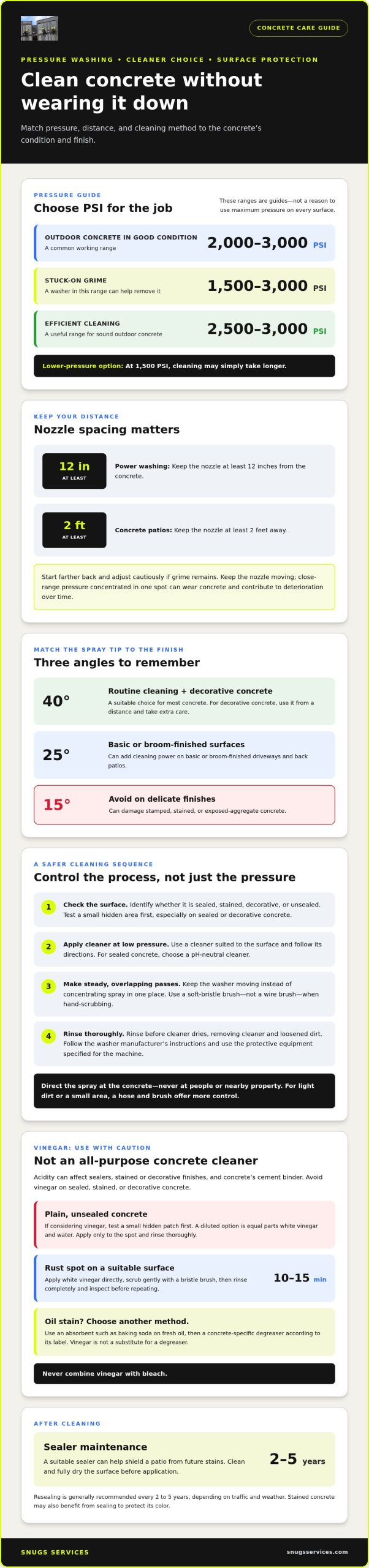
- Choose pressure based on the concrete’s condition. For outdoor concrete in good condition, 2,000 to 3,000 PSI is a common working range. A pressure washer operating between 1,500 and 3,000 PSI can help remove stuck-on grime, while 1,500 PSI may simply take longer. For efficient cleaning, 2,500 to 3,000 PSI is another useful range. These figures are guides, not a reason to use maximum pressure on every surface.
- Use a hose and brush for light dirt or when you need more control. Wet the area, apply a suitable cleaner, and scrub with a soft-bristle brush, not a wire brush. Rinse before the cleaner dries. The Centers for Disease Control and Prevention (CDC) advises cleaning wet concrete thoroughly with hot water and laundry or dish detergent. This method avoids concentrated washer pressure, but takes more effort on a large driveway.
- Set the nozzle distance before cleaning. Keep it at least 12 inches from concrete when power washing, and at least 2 feet away when washing a concrete patio. Start farther back, then adjust cautiously if grime remains. Don’t hold the nozzle close to one spot: high pressure at short range can wear concrete and contribute to deterioration over time.
- Match the tip to the surface. A 40-degree tip suits routine cleaning of most concrete and helps remove dirt and grime with less risk. A 25-degree tip can add cleaning power on basic or broom-finished driveways and back patios. Decorative concrete needs extra care: use a 40-degree tip at a distance. Avoid a 15-degree tip on stamped, stained, or exposed-aggregate surfaces, where it can damage the finish.
- Make steady, overlapping passes, keeping the pressure washer moving instead of concentrating the spray in one place. Apply cleaner at low pressure, then rinse at high pressure, following the washer manufacturer’s instructions. For sealed or decorative concrete, use a gentler approach and test a small area first. Rinse thoroughly to remove cleaner and loosened dirt.
- Prepare the required safety equipment before starting the washer. Follow the manufacturer’s operating instructions and use the protective equipment specified for the machine. Direct the spray at the concrete, never at people or nearby property. For a small, lightly soiled area, a hose and brush may offer better control. For stuck-on grime across sound outdoor concrete, use the washer within its suitable pressure range.
Is vinegar safe to use on concrete?
- Identify the stain before choosing a cleaner. Patios collect soil, leaves, pollen, food spills, and tracked-in grime from weather and daily use. Moisture can leave dark organic marks, while dropped metal objects may cause rust stains. Sweep away loose debris, then inspect the concrete in good light. Distinguish surface dirt from discoloration that has soaked into porous, unsealed concrete. Matching the treatment to the stain helps avoid unnecessary scrubbing or acidic cleaners.
- Check the finish before using vinegar. Acid-based cleaners can dissolve concrete’s Portland cement binder, and vinegar can affect sealers, stained finishes, and decorative colors. If you’re considering vinegar on plain, unsealed concrete, test a small hidden patch first. A diluted option is equal parts white vinegar and water. Apply it only to the spot, never combine it with bleach, and rinse thoroughly so the solution doesn’t remain on the surface.
- Treat rust stains with a short, controlled application. Apply white vinegar directly to the mark, let it sit for 10 to 15 minutes, then scrub gently with a bristle brush. Rinse the spot completely and inspect it before repeating. Don’t leave vinegar on decorative, stained, or sealed concrete, where acidity may alter the finish. If the rust remains, avoid escalating to a stronger acid without knowing how the concrete will respond.
- Use a different method for oil stains. Cover fresh oil with an absorbent such as baking soda, then remove the powder after it draws up residue. Follow with a concrete-specific degreaser, using the label directions and rinsing well. Vinegar isn’t a substitute for a degreaser: oil needs an absorbent and a cleaner suited to greasy residue. For general dirt, warm water and dish soap are a milder starting point than an acidic solution.
- Protect clean concrete with suitable sealing. A sealer can help shield a patio from future stains, but the surface must be clean and fully dry before application. Resealing is generally recommended every 2 to 5 years, depending on traffic and weather. Stained concrete may also benefit from sealing to protect its color. If surface deterioration or stubborn buildup calls for more than stain treatment, professional concrete grinding may be a relevant next step.
Choosing cleaners and tools for sealed or unsealed concrete
Identify the finish, then match the cleaner and tool to the surface. Sealed floors, decorative finishes, and unsealed slabs need different care.
-
Account for Sealed or Decorative Concrete
Check for a sealer, stain, or decorative finish before applying vinegar or scrubbing. Vinegar’s acidity can affect sealers and colored finishes, while acid-based cleaners can dissolve concrete’s Portland cement binder. If you’re unsure how a small area will respond, test the cleaner on a hidden patch first. Don’t treat the full surface until you’ve rinsed and inspected the test patch.
-
Select a pH-Neutral Cleaner for Sealed Concrete
Choose a pH-neutral cleaner for sealed concrete, especially stained surfaces where color matters. Apply it as directed, then work gently with a soft-bristle brush or a mop suited to the floor. Avoid wire brushes and abrasive scrubbing, which can scratch or dull the finish. For tough stains, test the product in an inconspicuous spot before cleaning a wider area.
- Use a mild method on unsealed concrete. Warm water and dish soap are suitable for general dirt, while a soft-bristle brush helps loosen grime without the harsh scraping of a wire brush. For a localized mark, mix ½ cup of baking soda with 1 gallon of warm water and a squirt of dish soap. Apply the paste to the stain, let it sit for 20 to 30 minutes, then scrub and rinse.
- Treat grease and oil with a cleaner made for the residue. An absorbent such as baking soda can draw up oil before you apply a concrete-specific degreaser. Follow the degreaser’s label, and don’t substitute vinegar. It doesn’t target grease like a degreaser and may affect a sealed or colored finish.
- Apply sealer only after cleaning and drying the concrete completely. After deep cleaning, most concrete types need 24 to 48 hours to dry. Follow the sealer’s product directions for application, and consider resealing every 2 to 5 years, depending on traffic and weather. A concrete sealer can help protect a clean patio from future stains, while sealing stained concrete can protect its colors.
Vinegar’s suitability for unsealed concrete
Vinegar may help with limited spot cleaning, but it isn’t a harmless all-purpose cleaner. Check the concrete first, then use a small, controlled amount.
-
Spot-Test Vinegar for Safety
Test diluted white vinegar on a hidden patch of unsealed concrete before treating a driveway or patio. Mix equal parts vinegar and water, apply a little, then rinse and inspect the spot for changes in color or texture. Avoid vinegar on sealed, stained, or decorative concrete, since its acidity can affect the finish. Never mix vinegar with bleach.
-
Clean Unsealed Concrete with Vinegar
Apply a vinegar-and-water solution only to the stain, not the whole slab. For a small mark, let it sit for 5 to 10 minutes, then scrub gently with a soft-bristle brush. Don’t let the cleaner dry on the concrete. Rinse thoroughly with a garden hose, then check whether the stain has lifted before repeating.
- Keep treatment targeted on outdoor surfaces. A patio exposed to leaves, dirt, and spills may have several kinds of marks, but vinegar isn’t suitable for every stain. Identify the mark first, and don’t spread the solution over a driveway or garage floor without a reason. Broad application increases contact with concrete’s cement binder, which acidic cleaners can dissolve.
- Choose another cleaner for oil or grease. On a garage floor or driveway, cover the oil stain with an absorbent such as baking soda, then use a concrete-specific degreaser. Vinegar isn’t a substitute, and scrubbing alone may spread greasy residue. Follow the cleaner’s directions, choose a brush suited to concrete, and rinse the treated area completely.
- For a non-vinegar spot treatment, use baking soda and water. Mix equal parts into a paste, apply it to the stain, then scrub and rinse. Don’t combine this method with vinegar. After washing, inspect the concrete as it dries. If a mark remains, choose a cleaner suited to that specific stain.
- Protect nearby surfaces and equipment during spot cleaning. Keep the solution on the concrete mark, then rinse away residue with a garden hose. Don’t leave vinegar sitting on the slab while you gather supplies or move equipment. If the test patch changes the concrete’s appearance, stop using vinegar and choose a gentler method suited to the finish.
Outdoor concrete cleaning methods
For outdoor concrete, clear dry debris first, wash targeted areas, then rinse thoroughly. Choose each method based on the stain and surface finish.
- Sweep the patio, walkway, or driveway before adding water. Removing leaves, grit, and loose soil first prevents them from turning into muddy residue during washing. For routine upkeep, sweeping concrete once a week helps keep leaves and dust from settling and causing stains. Move planters and outdoor equipment so you can clean the area evenly.
- Pick a suitable day and work in manageable sections. An overcast day slows evaporation, giving a cleaning solution more time to work before drying. Apply cleaner to one section, let it soak for 5 to 10 minutes, then scrub or rinse as directed. Don’t let cleaner dry on the concrete, and shorten the treated area if warm conditions make the surface dry quickly.
- Use manual washing for light grime or areas near delicate finishes. Apply a concrete-appropriate cleaner, then work it across the surface with a soft-bristle brush. A pH-neutral cleaner is suitable for sealed concrete. Scrub steadily, not with a wire brush, which can scratch the finish. Rinse the section thoroughly with clean water before moving on.
- Match the cleaner to stubborn marks instead of applying stronger chemicals across the whole patio. Use a concrete-specific degreaser for oil and a stain-appropriate method for rust. Check the product label for directions and suitable surfaces. Trisodium phosphate can irritate skin and cause burns. Phosphates entering lakes and streams can encourage algae growth, deplete oxygen, and endanger aquatic life.
- Rinse outdoor concrete regularly to remove surface grime before it becomes ingrained. A monthly garden-hose rinse can clear pollen, dust, or pet messes from a patio or walkway. Direct runoff away from planted areas, and rinse away cleaner residue instead of letting it collect along edges. After deep cleaning, let the surface dry completely before replacing furniture or equipment.
- Choose professional help if broad areas or stubborn buildup make careful cleaning difficult. For outdoor concrete that needs specialized attention, get help with concrete surface cleaning and leave the demanding work to experienced hands.
Snugs Services: Pressure Washing
Snugs Services offers pressure washing for outdoor concrete that needs more than routine sweeping or hand scrubbing. It can be a practical next step for a broad patio, driveway, or walkway with stubborn grime, especially when cleaning the area yourself feels too demanding. Surface condition still matters: worn, stained, or decorative concrete calls for care, since excessive pressure can damage finishes and concrete.
For small areas with light dirt, a hose and soft-bristle brush may be enough. For larger surfaces or persistent buildup, professional pressure washing can take on the labor while helping restore a cleaner appearance. Snugs Services serves the Portland and Vancouver metro areas. Contact Snugs Services to discuss pressure washing for your concrete.
Keep Your Concrete Looking Its Best
Make maintenance a simple habit: notice where dirt, leaves, and runoff collect, then clean those spots before grime becomes harder to remove. A clean surface is easier to inspect, helping you spot changes in color or finish early and choose a suitable method instead of reaching for harsher chemicals.
If roof runoff repeatedly marks a walkway or driveway, look beyond the concrete itself. Snugs Services offers gutter cleaning and installation as part of exterior maintenance. For larger areas or persistent buildup, professional pressure washing can take the strenuous work off your hands.
Keep cleaning concrete without damaging it focused on the surface in front of you, whether that means a small spot treatment or help with a broader area. Contact Snugs Services for cleaning help, and take the next step toward a cleaner, well-kept property.
Frequently Asked Questions
Can you damage concrete by power washing?
Yes, power washing can wear concrete when pressure is too high or the nozzle stays too close. Pay particular attention to older, cracked, or previously repaired areas, where concentrated spray may worsen existing surface damage. Before starting, inspect the slab and keep the spray moving in even passes. If aggregate or colored finish begins to lift, stop and switch to gentler cleaning rather than making another pass.
Can’t Get Rid of Stains?
If a stain remains after cleaning, identify its source before trying a stronger product. Oil needs an absorbent and a concrete degreaser; rust needs a different treatment. Rinse away the first cleaner completely before changing methods, and don’t layer chemicals. For a large stained area in Portland or a driveway that needs extensive work, Snugs Services offers pressure washing.
What is the safest way to clean concrete without damaging it?
The safest way to clean concrete without damaging it is to start with the least aggressive method suited to the stain. Remove loose grit, then try warm water, dish detergent, and a soft brush on a small area. Inspect the surface after rinsing. If the finish changes or particles loosen, stop scrubbing and don’t increase pressure; use a gentler method.
Which cleaners are safe for concrete, including sealed and unsealed surfaces?
For sealed concrete, choose a pH-neutral cleaner to help preserve the finish and color. For unsealed concrete, warm water and dish soap are mild options for general dirt. Match specialty products to the stain and follow their directions rather than combining cleaners. Test an inconspicuous spot first, especially on colored or decorative concrete, then rinse thoroughly to remove residue.
How do you remove oil stains from concrete without etching it?
For an oil stain, cover the spot with an absorbent such as baking soda, remove the powder, then apply a concrete-specific degreaser. Follow the product directions and rinse well. Don’t use vinegar to treat oil, and don’t scrub oily residue outward across the slab. On a garage floor, work from the stain’s edges toward its center.
How do you remove rust, mold, and algae from concrete safely?
Use a stain-specific method rather than one chemical for every mark. For rust, white vinegar may sit on unsealed concrete for 10 to 15 minutes before gentle scrubbing and rinsing. For mold or mildew, a vinegar-and-water spray may soak for about 30 minutes. Keep vinegar away from sealed or decorative finishes, and never combine it with bleach. Rinse treated areas thoroughly.
What pressure washer PSI and nozzle are safe for concrete?
For outdoor concrete in good condition, 2,000 to 3,000 PSI is a common range, but the surface finish matters as much as the setting. A 40-degree tip suits routine cleaning; decorative concrete needs a wider spray and greater distance. Keep the nozzle moving, follow the washer manufacturer’s instructions, and start with a gentle pass. Avoid a 15-degree tip on stamped, stained, or exposed-aggregate concrete.
Can vinegar, bleach, or muriatic acid damage concrete?
Vinegar and muriatic acid are acidic cleaners, and acid-based products can dissolve concrete’s Portland cement binder. Vinegar can also affect sealers, stained finishes, and decorative colors. Never combine vinegar with bleach. Don’t assume bleach is suitable for every surface: check the product label and concrete finish before using it. Test any cleaner in a hidden spot, then rinse completely.
Recent Comments