
The right cleaning method matters as much as the wash itself. Industrial equipment pressure washing in Vancouver, WA, can remove built-up grime, grease, and oil from machinery, trucks, and trailers. Soft washing offers a gentler approach for surfaces that need less force. The equipment and method should suit the surface and type of buildup.
It’s frustrating when dirt and oily residue cling to hard-working equipment, especially in areas that are difficult to reach by hand. This guide explains how pressure washing and soft washing work, what kinds of grime they address, and how professional washing equipment helps match the cleaning process to industrial machinery and vehicles.
You’ll also learn what shapes the scope of a cleaning job and what to consider when planning equipment washing in Vancouver. From construction machinery to fleet vehicles, the goal is a practical, surface-conscious clean, not a one-size-fits-all approach.
Key Takeaways
- Choose between pressure washing and soft washing based on the equipment’s surface and the buildup you need to remove.
- Cleaning trucks, trailers, and construction machinery starts with identifying grime-prone areas and matching the wash approach to each surface.
- Dirt, gum, food residue, and other buildup can accumulate over months or years; a planned wash helps tackle it systematically.
- Grease and oil call for a targeted cleaning approach rather than simply increasing water pressure.
- Learn how washing equipment and pressure washing services can support a practical cleaning plan for industrial machinery.
Commercial, industrial, environmental, and agricultural pressure washing
A loading dock, production machine, farm vehicle, and service truck each need a different cleaning plan. The surface, residue, access, and wash-water plan all help determine the right method.
Commercial pressure washing can address concrete, loading areas, exterior equipment, and fleet vehicles. Industrial work may involve machinery frames, guarded components, and hard-to-reach surfaces. Agricultural equipment, such as tractors and trailers, may carry soil or plant residue. Each job starts by identifying what needs cleaning and what should stay dry.
Pressure-washing equipment varies by task. A residential unit may suit a patio or small personal machine, while commercial equipment is selected for larger work areas and repeated jobs. Operators match the nozzle, water pressure, and cleaning solution to the material. A painted panel, for example, needs different handling from a metal undercarriage.
Pressure washer repair is a separate need for residential and commercial equipment owners. Start by identifying the symptom, such as inconsistent pressure, a leaking connection, or a motor that will not start. The model, power source, and condition help define the repair task. Keep the equipment details together when arranging service.
Industrial Equipment Service Coverage
Industrial equipment pressure washing services in Vancouver, WA, can cover machinery, work vehicles, and nearby hard surfaces. Snugs Services serves Vancouver and the Portland metro area, including Portland, Gresham, Salem, Eugene, Beaverton, Tualatin, Tigard, Hillsboro, Longview, Richfield, Battle Ground, Camas, Wilsonville, and Keizer. When planning a job, consider the equipment experience, surfaces included, cleaning method, and how the work area will be managed. Snugs Services provides pressure washing for industrial equipment and explains the scope before scheduling.
Fleet and Heavy Equipment Washing
Fleet and heavy equipment washing can cover trucks, trailers, construction machinery, and agricultural vehicles. A useful scope identifies each vehicle type and the areas needing attention, such as wheels, steps, exterior panels, or equipment frames. Distinguish routine exterior washing from detailed cleaning around hard-to-reach shapes. This helps match the wash to working conditions and the equipment’s surfaces.
Industrial Washing Price Factors
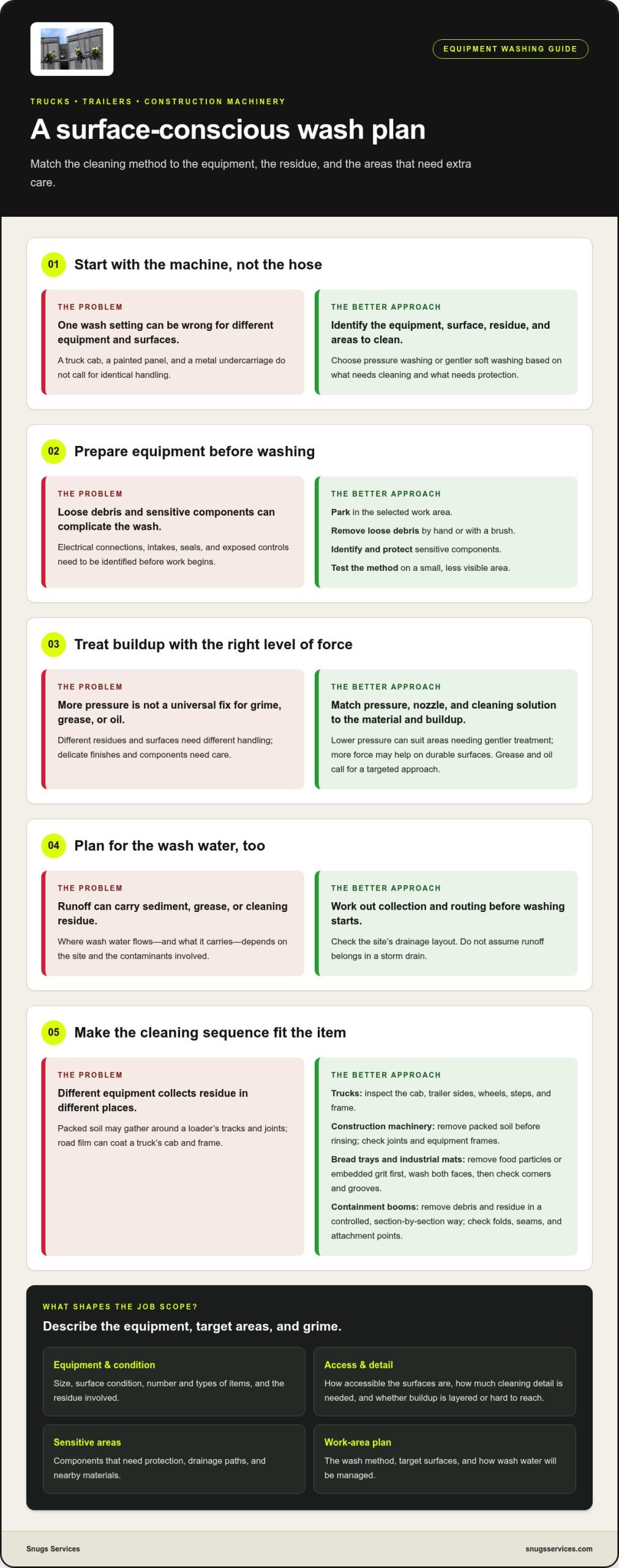
The scope of industrial equipment pressure washing depends on equipment size, surface condition, residue, access, and cleaning detail. A truck with accessible exterior panels differs from machinery with narrow gaps and layered buildup. The number and types of items also shape the work involved. When requesting a quote, describe the equipment, target areas, and grime so the scope reflects the actual job.
For heavy industrial equipment, the method may range from pressure washing to soft washing, depending on the surface and residue. Lower pressure can suit areas that need gentler treatment, while more force may help on durable surfaces. The operator should account for sensitive components, drainage paths, and nearby materials before washing. These considerations help shape a practical approach for commercial, environmental, and agricultural settings without treating every machine alike.
Truck, trailer, and construction equipment cleaning
A truck wash needs a different plan from cleaning a tracked excavator. Identify the equipment, residue, and any surfaces that need gentler treatment. A road tractor may carry road film along its cab and frame, while a loader can hold packed soil around its tracks and joints. This inspection helps shape the washing sequence.
Prepare equipment before washing. Park it in the selected work area, remove loose debris by hand or with a brush, and identify electrical connections, intakes, seals, and exposed controls. Protect sensitive components, then test the method on a small, less visible area. Dry brushing or scraping can loosen soil without detergent. Take care around delicate finishes and components.
Wastewater disposal in Vancouver, WA, depends on the wash water, site drainage, and contaminants involved. Plan how to collect and route wastewater before work begins. Do not assume runoff belongs in a storm drain. Account for where water flows and what it carries, such as sediment, grease, or cleaning residue. The site’s drainage layout is a practical starting point.
Containment booms collect floating material in water, so cleaning them calls for controlled removal of debris and residue. Keep the wash area organized, separate removed material from the cleaned boom, and prevent loose debris from spreading into nearby drains. A section-by-section approach makes it easier to spot missed folds, seams, or attachment points before the boom returns to use.
Interstate trucks may arrive with road film, dust, and residue from multiple routes. Inspect the cab, trailer sides, wheels, steps, and frame, then choose a method suited to each surface. Bread trays and industrial mats need a different workflow: remove food particles or embedded grit first, wash both faces, and check corners or grooves where residue collects. Drying and orderly stacking help keep cleaned items separate from incoming loads.
Before scheduling a wash, group vehicles by type and identify special handling needs. A construction machine with packed soil may need debris removal before rinsing, while a trailer may call for attention to its doors and lower panels. Describe the equipment and target areas clearly. For fleet and equipment cleaning needs, truck and equipment washing can be a practical next step.
Dirt, dust, and grime removal
Commercial pressure washing can remove dirt, gum, food, and other stain-causing buildup that accumulates over time. On industrial equipment, grime often gathers around handles, hinges, guards, and wheel wells. Identify the residue and surface type first. Dry dust on a control cabinet calls for a different approach from packed soil on a steel frame. A walkaround helps map areas needing attention and surfaces that need gentler treatment.
Separate loose material from adhered grime before choosing a wash method. A brush or controlled rinse can clear dry dust from broad surfaces, while stuck-on mud may need a more focused wash. For example, remove loose grit from a loader’s steps before rinsing them to reduce the chance of dragging particles across painted areas. Note seams, vents, and recessed panels, where dirt can remain after exposed surfaces look clean.
Work in manageable sections rather than washing the entire machine at once. On a forklift, clean the mast, outer frame, and wheels as separate zones, then inspect each before moving on. Direct the spray at the target surface and adjust distance and pressure to suit the material. Metal frames need different treatment from painted panels, decals, rubber seals, or electrical housings.
Gum and food residue require attention to their location and texture. A sticky patch on a metal platform may respond to targeted washing, while residue caught in a tread or joint calls for careful inspection. Check the runoff path, especially near floor drains or stored materials. After washing, look along edges, under guards, and around fasteners for remaining soil or streaks.
Finish with a close inspection rather than judging cleanliness from a distance. Compare cleaned and uncleaned areas on a truck step, equipment frame, or loading surface. Treat remaining marks with a method suited to the material instead of increasing pressure across the whole machine. Note recurring buildup points, such as a dusty intake cover or muddy wheel arch, so the next cleaning plan can target them.
Grease and oil removal
Grease and oil behave differently from dry soil on industrial equipment. A thin oil film may spread across a steel housing, while thick grease can cling around a loader’s pivot points. Identify the residue before washing, noting its location, thickness, and nearby materials such as paint, rubber, wiring, or concrete.
Start by removing loose debris around the affected area. A brush can clear dust and grit from a greasy step before water reaches it, reducing the chance of turning loose particles into abrasive slurry. Protect sensitive components, then test the chosen approach on a small area. A painted panel and an exposed metal bracket may respond differently.
For oily residue, use a controlled process that loosens the film without spreading it across clean surfaces. Work from the outer edge toward the affected area, then rinse in a direction that keeps residue away from finished sections. On a truck chassis, for example, treat the oily frame separately from nearby painted body panels. Inspect seams and brackets, where runoff may leave a greasy trace.
Thick grease often needs more preparation than a quick rinse. Remove accessible excess with a suitable scraper or absorbent material, then use a compatible cleaning method. Let the cleaner work according to its directions before rinsing. Avoid forcing water into bearings, electrical housings, seals, or open ports. A focused nozzle technique helps target buildup while limiting spray on adjacent parts.
After the first pass, inspect the surface in consistent lighting. Look for a slick sheen on metal, dark residue around fasteners, or grease packed into a joint. Repeat targeted cleaning where residue remains instead of increasing pressure across the entire machine. A clean cloth can help reveal an oily film that is difficult to see on a wet surface.
Keep the work area organized as you go. Separate used absorbent material and removed residue from clean tools, and keep wash water from carrying oily material across the surrounding floor. Check nearby tires, steps, and access points for transferred grease. On a forklift, even a small patch on a step can affect a frequently used contact surface. The final inspection should cover the cleaned component and the area around it.
Pressure-washing and soft-wash equipment
The wash rig matters because equipment varies in surface, size, and residue. A pressure washer directs water through a pump, hose, and nozzle; soft-wash equipment applies cleaning solution at lower pressure. A steel frame with caked soil may need a different setup from painted panels or delicate exterior surfaces. Choose the system for the task, not simply the machine’s maximum output.
Hot water can help loosen greasy residue, while cold water can rinse dust and loose soil from durable surfaces. For industrial machinery, the choice also depends on the material, nearby components, and type of buildup. Water temperature alone does not determine the method. Pressure, nozzle selection, distance, and cleaning solution all affect how the surface responds.
Mobile washing equipment can combine pressure-washing and soft-wash systems on one rig. The Ultimate Mini Pressure Washing & Soft Wash Truck Skid has dual 55-gallon tanks. The Workhorse Pressure Washing & Soft Wash Truck Skid has dual 100-gallon tanks. These tank capacities illustrate how equipment setups can vary with the amount of water or solution carried for a job.
For lower-pressure application, the Soft Wash Spray Pod includes a FloJet 6 GPM pump. Its stated flow rate describes the pump, not a guaranteed cleaning result. The operator still needs to select a suitable nozzle and approach for the surface. A delicate enclosure, painted guard, or area near exposed wiring calls for more care than an open steel platform.
Before choosing equipment, identify the residue and nearby surfaces. Consider how the wash will reach the target area, where rinse water will go, and whether the machine needs a gentler application. A practical setup allows control of spray direction and helps avoid directing water into openings or sensitive components.
- Pressure washer: Match the nozzle and spray distance to the surface.
- Soft-wash system: Use lower-pressure delivery for surfaces needing gentler treatment.
- Tank capacity: Consider the rig’s water and solution supply for the work.
- Pump flow: Treat a pump specification as equipment information, not a promise of results.
Those choices help shape a controlled cleaning plan for machinery, trucks, and industrial surfaces. For help with equipment washing, explore pressure washing service options.
Snugs Services: Pressure Washing
Snugs Services provides pressure washing for equipment and work areas with grime, dust, and residue. Turn to the service when buildup affects accessible exterior surfaces on machinery, trucks, or trailers and you want a professional wash rather than a rushed rinse.
The right approach depends on the surface and soil. Describe the equipment needing attention, where residue collects, and whether painted or sensitive components are nearby. This helps define a practical cleaning scope focused on the areas that matter. For vehicle fleets, Snugs Services offers fleet washing for recurring exterior cleaning needs. Pressure washing can also address suitable hard surfaces around equipment.
For a clear next step, describe the equipment and buildup you want removed. Contact Snugs Services to discuss pressure washing for your site.
Plan the Next Clean with Confidence
Build a maintenance plan around the equipment’s working demands, not just its appearance. A clear scope can identify which surfaces need attention, when equipment can be cleaned, and how to prepare the work area. For industrial equipment pressure washing in Vancouver, WA, that planning makes the next step practical for your site and daily operations.
Snugs Services can help with pressure washing when grime builds up on equipment or nearby surfaces. For broader exterior upkeep, the team also offers gutter cleaning and installation. These services address different maintenance needs, so choose the one that fits the property or equipment concern you’re handling now.
Share what needs cleaning and what you’d like to improve. Contact Snugs Services to discuss your pressure-washing needs and take a clear next step toward a cleaner, better-maintained site.
Recent Comments