
Could a rented pressure washer turn a simple cleanup into an injury, hidden water damage, or polluted runoff? The risks of DIY pressure washing go beyond choosing the wrong setting. A powerful spray can make exterior cleaning look quick, but using the wrong technique may harm you, your home, or the surrounding area.
This guide explains how to assess the surface, access, equipment, and runoff before you start. You’ll also find signs that a job may be safer in trained hands, including work on roofs, elevated areas, delicate finishes, and solar panels.
Solar panels require specialized low-pressure cleaning; high-pressure can crack glass, damage seals, or void warranties. Snugs Services provides pressure washing for residential and commercial properties in the Portland area and brings its own water for pressure-washing jobs. High-pressure water can be dangerous if not handled correctly. Our team follows OSHA-compliant procedures. Day, night, or weekend service is available, and last-minute calls can be accommodated. Here’s how to decide what makes sense for your property.
Key Takeaways
- DIY pressure washing can cause injury, surface damage, water intrusion, and runoff problems.
- Identify the surface before choosing a cleaning method. Solar panels require specialized low-pressure cleaning; high-pressure can crack glass, damage seals, or void warranties.
- Pause if you’re uncertain about the surface, water path, equipment, or a safe working position. High-pressure water can be dangerous if not handled correctly.
- For pressure washing in the Portland area, Snugs brings its own water. Our team follows OSHA-compliant procedures.
- Snugs offers day, night, or weekend service, and last-minute calls can be accommodated.
Why DIY Pressure Washing Seems Simple, and Where the Risk Begins
Renting or borrowing a pressure washer can seem like a simple way to refresh an exterior. You point the spray at dirt and watch it lift away. But a clean-looking result doesn’t necessarily mean you used a safe method or protected the surface underneath.
The risks of DIY pressure washing come from the possibility of injury, surface damage, and water intrusion. Having access to a machine doesn’t mean you know how a particular surface will respond, whether the water can be directed safely, or how to manage the work area. A pressure-washing job is only as safe as the match between the water pressure, the surface, and the operator’s experience.
For a general overview of the process and the dangers of pressure washing, keep in mind that the force that removes dirt can also cause harm.
Here’s a short video about hazards homeowners may overlook:
Why pressure washing can be riskier than it looks
A concentrated water stream can injure someone or damage property if the wand is mishandled, aimed at the wrong angle, or difficult to control. The risk extends beyond the spot you’re cleaning. Flying debris can hit nearby people or breakables, and a slip or sudden movement can make it harder to keep the spray pointed safely.
Removing visible dirt is not the same as protecting what lies behind the surface. Water forced behind siding or around window and door openings can enter parts of a building that are difficult to inspect. The exterior may look clean while moisture remains hidden inside a wall or other assembly. Pay attention to the spray direction and where the water will travel, not just the visible result. High-pressure water can be dangerous if not handled correctly.
Which jobs deserve extra caution?
Pause before cleaning roofs, elevated areas, delicate finishes, or hard-to-reach surfaces. A ladder, uneven ground, obstacles, or awkward angles can make it harder to stay stable and control the wand. Difficult access leaves less room to correct a mistake quickly.
Unfamiliar surfaces and equipment add uncertainty. A test spray may not show how a material will respond across the full area or reveal every risk. Solar panels require specialized low-pressure cleaning; high-pressure can crack glass, damage seals, or void warranties. If you can’t identify the surface, manage the water path, and reach the work safely, stop before starting. A pause can prevent a quick cleanup from becoming a bigger problem.
The Main Risks of DIY Pressure Washing: Injury, Damage, and Runoff
The main hazards fall into three groups: injury, property damage, and runoff that carries loosened grime or cleaning residues away from the work area. A single job can involve several of these risks, depending on the surface, access, equipment, and where the water flows. Consider all of them before you begin.
Injury, loss of control, and elevated work
High-pressure water can cause serious harm if the stream hits a person or the operator loses control. A distraction, awkward angle, or unexpected movement of the hose can make it difficult to direct the spray safely.
Roofs, ladders, and elevated work add fall hazards. Reaching around an obstacle or leaning to access a section can make it harder to maintain a stable position. Don’t push through if the job exceeds your experience or safe access. Leave difficult or elevated work to trained professionals rather than risking an injury to finish the project.
Surface damage and water intrusion
A surface that looks sturdy may still be vulnerable to unsuitable pressure or technique. On siding, spray can force water behind panels or into openings. On a deck, it can roughen or splinter wood; on windows, it can damage seals or surrounding components. Roof materials and delicate finishes can also be harmed by an overly aggressive approach.
Some damage is immediately visible, such as a stripped finish or marked material. Water intrusion can be harder to spot: moisture may pass behind siding, around windows, or into other building assemblies. A clean surface doesn’t prove the structure stayed dry. Check for openings and consider where water could travel before deciding how to clean.
Runoff and where wash water goes
Water leaving the work area can carry dirt, residues, and cleaning products toward a drain, soil, or nearby waterway. Think through the full path of runoff, not only the area being cleaned. EPA stormwater guidance explains the environmental impact of pressure washing runoff and why pollutants in stormwater are a concern. Don’t assume wash water disappears harmlessly once it leaves the surface.
If you can’t manage the water’s path, choose a safe method for the surface, or work from secure access, pause. For a property in the Portland area, residential and commercial pressure washing from Snugs is an option when the job feels beyond your experience. Snugs brings its own water for pressure-washing jobs.
DIY vs. Professional Pressure Washing: Compare the Job, Not Just the Machine
A pressure washer’s availability doesn’t determine whether a job is suitable for DIY. Consider access, surface type, your familiarity with the equipment, and the scale of the work. A small, reachable area on a familiar surface is different from a roof or a large commercial exterior. Use the table to assess the job, not just the machine.
| Factor | DIY may be reasonable | Consider professional service |
|---|---|---|
| Access | The work is reachable from stable ground, without awkward stretching. | The surface is elevated, difficult to reach, or requires an unsafe position. |
| Surface sensitivity | You know the material and understand how it should be cleaned. | The finish is delicate, unfamiliar, or vulnerable to unsuitable pressure. |
| Operator experience | You understand the equipment instructions and can keep control and visibility. | You’re inexperienced, uncertain about the equipment, or unsure how to handle the surface. |
| Job scale | The task is small and contained. | The area is large, commercial, or involves multiple surfaces and access challenges. |
When a homeowner may reasonably consider a small DIY task
DIY may suit a limited task on a familiar, durable surface that you can reach from a stable position and see clearly. Read and follow the equipment instructions, keep other people clear of the work area, and stop if you can’t maintain control or visibility. Don’t improvise if the surface responds unexpectedly. If you’re unsure what the material can tolerate, treat that uncertainty as a reason to pause.
When professional training and equipment matter more
Elevated work, large areas, delicate materials, and commercial properties add complexity. Snugs uses custom-built pressure-washing equipment and specialized training. Our team follows OSHA-compliant procedures. Difficult-to-access surfaces may have optional drone-assisted cleaning; drones aren’t used for every job. For more context on maintaining exterior surfaces, explore this Portland pressure-washing exterior maintenance guide.
The practical dividing line is whether you can identify the surface, reach it safely, and use the equipment confidently. If any answer is no, don’t let access to a machine settle the decision. The risks of DIY pressure washing rise when the job exceeds your experience or safe access.
Snugs provides residential and commercial pressure washing in the Portland area and brings its own water for pressure-washing jobs. Day, night, or weekend service is available, and last-minute calls can be accommodated. Professional help can make sense when the project calls for equipment and experience beyond what you can safely bring to it.
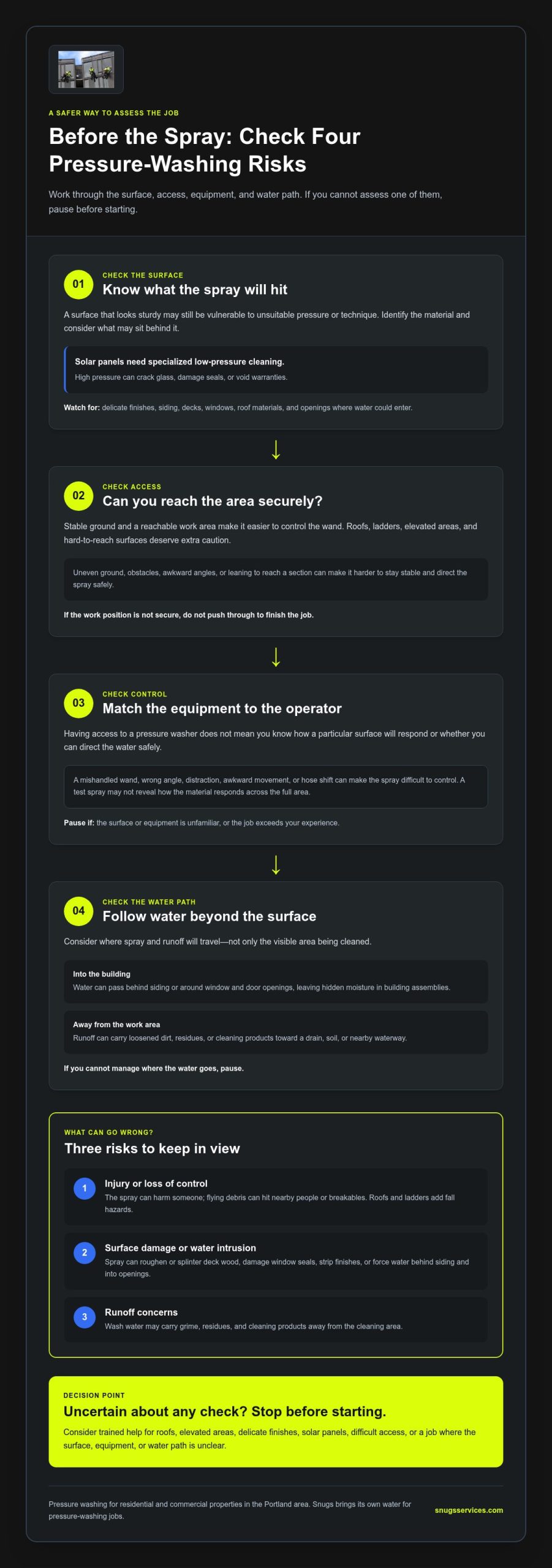
A Practical Checklist: How to Decide Whether DIY Pressure Washing Is Safe
Before setting up a pressure washer, assess the entire job, not just the area that needs cleaning. These checks can help you make a clear decision. They can’t eliminate every hazard, so treat uncertainty as a reason to pause rather than an invitation to experiment.
- Identify the surface. Can you name the material and understand how sensitive it is to water pressure? If the finish is fragile or unfamiliar, or its care instructions are unclear, don’t guess at a cleaning approach.
- Assess access. Can you reach the work without climbing unsafely, stretching awkwardly, or standing in an unstable position? Consider the space around the surface, too. Obstacles can make it harder to move safely and control the wand.
- Assess your experience. Have you read the equipment instructions and used this type of machine confidently? Can you see the area clearly throughout the task? If your experience doesn’t match the job, stop before spraying.
- Decide whether to proceed or stop. Can you keep household members, visitors, and pets away from the work area? Do you know where the wash water will travel? If you can’t answer confidently, leave the job to trained help.
Warning signs that mean stop and get help
Stop if the work requires a roof, ladder, difficult access, or cleaning a surface you don’t recognize. A task that seems manageable from the ground can become unsafe if reaching one section means leaning, climbing, or losing sight of the spray area. Take the same approach if the equipment is difficult to control or its instructions don’t make sense for the task.
Pay attention to what happens as you work. If water appears to enter gaps, openings, or areas behind the visible surface, stop spraying. Don’t continue just because the dirt is coming off; moisture may be moving somewhere you can’t inspect. Pause if you can’t identify a safe path for the water or keep other people clear.
Solar panels call for particular care. Don’t treat a general pressure-washing checklist as permission to use high pressure on a sensitive surface.
The risks of DIY pressure washing aren’t erased by checking every box. This checklist is a decision aid, not a safety guarantee. If the surface, water path, equipment, or working position remains uncertain, stop and choose a safer next step.
If a job in the Portland area raises any of these warning signs, request a pressure-washing quote from Snugs. Snugs brings its own water for pressure-washing jobs, and our team follows OSHA-compliant procedures.
Choose a Safer Next Step with Snugs Pressure Washing in Portland
If your assessment raised concerns about access, surface sensitivity, or equipment, you don’t have to take on the job alone. Snugs Services provides residential and commercial pressure washing in Portland and nearby communities, including Gresham, Salem, Eugene, Vancouver, Beaverton, Tualatin, Tigard, Hillsboro, Longview, Richfield, Battle Ground, Camas, Wilsonville, and Keizer. Trained help can reduce the hazards involved, though no cleaning approach can promise that every risk disappears.
What Snugs brings to residential and commercial pressure washing
Snugs is a family-owned company with custom-built pressure-washing equipment and specialized training. Snugs brings its own water for pressure-washing jobs. Our team follows OSHA-compliant procedures. That experience can be useful when the surface, size, or access makes a DIY approach uncertain, whether you’re caring for a home exterior or commercial property.
Difficult-to-access surfaces may have optional drone-assisted cleaning. It’s an option for challenging access, not a standard feature of every job. When describing the project, share any concerns about height, reach, or surface type.
Make the next step simple
Request a pressure-washing quote from Snugs and include a few practical details:
- The property type and the surface you want cleaned.
- Any access challenges, such as height, obstacles, or limited reach.
- Your cleaning goal and any areas of concern, including signs of water intrusion.
These details help explain the work and what makes you unsure, without requiring you to choose a cleaning method yourself. Snugs offers day, night, or weekend service, and last-minute calls can be accommodated.
If DIY pressure washing feels beyond your safe access or experience, take a straightforward next step. Request a pressure-washing quote from Snugs to discuss your property and cleaning needs.
Make the Safer Choice for Your Home
A clean exterior shouldn’t come at the expense of your confidence or your property. If you’re still weighing the risks of DIY pressure washing, let uncertainty guide your next move. You don’t have to take on a job just because the equipment is within reach. Choosing a safer approach is a practical way to care for your home and protect the time you’ve invested in it.
Snugs can discuss your pressure-washing project and provide a quote tailored to the property and work you have in mind. Share what you want cleaned and any concerns about access or the surface to plan a sensible next step.
Request a pressure-washing quote from Snugs to plan your exterior cleaning with less guesswork.
Frequently Asked Questions
Can DIY pressure washing cause serious injuries?
Yes. Mishandling a pressure washer can cause injury, especially if the spray is directed toward someone or the operator loses control. The risks of DIY pressure washing increase if you’re distracted, working in a cramped area, or unsure how the equipment responds. Stop if you can’t keep control or reach the work safely, and don’t continue just to finish the task.
Can pressure washing damage siding, decks, or windows?
Yes. Unsuitable pressure or technique can strip finishes, roughen deck surfaces, or damage window seals and surrounding components. Dirt coming off doesn’t mean the surface is unharmed. Identify the material and understand its care needs before cleaning. If you’re unsure what the siding, deck, or window assembly can tolerate, pause rather than test an unfamiliar method on a visible area.
Is it safe to pressure wash a roof yourself?
Roof pressure washing can be unsafe if it requires climbing or working from an unstable position. Height and awkward reach can make it harder to keep your footing and control the spray at the same time. Don’t attempt roof work if you lack appropriate training or safe access. Professional service is a sensible next step when cleaning involves a roof or other hard-to-reach area.
Can I pressure wash solar panels?
Don’t use high pressure on solar panels. Snugs cleans solar panels using low-pressure soft-washing and de-ionized water. If you’re unsure how to clean your system, avoid experimenting with a pressure washer and choose a method intended for the panels. Protecting the glass and seals matters more than removing dirt quickly.
What should I do if water gets behind siding during pressure washing?
Stop spraying the area and avoid adding more water. Don’t assume the moisture is harmless or try to force it out with more pressure. Note where you saw water enter and arrange an appropriate assessment of the affected area. This doesn’t establish that hidden damage has occurred, but an assessment can help determine whether follow-up is needed. Keep people away if the area presents an immediate safety concern.
Is renting a pressure washer enough to make DIY cleaning safe?
No. Access to a rented machine doesn’t tell you whether it’s appropriate for a particular surface or whether you can operate it safely. You also need to understand the material, reach the work from a safe position, and follow the equipment instructions. A machine you can use on a familiar, ground-level surface may not be suitable for a delicate finish or elevated area.
When should I hire a professional pressure-washing service?
Consider professional help if the work involves elevated areas, delicate surfaces, difficult access, or uncertainty about the right cleaning approach. For residential and commercial pressure washing in the Portland area, Snugs brings its own water for pressure-washing jobs. Our team follows OSHA-compliant procedures. Share the property and access details when requesting a tailored quote.
Recent Comments