
The safest high-rise cleaning method isn’t always the most advanced one. Rope access, suspended platforms, lifts, and drones each suit different buildings and site conditions. If you manage a high-rise, it’s reasonable to wonder how workers will reach upper floors safely while protecting occupants, pedestrians, and nearby property. Comparing safe high rise window cleaning methods starts with those practical concerns, not the equipment alone.
A sound plan considers access, rooftop conditions, activity around the property, and the safety controls needed for the work. This guide compares the main methods, explains their trade-offs, and outlines the site details that shape a well-managed clean. It also explains where drone window washing may be useful, without treating it as a universal replacement for other approaches. Snugs Services provides high-rise window washing and exterior maintenance in the Portland and Vancouver metro areas.
Key Takeaways
- Safe high rise window cleaning methods depend on the building, surrounding activity, and job conditions, not on one access option being best every time.
- Compare rope access, suspended platforms, aerial lifts, and drone window washing by how each fits the façade and available site access.
- Prepare by sharing building details, coordinating access, and planning around entrances, pedestrian routes, loading areas, and occupied spaces.
- Match the cleaning approach and safety controls to your property’s needs to keep the project organized and reduce uncertainty.
What Makes a High-Rise Window Cleaning Method Safe?
As a property manager, you need confidence that a window cleaning plan protects more than the people doing the work. Workers need safe access, while residents, employees, visitors, pedestrians, and the building itself must also be considered. The safest choice depends on the property and conditions on the day, not simply on which equipment looks most advanced.
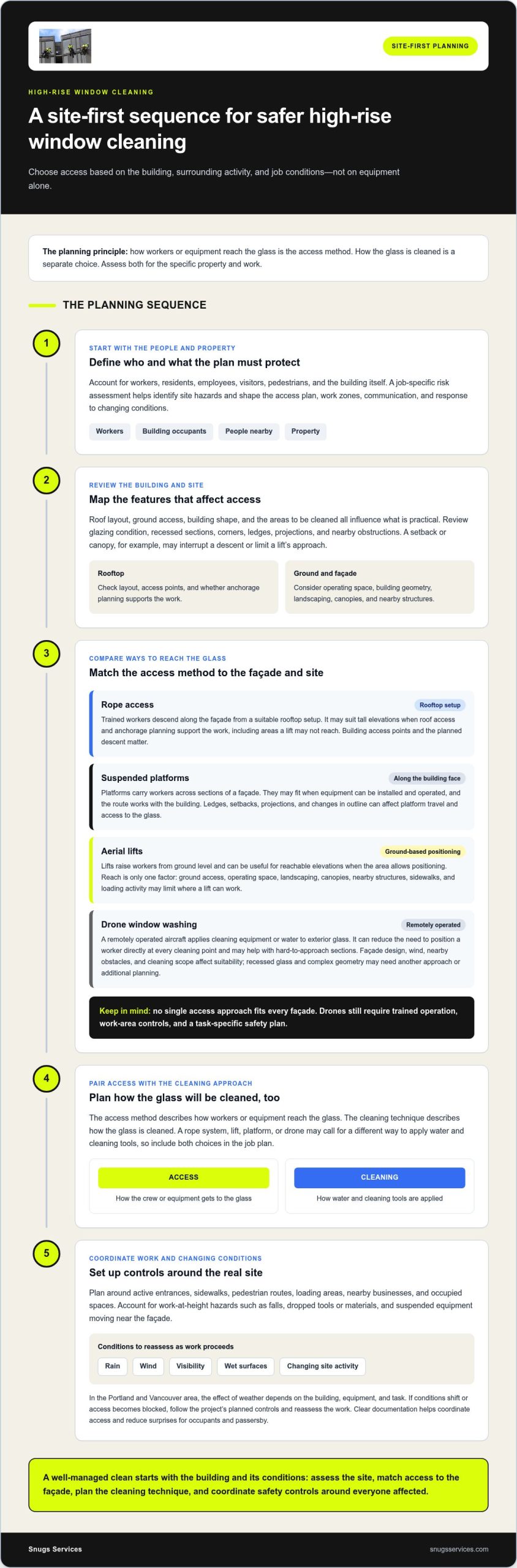
A job-specific risk assessment reviews the hazards at a particular site and the controls planned to manage them. It helps shape the access plan, work zones, communication, and response to changing conditions. The access method describes how workers or equipment reach the glass. The cleaning technique describes how the glass is cleaned. A rope system, lift, or drone may call for a different way to apply water and cleaning tools, so both choices belong in the plan.
This video shows a rope-access setup in action. It’s one example of an approach that must be planned around the building and job conditions.
Which hazards should a high-rise cleaning plan address?
Work at height can involve falls, dropped tools or materials, and suspended equipment moving near a façade. Conditions can also change during a job: a work area may become busier, access may be blocked, or weather may shift. The plan should consider who could be affected below and inside the building, not just the cleaning crew.
Glass and façade details matter. Glazing condition, recessed sections, corners, ledges, projecting features, and nearby obstructions can affect equipment positioning and access to each pane. For example, a deep setback or canopy may interrupt a straight descent or limit a lift’s approach. A site review helps identify these details before work begins and document how the crew will address them.
How do Portland and Vancouver conditions affect planning?
In the Portland and Vancouver area, rain, wind, visibility, and wet surfaces can all influence exterior work. Their effect depends on the building, equipment, and task. A method that suits one day or elevation may need adjustment if conditions change. The site team should reassess conditions as work proceeds and follow the project’s planned controls, rather than treating any access method as automatically safe in every situation.
Urban activity needs attention too. Active entrances, sidewalks, pedestrian routes, loading areas, and nearby businesses can bring people close to the work zone. Mapping those areas helps the property team coordinate access and reduce surprises for occupants and passersby. Across Portland, Gresham, Salem, Eugene, Vancouver, Beaverton, Tualatin, Tigard, Hillsboro, Longview, Richfield, Battle Ground, Camas, Wilsonville, and Keizer, local site layouts and activity should inform the plan. Clear documentation makes the work easier to manage and helps avoid preventable disruptions.
How Do Rope Access, Platforms, Lifts, and Drones Work?
High-rise façades don’t all offer the same way in. Roof layout, ground access, building shape, and the areas that need cleaning influence which approach is practical. Rope access, suspended platforms, aerial lifts, and drone window washing each provide a different way to reach exterior glass. Reach and maneuverability are only part of the decision. Each approach needs a work plan and safety controls suited to the equipment, building, and site.
When might rope access, suspended platforms, or lifts fit?
Rope access lets trained workers descend along a façade from a suitable rooftop setup. It can suit tall elevations where roof access and anchorage planning support the work, including areas a lift may not reach. Building access points and the planned descent matter. Rope access isn’t a default choice simply because a tower is tall.
Suspended platforms carry workers along a building face, allowing them to work across sections of a façade. They may suit buildings where the equipment can be installed and operated, and where the platform’s path and access points work with the façade. Ledges, setbacks, projections, and changes in the building’s outline may affect its route or access to the glass. For extensive facade projects and renovations where platforms alone are insufficient, professional scaffolding solutions from providers like allroundsteigerbouw.nl offer safe and stable working structures.
Aerial lifts raise workers from ground level and can be useful for reachable elevations when the surrounding area allows equipment to be positioned. The lift’s reach is one consideration. Ground access, operating space, and obstacles such as landscaping, canopies, or nearby structures also matter. A narrow sidewalk or busy loading area may limit where equipment can safely work, even if the windows appear within reach.
Where can drone window washing fit into the comparison?
Drone window washing uses a remotely operated aircraft to apply cleaning equipment or water to exterior glass. It can reduce the need to position a worker directly at every cleaning point, which may help on sections that are difficult to approach with conventional equipment. Façade design, wind, nearby obstacles, and cleaning scope all affect whether a drone is suitable. Detailed areas, recessed glass, or complex geometry may call for another approach or additional planning.
Drone work still involves people, equipment, and a site that needs managing. Trained operation, controls for the work area, and a safety plan tailored to the drone and task remain essential. The technology changes where the operator works, but it doesn’t remove the need to account for the building and people nearby.
No single access approach fits every façade. Compare how the crew or equipment reaches the glass separately from how the glass will be cleaned, then assess both against the job conditions. Snugs Services provides high-rise window washing, including conventional and drone-based approaches selected to suit the building and work.
Which High-Rise Window Cleaning Method Best Fits the Building?
No access method is automatically the safest choice for every tower. A rope system may suit one façade but be impractical on another. A lift may offer useful access where ground space allows, yet be blocked by landscaping or a busy entrance. Weigh building design, work area, cleaning scope, and conditions together. Safe high rise window cleaning methods are selected for the job, not ranked by equipment alone.
How do building design and ground access change the choice?
Start with the façade and the routes available to reach it. Setbacks, balconies, projections, and varied glazing layouts can interrupt access or limit how equipment moves along the exterior. Roof access and suitable anchorage may shape rope-access planning, while suspended platforms depend on workable installation and travel paths. A lift needs room to position and operate on the ground. Older or unusual façades may call for closer review of access points and obstructions before a method is chosen.
Ground conditions affect occupants too. If equipment would block an active entrance, loading area, or pedestrian route, the plan may need another position or approach. Use the comparison below as a starting point, then review the actual property and site conditions.
| Method | Site access and façade fit | Reach and movement | Potential disruption | Weather sensitivity |
|---|---|---|---|---|
| Rope access | Depends on rooftop access, suitable anchorage planning, and a façade that workers can descend alongside. | Can reach upper elevations; setbacks and projections may affect movement. | May require controlled roof access and a managed ground area below. | Wind and wet conditions can affect the work plan. |
| Suspended platform | Requires suitable installation and a workable path along the façade. | Can travel across sections; building features may interrupt its route. | Setup and movement may affect roof and ground areas. | Wind, rain, and visibility can influence operations. |
| Aerial lift | Needs ground access and room to position equipment near the building. | Reach depends on the lift and obstacles around the work area. | May occupy sidewalks, entrances, or loading space. | Weather and surface conditions can affect positioning and work. |
| Drone washing | Depends on an unobstructed operating area and suitable façade design. | Can access some exterior areas without positioning a worker at each point. | Requires a managed area for operation and people nearby. | Wind, rain, and visibility may affect suitability. |
How do work conditions affect method suitability?
The amount of glass, the locations to be cleaned, expected work duration, and how often the crew must move along the façade all shape the choice. One method may suit broad, continuous elevations; another may be more workable for separated or hard-to-reach sections. These are project considerations, not guarantees of speed or performance.
Wind exposure, rain, visibility, and changing conditions also belong in the plan. OSHA requirements and relevant industry standards are references for checking applicable safety obligations, not endorsements of a particular access method. The final selection follows a project-specific assessment of the building, site, task, and current requirements.
How Should Property Managers Prepare for Safe High-Rise Window Cleaning?
A well-prepared building makes the cleaning plan easier to coordinate and helps reduce surprises for workers and occupants. Share useful property information early, then make time for an on-site review. The goal is to align the access method, safety controls, and building operations with actual conditions at the tower.
- Share building information. Provide available façade drawings, roof and access details, known obstructions, and a list of the areas needing attention. Include building operating hours and any access restrictions.
- Review the site. Walk the relevant areas with the project team, including roof access points, entrances, sidewalks, loading areas, and potential equipment positions. Compare the plans with conditions on site.
- Plan controls. Identify how the work area will be managed, how people will be kept clear of active work zones, and how the team will communicate if conditions change. For drone-based exterior cleaning, account for the operating area and surrounding activity. The drone pressure washing guide provides related context for planning this type of exterior work.
- Coordinate access. Agree on how the crew and equipment will reach the work areas, accounting for entrances, pedestrian routes, loading activity, and occupied spaces. Keep building operations staff informed so they can help manage access and respond to questions.
- Communicate timing and conditions. Share the work schedule with tenants, employees, visitors, and relevant staff. Include a weather check and a clear decision point for pausing or adjusting work if wind, rain, visibility, or surface conditions make the planned approach unsuitable. Avoid assuming a fixed threshold applies to every method or building.
What building details help shape the work plan?
Useful details include façade drawings or access information, features that could obstruct equipment, and the specific windows or elevations needing attention. Note sensitive exterior areas and places where people regularly gather. An on-site review can reveal differences between drawings and real access conditions, helping the team refine the method and work sequence before cleaning begins.
How can teams reduce disruption around the work area?
Map active entrances, sidewalks, loading zones, pedestrian paths, and occupied spaces before work starts. Coordinate how people will be directed around the work area and how access changes will be communicated. Clear notices and a point of contact for building operations can help tenants and visitors understand what to expect. For broader exterior upkeep, commercial pressure cleaning can also be considered as part of the property’s maintenance schedule.
Preparation is part of choosing safe high rise window cleaning methods: share the building details, review the site, and coordinate the work around people and changing conditions. Snugs Services provides high-rise window washing for properties in the Portland and Vancouver metro areas.
Plan High-Rise Window Washing with Snugs Services
The right plan starts with the building, not a predetermined piece of equipment. Safe high rise window cleaning methods match the access approach and its controls to the façade, site access, cleaning scope, and conditions around the property. Rope access, platforms, lifts, and drone washing each have a place, but none is the automatic choice for every tower.
Snugs Services provides high-rise window washing and drone window washing as part of its exterior maintenance work in the Portland and Vancouver metro areas. Planning around the building and the people who use it helps keep the approach grounded in the site’s needs.
What should a property manager expect from a project discussion?
Share a few building details to give the conversation a practical starting point. Include the property location, building height, façade shape and materials, available roof or ground access, known obstacles, and the glass or elevations that need attention. Mention operating constraints, active entrances, and areas where equipment may have limited room. These details help shape an approach around real site conditions without assuming one method fits all.
A useful project discussion can cover:
- Building access: Roof entry, available access points, and ground-level setup areas.
- Façade details: Setbacks, balconies, ledges, projections, or other features that may affect reach.
- Cleaning priorities: Which elevations or glass areas need attention, and any sensitive exterior features.
- Property activity: Entrances, pedestrian routes, loading areas, and occupied spaces that need coordination.
How can Snugs Services help with local high-rise windows?
High-rise window washing calls for a plan suited to the building and the work. Drone window washing can be an option for appropriate project conditions, rather than a universal replacement for other access approaches. Building details and cleaning priorities help guide the method and work plan.
Snugs Services provides high-rise exterior maintenance in the Portland and Vancouver metro areas. Sharing the building’s height, façade details, access constraints, and cleaning priorities helps focus the project discussion on the property’s needs.
Talk with Snugs Services about high-rise window washing and discuss a project-specific approach for your building.
Set Your Building Up for a Confident Clean
Turn your building’s needs into a practical project brief. Note the elevations that need attention, access constraints, areas with regular foot traffic, and operating considerations that could affect the work. This gives the project discussion a useful starting point and keeps decisions focused on your property rather than a one-size-fits-all solution.
The right safe high rise window cleaning methods should support a thorough clean and a well-managed worksite. Keep occupants informed and allow room to adapt if site or weather conditions change. Small planning details can make a complex exterior project easier to manage.
Snugs Services provides high-rise window washing and drone window washing for properties in the Portland and Vancouver metro areas, with an approach shaped by building conditions. Start a high-rise window washing discussion with Snugs Services to plan a practical next step for your building.
Frequently Asked Questions
Is rope access safe for high-rise window cleaning?
Rope access can be safe when qualified personnel plan the work around suitable building access, appropriate controls, and current site conditions. A practical review should consider whether rooftop access is workable, how the crew will reach the assigned elevations, and how a response would be coordinated if work needs to stop. The method isn’t automatically suitable for every tower, even if the façade appears straightforward.
Can high-rise windows be cleaned during rain or strong winds?
Work may continue in manageable conditions, but rain or strong wind can require a change of plan or a pause. The decision depends on the access method, exposed elevation, visibility, and surfaces affected by moisture. In Portland and Vancouver, local weather can shift during a scheduled project, so the team needs to reassess conditions as work progresses rather than rely on the forecast alone.
How often should a commercial high-rise have its windows cleaned?
There’s no single schedule that suits every commercial tower. A building beside a busy road may collect grime differently from one with sheltered façades, while retail entrances or prominent public-facing windows may need more frequent attention to meet appearance goals. Professional glass cleaning services such as vitresultranettes.com recommend evaluating exposure, tenant traffic, seasonal conditions, and maintenance priorities to set the right cleaning cycle. A recorded cleaning history can further help property teams adjust the interval based on how quickly glass becomes visibly soiled.
Can drone window washing reach every high-rise window?
No. Drone window washing may suit some exterior areas, but façade recesses, balconies, overhangs, nearby structures, and operating conditions can limit access. Wind also matters, and tasks requiring detailed attention may call for another approach or a combination of methods. Before planning drone work, define which glass needs cleaning and note features that could block a clear route or complicate coverage.
What should tenants know before high-rise window cleaning begins?
Tenants should receive notice of the planned work, expected timing, and any changes to entrances, balconies, windows, or nearby access areas. They should keep clear of designated work zones and follow posted signs or staff instructions. For example, if a sidewalk route or loading entrance is temporarily managed, use the indicated alternative. Clear, timely communication helps residents, employees, and visitors move through the property safely.
How long does high-rise window cleaning take?
Project duration depends on the building’s size, the amount of glass, the selected access method, and conditions during the work. A tower with broad, unobstructed elevations may present a different schedule from one with setbacks, multiple façade sections, or restricted ground access. Weather adjustments can also affect progress. Sharing the cleaning scope and access details early helps the team develop a practical project plan without guessing at a fixed duration.
Recent Comments