
What if a thorough warehouse exterior clean didn’t have to bring site activity to a halt? A warehouse exterior cleaning Salem OR plan should account for delivery routes, employee access, and the different surfaces around your building. That matters in the Willamette Valley, where rain, moisture, pollen, moss, and algae can leave siding, windows, concrete, and other exterior areas looking tired.
It’s reasonable to want a clean, professional property without risking surface damage or disrupting the workday. Start with the building itself: identify its materials, visible problem areas, access points, and operating needs. Then define which areas to clean and plan the work sequence around how the site is used, rather than applying one approach to every surface.
This guide explains how to scope exterior cleaning, protect warehouse surfaces, and coordinate work around employees, vehicles, and deliveries. You’ll also learn where pressure washing and related exterior maintenance can help refresh a property’s appearance. Snugs Services has served Salem and regional communities since 1995, providing exterior maintenance for commercial properties.
Key Takeaways
- A site-specific warehouse exterior cleaning Salem OR plan accounts for local moisture, pollen, and organic buildup.
- Match the cleaning approach to each surface, the type of soil, site access, and project conditions.
- Plan around loading zones, entrances, windows, façades, and paved areas to limit avoidable disruption.
- Prepare with a site walk-through: set priorities, map access, coordinate timing, and define the cleaning scope.
- Snugs Services brings regional exterior-maintenance experience to Salem, serving customers since 1995.
Why Salem Warehouses Need a Site-Specific Exterior Cleaning Plan
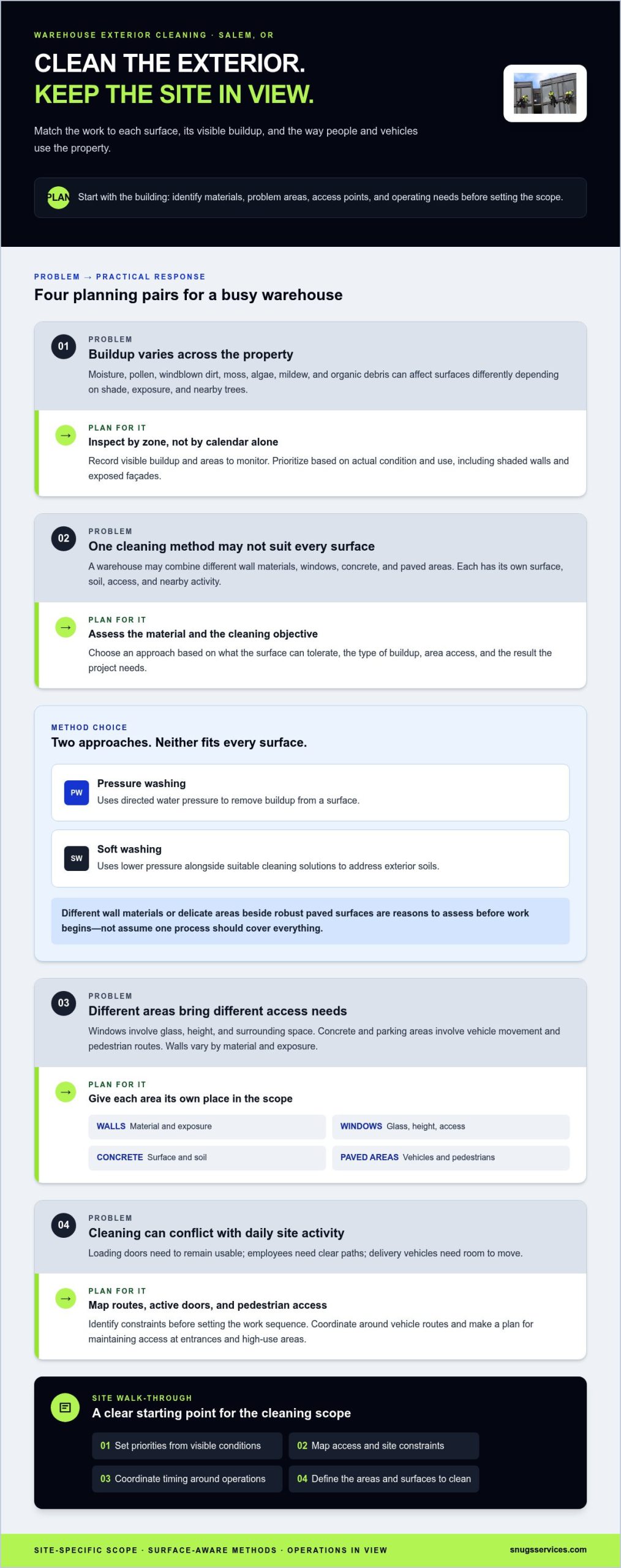
A warehouse manager needs the property to look clean without turning a busy workday into an obstacle course. Loading doors must remain usable, employees need clear paths, and delivery vehicles need room to move. Planning warehouse exterior cleaning Salem OR around the building’s activity and surfaces helps clarify what needs attention, which areas require coordination, and how to limit avoidable interruptions.
Salem’s Willamette Valley setting brings moisture, seasonal pollen, and organic debris that can settle on exposed building surfaces. Buildup varies across a warehouse: shaded walls may collect different residue than a sun-exposed façade, while entrances and paved areas see frequent foot and vehicle traffic. A site-specific plan accounts for those differences and prioritizes areas based on their condition and use, rather than assuming every exterior surface needs the same attention. A general overview of industrial cleaning processes illustrates how cleaning methods vary by context.
Salem warehouse cleaning works best when the plan reflects both the building’s conditions and the way people use the site.
What Salem’s climate can leave on warehouse exteriors
Moisture and nearby tree coverage can contribute to moss, algae, mildew, and organic debris on exterior surfaces. Seasonal pollen and windblown dirt add another visible layer, especially on windows, façades, and areas where residue settles. The amount and location of buildup depend on exposure, shade, and the surrounding property, so a calendar alone won’t show which zones need attention.
Grime and organic growth can make a warehouse look less cared for and add to routine appearance upkeep. During an inspection, distinguish areas with visible buildup from those that need monitoring. This gives managers a practical basis for defining the cleaning scope and deciding which areas to prioritize.
Which warehouse areas deserve an exterior inspection?
Walk the property by zone instead of treating the exterior as one continuous surface. Building material, shade, weather exposure, and daily traffic all affect what you’ll find and how much access coordination may be needed. Note high-use areas and constraints before setting the scope, including vehicle routes, doors that must stay in use, and pedestrian paths that need to remain accessible.
- Façades and walls: Look for visible dirt, algae, or moss, especially in shaded areas.
- Windows: Check for pollen, dust, and other residue that affects the building’s appearance.
- Entrances and walkways: Note buildup near employee and visitor access points.
- Loading zones: Identify active doors, delivery routes, and areas where work may need coordination.
- Paved areas: Inspect parking and travel surfaces for tracked-in dirt and debris.
This zone-by-zone review gives the cleaning plan a useful starting point. It helps match priorities to actual conditions, keep heavily used areas in view, and weigh site appearance alongside daily operations.
Warehouse Exterior Cleaning Methods for Salem Building Surfaces
Warehouse exterior cleaning covers selected building surfaces and surrounding outdoor areas, not a single treatment applied everywhere. A facility may need attention to wall panels, windows, concrete, or paved areas. Each has its own material, visible soil, access needs, and nearby activity. Define the surfaces to be cleaned and account for the conditions around them.
Surface assessment should guide method selection, not the assumption that one cleaning approach suits every part of a warehouse. That’s especially useful on large sites, where a wall, a window, and a loading area call for different considerations. For warehouse exterior cleaning Salem OR, connect the cleaning objective with the surface and practical conditions at the site.
How pressure washing and soft washing differ
Pressure washing uses directed water pressure to remove buildup from a surface. Soft washing uses lower pressure alongside suitable cleaning solutions to address exterior soils. Neither approach is right for every warehouse material or condition. The appropriate option depends on what the surface can tolerate, the type of buildup, access to the area, and the result the project needs to achieve.
This distinction matters when a building combines different wall materials or has delicate areas beside more robust paved surfaces. Identify those differences before work begins instead of assuming the same pressure or process should be used across the whole property.
Planning cleaning for windows, concrete, and building exteriors
Give windows, paved areas, and walls their own place in the plan. Window cleaning involves the glass and access, including height and the space around the building. Concrete and parking areas bring different considerations, such as vehicle movement and pedestrian routes. Wall surfaces vary by material and exposure, so base the plan on what’s actually present instead of treating every façade alike.
Before setting the work sequence, consider visible soil, surface type, height, access, and nearby operations. A busy loading zone may need coordination around vehicle routes, while an entrance needs a plan for maintaining access. High or difficult-to-reach areas also affect how the work is approached. OSHA’s workplace safety resources offer broader context for keeping worker safety in view during site activities.
- Windows: Consider height, access, and nearby employee or vehicle movement.
- Walls and façades: Identify the material, exposure, and visible buildup before selecting an approach.
- Concrete and parking areas: Account for traffic patterns and the extent of the area in scope.
Commercial window cleaning and parking-area cleaning can complement building washing when those surfaces are part of the property’s needs. Snugs Services provides exterior maintenance shaped around the site’s surfaces, access, and operating conditions. Explore commercial exterior cleaning services for Salem properties.
Will Warehouse Exterior Cleaning Disrupt Operations or Damage Surfaces?
Careful scoping and coordination can help limit avoidable interruptions while giving each surface the attention it needs. For warehouse exterior cleaning Salem OR, plan around active work zones and assess materials before selecting a cleaning approach. Don’t assume that every surface can tolerate the same pressure or treatment.
Clear access planning makes a commercial cleaning project smoother for crews, employees, and delivery drivers. Before work begins, map vehicle routes, loading doors, pedestrian entrances, and areas that need continued access. Share these priorities during planning so cleaning zones and timing can be organized around facility operations, not just the easiest route through the site.
How to coordinate cleaning around warehouse activity
Start with a practical site map. Mark delivery routes, employee entrances, vehicle movements, and busy areas where access needs to remain open. Identify which zones can be addressed independently and where work may need coordination with site activity. A clear scope helps everyone understand which areas are included and where crews will be working.
Share access restrictions, high-traffic periods, and operational priorities with the cleaning team before organizing the project. This context helps establish a workable sequence and reduce avoidable conflicts around docks, walkways, and building entrances.
| Area | Planning consideration |
|---|---|
| Active loading zones | Map truck routes and loading doors; coordinate work zones around access needs. |
| Pedestrian entrances | Keep employee and visitor routes in view when organizing the work area. |
| Windows | Consider access, height, nearby movement, and the condition of the glass. |
| Walls | Identify material, condition, shade, and visible buildup before choosing a method. |
| Paved areas | Account for vehicle and foot traffic when defining the cleaning area and sequence. |
How surface-aware planning helps protect the property
Cleaning decisions should reflect the surface’s material, condition, and type of buildup. Pressure washing may suit some areas, while another surface or cleaning objective may call for a different method. The goal isn’t to apply maximum pressure everywhere; it’s to select an approach that fits the task and building conditions.
During preparation, document sensitive areas, existing concerns, and access limitations. Note changes in wall materials, glass, tight corners, and locations close to active operations. This record helps shape a clear scope and keeps important site details visible as work is planned.
Include wash-water handling in the project plan. Oregon DEQ provides stormwater management information that offers context for planning around runoff. Keeping access, surfaces, and site conditions in view helps organize the project and reduce surprises.
How to Prepare a Salem Warehouse for Exterior Cleaning
A useful preparation process turns a broad cleaning request into a clear, workable scope. Before planning warehouse exterior cleaning Salem OR, walk the property, record what needs attention, and identify how crews can work around daily activity. This gives the cleaning team practical information about the building and helps the facility manager prioritize visible improvements without overlooking access needs.
Build a site walk-through checklist
Inspect the property zone by zone, including loading docks, walkways, windows, façades, and paved areas. Note surface types and where moss, algae, grime, pollen, or debris is visible. A brief written record, supported by location notes or photos for internal planning, can help distinguish a specific cleaning need from a general appearance concern.
- Surfaces: List the areas that need attention and note their material and condition.
- Visible buildup: Mark where moss, algae, grime, or debris appears, rather than describing the whole building as dirty.
- Access: Identify delivery routes, employee walkways, parking, and entrances that need to remain accessible.
- Priorities: Separate immediate appearance concerns from other exterior maintenance needs.
This makes the scope easier to discuss and grounds priorities in the property’s actual condition. For example, a manager may prioritize a customer-facing entrance while also recording buildup around less prominent walls for consideration in the wider plan.
Set the scope around the property’s operating schedule
Share the facility’s active periods, delivery patterns, and access restrictions as part of project planning. Identify areas that need continued access and note where vehicle or pedestrian movement may affect the work zone. Grouping related areas, such as one façade or a set of paved sections, can help organize the scope and clarify how the project fits around site activity.
Be specific about what should be included. Distinguish window cleaning from wall washing, for example, and identify which paved areas are part of the request. This avoids assumptions about the work and aligns the plan with the site’s priorities. For broader commercial context, see this guide to commercial pressure cleaning services.
Snugs Services provides commercial exterior maintenance for Salem properties, including pressure washing, window cleaning, and parking-area services. Plan your Salem warehouse cleaning project with Snugs Services by starting with the site details that matter most.
Warehouse Exterior Cleaning in Salem, OR: Work with Snugs Services
A warehouse exterior has several jobs to do: present a professional face, support access, and keep outdoor areas in good order. Snugs Services is a family-owned regional exterior maintenance provider serving Salem. The company has served customers since 1995, bringing local experience to commercial property upkeep.
For warehouse exterior cleaning Salem OR, the work should match the facility’s actual needs. A warehouse with visible grime on its walls may need a different scope from one where windows or paved areas are the main concern. Snugs Services provides commercial pressure washing, window cleaning, and parking-area maintenance, helping property managers plan around the surfaces and priorities that matter instead of treating every service as automatically necessary.
A commercial scope shaped around the warehouse
A clear project scope starts with the building and how the property operates. Identify wall surfaces requiring attention, window access needs, paved areas included in the work, and operating conditions that affect site access. This keeps the plan focused: pressure washing can address relevant exterior surfaces, window cleaning can address glass, and parking-area services can support upkeep where paved spaces are part of the property plan.
These services don’t have to be bundled together. A facility can prioritize one area first and include related exterior maintenance only where it fits the property’s condition and goals. If parking areas are part of your plan, Snugs Services’ parking lot sweeping guide offers additional context for paved-area upkeep.
Sharing site details up front helps shape the project around real constraints, such as active loading zones, pedestrian routes, and areas with limited access. This gives the project a practical basis for discussing scope, priorities, and how exterior maintenance fits the facility.
Plan your Salem warehouse exterior cleaning project
To get started, gather a few practical details: the property’s Salem-area location, the surfaces you want addressed, visible buildup, and access considerations. Note which areas matter most to the property’s appearance and which routes or entrances need to stay in use. Clear information gives the project scope a strong starting point without assuming every warehouse needs the same approach.
Salem-area property managers can request a tailored estimate from Snugs Services for commercial exterior cleaning. Share your priorities, whether they include building surfaces, windows, paved areas, or a focused combination, and outline site conditions that can guide the work.
Request a warehouse exterior cleaning estimate and describe your Salem property’s priorities.
Set Your Warehouse Up for Easier Exterior Upkeep
A cleaning project can also give your team a clearer starting point for future property decisions. Note which areas matter most to staff, visitors, and day-to-day site use, then keep that list as a reference when exterior needs change. This helps ensure the next warehouse exterior cleaning Salem OR project begins with clear priorities rather than a one-size-fits-all scope.
Start with the result you want: a sharper entrance, cleaner windows, refreshed walls, or tidier paved areas. Share that goal along with access constraints to give the project direction and keep the work focused on what matters most to your property.
Snugs Services can shape an exterior maintenance plan around your warehouse’s surfaces and operating needs. Serving communities across the region, including Portland, Gresham, Salem, Eugene, Vancouver, WA, Beaverton, Tualatin, Tigard, Hillsboro, Longview, Richfield, Battle Ground, Camas, Wilsonville, and Keizer, the company provides exterior cleaning and maintenance for commercial properties. Request a warehouse exterior cleaning estimate and share your Salem property’s priorities.
Frequently Asked Questions
How often should a warehouse in Salem, OR, have its exterior cleaned?
There’s no single cleaning interval that fits every warehouse. Base a warehouse exterior cleaning Salem OR plan on what inspections reveal: shaded walls near trees may show organic growth sooner than open, sun-exposed sections, while busy entrances may collect grime from daily traffic. Keep a simple record of inspected areas and visible changes after seasonal pollen or wet weather. That history helps you set priorities based on observed conditions, not guesswork.
Can pressure washing damage warehouse siding or concrete?
Yes. A poorly matched method can harm a surface, so pressure washing shouldn’t be treated as suitable for every exterior. Before work is scoped, note the material and condition, including loose coatings, cracks, or areas that appear especially sensitive. Share those details so the cleaning approach can reflect the surface and desired result. A wall with peeling finish, for example, needs a different assessment than sound concrete paving.
What does warehouse exterior cleaning typically include?
The scope can cover selected outdoor areas, such as façades, windows, entrances, loading areas, sidewalks, or paved sections. Ask for the work to be described by zone so it’s clear which walls, window elevations, or parking areas are included. Exterior maintenance is separate from interior janitorial work. A warehouse might prioritize the customer-facing entrance and office windows while leaving other areas for a later maintenance decision.
How can a warehouse stay accessible during exterior cleaning?
Share a site map or marked-up layout showing entrances, delivery routes, and doors that need continued access. The facility team can flag recurring delivery patterns and employee movement, then communicate changes in activity during planning. For example, identifying a dock used for scheduled deliveries helps distinguish it from a lower-traffic area. Coordinate work zones and timing with the facility’s operating needs and agreed scope.
Does Salem’s climate make warehouse exterior cleaning more important?
Salem’s moisture, tree coverage, and seasonal pollen can contribute to visible moss, algae, mildew, dirt, and debris outdoors. Conditions vary across a property: a sheltered elevation may stay damp while an exposed wall collects more airborne dust or pollen. Compare areas during routine property checks and note where buildup returns. This gives managers a practical basis for deciding which surfaces need attention, rather than applying the same maintenance plan to every warehouse.
Can warehouse windows and paved areas be included in an exterior cleaning plan?
Yes, windows and paved areas can be included when they’re part of the project scope. Treat them as distinct work zones: window planning may depend on height and access, while parking or paved areas require consideration of vehicle and pedestrian movement. Specify the windows or pavement sections you want addressed, and identify nearby entrances or active routes. That helps keep the scope clear and connects the work to your property’s priorities.
Recent Comments