
That thick layer of Pacific Northwest mud caked onto your excavator isn’t just a badge of a hard day’s work. It’s actually a thermal blanket that’s slowly cooking your engine and hiding expensive hydraulic leaks from your mechanics. You already know that keeping your fleet running in the rainy Portland and Vancouver climate is a constant battle against the elements. It’s exhausting to worry about unexpected downtime or environmental fines when you’re just trying to finish a project on schedule. Professional heavy equipment cleaning services offer more than just a polished look for the job site; they provide a vital mechanical reset that restores the functional integrity of your most valuable assets.
In this 2026 maintenance guide, you’ll discover how specialized washing prevents costly overheating and makes mechanical inspections a breeze. We’ll show you how to stay fully compliant with local wastewater regulations, including Portland City Code 17.39 and Vancouver’s updated water ordinances. From extending the lifespan of your machines to maintaining a professional brand image that commands respect, this article covers the essential strategies for keeping your fleet in peak condition with total peace of mind.
Key Takeaways
- Learn why removing caked-on mud and grease is a mechanical necessity that prevents engine overheating and costly hydraulic failures.
- Discover the specific environmental regulations in Portland and Vancouver that mandate professional wastewater recovery to avoid heavy fines.
- See how professional heavy equipment cleaning services use specialized steam and biodegradable degreasers to tackle the “sticky” clay mud unique to the Pacific Northwest.
- Understand how mobile on-site cleaning minimizes your equipment downtime while ensuring your fleet maintains a professional brand image on every job site.
- Find out how a regular cleaning schedule makes mechanical inspections faster and safer by revealing hidden cracks or leaks before they cause a breakdown.
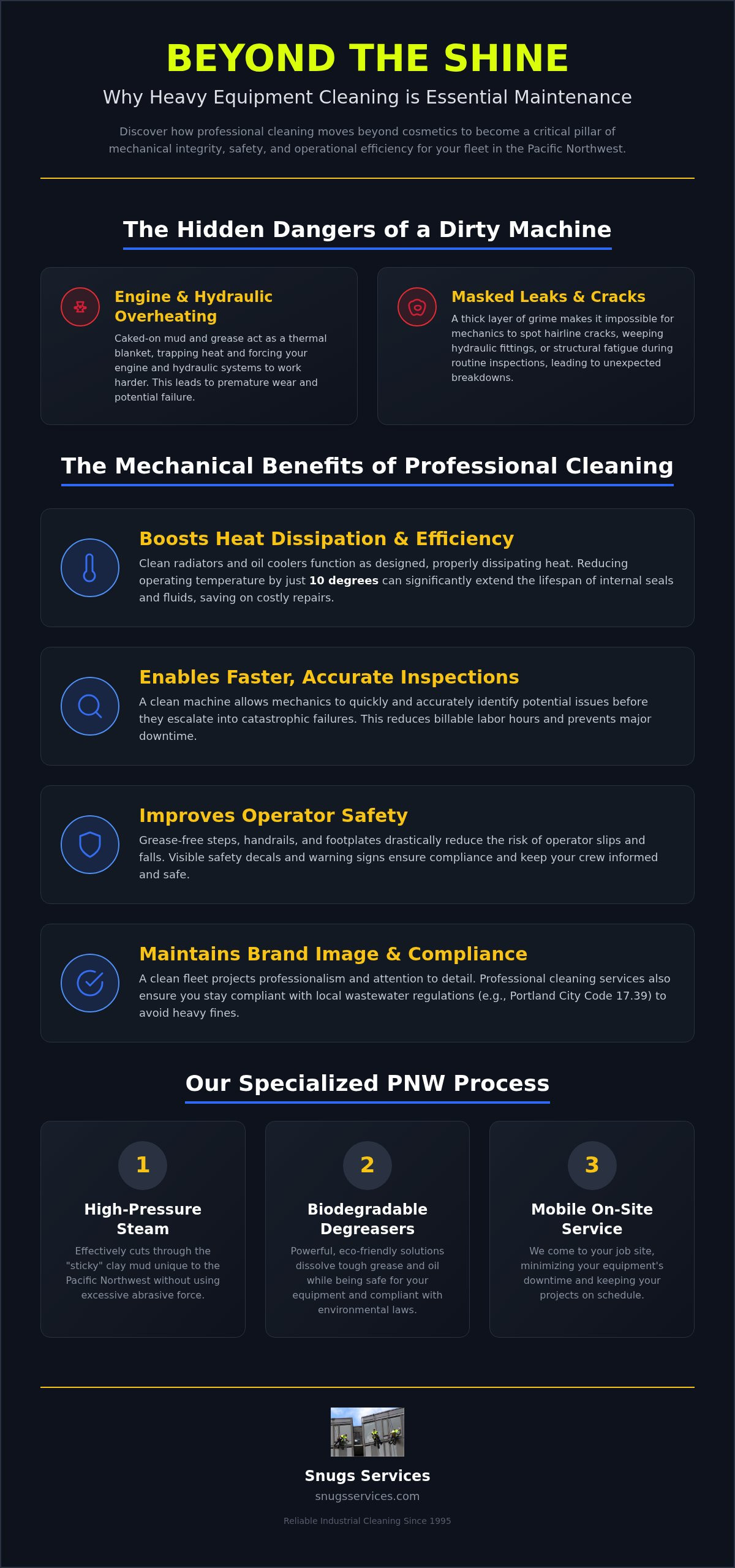
Beyond the Shine: Why Heavy Equipment Cleaning is Essential Maintenance
Many fleet managers view washing as a cosmetic luxury, but in reality, it’s a fundamental pillar of operational maintenance. Professional heavy equipment cleaning services focus on the strategic removal of abrasive soils, thick grease, and industrial debris that accumulate during daily operations. When you strip away the layers of caked-on mud, you’re not just revealing the paint; you’re ensuring the functional integrity of your most expensive assets. This process is about protecting your investment from the ground up.
Heat Dissipation and Mechanical Efficiency
In the Pacific Northwest, mud acts as a powerful insulator that traps heat exactly where you don’t want it. When radiators and oil coolers are choked with grime, your engine and hydraulic systems have to work twice as hard to maintain safe temperatures. This buildup also infiltrates moving parts like pins, bushings, and tracks, acting like sandpaper that grinds down metal components. Reducing a machine’s operating temperature by just 10 degrees through consistent cleaning can significantly extend the lifespan of its internal seals and fluids.
Facilitating Faster and More Accurate Inspections
It’s nearly impossible for a mechanic to spot a hairline crack in a boom or a weeping hydraulic fitting when it’s buried under inches of grease. Utilizing heavy equipment cleaning services clears the way for thorough inspections, allowing your team to identify structural fatigue before it turns into a catastrophic failure. Mechanics work faster and more accurately on clean machines, which directly reduces your billable labor hours. Additionally, keeping serial numbers, safety decals, and warning signs visible ensures your fleet stays compliant and your operators stay informed about weight limits and safety zones.
A clean machine is also a safer machine. When steps, handrails, and footplates are free of slippery grease and clay, the risk of operator injury from slips and falls drops significantly. There’s a clear connection between equipment condition and crew morale. Operators take more pride in their work when they’re handed the keys to a well-maintained machine. A clean fleet projects a professional image that tells your clients you’re a detail-oriented expert who values reliability and safety on every job site.
Specialized Cleaning for Every Machine: From Excavators to Agricultural Fleet
Every piece of machinery in your fleet has a unique “grime profile” based on its specific environment. A bulldozer working on a Portland construction site faces inorganic grit and heavy clay, while a tractor in a Vancouver field deals with organic acids and moisture-trapping debris. Professional heavy equipment cleaning services recognize that a one-size-fits-all approach doesn’t work. We tailor our methods to protect the specific components of your gear, whether it’s heavy-duty “yellow iron” or high-tech agricultural machinery packed with sensitive electronics.
Earthmoving and Construction Equipment
Construction machinery like excavators, skid steers, and bulldozers requires a deep focus on the undercarriage. The tracks are often the most expensive components to maintain; when they’re packed with abrasive mud, the rollers and idlers wear out prematurely. We also specialize in the difficult task of removing hardened concrete from mixers and pump trucks, which requires a careful balance of pressure and precision to avoid damaging the paint or metal. For specialized gear like pavers, industrial grinders, and shredders, we focus on degreasing the booms, buckets, and internal chutes. This ensures every pivot point remains fluid and every weld is visible for inspection. Following strict environmental regulations ensures that the grease and heavy metals removed during this process are handled responsibly and don’t contaminate local soil.
Agricultural and Farming Machinery
Farming equipment presents a different set of challenges. Modern combines and tractors are packed with advanced sensors and GPS technology that can be easily damaged by high-pressure water if handled by an amateur. Our approach for agricultural tech is more delicate, focusing on removing organic debris that can lead to rust or even fire hazards during the heat of harvest. This cleaning is also vital for biosecurity, as it prevents the transfer of pests, fungi, or invasive seeds between different properties. Whether you’re transitioning between crops or prepping for winter storage, a thorough wash protects your electronics and your harvest. If your diverse fleet needs a professional touch that understands these technical differences, the team at Snugs Services is ready to help you maintain your equipment’s aesthetic and functional integrity.
The Process of Professional Equipment Degreasing and Washing
A high-quality wash is far more than just pointing a pressure wand at a bulldozer. Professional heavy equipment cleaning services utilize a four-stage sequence designed to protect sensitive components while stripping away stubborn industrial grime. This starts with a thorough pre-soak to loosen “sticky” clay and abrasive soils. Next, we apply industrial-grade, biodegradable degreasers to break down carbon buildup and oil. A high-pressure hot water rinse follows to emulsify the grease, and we conclude with a meticulous detail of safety decals and glass. For sensitive areas like cabs and electronic sensor arrays, we employ “soft washing” techniques that use lower pressure to prevent water intrusion and electrical shorts.
Hot Water vs. Cold Water Pressure Washing
Using cold water on heavy grease is like trying to wash butter off a plate with ice water; it just moves the mess around. Hot water, often reaching steam temperatures, is non-negotiable for professional-grade results. It emulsifies oil and grease on contact, significantly reducing the time your machine sits idle. Because hot water systems work more efficiently, they use less fuel and water per machine, providing a faster mechanical reset for your fleet.
- Hot Water (Steam): Rapidly breaks down molecular bonds in grease; requires fewer chemicals; ensures significantly faster cleaning times.
- Cold Water: Effective for basic mud removal; struggles with heavy oil; often requires more aggressive chemical use to compensate for lack of heat.
Environmental Compliance and Wastewater Management
In the Pacific Northwest, how you handle wash water is just as important as how you clean the machine. Local regulations, such as Portland City Code 17.39 and Vancouver’s Water Resources Protection Ordinance, strictly prohibit discharging wash water into stormwater systems. This water often contains heavy metals, oils, and chemical residues that are hazardous to our local waterways. All mobile washing services must have a Discharge Authorization to operate legally in these areas.
At Snugs, we manage this responsibility by utilizing professional wastewater recovery systems. We capture the runoff at the source and ensure it is disposed of in the sanitary sewer system or a dedicated treatment facility. By using eco-friendly, biodegradable detergents, we protect the environment while maintaining the high standards of cleanliness your equipment requires. This careful management removes the risk of heavy environmental fines from your plate, allowing you to focus on your core operations with total peace of mind.
Handling PNW Conditions: Battling Mud, Moss, and Road Salts
Operating a fleet in the Pacific Northwest requires a different strategy than in drier climates. Our frequent rain and high humidity don’t just wash your machines; they create a breeding ground for moss and algae on equipment left idle between projects. More importantly, the soil in Oregon and Washington often has a high clay content. This creates a “sticky” mud that adheres to tracks and buckets like wet cement, becoming incredibly difficult to remove once it dries. Specialized heavy equipment cleaning services are designed to tackle these regional challenges before they cause permanent damage or mechanical failure.
Corrosion Prevention in a Wet Climate
Moisture is the primary catalyst for rust, but road salts and modern de-icing agents act as a powerful accelerant. When these chemicals mix with PNW rain, they create a highly corrosive brine that eats through protective coatings and infiltrates sensitive electrical connectors. If your machines are operating in winter conditions or traveling on treated metro roads, we recommend increasing your washing frequency to at least once every two weeks. Keeping your staging areas and staging lots clear of these chemicals is also vital for long-term health. You can learn more about maintaining a clean site in our guide to Professional Parking Lot Sweeping in Portland & Vancouver.
Local Service Areas: From Hillsboro to Camas
Logistics matter when you’re managing a busy construction or agricultural schedule. Whether your fleet is stationed in the growing tech hubs of Hillsboro or the industrial corridors of Camas, having a neighborly, local provider is a massive advantage. We understand the specific needs of logistics centers in Vancouver and Gresham, where high-traffic turnover requires fast and reliable service to minimize downtime. Snugs has been a part of these communities since 1995, providing the localized expertise needed to keep regional businesses running smoothly. We take the hazardous and tedious task of degreasing off your hands so your crew can stay focused on the project at hand. If you’re ready to restore the aesthetic and functional integrity of your fleet, contact Snugs Services to book your mobile wash today.
The Snugs Standard: Reliable Industrial Cleaning Since 1995
Managing a fleet is a complex balancing act of logistics, safety, and budgeting. You don’t have time to worry about whether your machines are too dirty for a mechanic to inspect or if a layer of mud is hiding a critical leak. Since 1995, Snugs has been the reliable partner that takes this hazardous and tedious “dirty work” off your plate. Our professional heavy equipment cleaning services are designed to restore the aesthetic and functional integrity of your machinery without requiring you to haul gear to a wash bay. We bring industrial-grade capability directly to your job site or staging lot.
Our mobile on-site service is a cornerstone of how we support local businesses. We understand that every hour a machine spends traveling to a cleaning facility is an hour of lost productivity. By performing the wash where your equipment sits, we minimize downtime and keep your projects moving forward. This proactive approach transforms cleaning from a reactive chore into a strategic maintenance schedule that extends the life of your fleet and keeps your crew safe. For those managing mixed fleets that include light-duty vehicles in other regions, specialized services such as mobile car detailing glendale az offer a similar level of on-site convenience and professional care.
Why Fleet Managers Trust Snugs
There is a unique sense of relief that comes from working with a family-owned business that has survived and thrived in the Pacific Northwest for over 30 years. We pair the pride of a local craftsman with the efficiency of a modern service provider. Our team is punctual, thorough, and deeply familiar with the environmental regulations of Portland and Vancouver. This neighborly trust extends across our entire range of industrial offerings, including our Expert Truck Washing Services in Portland & Vancouver, ensuring your entire fleet reflects your professional brand image.
Ready to Schedule Your Equipment Wash?
Getting your fleet back to peak condition is a straightforward process. Whether you need a quote for a single excavator or a comprehensive maintenance plan for a massive agricultural fleet, our team provides clear, direct communication to get the job done right. We also understand that work in the PNW can be unpredictable. We offer responsive cleaning after major storms or accidental spills, helping you maintain a safe and compliant work environment. Don’t let grime dictate your machine’s lifespan. Contact Snugs Services for a heavy equipment cleaning quote and experience the peace of mind that comes with a well-maintained environment.
Protecting Your Fleet’s Future in the Pacific Northwest
Keeping your machinery caked in Pacific Northwest mud is a gamble you don’t need to take. We’ve explored how professional heavy equipment cleaning services act as a vital mechanical reset; preventing engine overheating, simplifying inspections, and ensuring your fleet stays fully compliant with local wastewater laws. Whether you’re battling the sticky clay of Gresham or the corrosive road salts of Hillsboro, a proactive maintenance schedule is the best way to protect your primary assets and your professional brand image.
Since 1995, our family owned team has provided the specialized hot water degreasing systems needed to handle the toughest industrial grime across the entire Portland and Vancouver metro area. We take the hazardous and tedious labor off your plate so you can focus on finishing your projects on time and under budget. It’s about more than just a clean machine; it’s about the peace of mind that comes with a well maintained environment. Get a Professional Heavy Equipment Cleaning Quote from Snugs today and let us help you restore the functional integrity of your fleet. We look forward to being your reliable partner on the job site.
Frequently Asked Questions
How often should I have my heavy equipment professionally cleaned?
You should schedule heavy equipment cleaning services based on your machine’s specific operating environment. For equipment working in heavy PNW clay or mud, a weekly wash is ideal to prevent buildup that causes engine overheating. If your fleet operates in less abrasive conditions, a bi-weekly or monthly professional cleaning is usually sufficient for maintenance. Regular washing ensures that your mechanics can spot issues like hydraulic leaks or structural cracks before they lead to a breakdown.
Can high-pressure washing damage my machines hydraulics or electronics?
High-pressure washing is perfectly safe for machinery when handled by trained experts who understand technical vulnerabilities. We utilize specialized soft washing techniques for sensitive areas like operator cabs, electronic sensor arrays, and delicate wiring harnesses. By adjusting the pressure and spray angle, we remove stubborn grime without forcing water into seals or electrical components. This careful approach protects your machine’s hydraulic systems while ensuring every inch of the chassis is thoroughly degreased and cleaned.
Do you provide on-site heavy equipment cleaning services in Vancouver, WA?
Yes, Snugs Services provides comprehensive mobile on-site cleaning throughout Vancouver, WA, and the entire Portland metro area. We bring our specialized equipment directly to your job site, staging lot, or farm to minimize your machine’s downtime. Our local service area includes Camas, Battle Ground, and Ridgefield, as well as Oregon locations like Hillsboro and Gresham. This logistical advantage means you don’t have to waste fuel or labor hours hauling heavy machinery to a stationary wash bay.
What kind of degreasers do you use for heavy industrial grease?
We utilize industrial-grade, biodegradable degreasers that are specifically formulated to break down heavy carbon buildup and stubborn oil. These professional-strength solutions emulsify grease on contact, making it much easier to rinse away without damaging your machine’s paint or protective coatings. Using eco-friendly detergents is a core part of our commitment to protecting local PNW waterways. These agents are tough enough for the dirtiest bulldozers but safe enough to meet strict local and federal environmental standards.
How long does a typical excavator or bulldozer wash take?
A professional wash for a mid-sized excavator or bulldozer generally takes between one and three hours to complete. The exact timing depends on the level of mud buildup and the amount of grease that needs to be emulsified. While a quick rinse might seem faster, our detailed process involves a pre-soak, degreasing, and a high-pressure hot water rinse. This thoroughness ensures your equipment is truly clean and ready for immediate mechanical inspection or deployment to the next job.
Do you handle wastewater recovery for environmental compliance?
Wastewater recovery is a standard part of our professional service to ensure full environmental compliance. In cities like Portland and Vancouver, it’s illegal to allow wash water containing oils or heavy metals to enter the storm drain system. We utilize specialized capture systems to collect runoff at the source. This water is then safely transported and disposed of according to local regulations, protecting you from significant environmental fines and keeping our local rivers clean and safe.
Is hot water pressure washing better than cold water for equipment?
Hot water is significantly more effective than cold water for removing the heavy grease and oils found on industrial machinery. Heat acts as a catalyst that breaks the molecular bonds in grease, allowing it to be emulsified and rinsed away quickly. Cold water often requires more aggressive chemicals and longer labor hours to achieve the same result. By using hot water, we provide a faster, more efficient cleaning process that uses less water and provides a superior mechanical reset.
Can professional cleaning help my equipment pass safety inspections?
Professional cleaning is one of the most effective ways to prepare your fleet for safety inspections. Layers of grease and PNW mud often hide structural fatigue, hairline cracks in the boom, or weeping hydraulic fittings that an inspector would flag. A clean machine also ensures that safety decals, weight limit signs, and serial numbers are perfectly visible. This transparency demonstrates to inspectors and clients alike that you maintain a high standard of safety and professional reliability.
Recent Comments