
That thick layer of moss on a local headstone isn’t just a sign of age; it’s a living organism slowly hiding the history it covers. In our damp climate, professional monument cleaning Portland residents trust is about more than just aesthetics. It is a vital preservation tactic to stop biological growth before it causes permanent structural damage. You want to honor these landmarks and keep them legible, but the fear of causing erosion with a high-pressure hose often stops property owners in their tracks. It’s a valid concern because improper cleaning can do more harm than decades of rain.
This guide provides the expert insights you need to safely restore stone surfaces and protect them for years to come. We will show you how to eliminate dark biological staining and lichen while ensuring the underlying masonry remains perfectly intact. You’ll learn about the “do no harm” philosophy, the benefits of specialized soft washing, and how to provide long term protection against our region’s relentless tree canopy cover. Let’s look at how to bring these local treasures back to life with the care and precision they deserve.
Key Takeaways
- Understand how Portland’s excessive annual rainfall creates a “bio-incubator” that accelerates the decay of stone monuments and headstones.
- Discover why traditional high-pressure washing is dangerous for historic masonry and how it can actually invite faster moss regrowth.
- Learn to perform a professional “Tap Test” to check for internal stone damage and delamination before beginning any monument cleaning Portland work.
- Explore the specialized “Soft Wash” protocol designed to safely eliminate biofilms while preserving the delicate texture of aged stone.
- Gain peace of mind by identifying the specific signs of friability that indicate when a monument requires expert restorative care.
Understanding Monument Cleaning in Portland’s Unique Climate
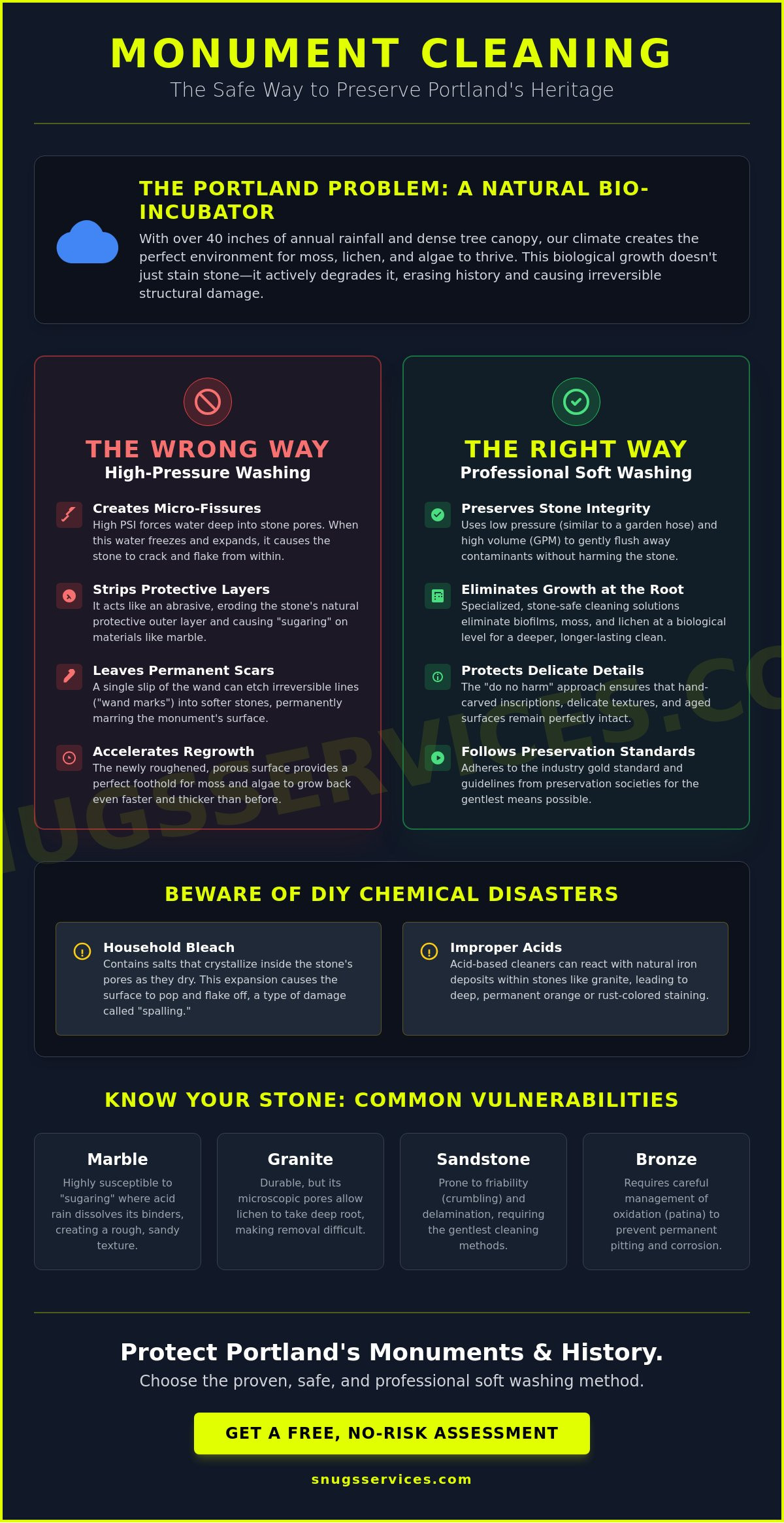
Monument cleaning is the technical, restorative removal of biological growth and environmental pollutants that settle on stone over time. In Portland, this task is a constant uphill battle. With over 40 inches of annual rainfall, our city acts as a literal bio-incubator for moss, algae, and lichen. This isn’t just a matter of keeping things tidy; it’s a vital part of preserving outdoor art and local history before the Northwest elements reclaim these structures entirely.
While many people associate this work only with cemeteries, professional monument cleaning Portland services cover a much broader range of local assets. This includes commemorative headstones, civic statues in our public parks, and the heavy stone signage used by local businesses and industrial parks. A common issue we see is the “disappearing name” phenomenon. This happens when a thick organic film fills the depth of hand-carved inscriptions. Over years of neglect, once-proud markers become unreadable, turning a significant landmark into an anonymous block of stained stone.
The Role of PNW Tree Canopy in Stone Staining
Our city’s lush greenery is a hallmark of the Northwest, but it’s also a primary source of stone decay. Tannins from falling oak leaves and evergreen needles leach onto surfaces, leaving behind stubborn brown stains that rain won’t wash away. In heavily wooded areas like Lone Fir Cemetery, “splashback” from the damp soil carries minerals and microbes onto the base of monuments during heavy storms. Because shaded stone stays damp for days at a time, biological colonies thrive here far more aggressively than they do in open, sunny locations.
Types of Stone Common in Portland Monuments
Every material reacts differently to our environment and requires a specific touch. Marble is perhaps the most delicate stone we encounter. It’s highly susceptible to “sugaring,” a process where acid rain dissolves the binder between grains and leaves the surface feeling like rough sandpaper. Granite is much more durable, but its microscopic pores allow lichen to take root deeply, making it difficult to clean without the right equipment. We also frequently work with sandstone, which is prone to friability or crumbling, and bronze statues that require careful management of oxidation to prevent permanent pitting.
Why Standard Pressure Washing Destroys Historic Monuments
It’s tempting to think a high-pressure blast is the fastest way to scrub away decades of grime. However, high PSI (pounds per square inch) is the primary enemy of historic masonry. When you use intense pressure on aged stone, you aren’t just removing dirt; you’re often removing the stone’s protective outer layer. Professional monument cleaning Portland experts focus on GPM (gallons per minute) rather than raw pressure. High volume at low pressure flushes away debris safely, whereas high pressure acts like a blunt instrument against delicate surfaces.
The most hidden danger of pressure washing is the creation of micro-fissures. These tiny, invisible cracks occur when water is forced into the stone’s pores under extreme stress. Once these fissures exist, they act as perfect traps for water and organic spores. In our freezing winter months, that trapped water expands, causing the stone to flake or crack further. This actually invites more moss and lichen to take root than was there before the cleaning. Beyond structural damage, a single slip with a high-pressure wand can leave permanent “wand marks” or scars on soft stones like marble and sandstone. These marks are nearly impossible to remove and forever mar the beauty of the monument.
To avoid these risks, the industry gold standard has shifted toward soft washing. If you are looking for a safe way to restore a site, choosing a professional monument cleaning service ensures the work follows the gentlest means possible to preserve the stone’s integrity.
The Dangers of DIY Chemical Cleaners
Household bleach is a common but disastrous choice for monument care. Bleach contains salts that can stay trapped inside the stone’s pores. As these salts dry, they form crystals that expand and cause the stone to pop or “spall” from the inside out. Additionally, using improper acid-based cleaners on granite can lead to permanent orange staining as the chemicals react with iron deposits in the stone. We also have to consider our local environment. Harsh chemical runoff can easily enter Portland’s sensitive storm drains and soil, harming the very landscapes we want to protect.
The Science of Biological Solutions
Modern preservation relies on pH-neutral biological cleaners that work slowly and safely. These solutions don’t just bleach the surface; they penetrate the stone to kill the root systems of lichen and algae. This creates a “clean and protect” cycle where the stone continues to brighten over several weeks as the organic matter dies and washes away naturally with the rain. Soft washing is a low-pressure application of eco-friendly surfactants that eliminates biological growth without stressing the underlying masonry.
The Anatomy of Portland Monument Decay: Moss, Lichen, and Biofilms
Portland’s landmarks face a constant assault from a biological trio that thrives in our wet climate. While it might look like simple dirt, the dark staining on local stone is usually a living colony. Effective monument cleaning Portland requires identifying which of these organisms is present to treat them correctly without damaging the substrate. Each one attacks the stone in a different way, and understanding these mechanisms is the first step toward a successful restoration.
Moss is the most visible offender. It acts like a thick, green sponge, holding water directly against the stone’s surface for months at a time. This constant dampness leads to a destructive freeze-thaw cycle. When temperatures drop below freezing, the trapped moisture expands, creating internal pressure that eventually causes the stone to flake or split. Lichen is even more aggressive. Unlike moss, which sits on the surface, lichen uses root-like structures called hyphae to anchor itself deep into the stone’s pores. Finally, the black, “sooty” look common on many local markers is usually a biofilm. This is a complex community of bacteria and fungi that creates a sticky layer, trapping dirt and environmental pollutants.
Why Lichen is the #1 Threat to Portland Inscriptions
Lichen is a unique partnership between fungi and algae that allows it to survive in harsh conditions. It doesn’t just sit on the stone; it produces oxalic acid as a byproduct of its growth. This acid chemically dissolves the minerals in stones like marble and limestone, slowly eating away at the fine lines of an inscription. You should never try to pluck or scrape dry lichen off a monument. Because the roots are fused with the material, pulling it off often takes a layer of the original stone with it. Following the “do no harm” principles advocated by the Cemetery Conservators for United Standards is essential to prevent this permanent loss of history.
Identifying Environmental Pollutants in the City
Biological growth isn’t the only concern in an urban setting. Monuments near high-traffic Portland corridors often suffer from heavy carbon and soot buildup from vehicle exhaust. This creates a greasy, dark film that obscures the stone’s natural color. Bird guano is another serious issue; it’s highly acidic and can cause irreversible pitting on bronze statues and limestone markers if left untreated. We also see the impact of graffiti in public spaces. This requires an urgent response with specialized removal techniques to ensure the ink doesn’t “ghost” or leave a permanent shadow deep within the stone’s grain.
Professional Evaluation: How to Assess a Monument’s Cleaning Needs
Before you begin any monument cleaning Portland project, you must perform a thorough physical assessment. You don’t want to apply even the gentlest cleaner to a stone that’s already structurally compromised. Taking ten minutes to evaluate the stability of the masonry can save a piece of history from accidental destruction. This process moves beyond just looking at the surface; it requires a hands-on approach to understand what’s happening beneath the grime.
Start with the “Tap Test.” Use your knuckles or a small wooden mallet to gently tap across different areas of the stone. Listen closely for a hollow, drum-like sound. A hollow thud indicates delamination, where the outer surface of the stone has separated from the core. If you hear this, stop immediately. Any cleaning, no matter how careful, could cause that outer layer to flake off. Next, check for friability by rubbing a finger across a non-carved area. If the stone crumbles or leaves sand-like grit on your hand, it’s too fragile for standard maintenance and needs expert stabilization.
You also need to identify the biological load. Surface algae often looks like a thin green film, while deep-seated lichen appears as crusty, grey or orange patches that seem fused to the masonry. Documenting the “before” state is your final step. Take high-resolution photos from multiple angles, specifically focusing on existing cracks or eroded inscriptions. These records are critical for insurance purposes and help historians track the stone’s condition over several decades.
Setting Realistic Expectations for Restoration
It’s important to understand that some 150-year-old stains may never fully disappear. If a shadow remains after a professional treatment, leave it alone. Attempting to reach “perfect” white or grey often requires aggressive methods that risk the stone’s integrity. We advocate for a “slow clean” philosophy. High-quality biological solutions continue to work long after the initial application, and the best results often take two to four weeks to appear as the weather helps rinse away dead spores. Consistent, once-a-year cleaning is always better for the stone than a once-a-decade heavy scouring.
When to Call a Professional vs. DIY
We generally recommend the 1950 Rule: if a monument was placed before 1950, it should almost always be handled by experts. Older stones have endured decades of acid rain and internal stress that make them unpredictable. Safety is another major factor. Cleaning large, unstable statues or leaning headstones is physically dangerous. If a marker is tilted or loose at the base, the weight of the stone can cause it to fall during the cleaning process. You can learn more about these safety protocols in our guide to Expert Pressure Washing in Portland. If you aren’t sure about the stability of a local landmark, don’t take the risk.
Ready to restore a piece of local history safely? Contact our team today for a professional monument cleaning evaluation and protect your property’s legacy.
Snugs Services: Specialized Monument & Sign Cleaning in Portland
Snugs Services has been a fixture in the Portland and Vancouver metro area since 1995. With over 30 years of hands-on experience, we understand that every stone tells a story that deserves protection. Our team treats every project with the pride of a local craftsman while maintaining the efficiency and safety standards of a modern industrial provider. This commitment to quality has earned us a 5.0 overall rating on Angi, reflecting the trust we’ve built with our neighbors over the decades. Whether you’re looking for the specialized monument cleaning Portland families rely on for private memorials or you need a large-scale commercial restoration, we have the expertise to get the job done right. We take the physical labor and the technical stress off your plate, leaving you with a result that honors the history of the site.
Our specialized “Soft Wash” protocol is the cornerstone of our preservation work. We don’t rely on damaging high pressure that can scar historic masonry or erode delicate inscriptions. Instead, we use low-pressure systems and eco-friendly solutions to gently lift away biological growth and urban pollutants. This approach ensures that delicate carvings and aged surfaces remain intact for future generations. We call this the “Snugs Difference.” It’s a combination of neighborly care, industrial-grade equipment, and comprehensive insurance that gives you total peace of mind. No task is too complex for our detail-oriented team, from cleaning a single headstone to maintaining a sprawling industrial park.
Commercial and Institutional Monument Solutions
For local businesses, first impressions start at the property line. We help maintain your corporate curb appeal through professional monument sign cleaning that keeps your branding clear and professional. Our services extend to universities and municipalities, where we keep public statues, pillars, and commemorative plaques looking their best for the community. If your property has been targeted by vandals, our graffiti removal experts use specialized methods that protect the underlying historic stone without leaving unsightly “ghosting” marks or chemical shadows. We understand that the monument cleaning Portland businesses require must be thorough yet non-disruptive, and we work efficiently to restore the aesthetic integrity of your primary property.
Advanced Tech: Drone Pressure Washing for Large Monuments
Reaching the top of a massive statue or a high-rise pillar used to require expensive scaffolding or dangerous ladder work. We’ve changed that by introducing drone pressure washing to our service list. This advanced technology allows us to clean high-access areas with incredible precision while keeping our technicians safely on the ground. Snugs uses drones for high-rise monument cleaning to ensure safety and precision. By removing the need for heavy equipment or lifts on the lawn, we also protect the sensitive landscaping and soil surrounding your monuments. It’s a modern solution that reflects our commitment to using the best tools available for our community, ensuring every project is completed with the highest level of care.
Protect Your Legacy with Expert Care
Preserving Portland’s history requires more than just a bucket of water and a brush. It demands a technical understanding of stone types and the specific biological threats found in the Pacific Northwest. You now know that standard pressure washing often causes irreversible damage, making specialized soft washing the only safe choice for historic masonry. By identifying the specific needs of your monument through careful professional evaluation, you ensure that inscriptions remain legible for future generations.
When you need reliable monument cleaning Portland experts, experience matters. Snugs Services has been serving the Portland and Vancouver metro area since 1995. We combine specialized Soft Wash technology with industrial-grade safety standards to deliver visual results that restore both beauty and structural integrity. Our team is fully insured for commercial and historic projects, taking the physical burden off your shoulders while providing the peace of mind you deserve. Restore your monument’s legacy; Request a free quote from Snugs Services today! Let’s work together to keep our local history standing tall and looking its best.
Frequently Asked Questions
Is it safe to pressure wash an old headstone or monument?
Standard high-pressure washing is generally unsafe for historic monuments because it can strip the protective surface of the stone. We recommend using low-pressure methods that prioritize the stone’s integrity. High pressure often forces water into microscopic pores, which can lead to flaking or cracking during our local freeze-thaw cycles.
What is the best time of year for monument cleaning in Portland?
The best time for monument cleaning Portland projects is during the spring or early autumn when temperatures are consistently above freezing. Cleaning shouldn’t be performed when a freeze is expected, as moisture trapped in the stone can expand and cause structural damage. Mild, overcast days are ideal for allowing biological cleaners to work effectively without drying out too quickly.
Can you remove lichen from a monument without damaging the surface?
Yes, we safely remove lichen using pH-neutral biological solutions and low-pressure rinsing. It’s critical to avoid scraping or “plucking” dry lichen, as this often pulls away pieces of the original stone. Our specialized process kills the lichen at the root, allowing it to detach naturally without harming the delicate carvings or inscriptions beneath.
How much does professional monument cleaning cost in Portland?
Professional monument cleaning Portland costs are determined on a project-by-project basis through customized quotes rather than standardized rates. We provide estimates based on the size of the monument, the type of stone, and the level of biological growth present. Factors like location and the need for specialized equipment, such as drones for high-access areas, also influence the final quote.
Do I need permission from the cemetery to have a headstone cleaned?
You must obtain permission from the cemetery owner or the responsible party before starting any work on a headstone. Most cemeteries have specific guidelines regarding who can perform maintenance and what methods are allowed. We recommend checking with the local sexton or cemetery office to ensure you have the necessary authorization to proceed with a professional cleaning.
What is “Soft Washing” and why is it recommended for monuments?
Soft washing is a cleaning method that uses low-pressure water combined with specialized, eco-friendly surfactants to eliminate organic growth. It’s the recommended standard for monuments because it removes moss, algae, and biofilms without the physical stress of high-pressure washing. This technique ensures a deep clean that lasts longer while protecting the stone from erosion or “sugaring.”
How long does the cleaning process take to show full results?
While you’ll see an immediate improvement after the initial rinse, full results typically appear over two to four weeks. Biological cleaners continue to work as they penetrate the stone and break down deep-seated organisms. Natural rainfall helps wash away the remaining debris, gradually revealing the stone’s true color and making inscriptions much easier to read.
Does Snugs Services offer graffiti removal for public monuments?
Yes, Snugs Services provides expert graffiti removal for public monuments, commercial signs, and historic landmarks. We use specialized techniques designed to lift ink and paint without leaving “shadows” or damaging the underlying masonry. Our team is equipped to handle both small-scale tags and larger institutional projects across the Portland and Vancouver metro area.
Recent Comments